
Hola España - Our extra virgin adventure in the olive groves
Published on 05.12.2025
Route to the blog:

After a stormy night in a former bunker in the Pyrenees, we had a beautiful descent towards Figueres ahead of us. We rolled past numerous idyllic villages, rustic houses, a church in every town, and finally reached Girona, where our Warmshowers host Pau was waiting for us. We were able to send him a replacement part for our gasoline stove, and on top of that, he offered us a place to stay for the night. Fun fact: one of his hobbies is collecting stoves of all kinds! He owns over 200 of them—gas, gasoline, wood, even one from the Swiss Army, he proudly tells us.
He is also a real surprise package in other ways. Who would have thought that a Spaniard had taken part in igloo building meetings in Switzerland several times and even taught others how to build a two-story igloo out of snow alone? In addition to his stories, he also spoiled us with culinary delights; homemade pickled olives were of course a must. Later in the evening, his wife joined us, and the two told us about the many Warmshowers guests they have hosted – on average one person per week. Once, they even left their car outside and covered the entire garage with mattresses to accommodate a French family with four children, all of whom were also traveling by bike.


We love traveling without fixed dates, as this gives us enough time for spontaneous encounters. We felt the difference all the more when we realized that we had to be in La Palma in a month's time because we had rented an apartment there for 1.5 months and were therefore under some time pressure.
It quickly became clear that we wouldn't be able to cycle the entire route across Spain – we started late and then got sick. So we considered how we could best "shorten" our journey from Girona to get as far south as possible and, as an added bonus, warmer weather. The train would have been our first choice, but the decent routes don't allow bikes, or only in a cardboard box. Flixbus would also be ideal, but they don't transport bikes in winter because demand is too low. The fact that they dismantle their entire bike rack system and forgo the extra revenue makes little sense to us, but some economist must have calculated it correctly 😅. Flying wasn't an attractive option with our bikes either.
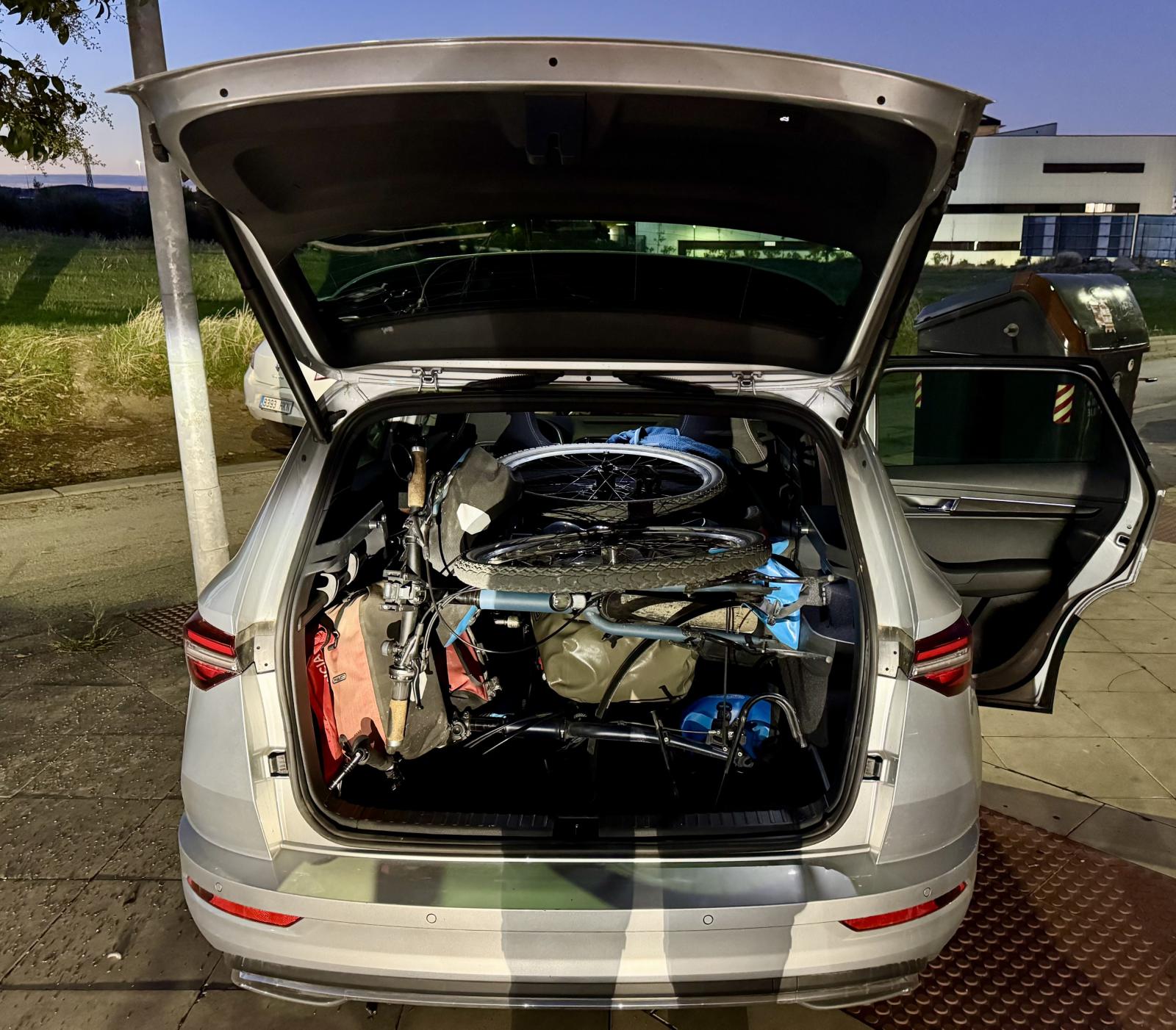
Then we had the idea of renting a car and returning it at a different location. And lo and behold: Europcar made it easy – and it wasn't even much more expensive than the train! So we booked the largest available car from Girona to Jaén in Andalusia. Since we didn't want to spend the night somewhere with all our luggage in the trunk, we had no choice but to drive the 900 kilometers more or less in one go. We were at the Europcar counter at 8:00 a.m. sharp to avoid wasting any time.
Once we were cruising at 140 to 160 km/h, we could finally breathe a sigh of relief, as we were making excellent progress. You know that feeling when the estimated arrival time keeps getting earlier and earlier? Wonderful. The roads were in excellent condition, and there was hardly any traffic. So, quite exhausted, we arrived in Jaén an hour before closing time (7:00 p.m.).
There we were, standing in the dark, in the middle of this city with 112,000 inhabitants. Like two zombies, we sat down in the first park we found and cooked our meal for hard times: pasta with tomato sauce 😅. Then we walked a few meters further and pitched our tent under the nearest olive tree. Spoiler alert: that wouldn't be the last olive tree.


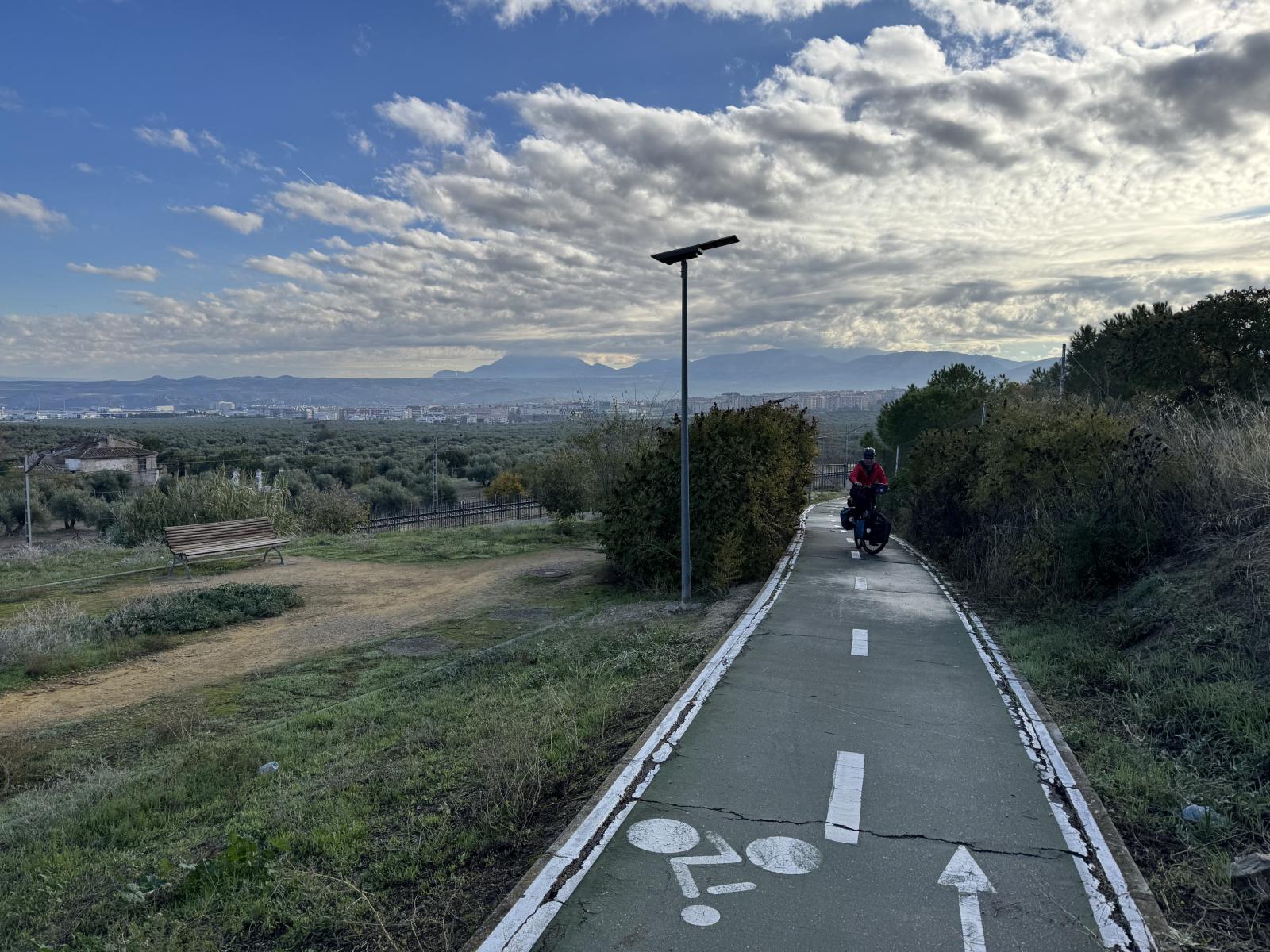
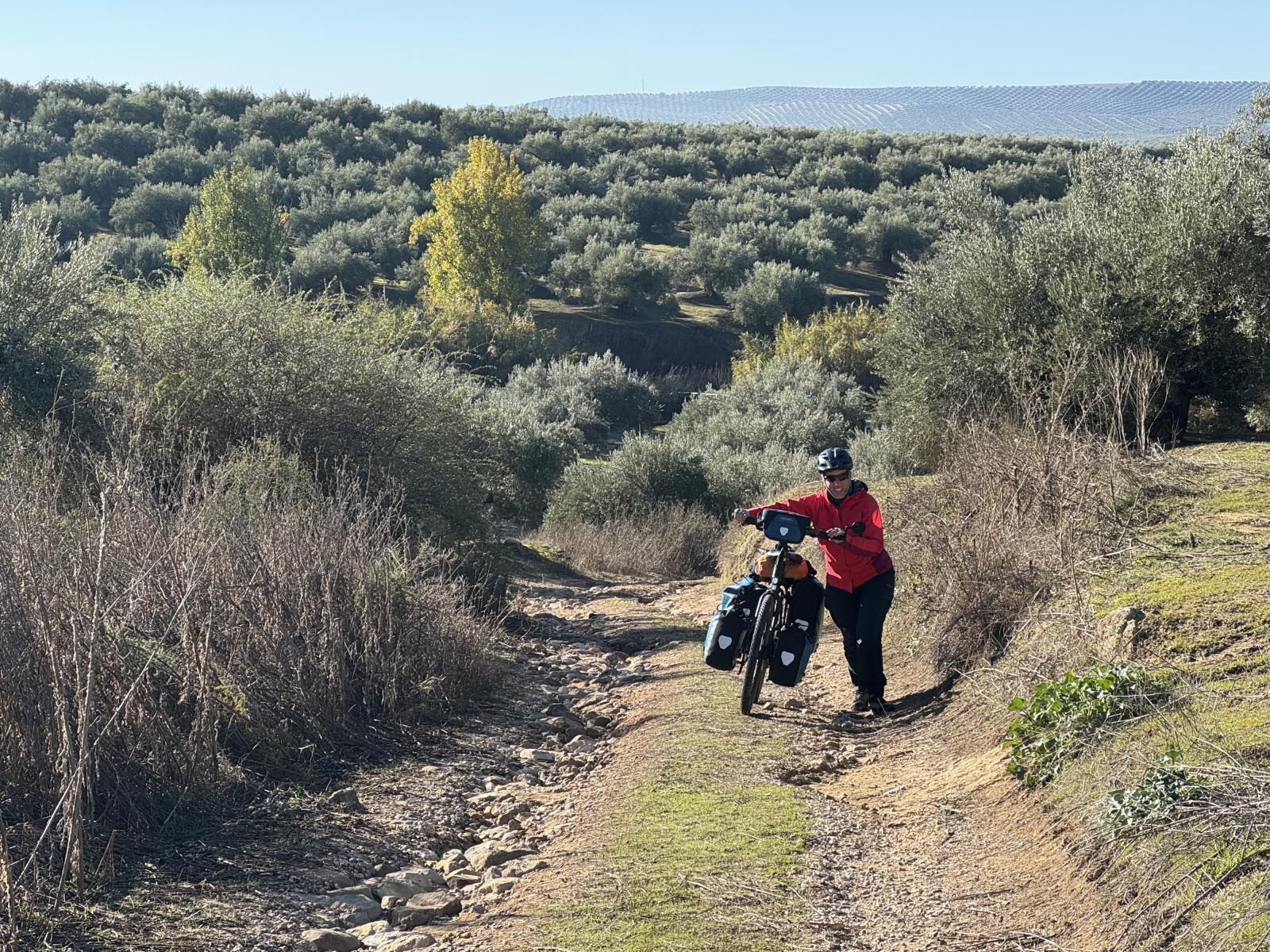
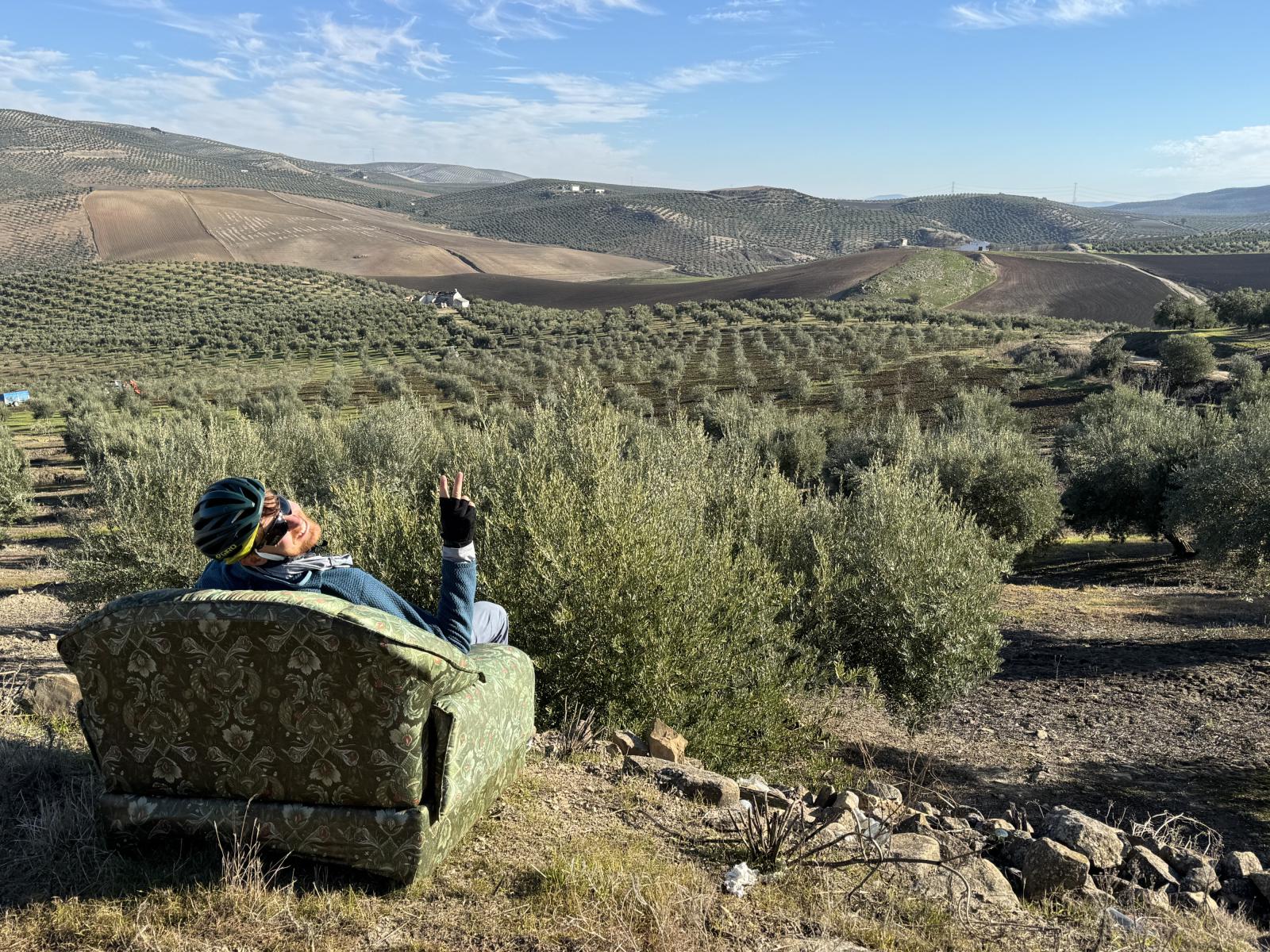
From Jaén, we mainly follow the European Divide Trail, a bikepacking route to Cádiz. There, we will take the ferry to the Canary Islands on December 13. Just beyond Jaén, an amazingly well-maintained gravel bike path took us through olive groves toward Martos—right into the heart of olive oil production. It was only when we had climbed the first few meters that we realized how incredibly large these plantations are. With around 175 to 200 million olive trees in Andalusia, an estimated 30–36% of the world's olive oil comes from here. No matter where we look, there are always olive trees on the horizon.
Irgendwie wirkt es seltsam, dass man so oft von der Abholzung des Regenwaldes wegen Palmöl liest, aber über die 1’700’000 Hektar (allein in Andalusien) Oliven-Monokultur kaum etwas hört. Wenn man durch die Felder fährt oder sogar darin übernachtet, merkt man schnell, dass hier jegliches Leben verschwunden ist. Keine Insekten weit und breit – fürs Zelten zwar angenehm, aber für die Natur? Begrünungsstreifen sucht man vergeblich. Wie viel ein solcher Streifen ausmachen kann, merkten wir, als wir unser Zelt einmal in der Nähe eines kleinen Bachlaufs aufstellten. Dort standen aufgrund der Topografie noch ein paar „normale“ Bäume und Büsche – und plötzlich wimmelte es nur so von Vögeln.
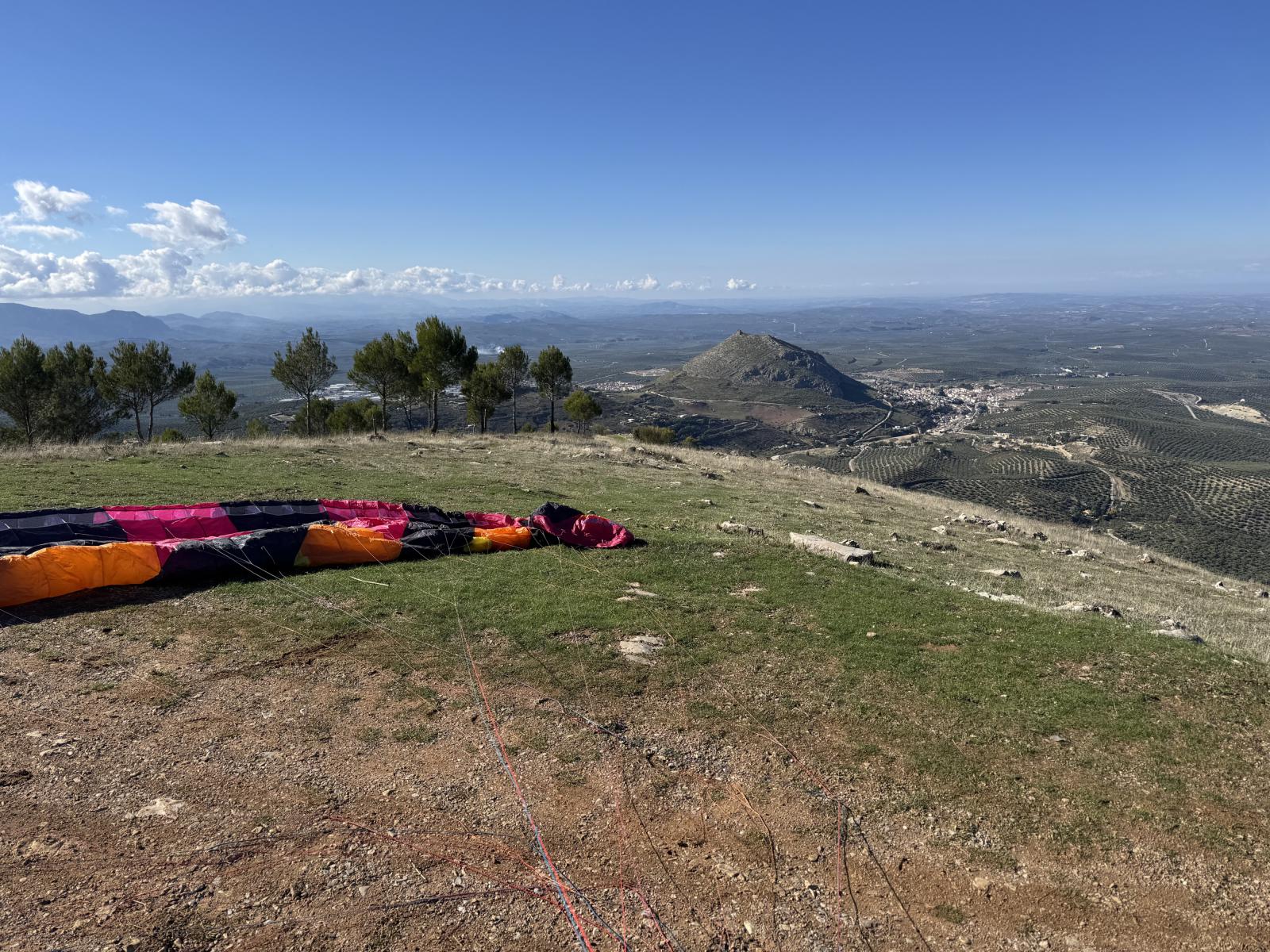
We had planned a break in Martos. We really liked the town. High above it, the Castillo de la Peña towers on a huge rock, and below it, the town nestles into the slopes – beautiful. After the first night in our accommodation, Beni actually wanted to just relax. But the good flying weather 🪂 and the direct view of the official launch site were too tempting. It was more than worth it: he had the sky to himself and landed safely in Martos. For those interested:
https://igcviewer.burnair.cloud/?file=https://www.burnair.cloud/igc/2025-11-20_11.54_LA-GRANA_BENI-GASSER_11-5617_1001.igc
After the flight, we spent a few days focusing on the Lightning Process. Put simply, old patterns emerged that we wanted to break as quickly as possible. In moments like these, it is incredibly valuable for us to have Lucia as our trainer. With her help, we were back on our feet in just a few days, so that on our last day in Martos we were able to climb the rock above the city.
Beni had already assessed it from the air 🪂 a few days earlier and said that it might be possible to take off from there and that he might be able to fly his paraglider again – more on this in our blog video 😊.
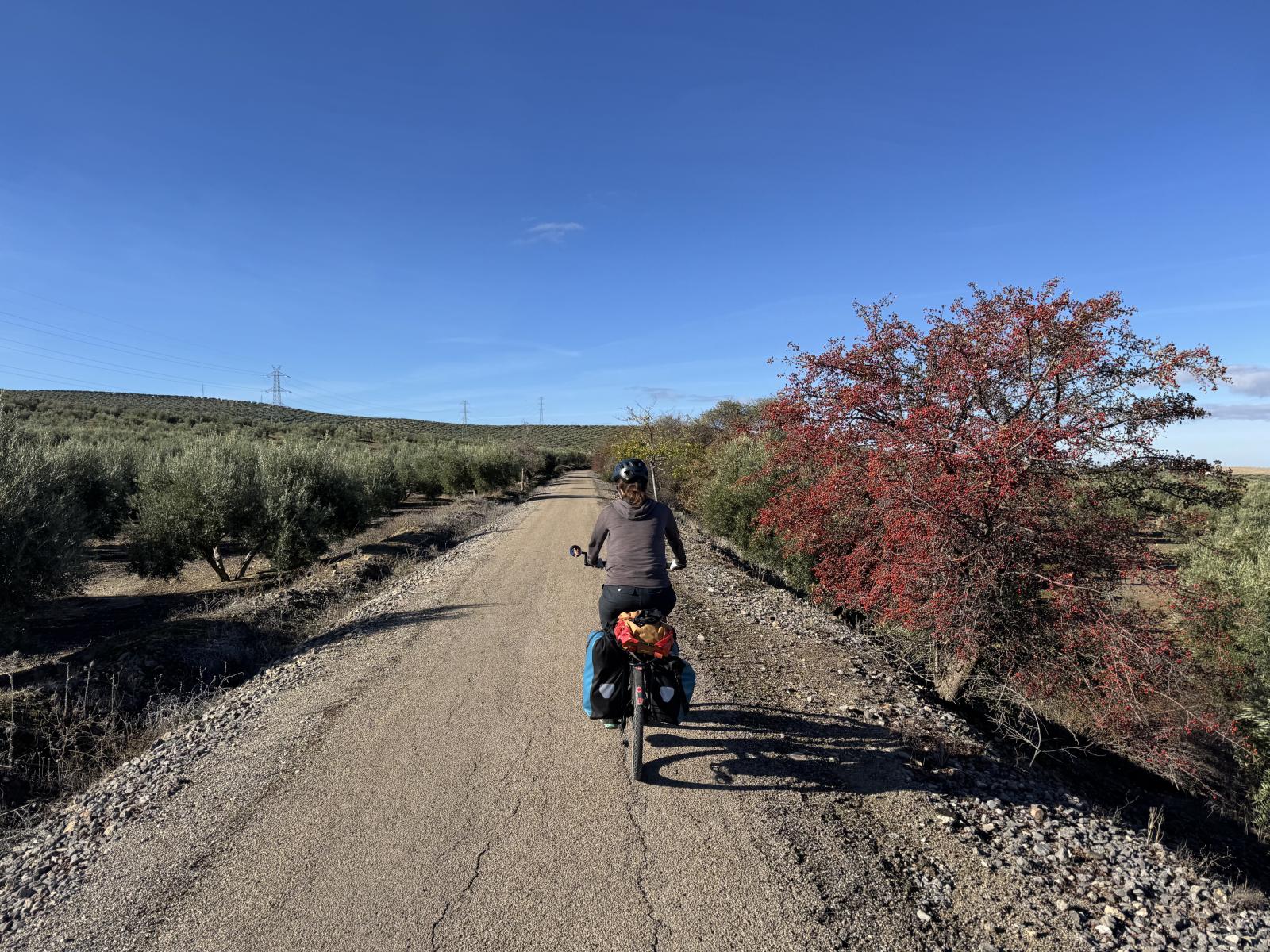



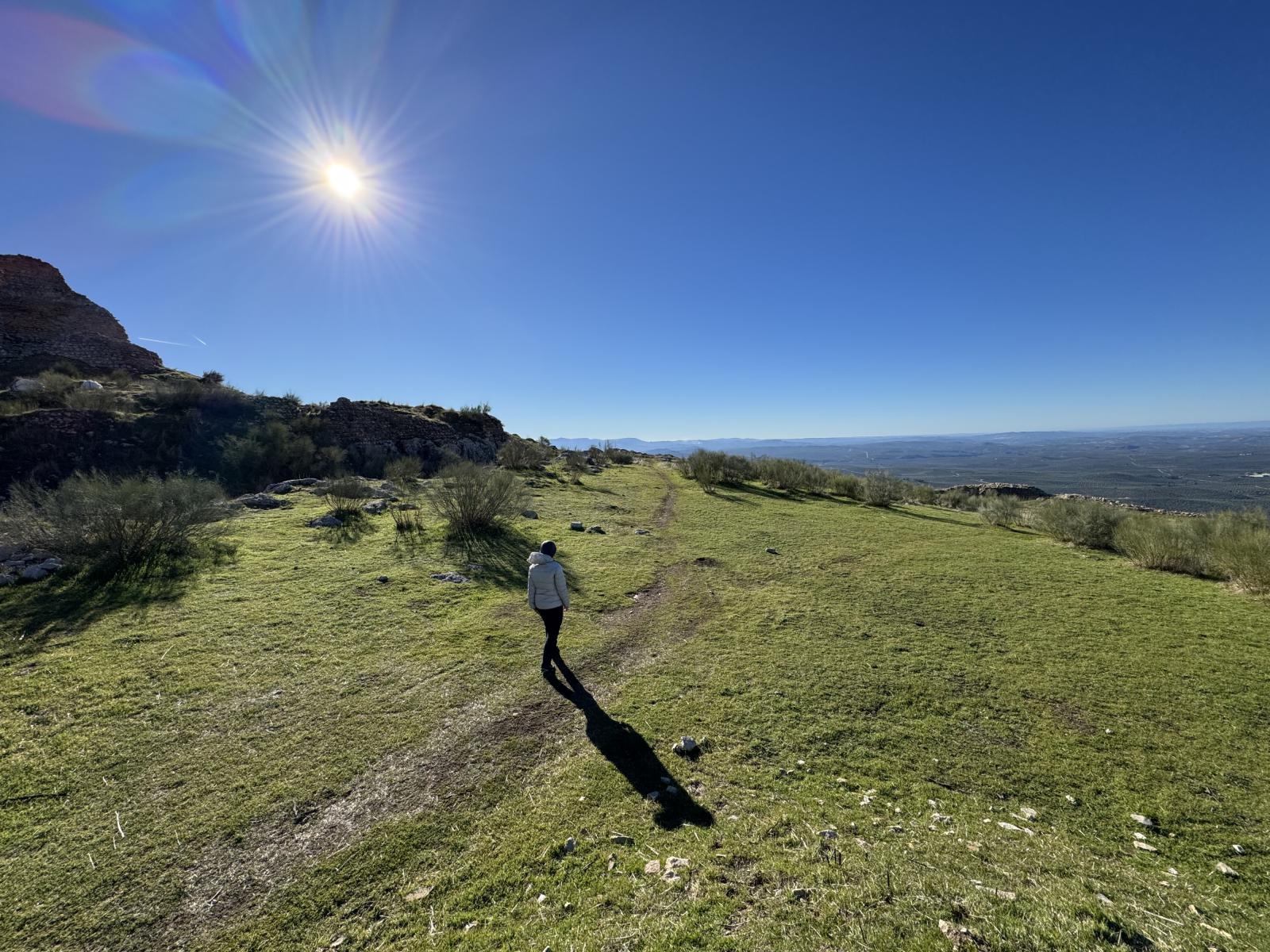
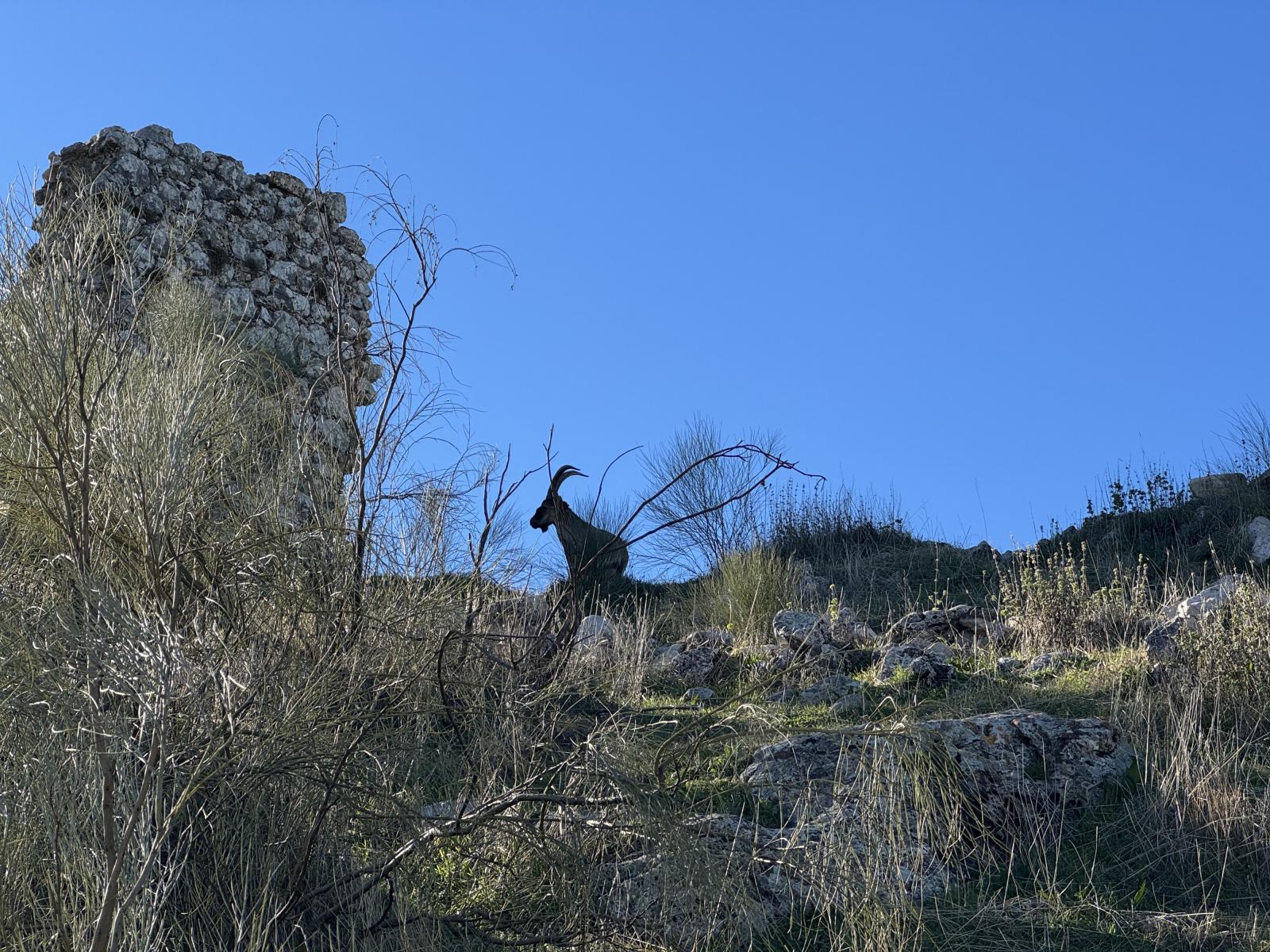
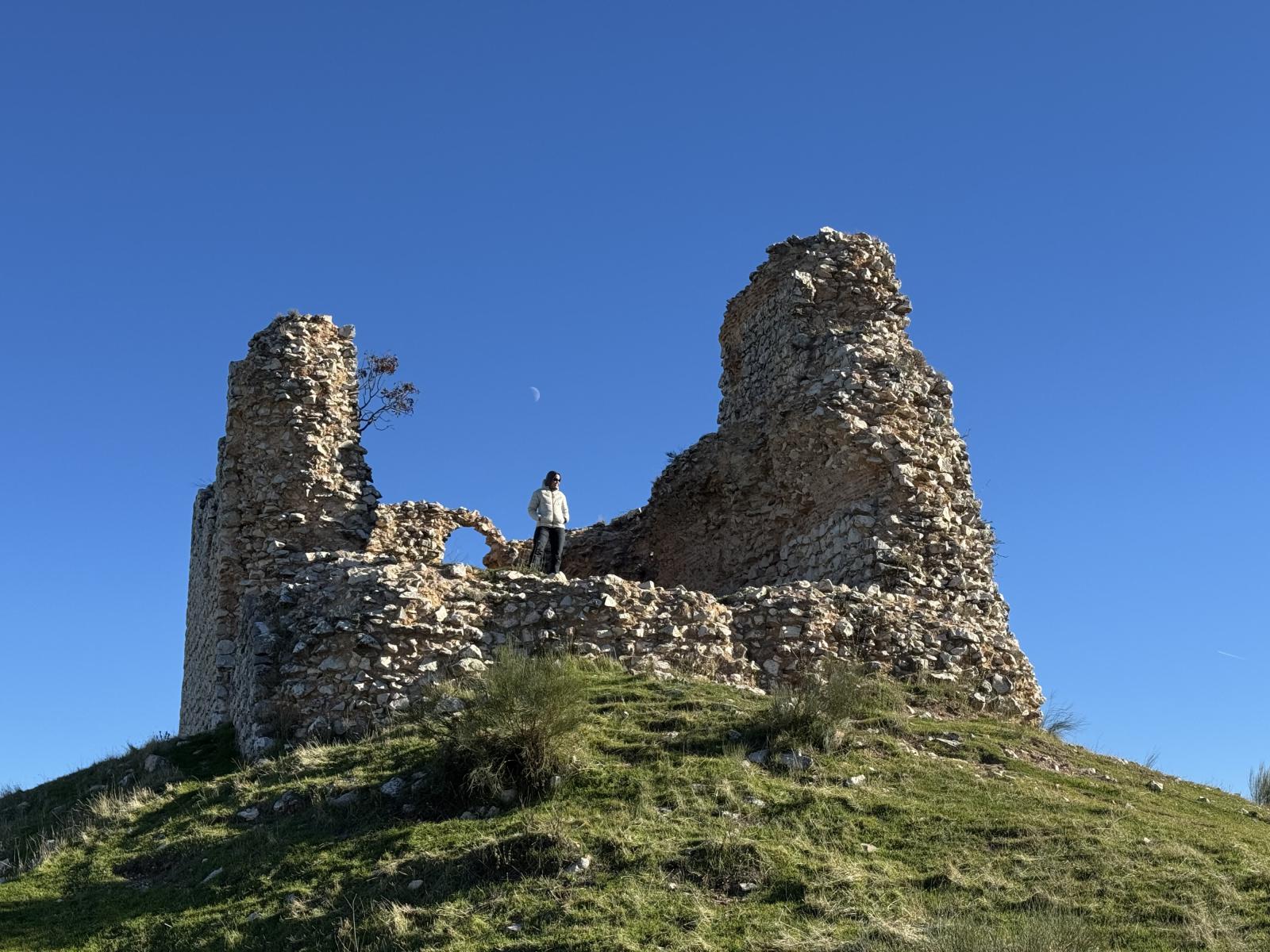
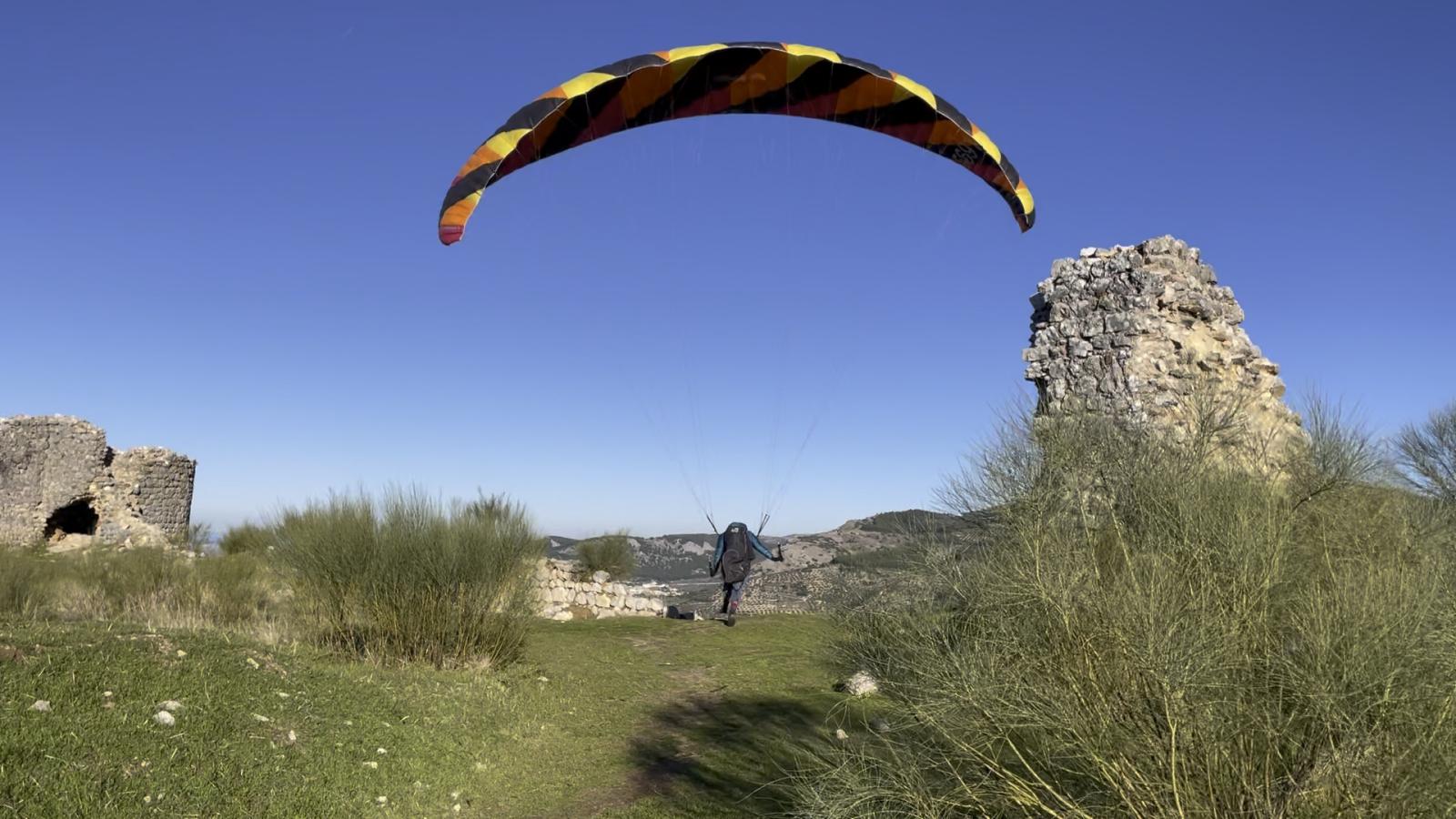
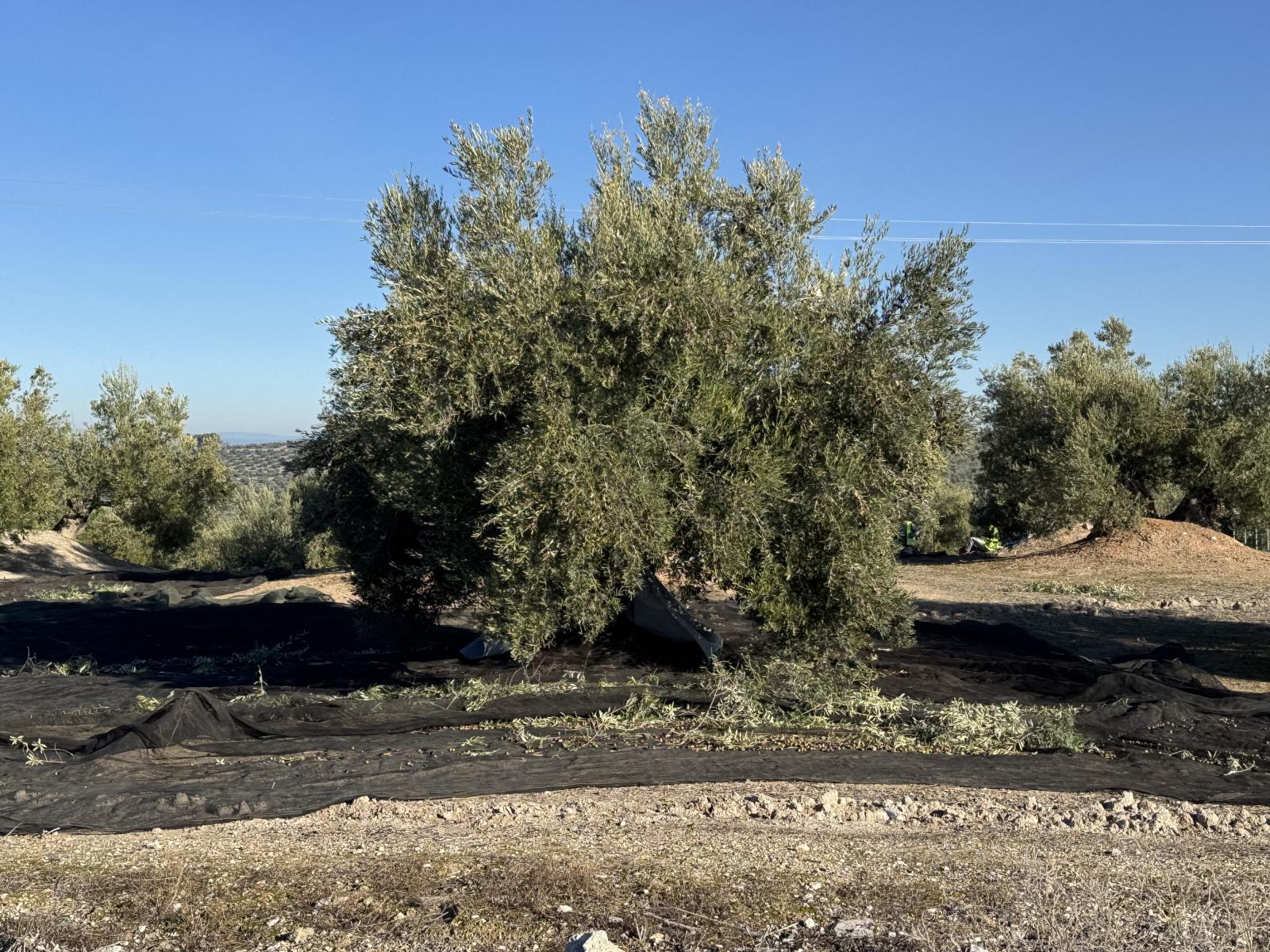
Despite the monoculture of olive trees, we enjoyed the vastness, the colors of the hills, and the incredible tranquility on the bike path towards Córdoba. There is nothing easier than finding a good place to camp among the olive trees in this area, if it weren't for the fact that it is peak harvest season 😊. So we had to make sure that we were more or less invisible in all directions and settle down where the harvest had already taken place. Farmers tend to be cautious with trees that have not yet been harvested, as criminal gangs have often stolen large quantities of olives at night. In Andalusia alone, police estimate that more than 500,000 kilos of olives disappeared from the fields during the 2023/2024 winter harvest season. As a result, farmers now monitor the cultivation areas with drones, night vision devices, and helicopters.





For even more insight into our everyday cycling life, check out our latest video:
Comments
Gasser
Ahoi ihr beide, schön, eu immer wieder uf Kurs z gseh, danke lönd ihr mich mitreise, ah, ich liebe Olive und all die Abentür us eurer Reis und s Video het mi richtig zum Lache brocht, unglaublich. Keep on going, Heidi
05.12.2025 13:16
Nicole & Beni
Schön het der de Blog gfalle und dich chöne zum lache bringe 😊
05.12.2025 17:01
Stephanie Bühler
Hallöchen🙋♀️ Wiedereinmal lasst Ihr uns teilhaben an Eurem Abenteuer. Mit beeindruckenden Bildern dürfen wir ein Stückweit mit Euch reisen. Das ist schön.🤩 Weiterhin alles Gute.Habt noch einen angenehmen Tag.🎅🏻 Herzliche Grüsse aus Lausen.🫶 Von Stephanie & Markus
06.12.2025 07:58
Nicole & Beni
Danke Stephanie und Markus, dass ihr uns so interessiert verfolgt, das freut uns sehr! Wir wünschen euch eine schöne Adventszeit und grüssen euch herzlich aus Cadiz.
10.12.2025 08:50
Sylvia
Schön dass mir so chöne chli derbi si uf eurer Reis 😍 Freued eus scho uf dr nögschti Blog❣️ Liebi Grüess, Sylvia & Tom
06.12.2025 10:41
Nicole & Beni
Danke liebi Sylvia und liebe Götti für euches Inträsse a eusem Blog und eusere Reis, das freut eus sehr, dass ihr uf dem Wäg mit eus mitreised 😊 Liebi Grüess us Cadiz
10.12.2025 08:47
Markus B
Hoi zämme! Sehr schöne Filme!!! Beni ist einfach en geile Siech, wenn er seinen Schirm gepackt hat. Aber Nicole ist eine gute Kamerafrau! Ist die Drohne vom Stauffberg auch im Einsatz? So wünsche ich euch schöne Wochen auf den Canaren🍷🫶🏻🏄🏼♀️🧗♂️🚵🏼♀️🚵🏼♂️🪂Gruss Markus
21.12.2025 13:38
Nicole & Beni
Lieber Markus Danke für die Komplimente 😃. Ja, dieselbe Drohne ist im Einsatz, sie ist ein treuer Begleiter. Vielen Dank für die grosszügige Kaffeespende! Merci vielmals und frohe Festtage. Liebe Grüsse
24.12.2025 10:06