
El Hierro – A Week at the End of the World
Published on 16.03.2026
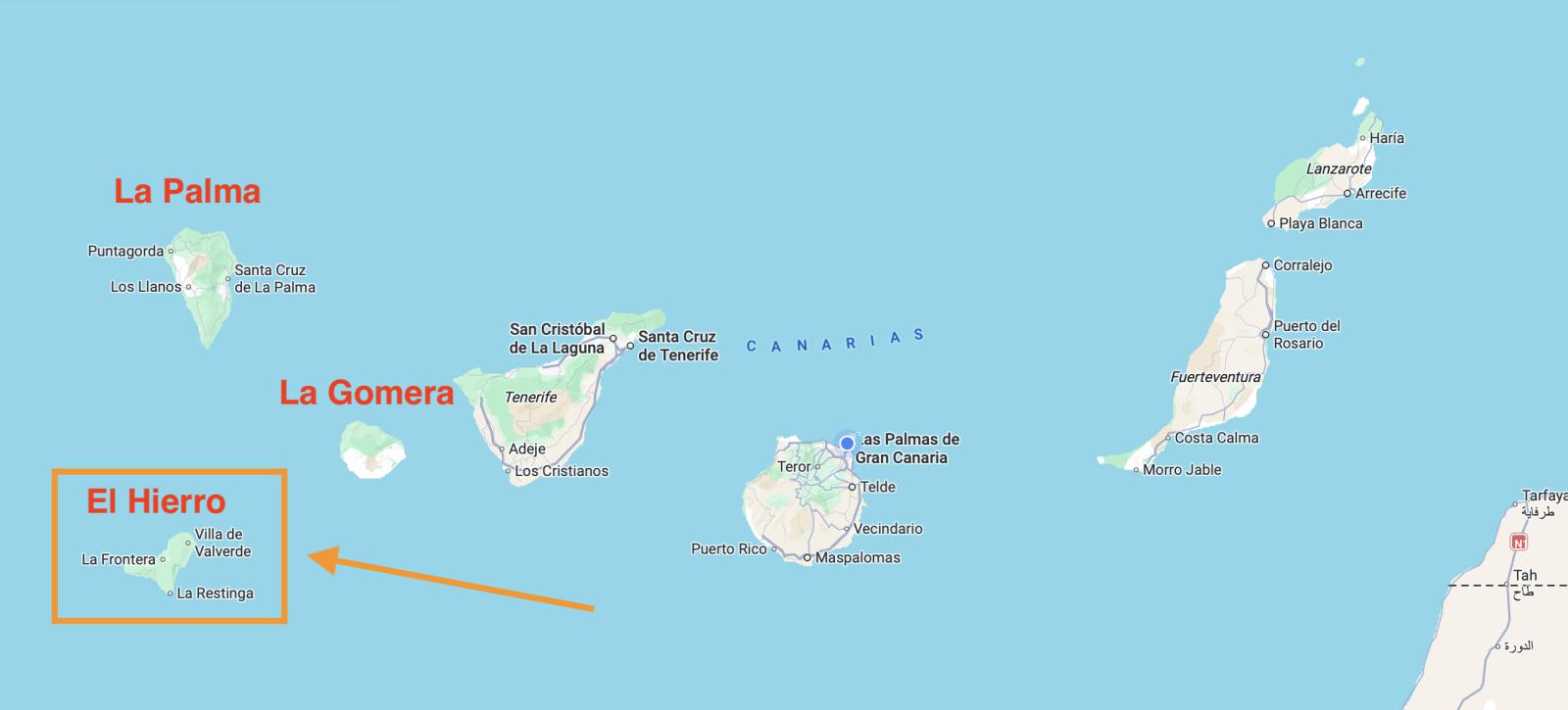
Map of the island:
Route to the blog:

El Hierro is the smallest and westernmost of the inhabited Canary Islands. For a long time, it was even considered the “end of the world,” as old maps placed the prime meridian through El Hierro. Today, only a small community of about 11,000 people lives on this rugged volcanic island.
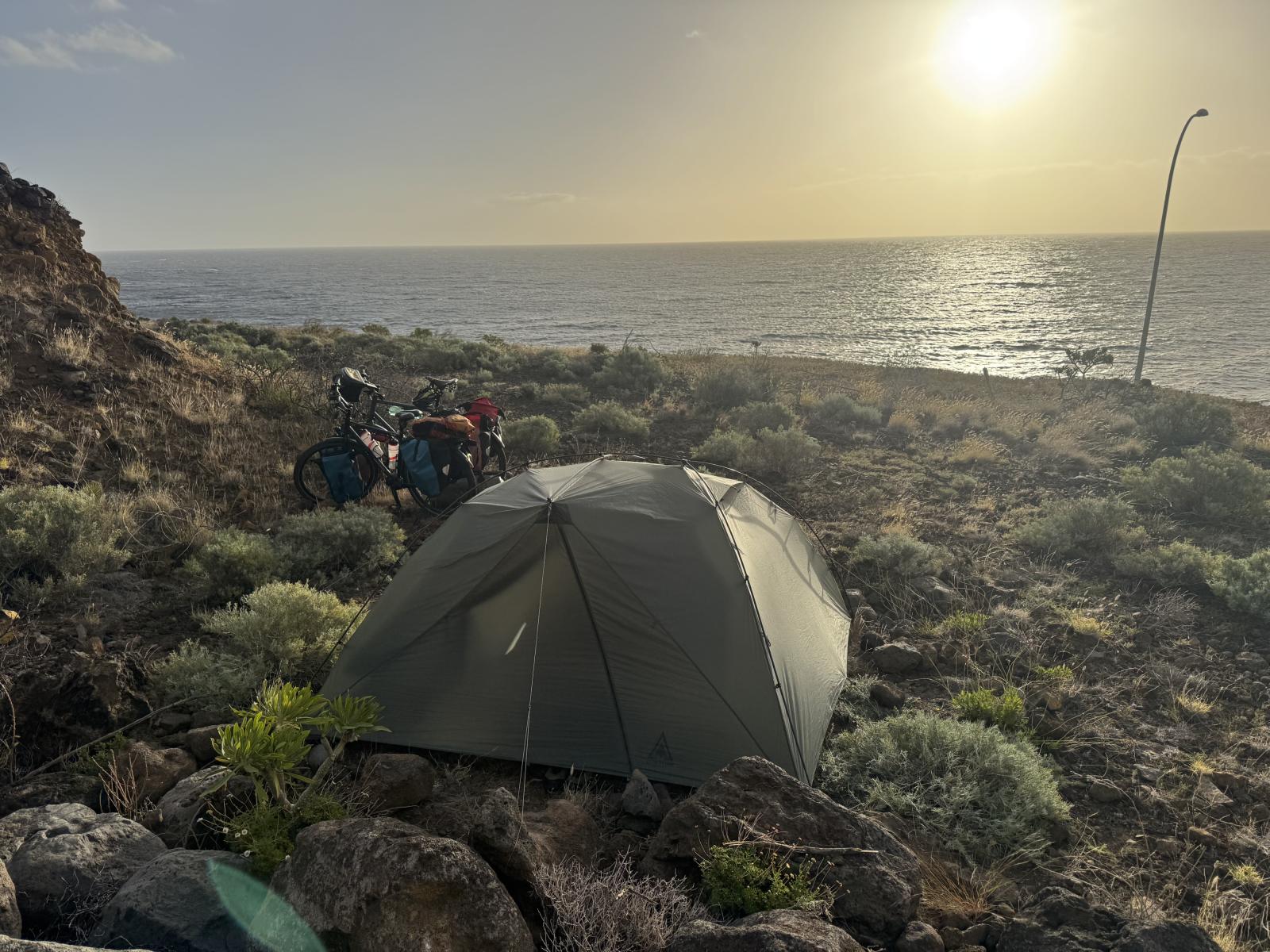
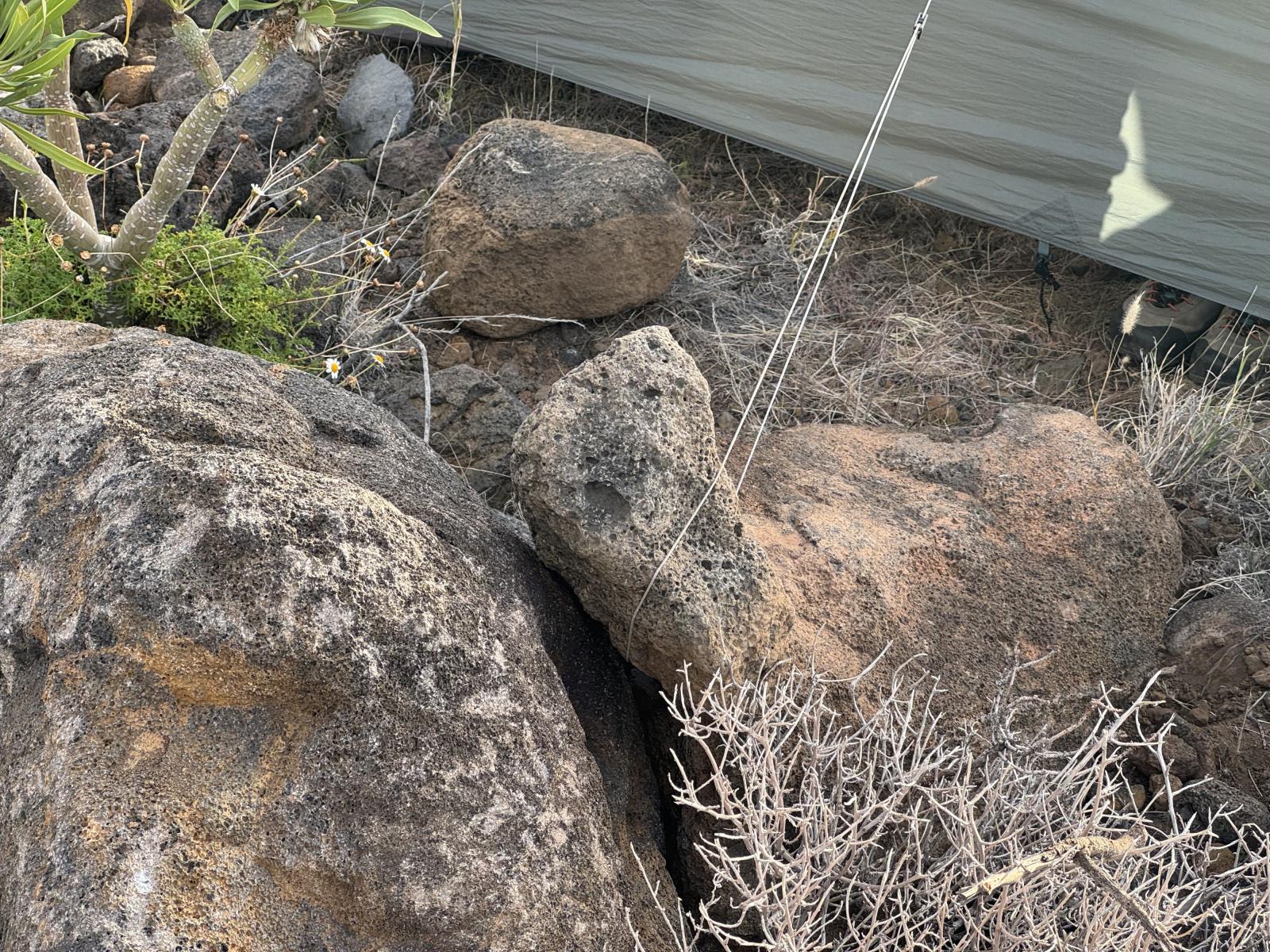
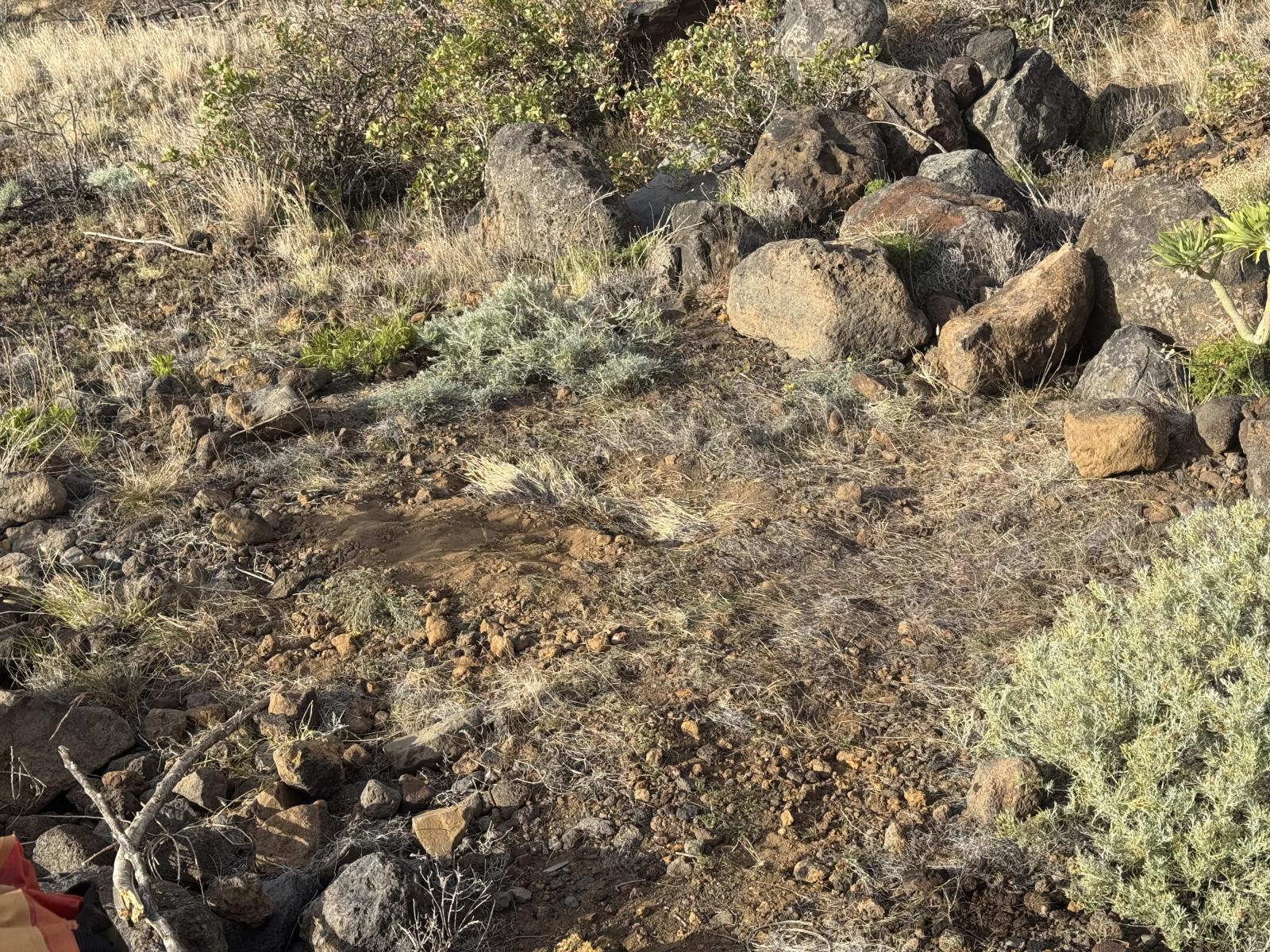
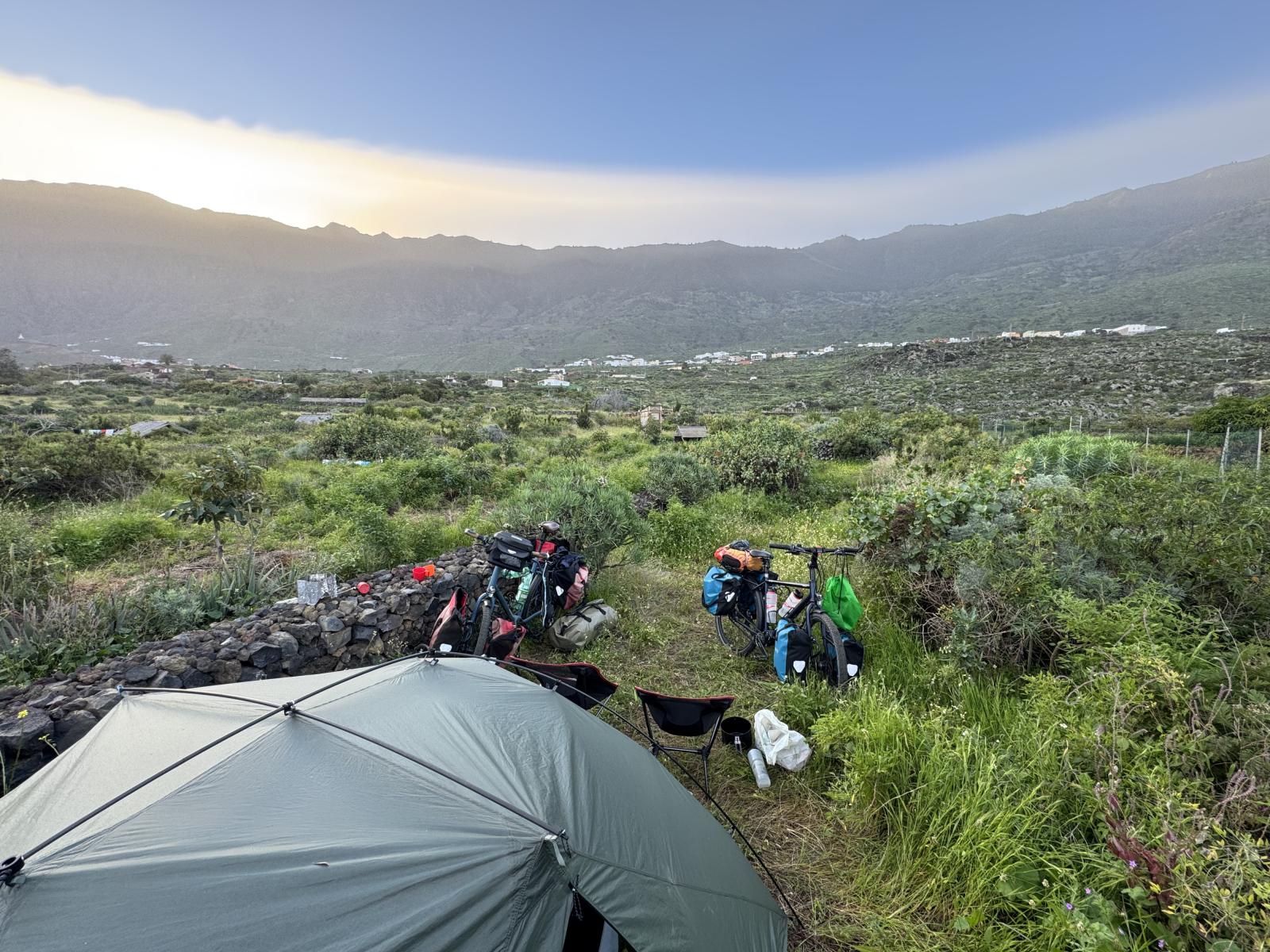
El Hierro greets us with strong winds and darkness; it’s eight o’clock in the evening. We find a bench right in front of the police station at the harbor and cook our dinner there. Afterward, we start looking for a place to sleep, which isn’t exactly easy in the dark and with gusts of up to 60 km/h—we can only guess at our surroundings. Luckily, we’ve already developed a bit of a “nose” for wild camping spots, so we find what we’re looking for with a mix of intuition and Google Maps. The spot leaves a lot to be desired—there are lots of big rocks we have to clear away, plenty of bushes, it’s slightly sloped, and it offers only moderate shelter from the wind. But we’re simply too tired to keep searching for hours, and the spot is deemed acceptable under the motto “better than nothing.” It’ll definitely take another 1.5 hours before we finally crawl into our sleeping bags, because securing the tent in the strong wind takes a lot of time (since it’s pitch black). Unfortunately, falling asleep right away is out of the question; the wind doesn’t let up one bit even at night.
The next morning, we finally get to see exactly where we slept—it’s always a fun surprise. We also get our first glimpse of the island and are excited to explore it.
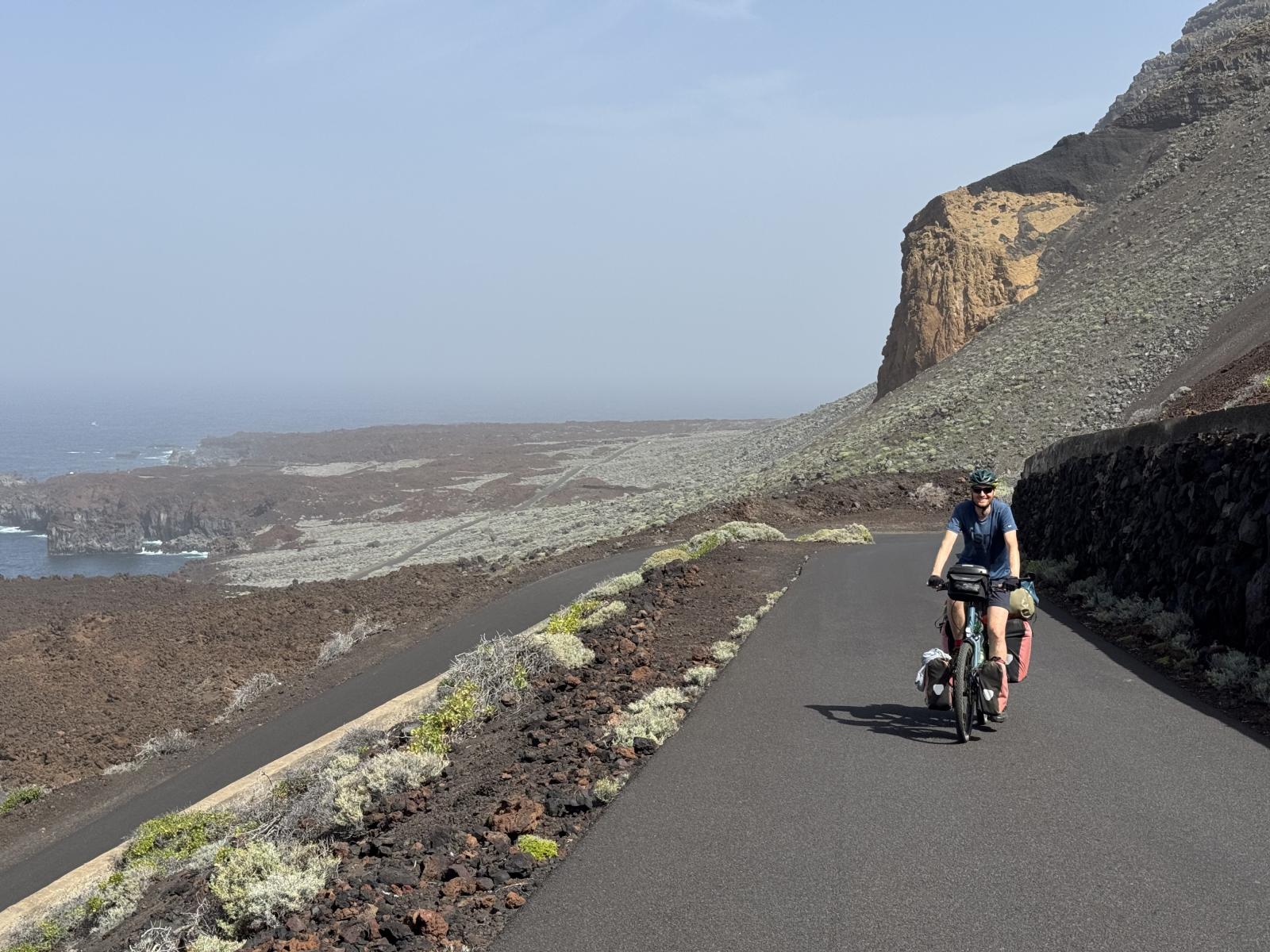
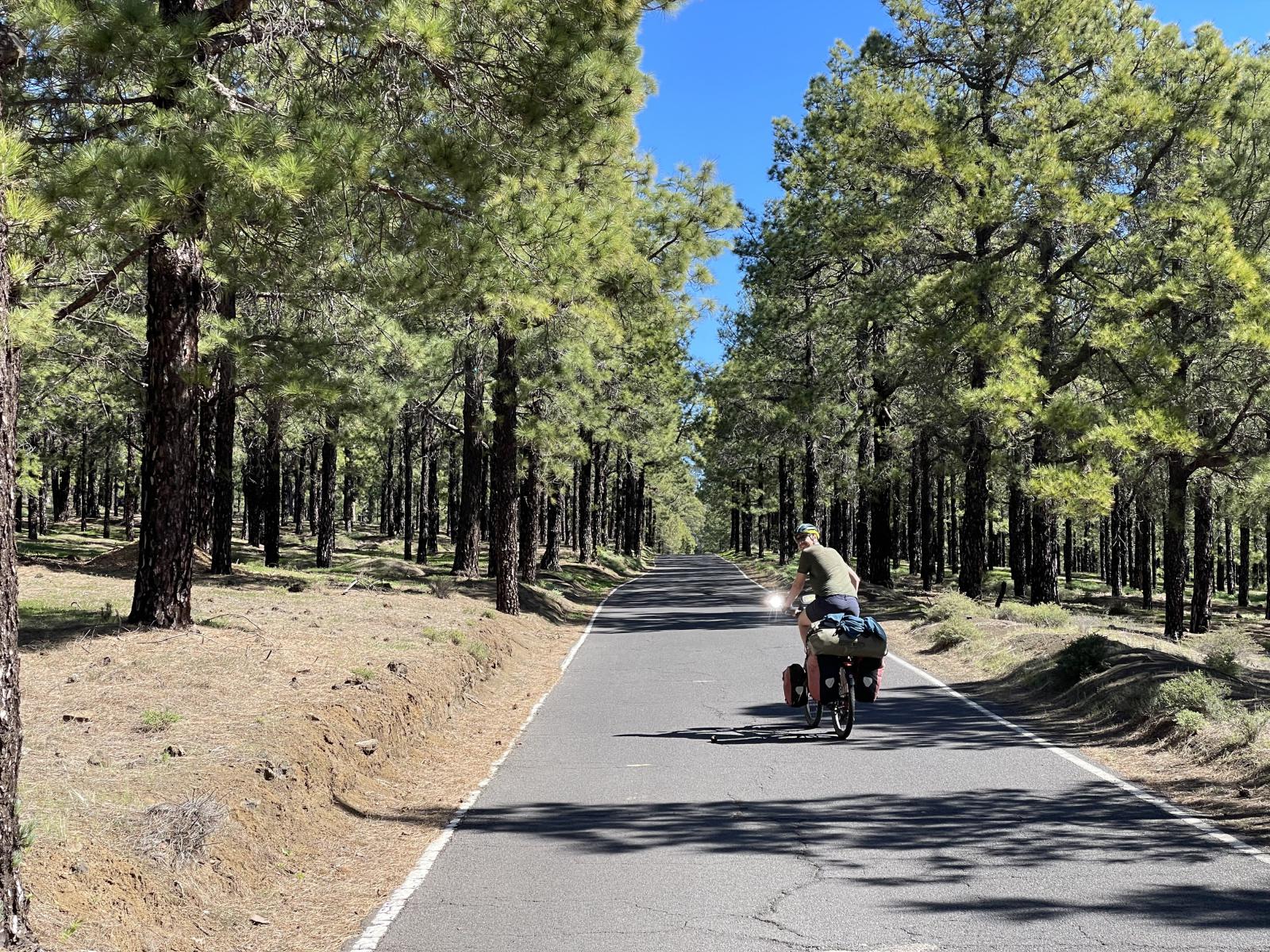
Unsurprisingly, we have to start climbing right from the get-go 😅. The Canary Islands aren’t for the faint of heart 😄. The great thing about the climb is that we can quickly enjoy a beautiful view of the sea, and the traffic is super pleasant—only a few cars pass us by.



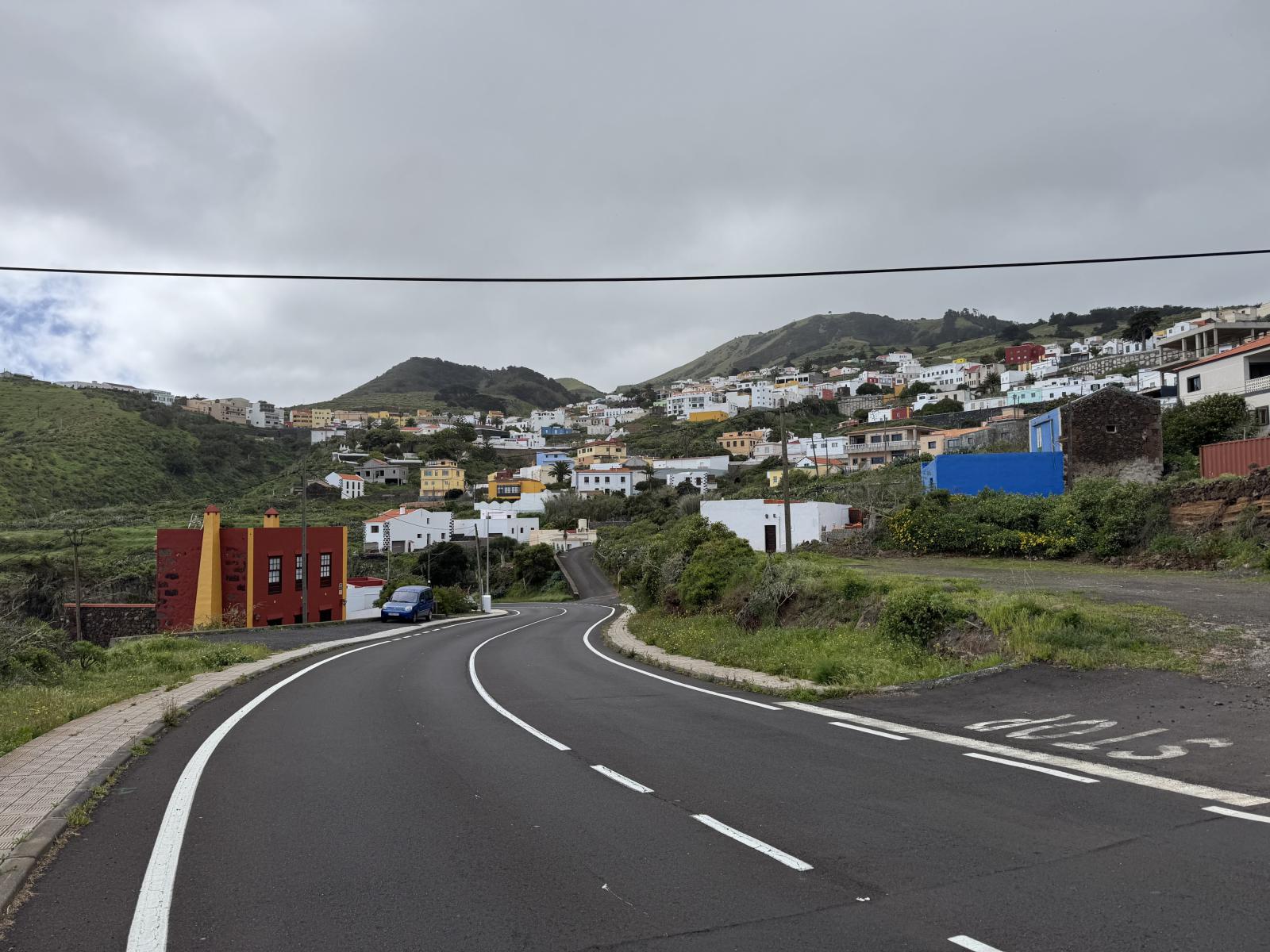


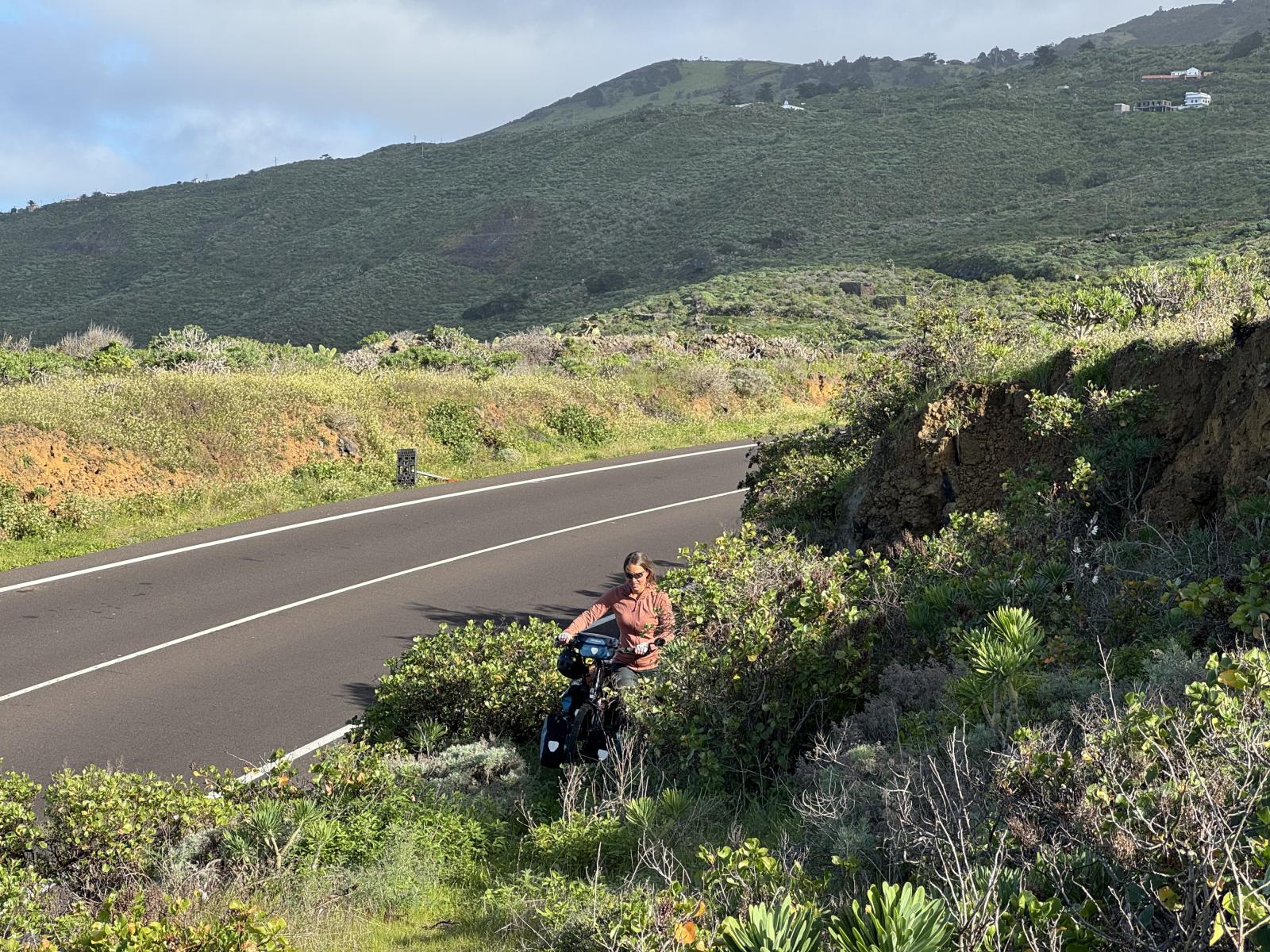

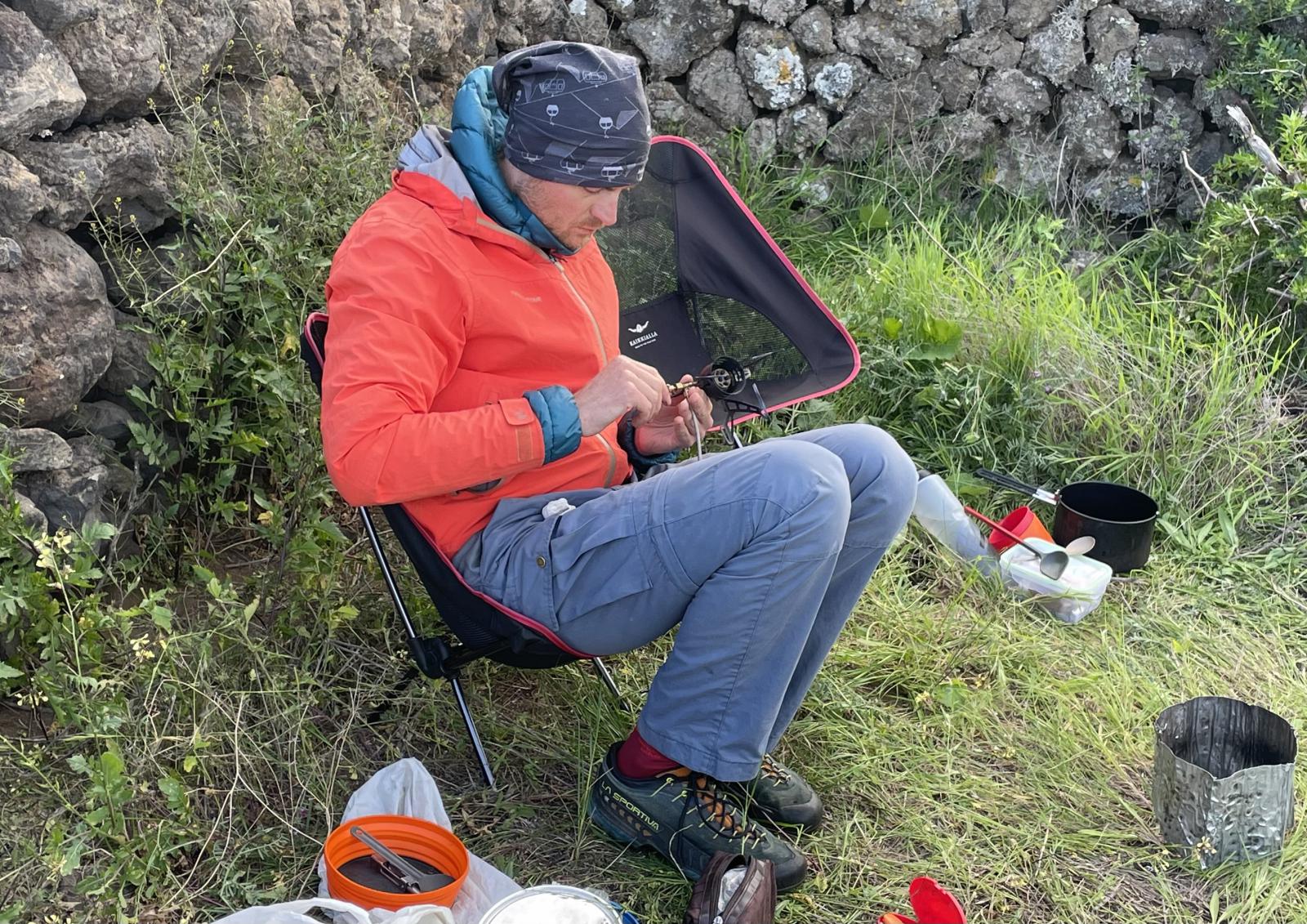
We know from a YouTube video by another couple on a cycling trip that there’s a tunnel along our route that’s actually closed to cyclists. The catch—and the reason why most people ride through it anyway—is that otherwise you’d have to take a massive detour around half the island. We’d actually planned our route specifically so we’d have to ride down the tunnel instead of up, so we decide to go through despite the bike ban—which works out just fine. Only later do we find out that the “tunnel attendant” is required to notify the police whenever a cyclist passes through the tunnel. Although we didn’t know any of this, we took the precaution of hiding behind a house a few hundred meters in 😄 and taking a break for a while. When everything remained quiet, we continued on our way. We—and surely everyone else—would prefer a slightly more relaxed solution for cyclists 😅.
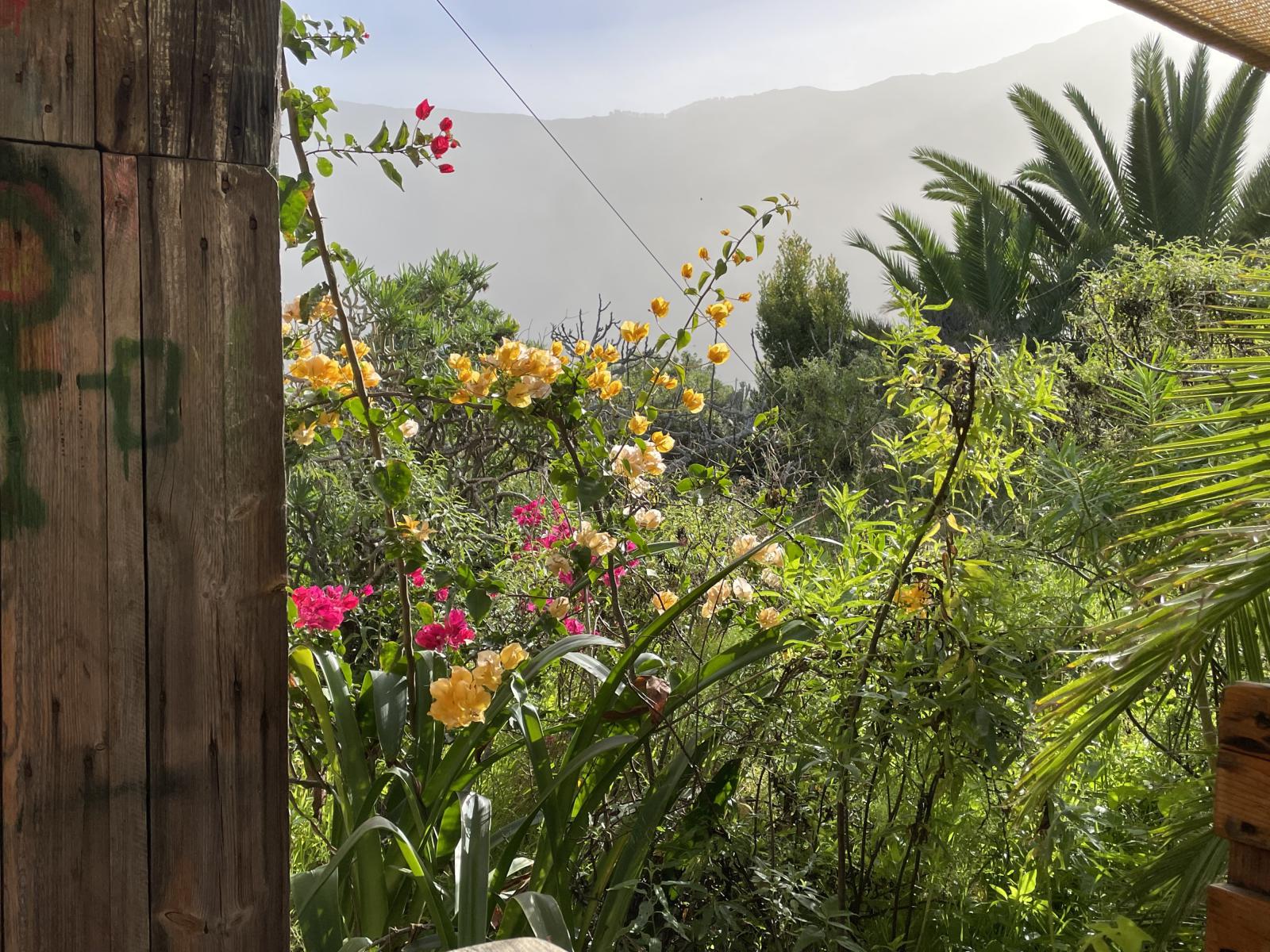
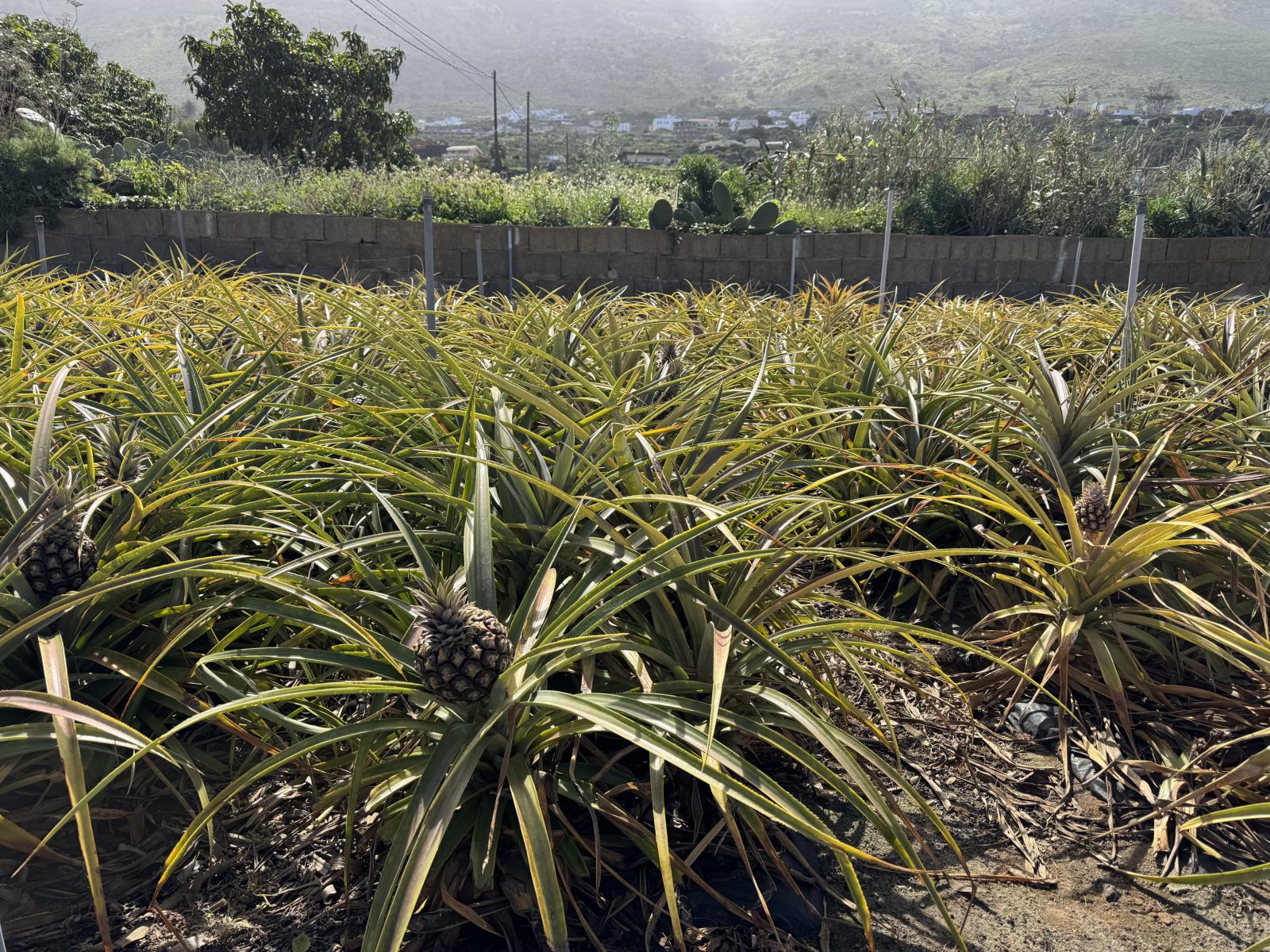
For the night, we’re allowed to pitch our tent in the garden of a Warmshowers family in the north of the island and enjoy a shower. And we’re not alone there, because the family (he’s from Tenerife and she’s from Germany) offers work in exchange for lodging on their permaculture property, which is why there are currently six people there, each working five hours a day in exchange for room and board. It’s really fascinating and beautiful what Eric and Mareike have built there over the years. They arrived on the huge property many years ago with three tents and their four children, and they built one little house after another, beautifully landscaped the overgrown areas, planted trees and palm trees, and continued to dedicate themselves to bringing their vision of permaculture to life.
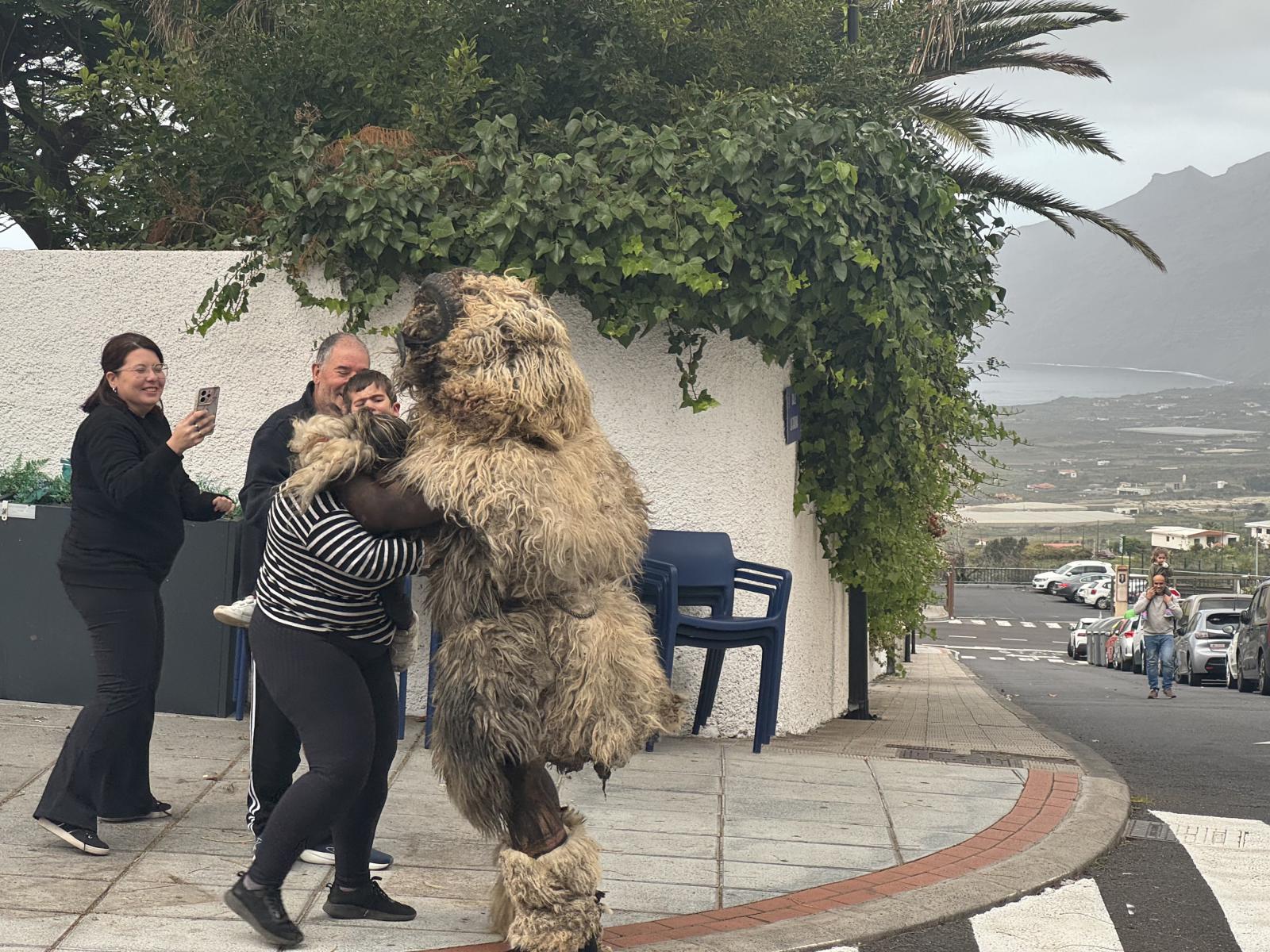
Another great thing was that we happened to be in the village of La Frontera on the very Sunday when the Carneros carnival tradition took place. Young men dress up in animal skins and masks and smear every man, woman, and child they can get their hands on with black paint (which washes off easily).
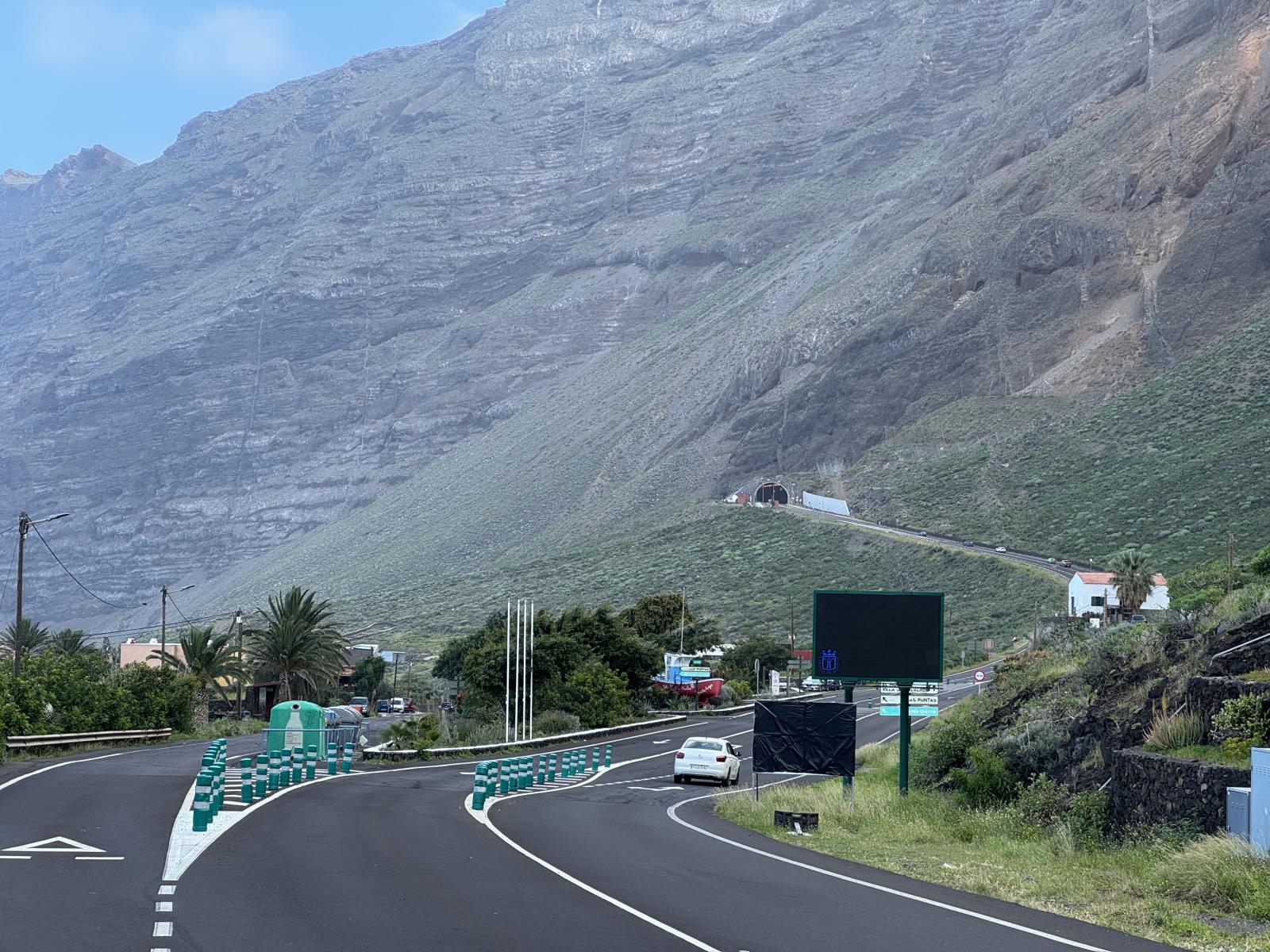




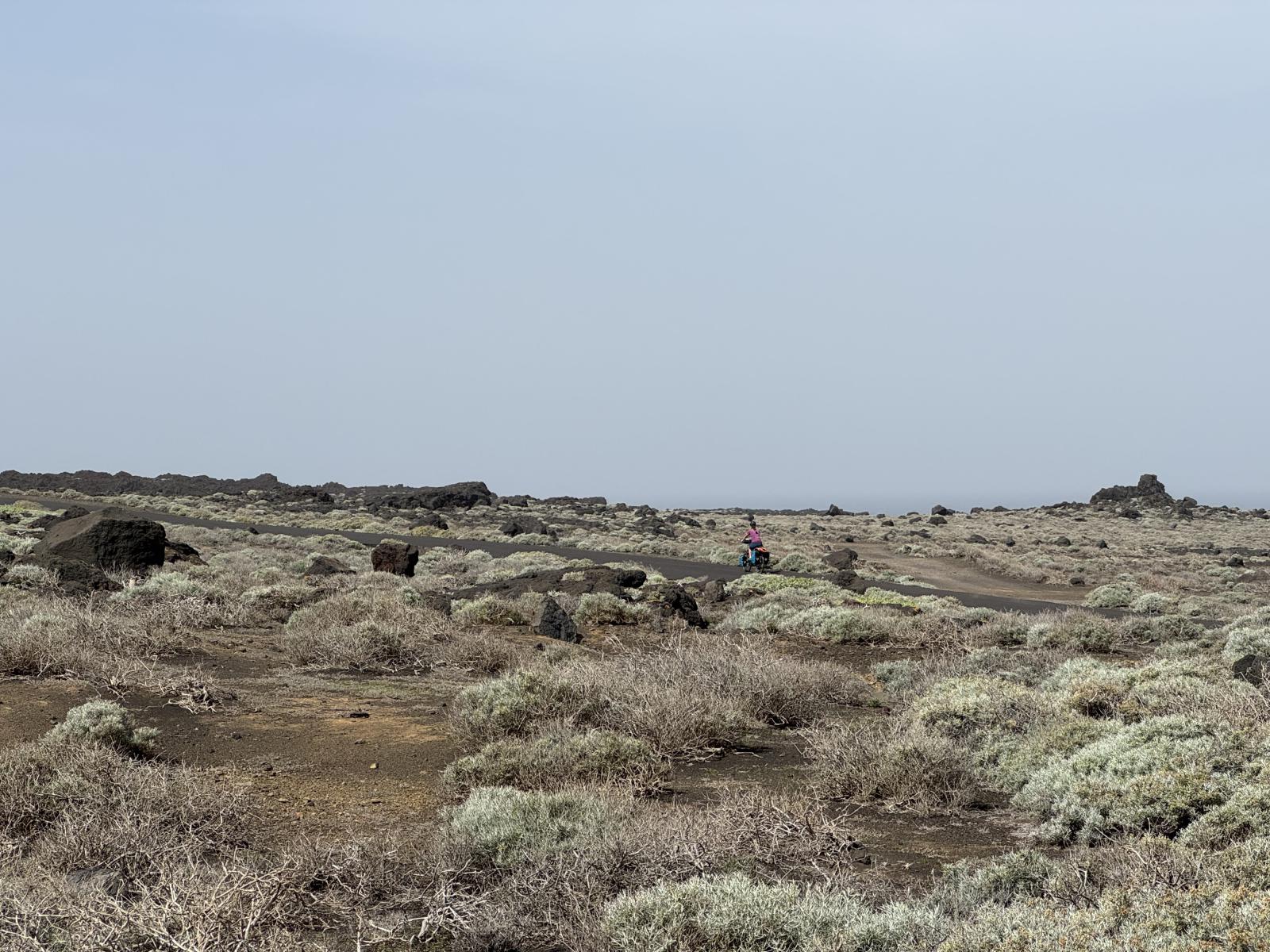
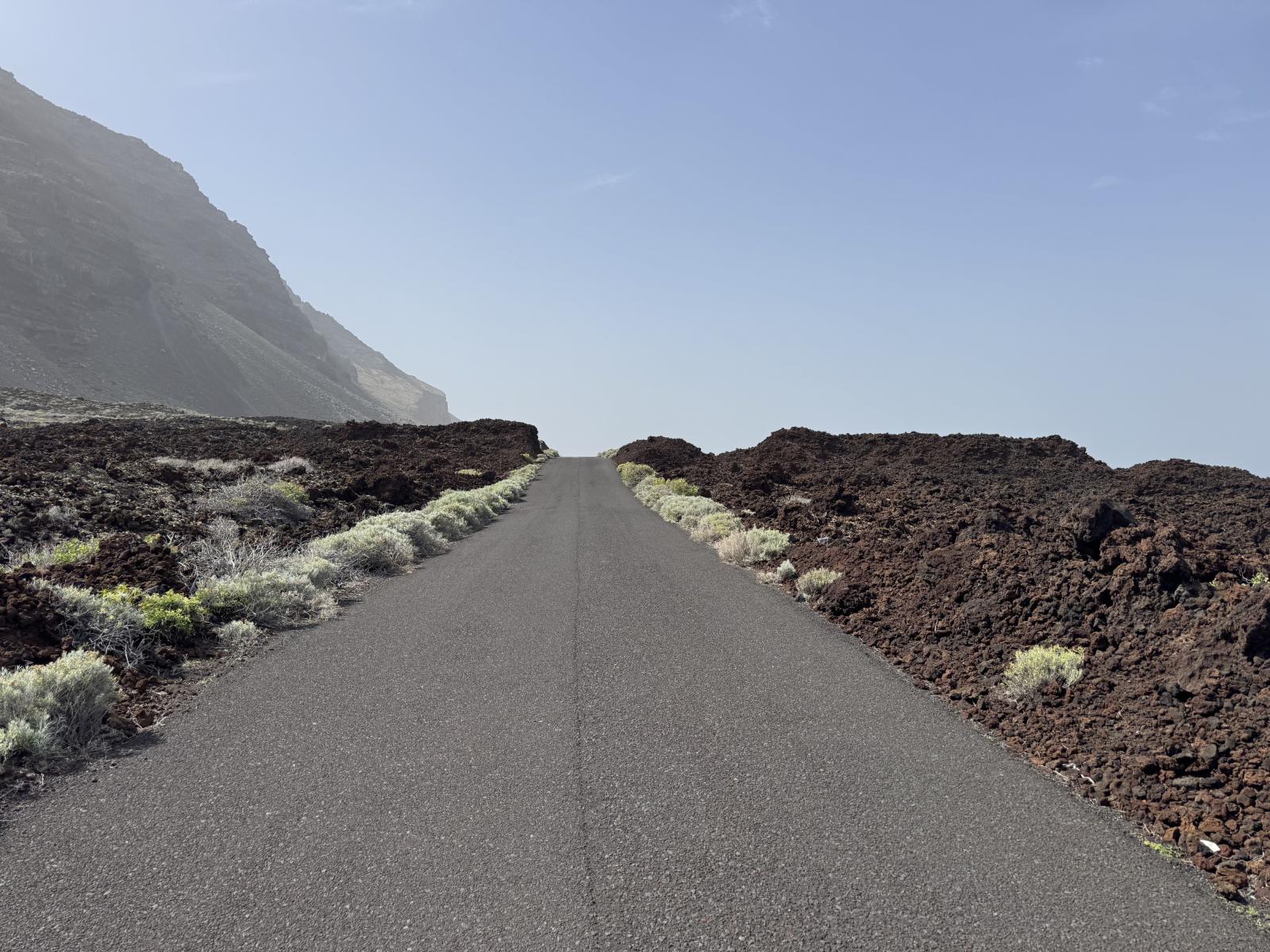
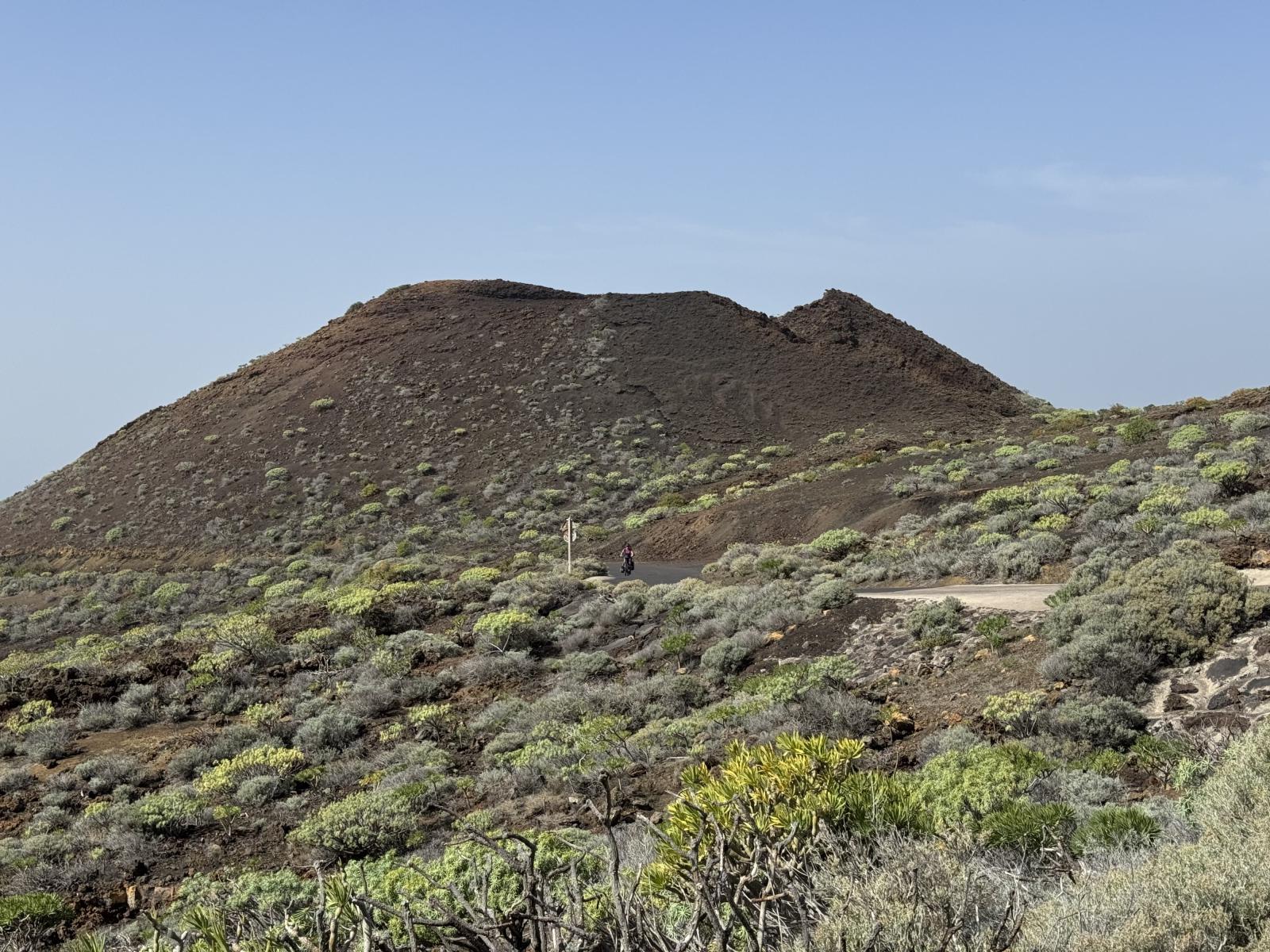
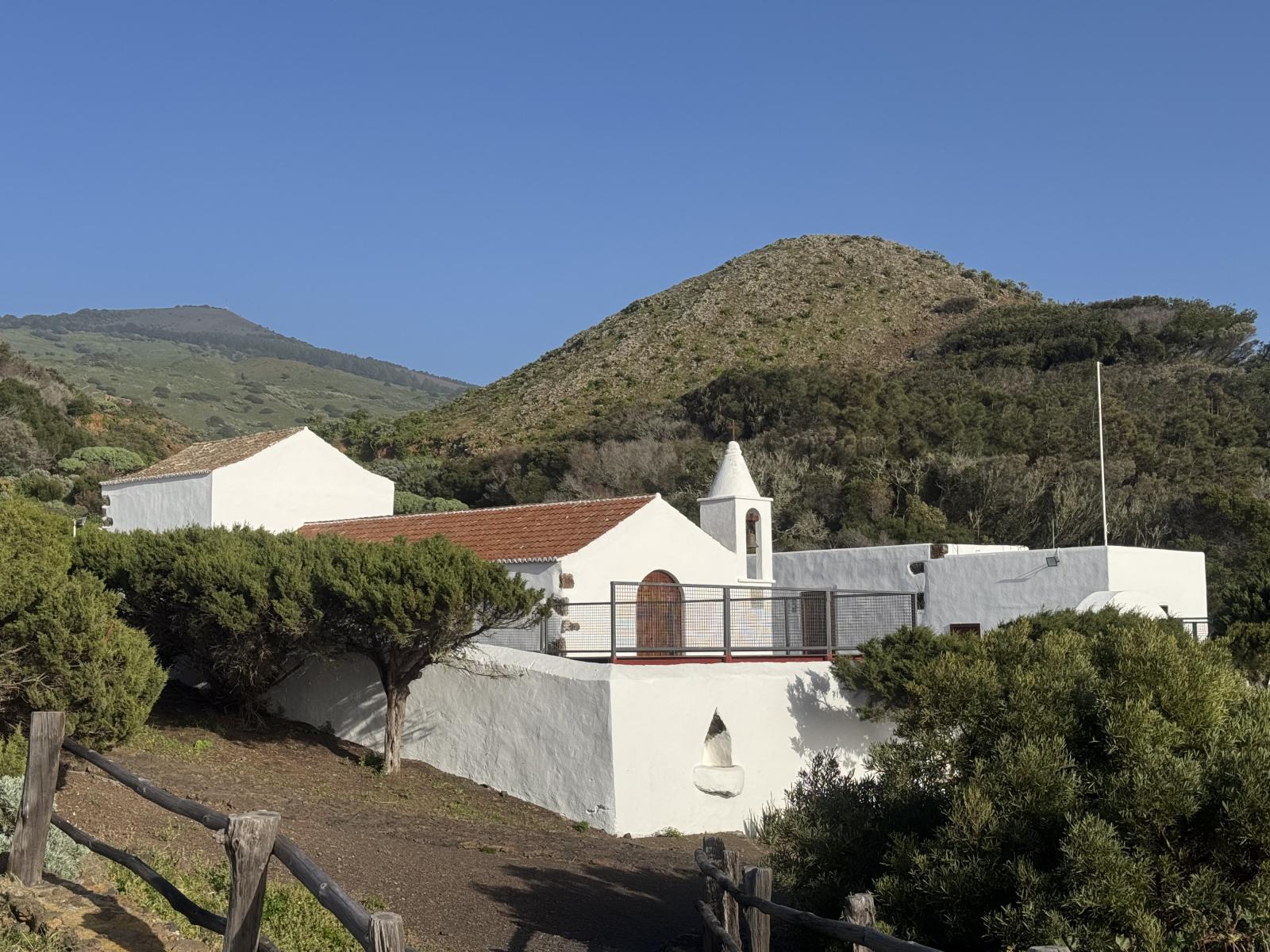
After two nights in our permaculture paradise, we said our goodbyes and headed further west. Looking at our route planning, we could see the landscape shifting—becoming barren and dry. Shops were practically non-existent, and the only water source on the map was at the sacred site of Santuario Nuestra Señora de los Reyes. It was clear: we had to reach that spot the same day if we wanted to get our hands on more water.
The surroundings dried up incredibly fast, and to top it off, Saharan dust (Calima) rolled in, giving the whole scene a distinct desert vibe. For our lunch break, we scouted out an abandoned hut for shade to avoid being grilled by the intense sun. Even our food blended in perfectly with the environment; the bread was just as bone-dry as the air 😄. We specifically chose bread because, when water is scarce, we make sure to buy food that doesn't require extra water for cooking or the subsequent washing up.
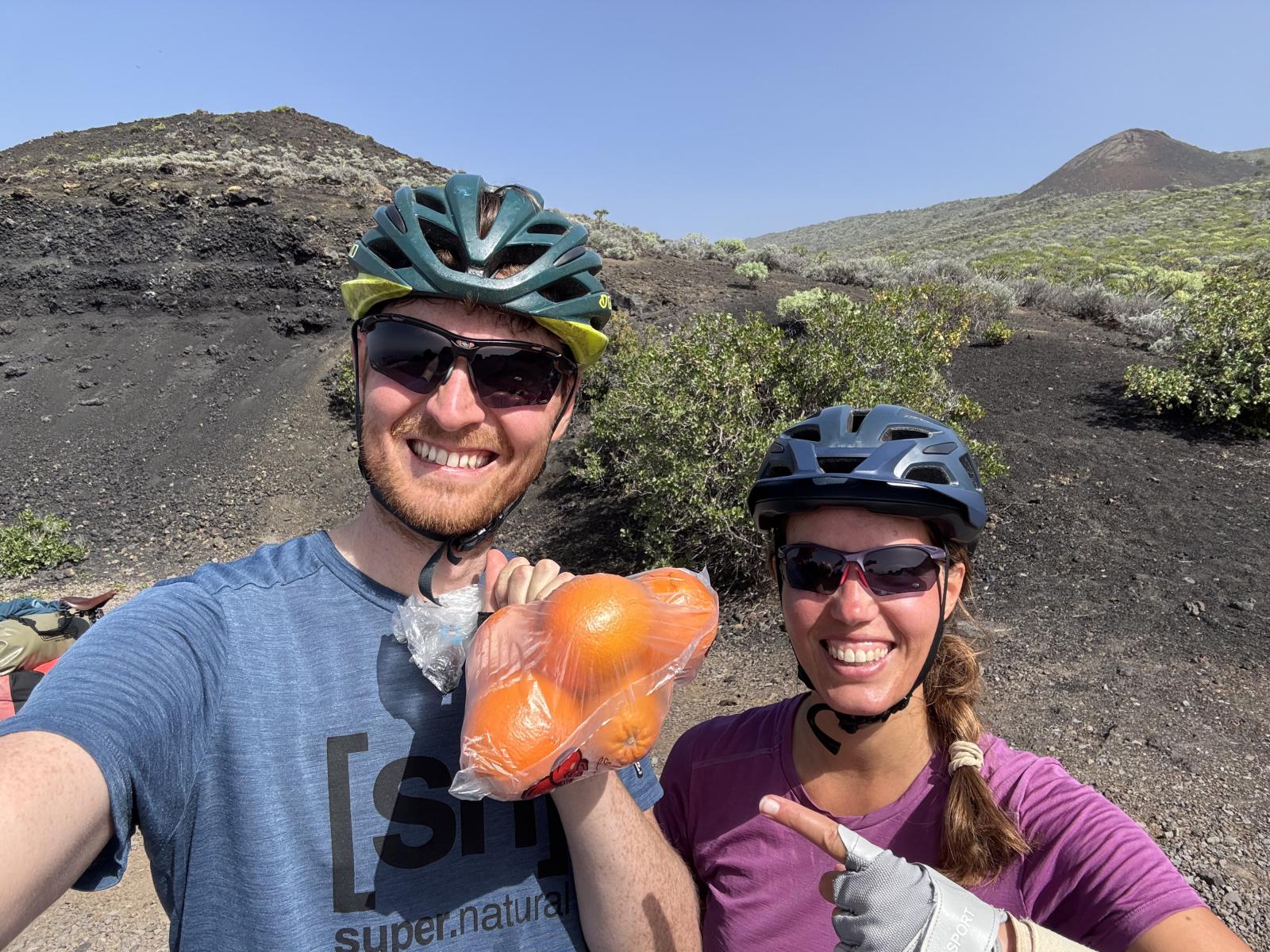
Refreshed, we tackled an extremely steep climb, sweating our absolute souls out. But then—lo and behold—for the first time on this trip, a man took pity on us. He pulled over and gifted us a whole bag of oranges, and he even let us refill our water bottles. That gave us the boost of energy and motivation we needed to reach the sanctuary just before closing time. Well, technically, we had to charm the caretaker into unlocking the restroom one last time so we could fill up our water—phew, talk about a stroke of luck!!
This sacred site is a big deal on the island; it’s the sanctuary of the patron saint of El Hierro. Legend has it that in 1546, a statue of the Virgin Mary arrived on the island's coast by ship. Shepherds took her in and initially kept the figure in a cave before a small chapel was eventually built. The statue became especially famous when a miracle was attributed to it during a severe drought: after the locals carried her in a procession across the island, it is said that rain finally fell. Since then, she has been the protector of the island—and every four years, she is carried across El Hierro during a massive festival.
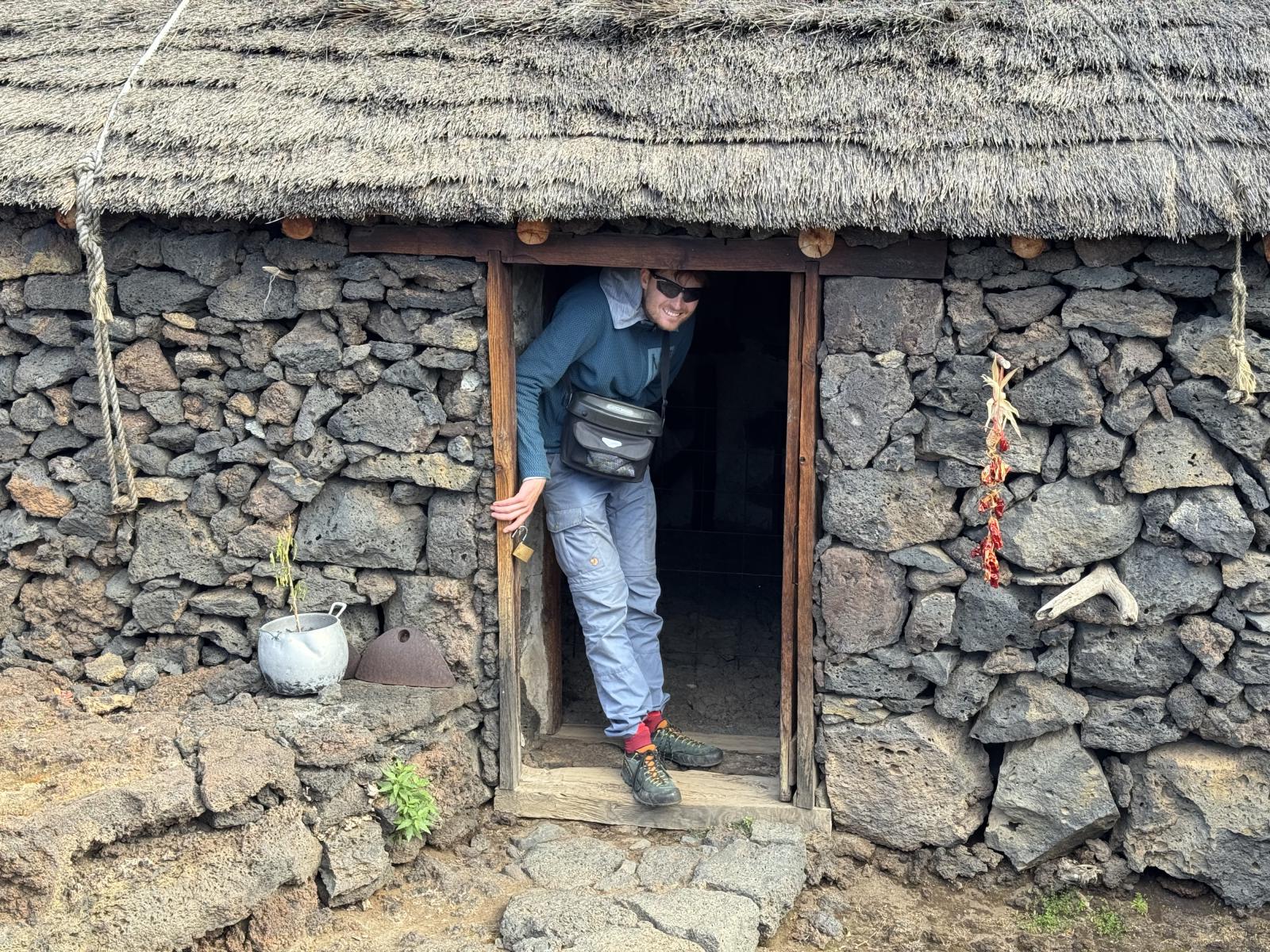
We didn’t want to miss these caves—and thank goodness we didn’t! To our huge surprise, some of the caves are open to the public today and even lined with cardboard to make them suitable for sleeping. Bingo! Before we knew it, our mattresses were nestled comfortably in the wind-sheltered cave, all set for the night.








After spending a truly peaceful night sheltered in the cave, we were a bit aimless regarding our next move. You see, there is only one official campsite on the entire island: Hoya del Morcillo. That was actually our target—we wanted to stay for two nights so Beni could potentially get a paragliding flight in while Nicole enjoyed a well-deserved rest day.
But let me tell you: we could almost write an entire blog post just about this one campsite.
It all started when we saw online that you have to reserve your spot—no problem, we thought. So we went to the website (which, of course, is only available in Spanish) and tried to book a spot and pay the fee of just over €4 per person, per night. However, we quickly realized that this system clearly wasn't designed for non-Spaniards. To finalize the reservation, you are required to verify yourself with a Spanish ID card.
After some research, we found out that tourists supposedly have to go in person to the municipal administration in the capital to apply for a camping permit. Other sources claimed there was a small info booth at the campsite itself where—if it wasn’t too busy—you could pay spontaneously on-site. Yet others insisted that wasn't possible at all.
So, we simply picked up the phone and asked the municipality directly. They actually confirmed it: the permit could only be requested in person at the administration office. For us, that made zero sense—it would have meant riding all the way back to Valverde, exactly where we had been the day after our arrival.
On the way there, we heard yet another version of the story. In the end, we told ourselves: let's just go for it, since the campsite is pretty much on our route anyway.
Once we arrived, we headed for the small info booth first. The ranger listened to our story and simply said: "You have to go to the municipality—but not Valverde, go to El Pinar." He said it was only a few kilometers away. Sure... easy enough by car.
Just as a side note: Beni had already ridden up to the town hall in Frontera earlier to check—but the doors were locked because of a public holiday.
So Beni quickly dropped off his gear and raced down nearly 200 meters of elevation to the town hall in El Pinar. He had to hurry because the administration's opening hours here are even shorter than in Switzerland—they close at 2:30 PM.
In the first building, they told him he had to go one house further. Once in the right building, he was finally allowed to take a seat and fill out the infamous form—a slip of paper that looked like it had just emerged from a 1990s fax machine.
After Beni first had to do the math for the employee to figure out how much we actually owed, and everything was finally filled out, came the next step: He was told to take this paper to a bank and deposit the amount there 🙈😂.
Luckily, Beni managed to persuade her to let him pay directly via e-banking. After he then discovered that even the account recipient on the form was written down incorrectly, it finally, finally worked out. Nach über einer Stunde hielt er endlich diesen für uns inzwischen fast goldenen Zettel in der Hand.
Also wieder alles den Berg hinauf – zurück zum Campingplatz – und endlich das Zelt aufstellen.
Kurz darauf kam auch schon der Ranger vorbei, kontrollierte unsere Reservierung und schickte mehrere andere, die den ganzen Papierkram nicht geschafft hatten, gleich wieder vom Platz.
So hat halt alles seine Vor- und Nachteile. Die Insel ist nicht wirklich für den Tourismus ausgelegt – und wenn, dann eher für den der Festlandspanier. Das macht vieles etwas komplizierter, aber auf der anderen Seite hoffen wir, dass das noch lange so bleibt und die meisten Leute davon abhält, diese noch so unberührte und ruhige Insel zu besuchen.

Our tent is set up, and we’re cooking up a quick meal to stave off hunger, because Beni wants to hike up to Dos Hermanas—the island’s highest paragliding launch site at 1,344 meters—which will take a good hour, and try to fly down to the other side, to Frontera. The hope after the flight: to be able to ride along for the over 1,000 meters of descent with a tandem pilot who’s heading back up to the launch site—and to get back to the campsite from there.
But when he lands in the late afternoon after a wonderful flight, the tandem pilot says the ride isn’t going to happen after all.
Okay, then I’ll just try hitchhiking—after all, someone said that’s easy on the island. So I hike up to the fork where the road leads only to the launch site, and wait. And wait. And wait 😬.
After more than an hour, only a handful of cars have passed me. They’ve all gestured to me that they’re not driving all the way to the top.
I’m starting to get nervous. The sun is already low in the sky, and on foot it would take me a good three to four hours to get to the campsite. My legs definitely wouldn’t appreciate that 😅. I had brought my headlamp along just in case, but more for the walk from the starting point down to the campsite.
Time is running out, and I give up. I walk further ahead, where the hiking trail leads down to the village. I plan to look for a taxi there.
Just as I’m about to turn, I hear another car approaching from behind. I turn around and see a small car: two people in the front, the back completely packed. No chance, I think—but I stick my thumb out anyway.
To my surprise, the car stops.
As is often the case, I start the conversation by asking, "English or German?"
The two guys my age reply in "Berndeutsch".
It turns out they’re two acrobatic paragliders from Switzerland who are here on vacation and now want to drive back up to the launch site to go on a sunset flight 😄.
What an incredible coincidence—they’re actually the only pilots on the island I’ve come across and seen in the air!
So the three of us squeeze into the front, and the car struggles its way up the road. We can only shift gears if we all move over a little to the side 😂.
When we reach the top, we take a pinch of snuff and exchange numbers. One of them glides down toward Frontera in the deep red of the evening sky, while I start my descent back to the campsite – where Nicole is already half starving, waiting for me to arrive. After all, I brought a few things from the shop in Frontera.
The next day we are both quite exhausted from the efforts of the past few days, so we decide to simply enjoy the day at the charming campsite – which, by the way, we almost have entirely to ourselves.
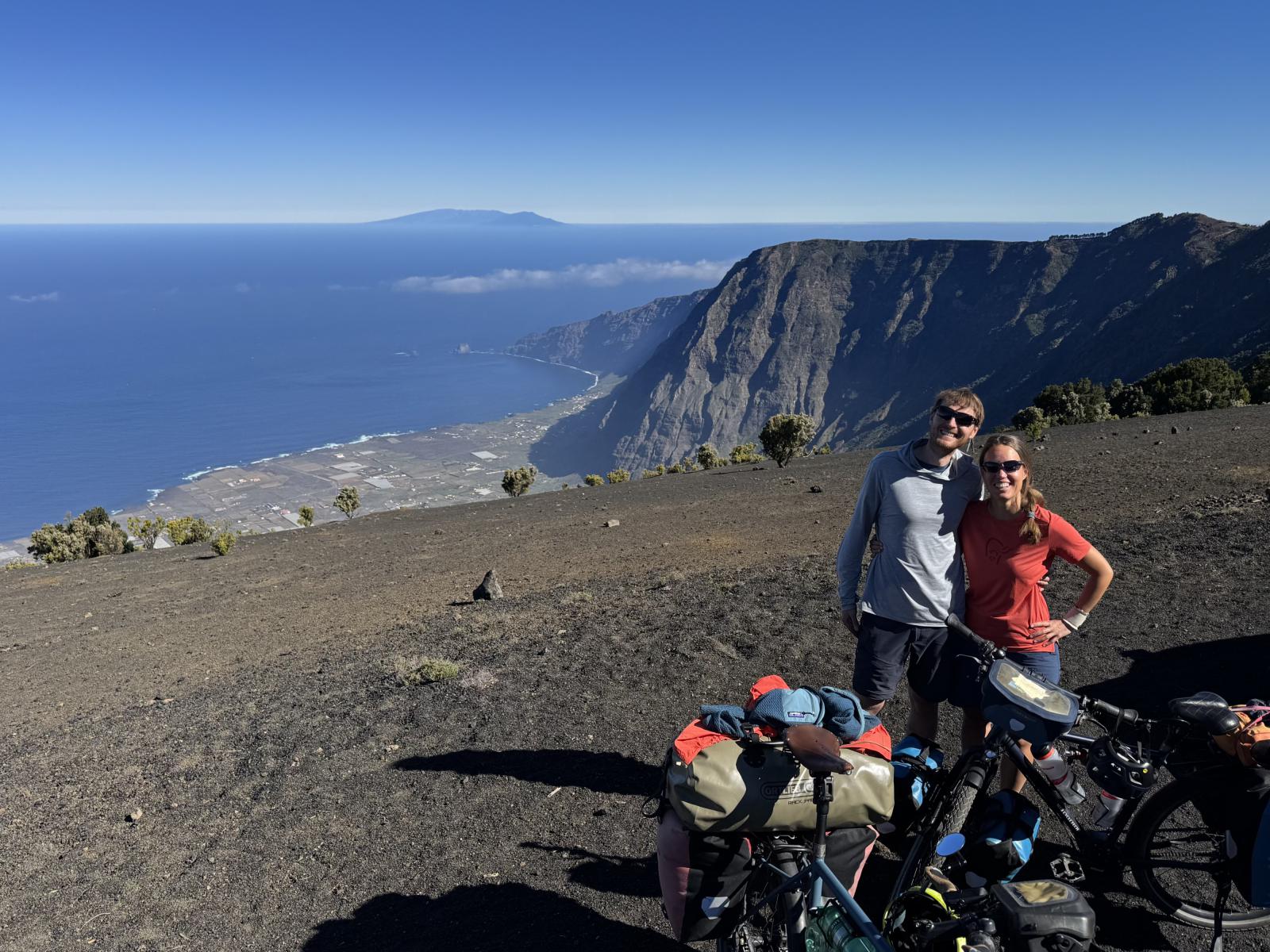
The incredible peace and quiet here feels really good. The following morning we take our last day on El Hierro very slowly and relaxed. Beni was so fascinated by the view at the take-off site that we are happy to make a small detour just to pass by it once more.
When we reach the top, we unexpectedly run into the two Swiss guys again who saved my ass yesterday.
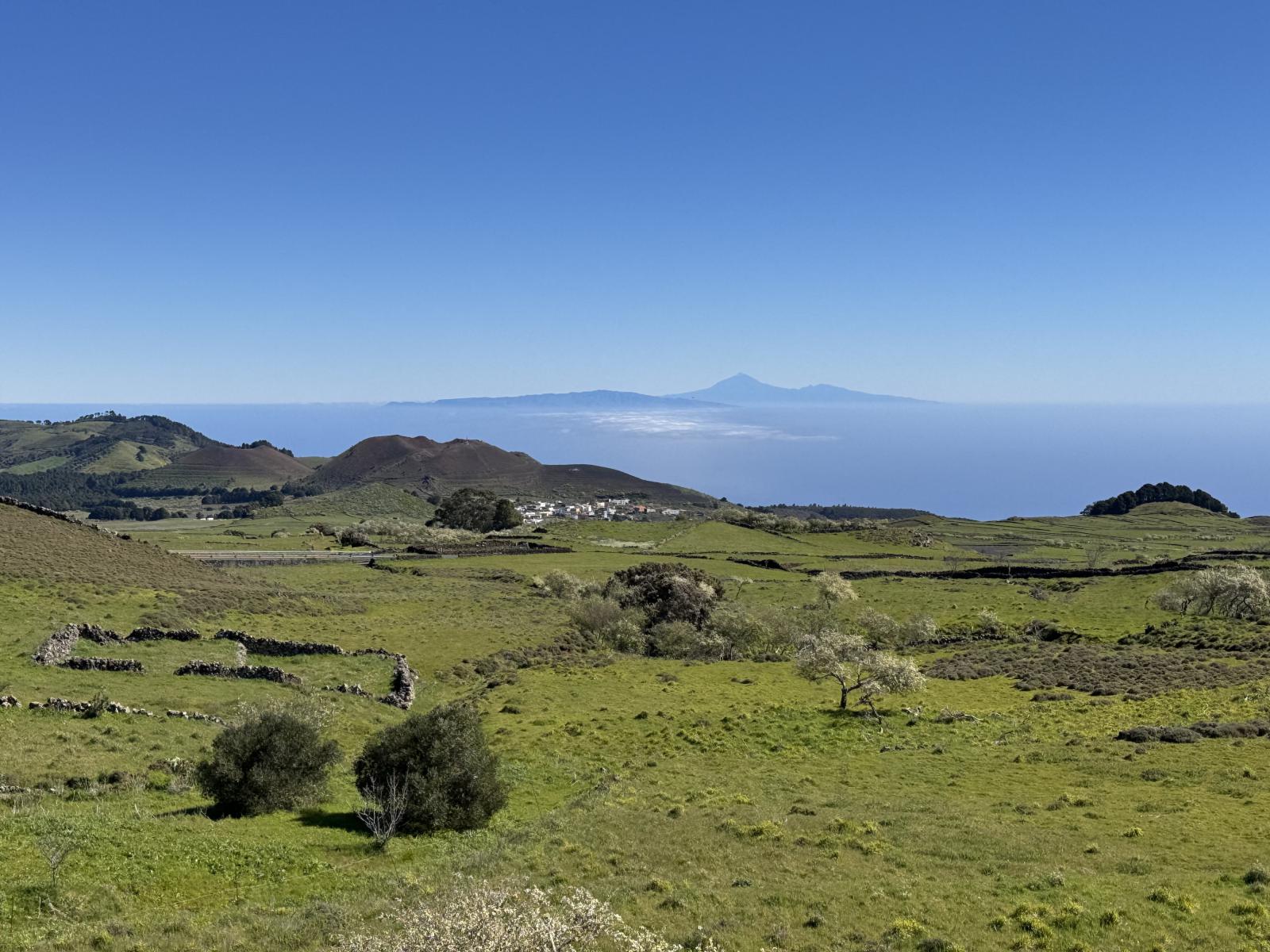
Then the dreamy descent through the lush green east of the island begins. We roll through the landscape almost in a daze, once again amazed – as so often – that we actually cycled up all of this on the other side. In some places the descents are so steep that we have to take short breaks to let our smoking brakes cool down.
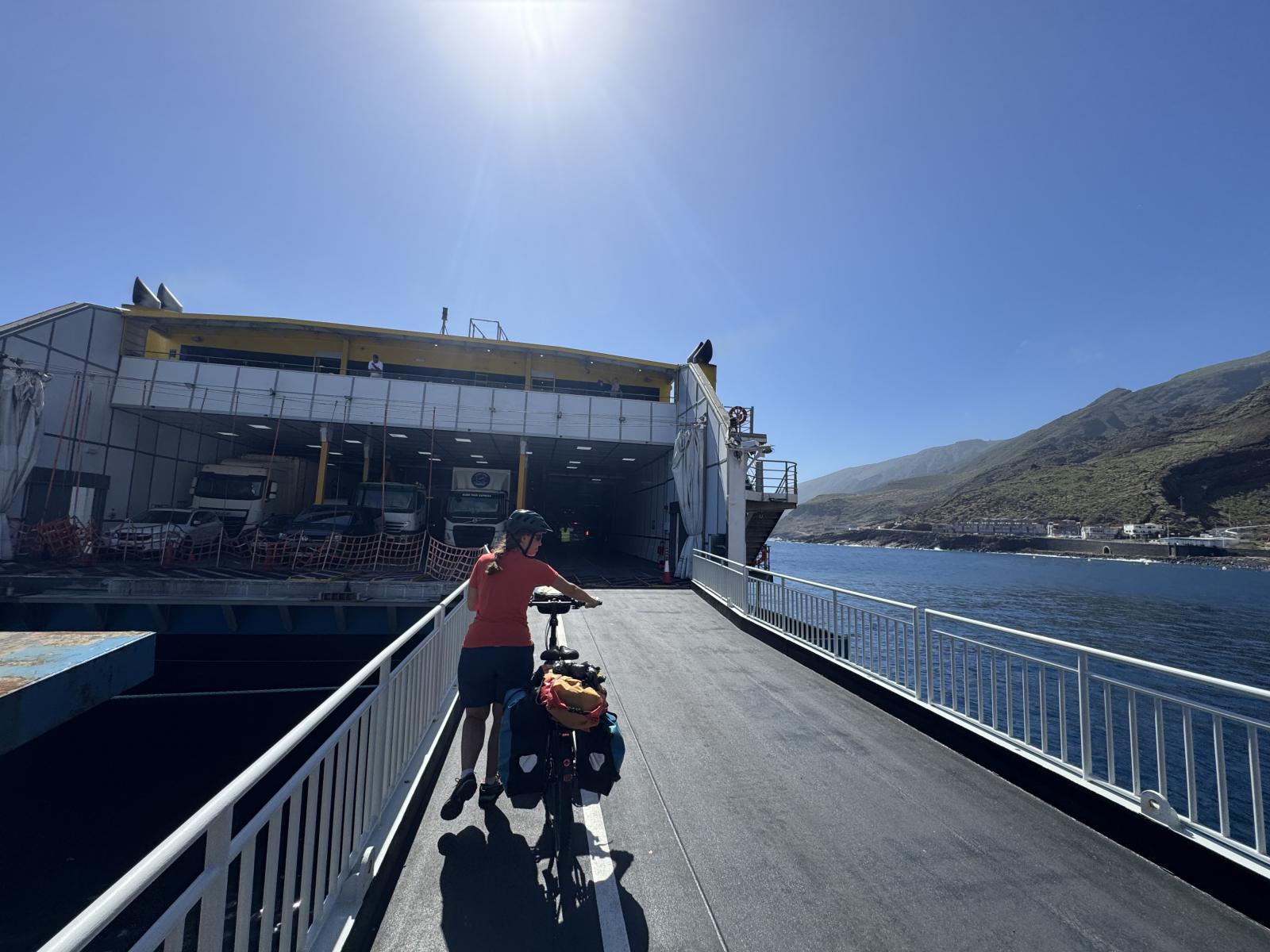
And so we finally roll into the harbour – the very place where everything began a week ago – and board the ferry.
A week on El Hierro lies behind us, full of coincidences, steep roads and incredible tranquillity. Let’s see what awaits us on Tenerife.






For even more insight into our everyday cycling life, check out our latest video:
Comments
Benjamin
Auf solchen Touren lernt man die alltäglichen Selbstverständlichkeiten, wie bspw. Wasser wieder zu schätzen 😊 Und ich dachte schon ich hätte in Italien den kompliziertesten Campingplatz gehabt. Dort musste ich rund 2.5 km zu einer CAI Hütte laufen, wo dann diverse Formulare (Quittungen?) ausgefüllt wurden. Ich bin mir bis heute nicht ganz sicher ob ich da nicht möglicherweise den Kaufvertrag für einen wunderschönen und abgelegenene Campingplatz in den italienischen Bergen unterschrieben habe😅 Bin gespannt auf den nächsten Bericht und die schönen Fotos. Macheds guet, liebe Grüsse Benjamin
16.03.2026 15:35
Nicole & Beni
😅 dann musst du das unbedingt ausfindig machen 🤗. Machs au ganz guet 🍀 und liebi Grüess
17.03.2026 11:12
Andreas & Barbara
Danke wieder für die Einblicke in euer Veloleben! So ein Glück, dass Dich Beni die zwei Berner gerettet haben. Das hätte noch dumm werden können! Interessant sind die beiden ausgelaugten Ziegenschädel (?) die ihr wohl irgendwo gefunden habt. Liebe Grüße aus Meran, wo wir nun ein paar Frühlingstage verbringen. Andreas & Barbara
16.03.2026 19:20
Nicole & Beni
Lieber Andreas, liebe Barbara Ja, das hat mir hohe Taxikosten erspart und eine tolle Bekanntschaft beschehrt. Die Schädel haben wir am Strassenrand gefunden. Wir wünschen euch eine erholsame und schöne Zeit in Meran und schicken euch liebe Grüsse
17.03.2026 11:12
Markus
Hallo Ihr Beiden, Nicole und Beni! Heute will ich mich zusammenreissen, um nicht auszuufern. Ich sollte einmal Stephanie einen solch komfortabel ausgebauten Schlafplatz mit Wellpappe in einer Grotte anbieten...die Scheidungspapiere lägen parat. Und das war ja noch einer der besseren, die uns so insgesamt angeboten wurden. Ich sage nur: sowas muss man können, das lernt man nicht; aber tolle Eigenschaft! Wirklich. Aber dafür der Wald-Camping-Platz von erlesener Schönheit. Überhaupt, wenn es Büsche und Bäume hat, könnte man mich hinterm Ofen vorlocken. So da, wo's zur Fähre runter ging und das Gelände üppig im saftigen Grün stand. Gut Beni hasst Du Dich für Deinen Schirm entschieden, immer für einen Rundflug zu haben. Eigentlich, fällt mir gerade so ein, müsstet Ihr solche Schirme oder Segel für die Fahrräder haben, die Euch mit dem Morgen-Passat die Berge hochgleiten lassen - eine Art Kite-Surfing am Steilhang. Also, wer verbotene Tunnels befährt mit 💩"Kack in der Hose"💩 und schlechtem Gewissen und Angst vor der Polizei hinterm Auto...der würde sich nicht scheuen. Ihr habt ja noch drei spannende Inseln vor Euch, für neue Ideen zu testen. So ich wünsche Euch eine gute Überfahrt, reichlich neue Abenteuer, wohlwollende Helfer in misslichen Lebenslagen und dass Euer gesamtes Material durchhält. Hören Euch bald?!? Gruss Markus und Stephanie.🙂🙋🏻♂️🙋🏼♀️😘
17.03.2026 16:12
Nicole & Beni
Lieber Markus, liebe Stephanie Wir mussten erneut sehr lachen ab deinem Kommentar 😄. Für uns war der Schlafplatz in der Höhle ein Segen 😄. So unterschiedlich können Bedürfnisse sein. Ja, an dem mit dem Segel haben wir schon oft herumstudiert, leider ist die Umsetzung wegen des Windes und des Verkehrs zu gefährlich. Vielleicht klappt das ja mal in Australien 🇦🇺😉. Im Moment zeigt unser Material erste Spuren des scharfen Vulkansandes und auch Beni’s Mätteli ist noch immer unser Sorgenkind. Vielen Dank für die lustigen Worte Nicole & Beni
20.03.2026 10:07
Silvan Peterhans
Liebe Nicole, lieber Beni, herzlichen Dank für eure immer tollen und witzig geschriebenen Berichte und die schönen Fotos dazu. Ich lese imner sehr gerne, was euch so auf eurer Reise passiert und was ihr erleben könnt. Ich wünsche euch ein gutes Händchen, Gesundheit, eine unfallfreie Fahrt und viele, viele unvergessliche Erlebnisse. Herzlich grüßt euch Silvan
26.03.2026 21:26
Nicole & Beni
Hey Silvan Vielen Dank für die Wünsche und schön, dass du ein treuer Blog-Leser bist :-)! Liebi Grüess
29.03.2026 09:09