Map of the island:

Route to the blog:

About the island
Tenerife is the largest of the Canary Islands and, compared to El Hierro, almost feels like a small world of its own. While El Hierro, with a population of around 11,000, has remained very quiet and unspoiled, over 900,000 people live on Tenerife. The difference in size is also striking: Tenerife is about ten times larger than El Hierro.
The contrast is even more striking when it comes to tourism: Tenerife attracts several million visitors each year (around 5–6 million), while only a fraction of that number ever makes their way to El Hierro.
Quick update:
We’re a little behind on the blog. Due to Storm Theresa in the Canary Islands, we returned to the mainland (Spain, Cádiz) about a week earlier than planned, three days ago.
By the way, you’ll find a map on the homepage that shows our current location in real time.
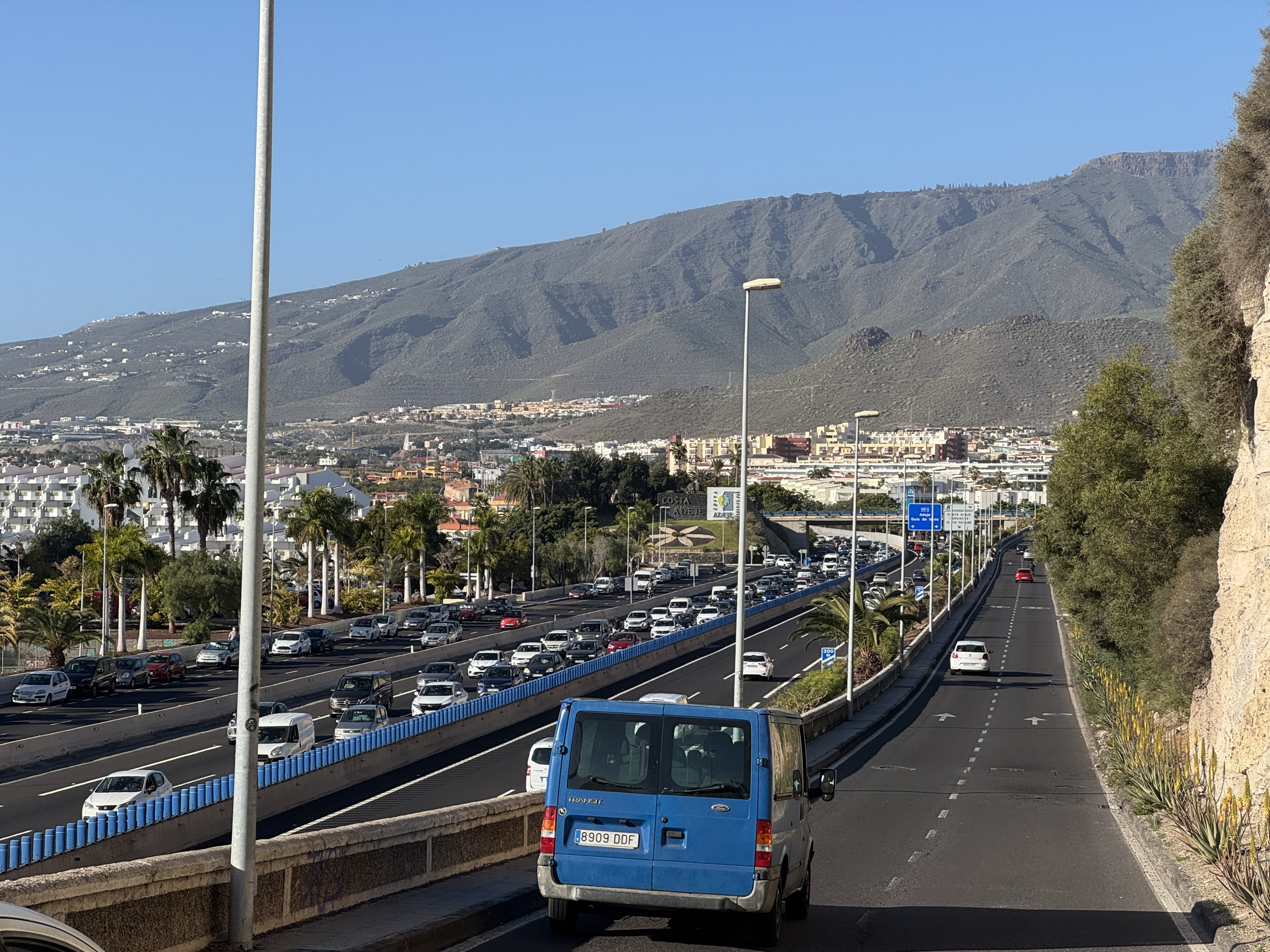
While we only saw a few cars an hour on El Hierro, here in Los Cristianos on Tenerife we have to be careful not to accidentally end up on the three-lane highway. Amid the hectic traffic—where there are not only regular traffic jams but also tourists zipping around on e-scooters and senior mobility scooters from all directions—we first have to get our bearings again. We quickly realize, however, that a tourist island isn’t all bad. The menu has suddenly expanded from the typical 10 Spanish dishes—like papas fritas and papas arrugadas with meat—to include Indian, Chinese, or whatever your heart desires. Booking campsites no longer takes days either; it can be handled quite easily with an online form.
For once, we already have a very specific plan for this island right from the start: We’ll drive about 10 km northwest, away from the hustle and bustle toward Adeje. Beni has been there before for a few days with a group to go paragliding—and that’s exactly what he’s doing again this time.
So we settle into accommodations for five days in a relatively quiet town. For once, we’re traveling separately and only see each other briefly at breakfast and in the evening.
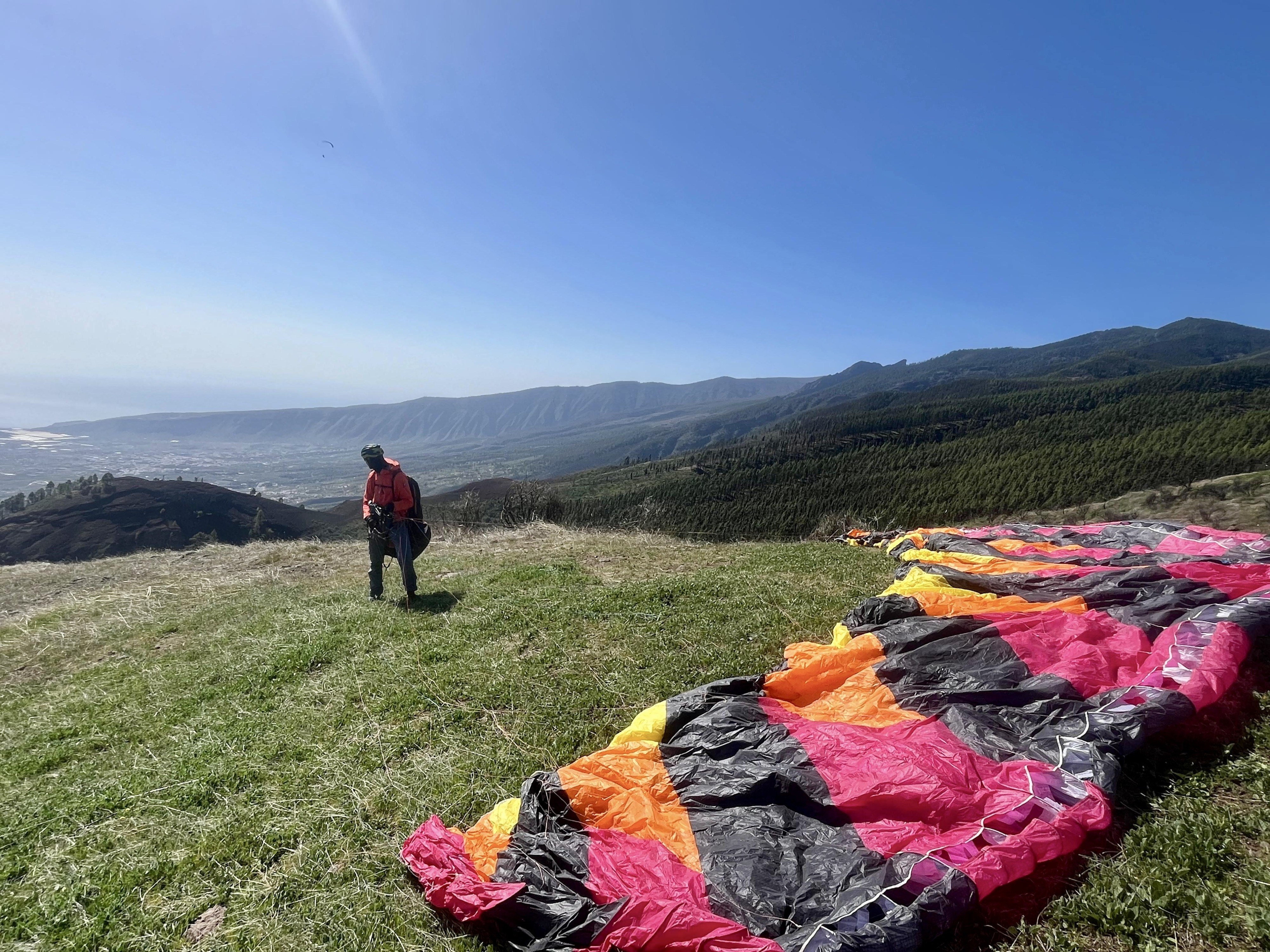
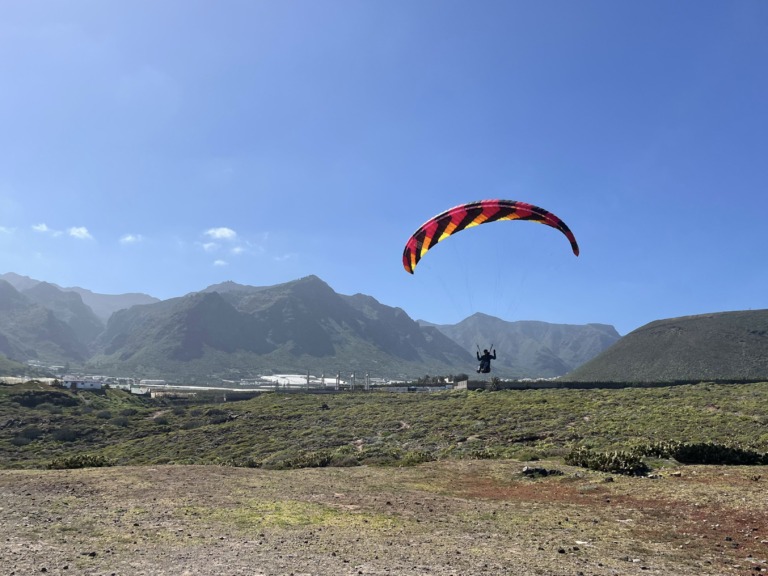
Beni enjoys four varied days of flying. The only downside was the poor visibility caused by Saharan dust, which also blocked some of the thermals. He’s flying with Para42, a company that has been offering daily (partially instructed) flights from November to March for many years. This means: You’re taken to a flying area that’s expected to offer good conditions that day and receive a short briefing. However, you make all decisions yourself, as this isn’t a flight school.
It’s especially convenient that after a water landing, you can simply send your location to the driver and get picked up again. Usually, there’s a longer flight around noon and a leisurely sunset flight in the evening with a landing on the beach.

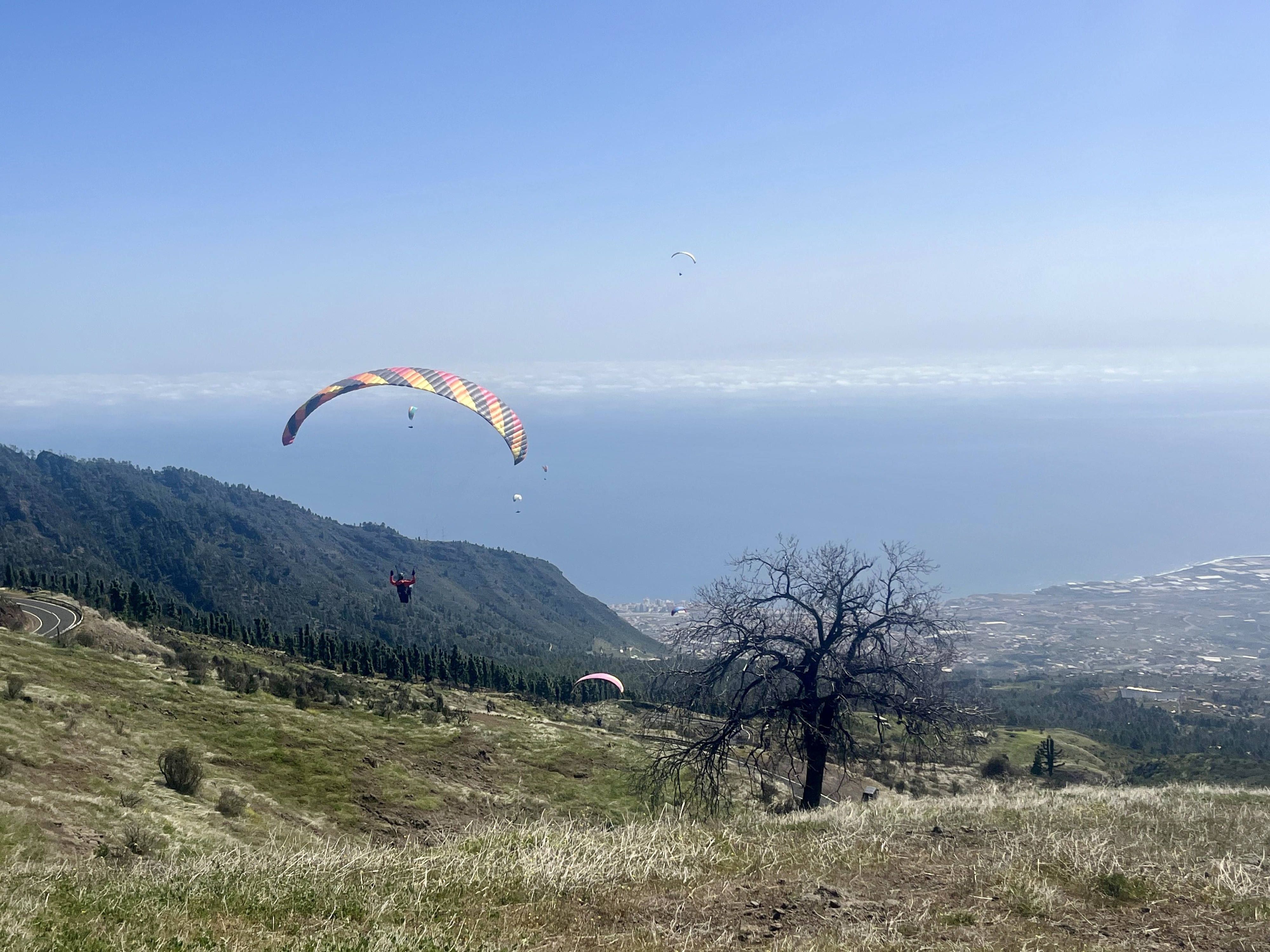

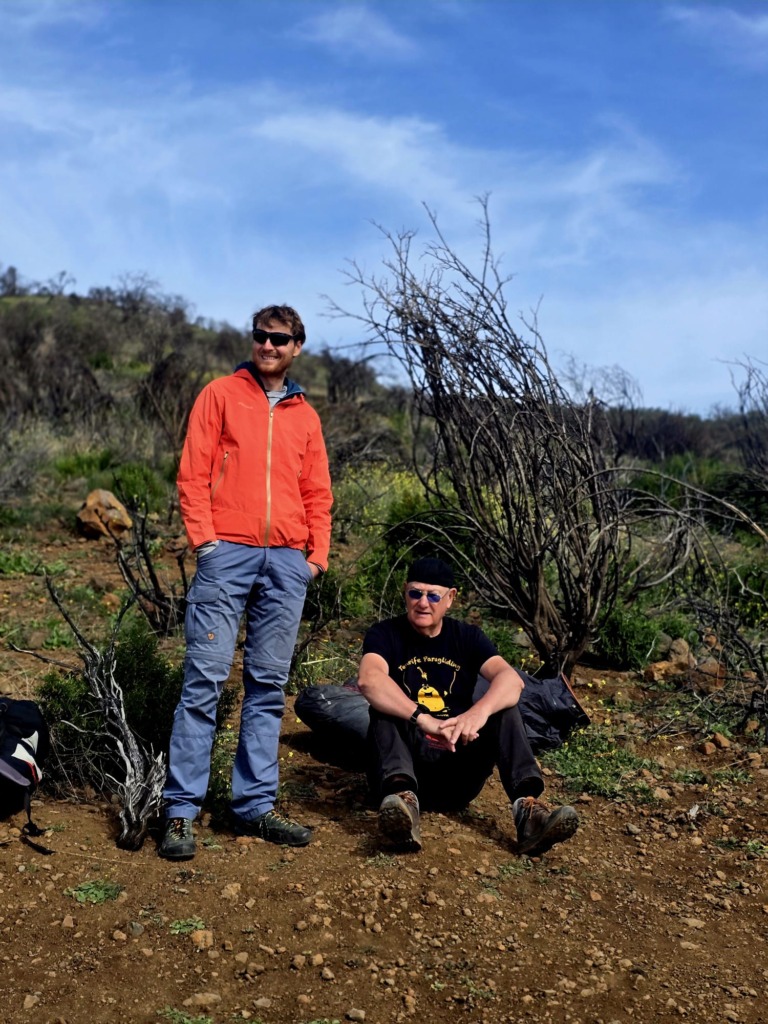
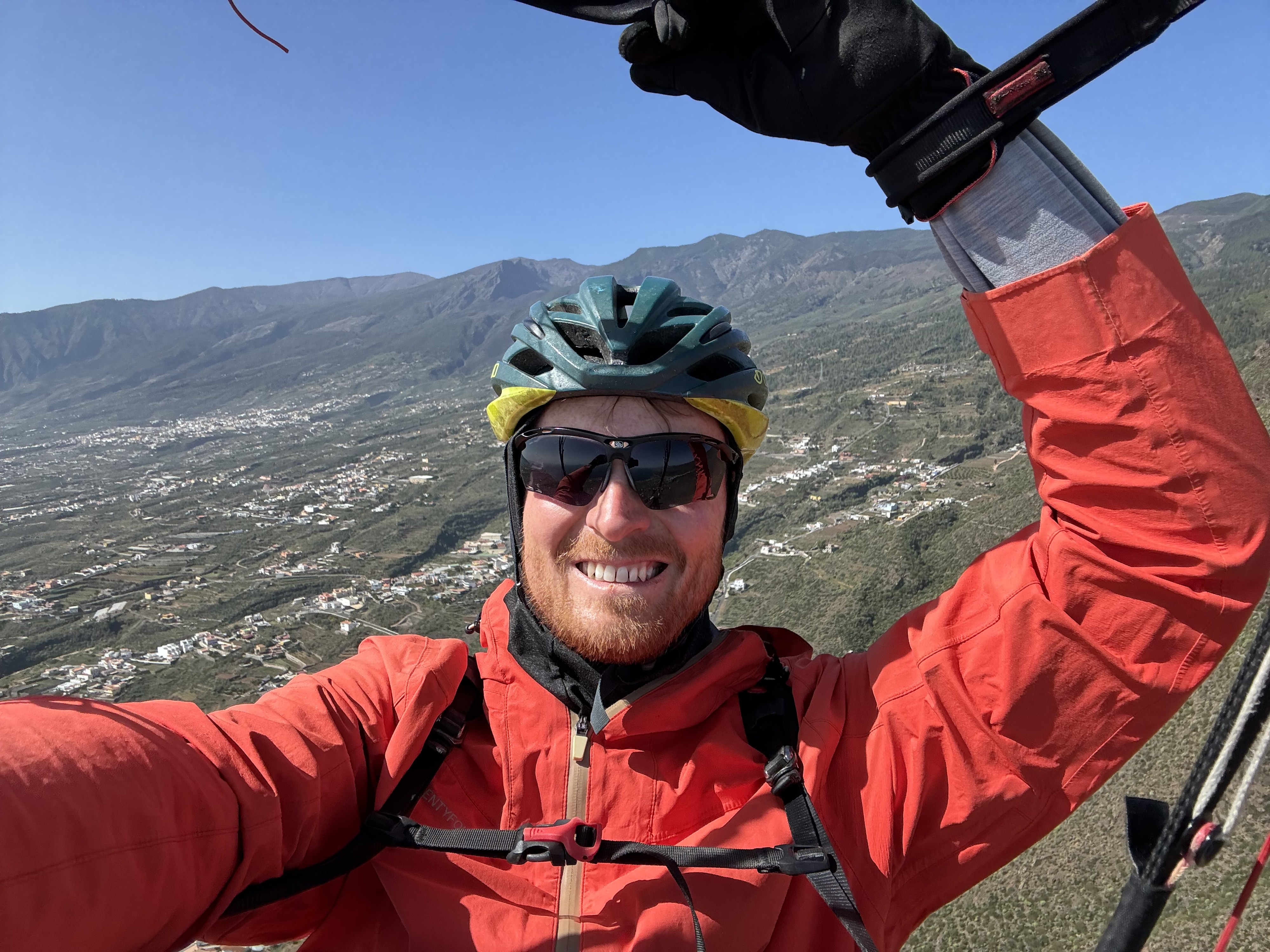
After these relaxing days for Nicole and eventful ones for Beni, they plan to continue by bike—heading up the BC-1 Ruta Forestal del Norte mountain bike trail, which winds through parts of Teide National Park. However, planning the route proves more complicated than expected: it seems that about half of the trail is closed due to landslides or other issues.
Anyone who has ever gone hiking in the Canary Islands may be familiar with this phenomenon: an extremely large number of trails are closed—often simply because no one wants to take responsibility if something happens. The trail itself would actually be perfectly passable. It’s a bit like closing all the more exposed hiking trails in Switzerland. Sure, there might be fewer accidents (for example, people climbing to a summit in flip-flops for a selfie), but freedom is severely restricted—and you never really know how serious a closure actually is.
If you drive nearby and ask, even rangers often say it’s no problem—and locals, too, routinely ignore many restrictions. Still, you shouldn’t underestimate the situation: common sense is key. It’s best to proceed cautiously, gain experience, and talk to the locals.
With three days’ worth of provisions in our bags, we decide that the first section should definitely be doable—and we’ll see how things go once we get there.
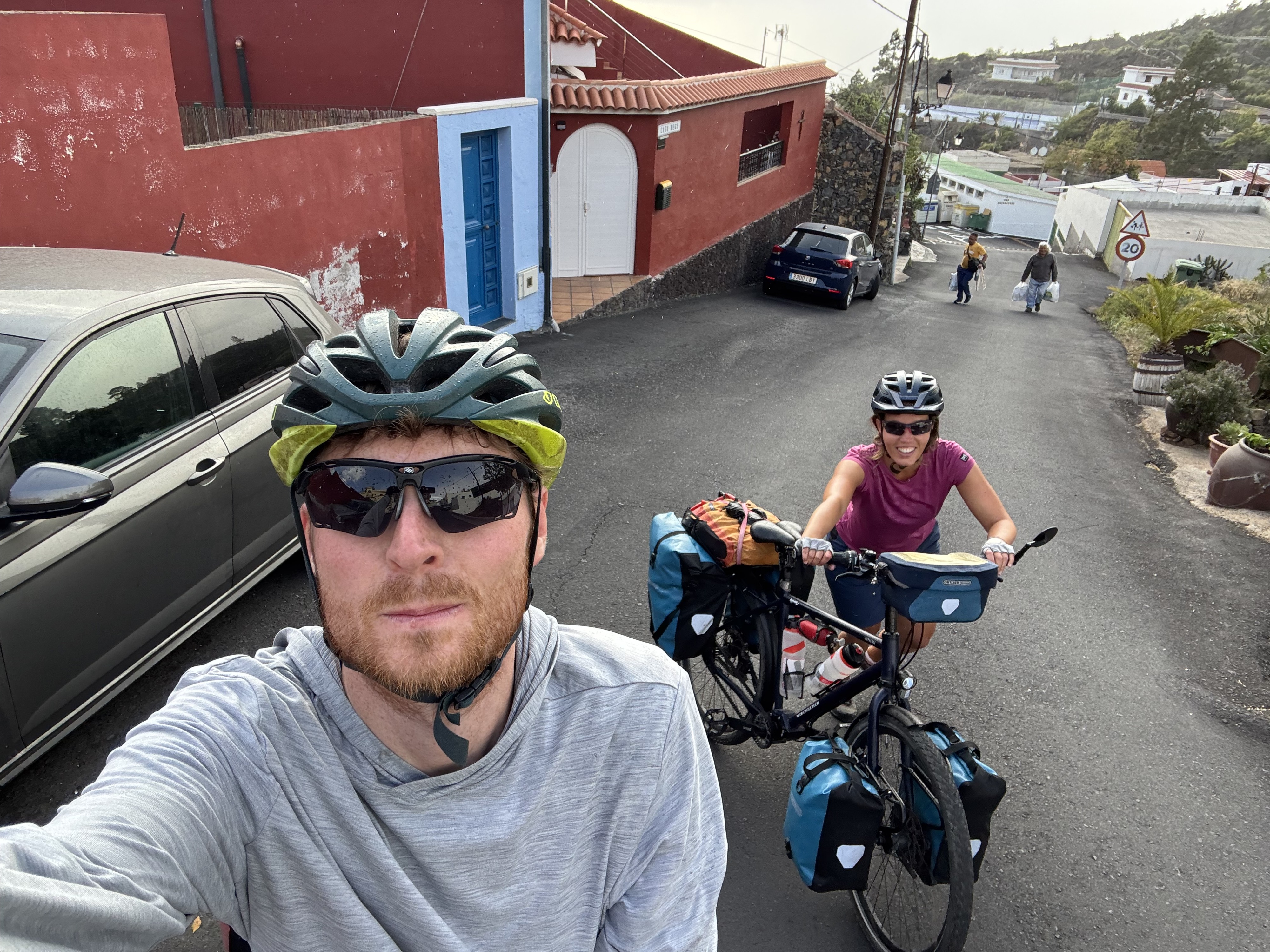
So we tackle the elevation gain, since the trail starts at 1,620 meters above sea level. To make matters worse, there’s a strong wind and occasional rain. The wind is blowing so hard from the side that we have to push our bikes at times. The weather in the Canary Islands has been acting up lately anyway: there hasn’t been this much rain or such strong winds in over ten years.
The positive effects, however, are clearly visible—even on satellite images: everything is greener and blooming much more than usual.
Here is an example comparing 2025 and 2026 on Fuerteventura:

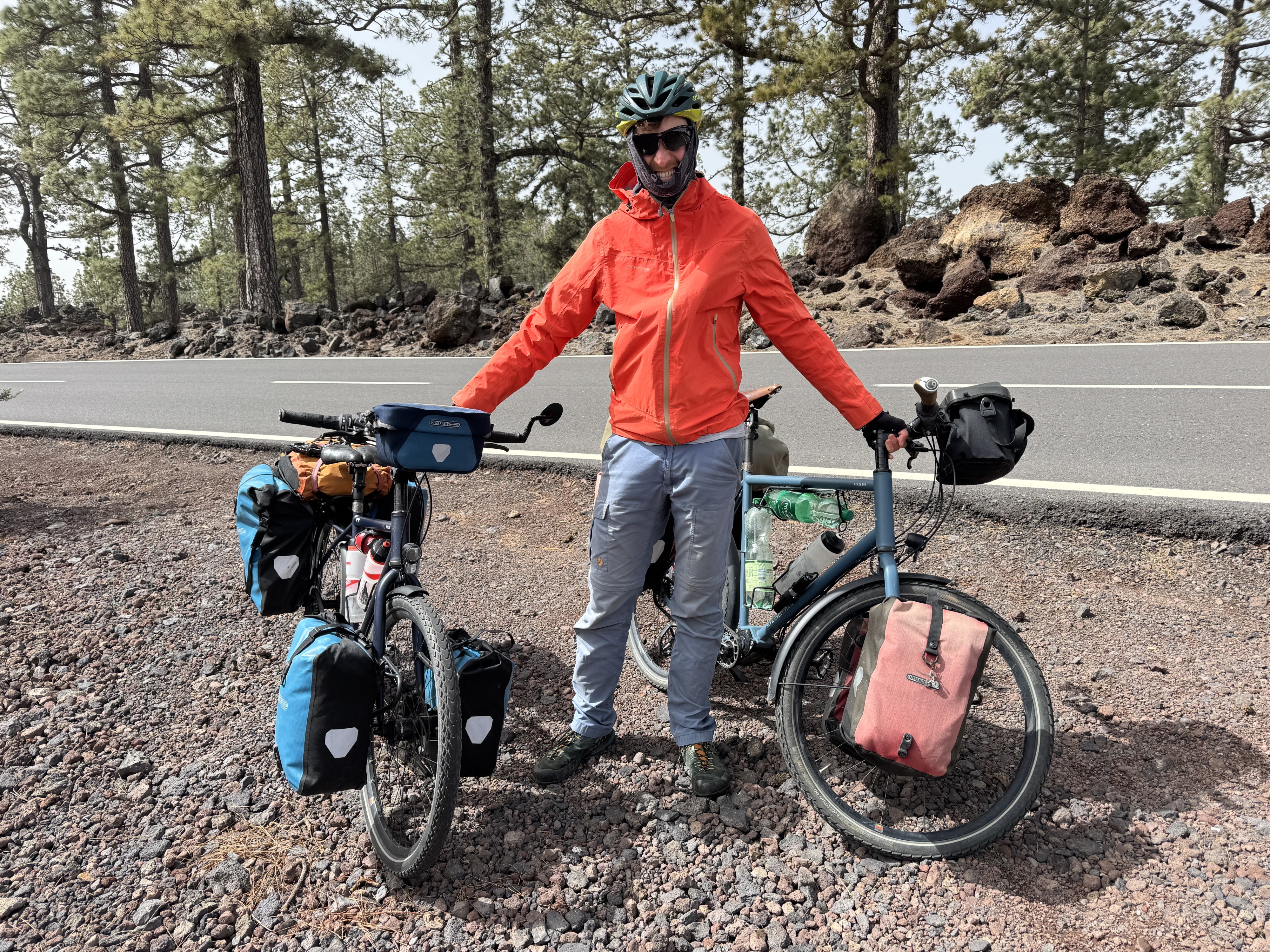
When we finally arrive at the trail’s actual starting point and enter the nature reserve, we can breathe a sigh of relief: at last, we’re sheltered from the wind. We enjoy the solitude and the ethereal scents of the conifers.
The path leads gently downhill until we reach one of the many free campsites (El Lagar). We are completely alone there, and the site even offers restroom facilities with a cold shower, toilet, and trash cans.




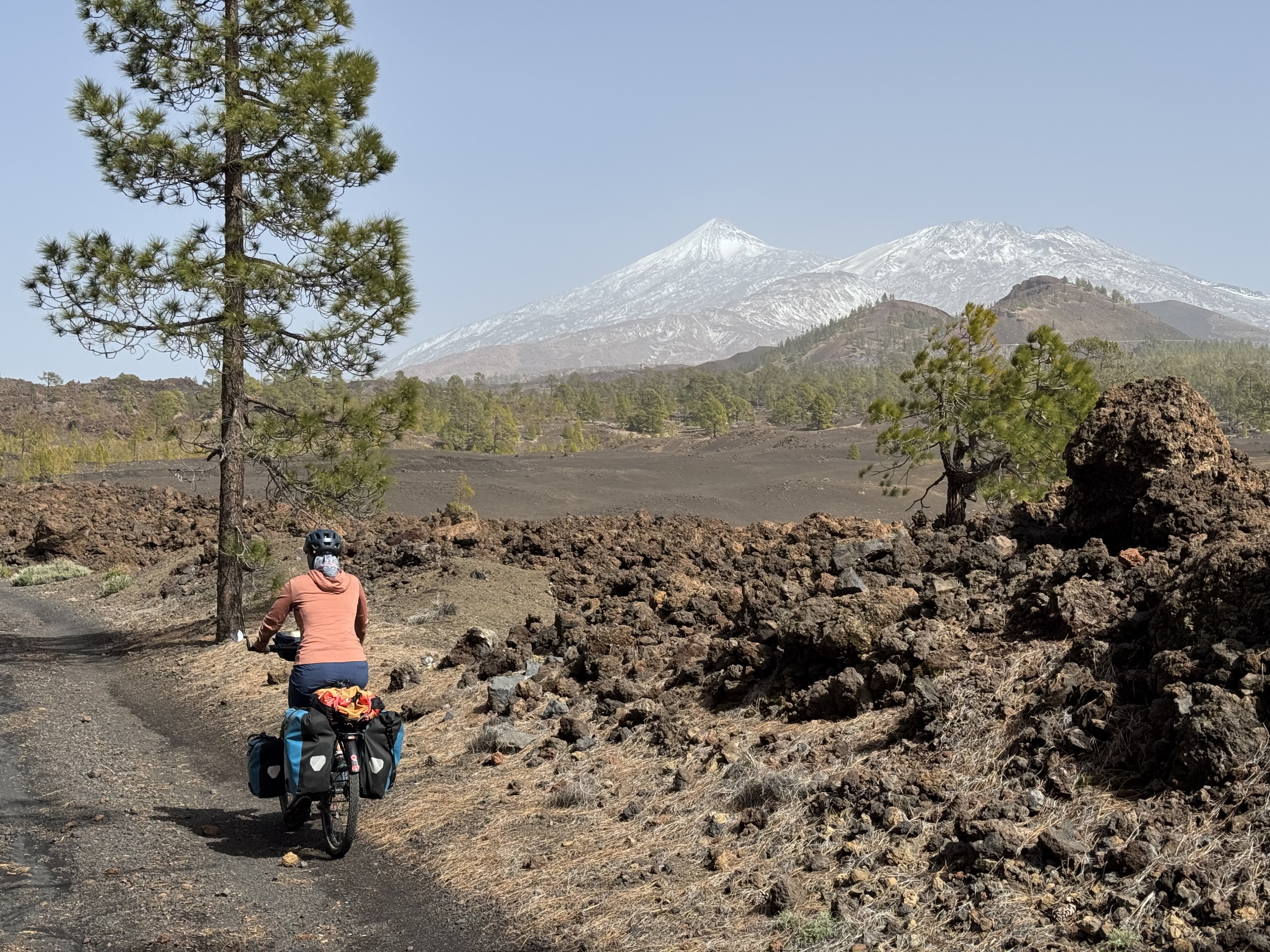

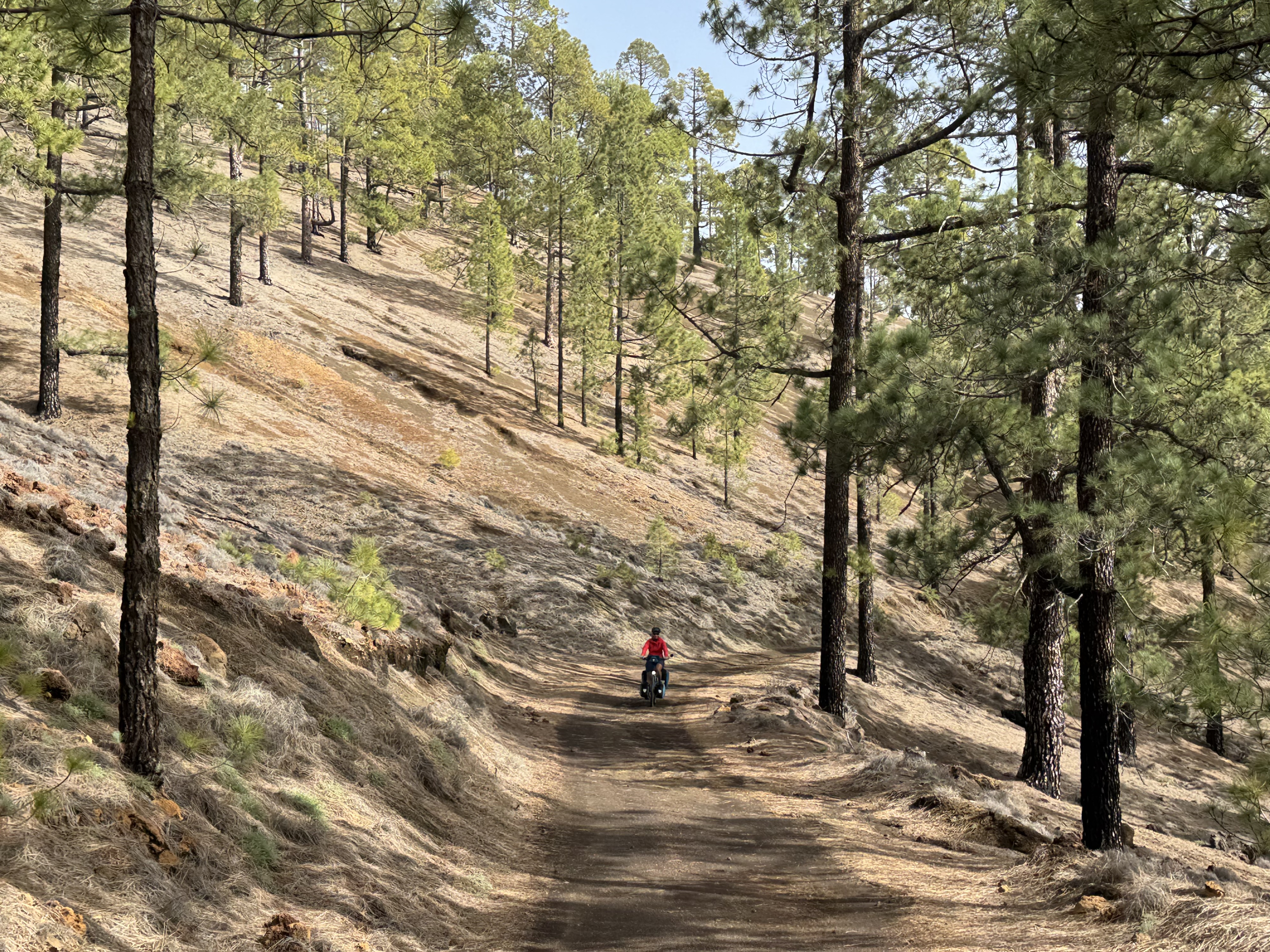


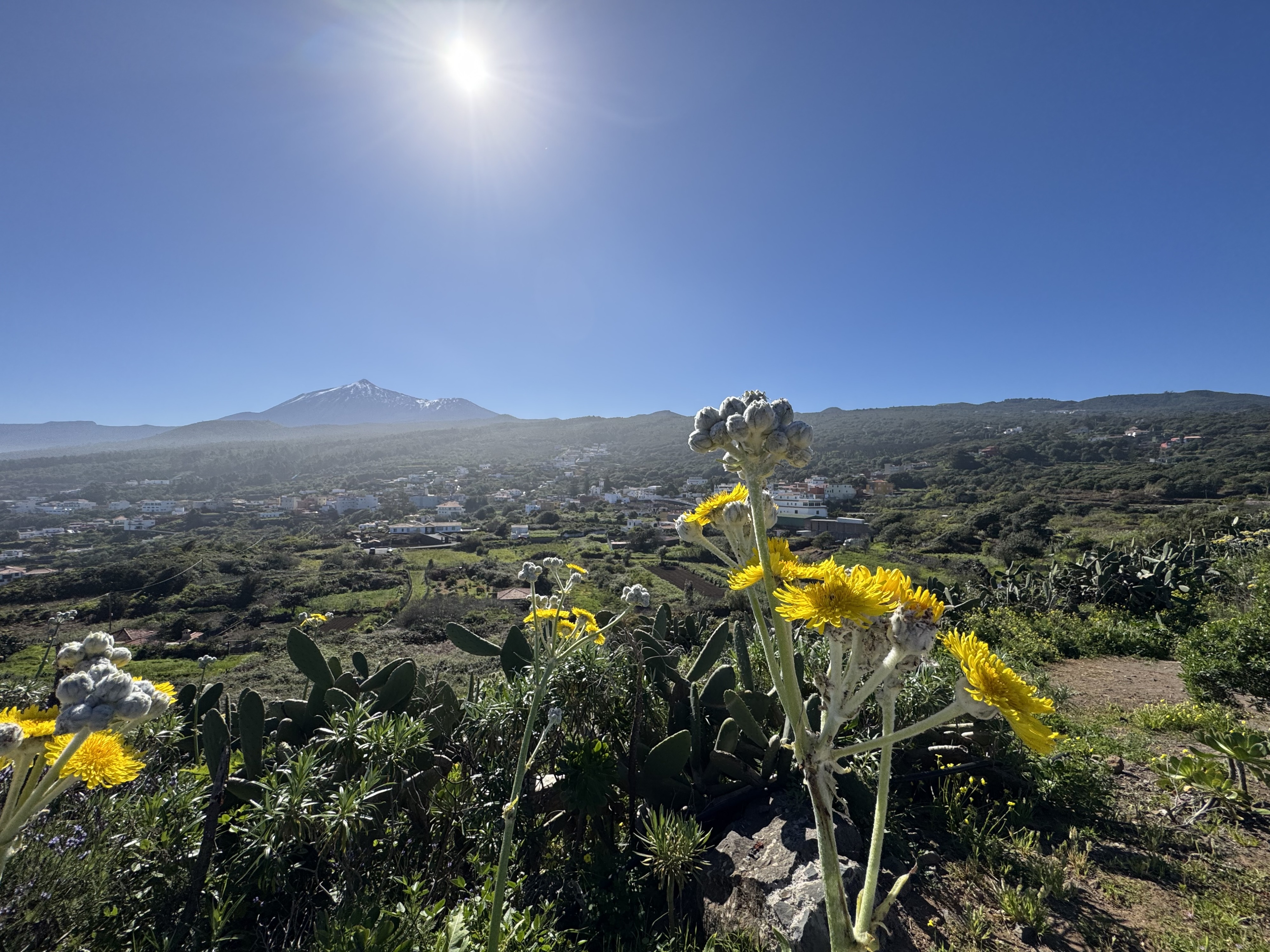
The view of the snow-capped, 3,715-meter-high summit of Mount Teide, which keeps coming into view, is also magnificent.
However, the stormy weather worsens again, forcing us—soaked and freezing—to begin our descent to the northeast of the island earlier than planned, having covered only three-quarters of the route. We had actually intended to spend the night at another free campsite, but for some inexplicable reason, this one is also closed.
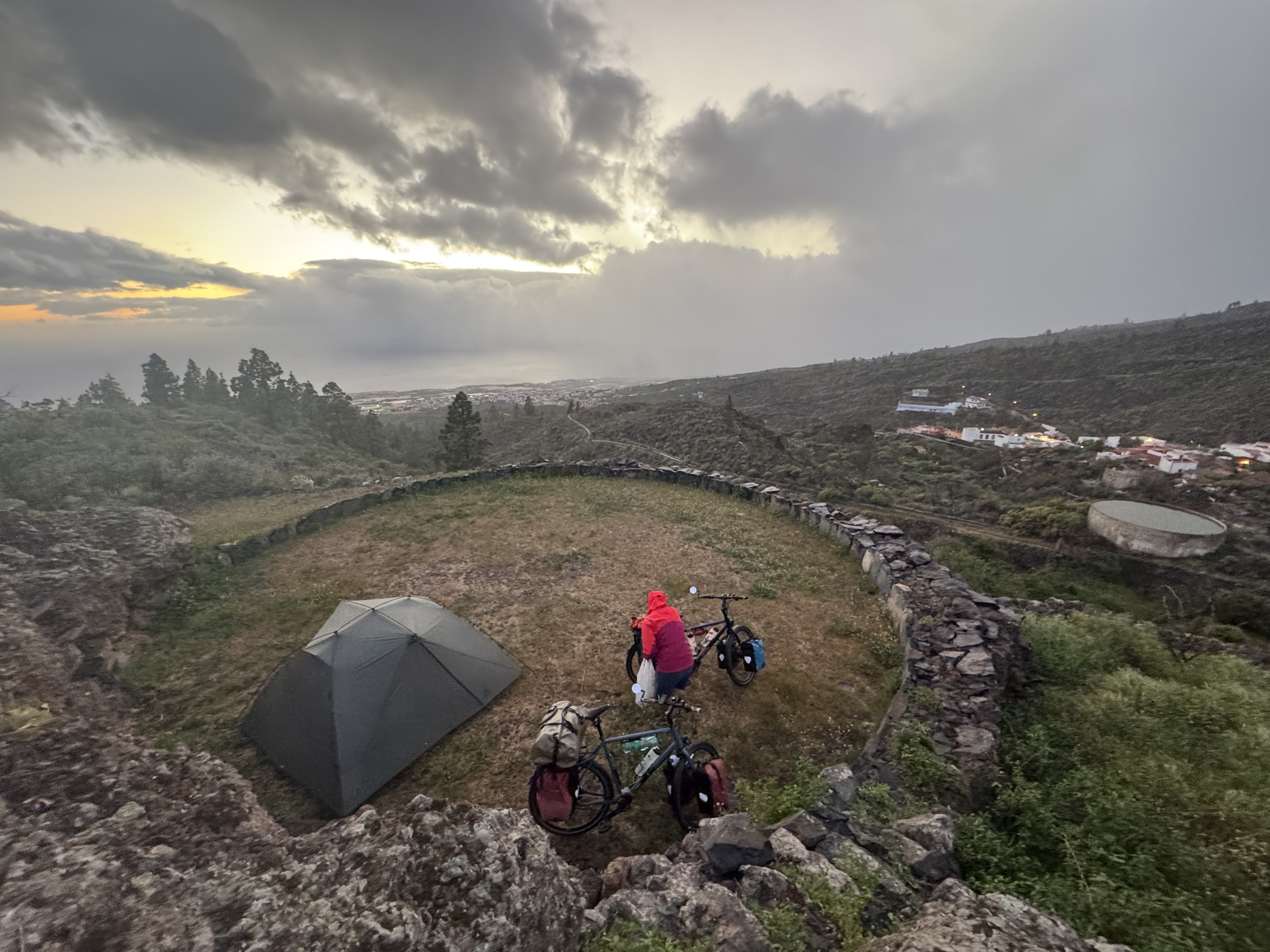
So the descent begins in a light drizzle, and we grow increasingly nervous: apart from the national park, the island is densely populated far up into the mountains. Today, we’re having a particularly hard time finding a suitable spot for wild camping. Finally, we do find a spot—deep inside a barranco (gorge), well hidden, we find our peace.
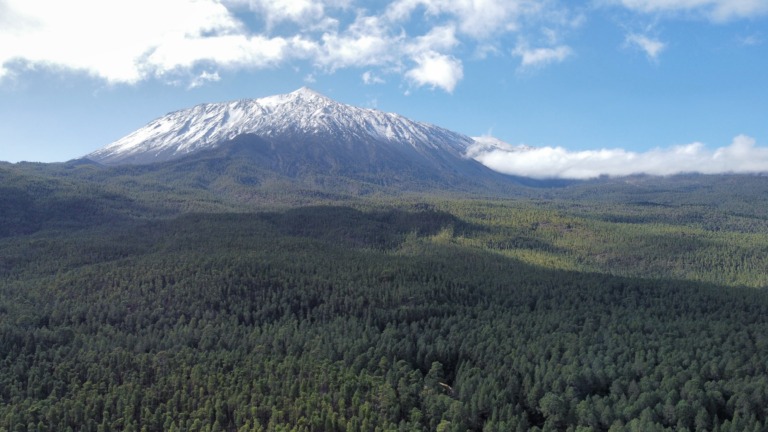
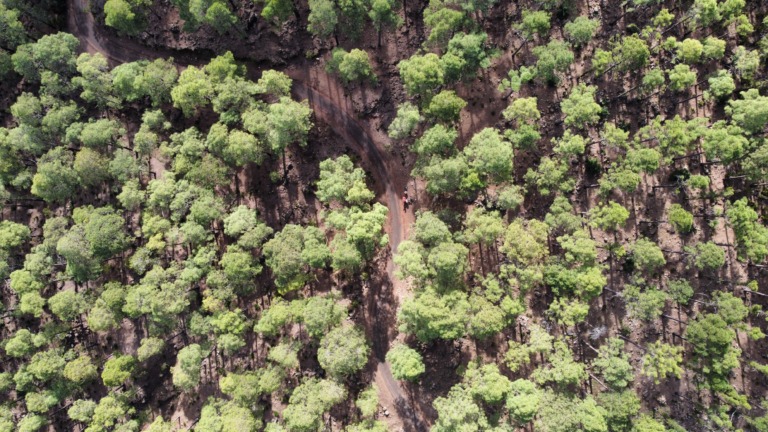

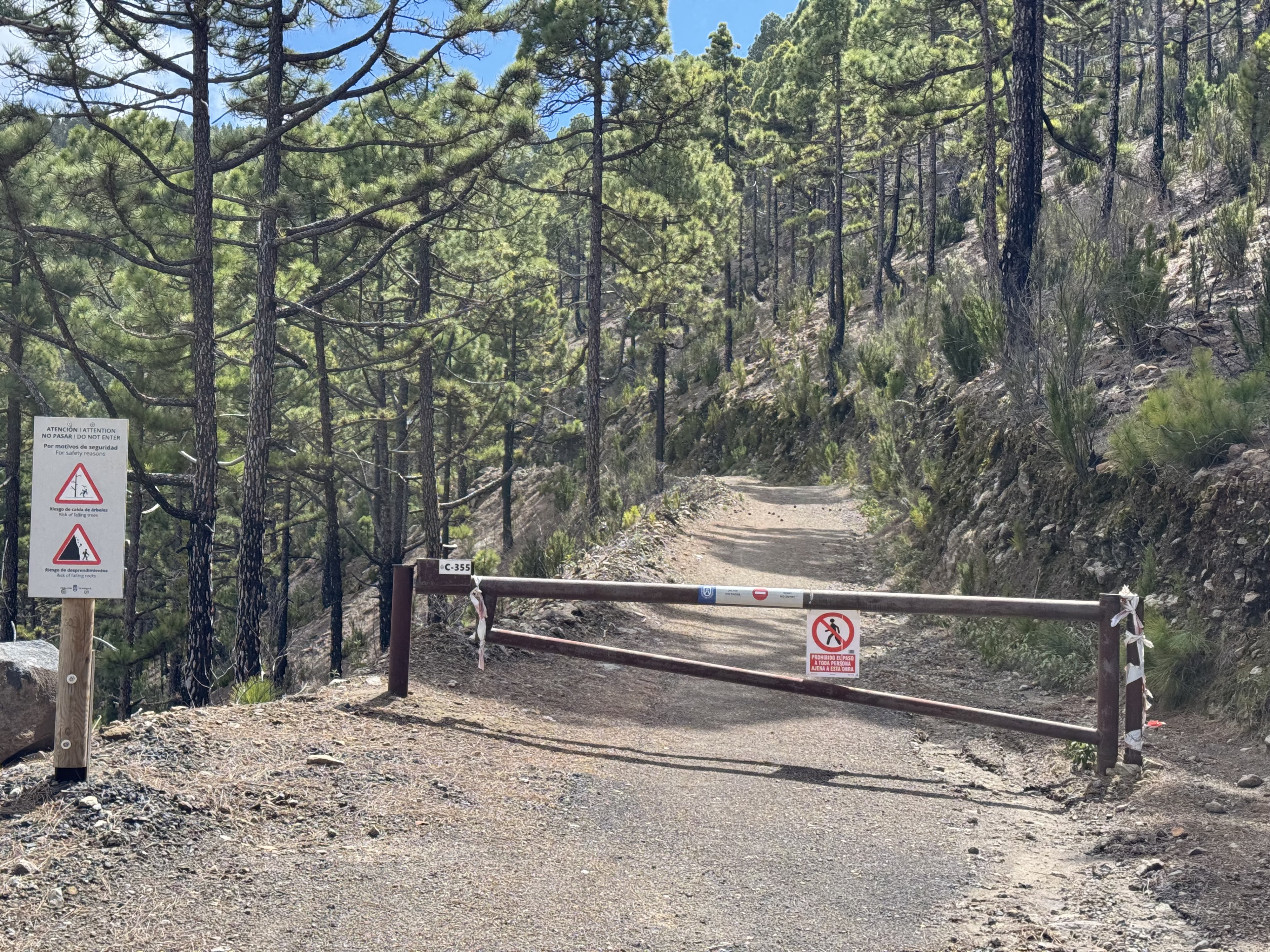

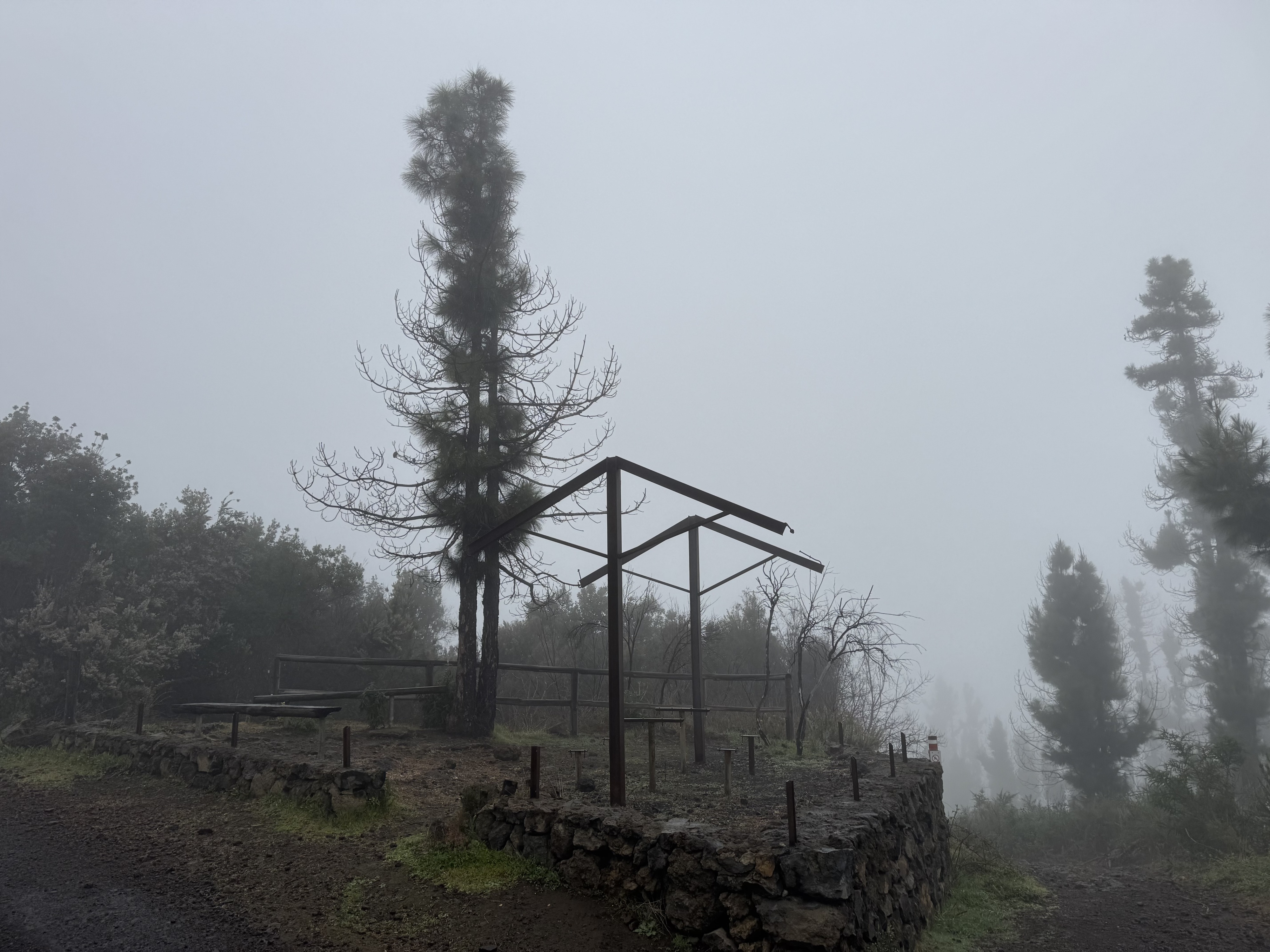

The next day remains unsettled, though temperatures at sea level are mostly pleasant again. However, since strong winds and rain are forecast for the following day—and having learned from last night that suitable wild camping spots are scarce in this region—we decide to push on through the lush green northeast toward Camping Punta del Hidalgo (a paid site this time).
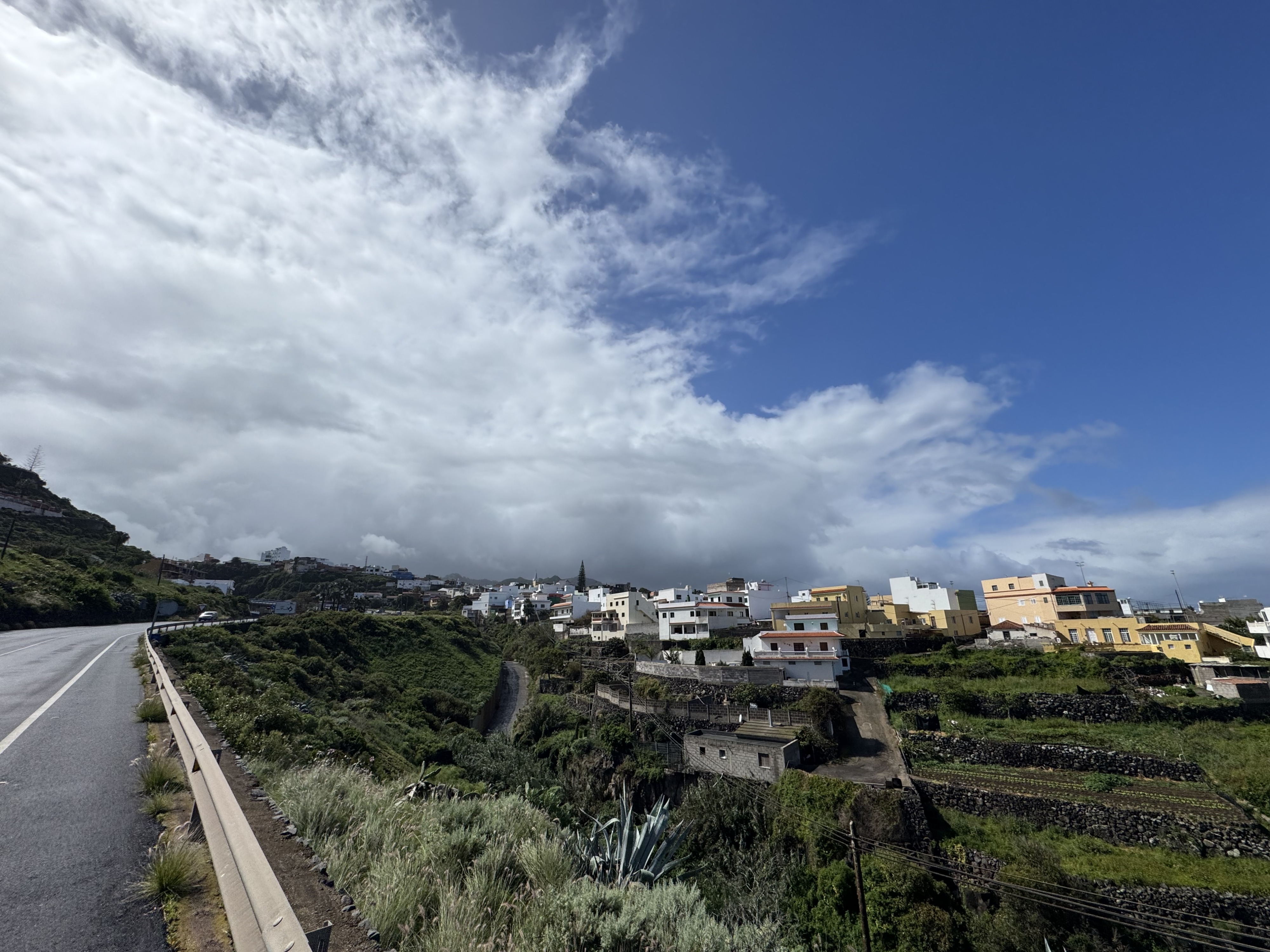
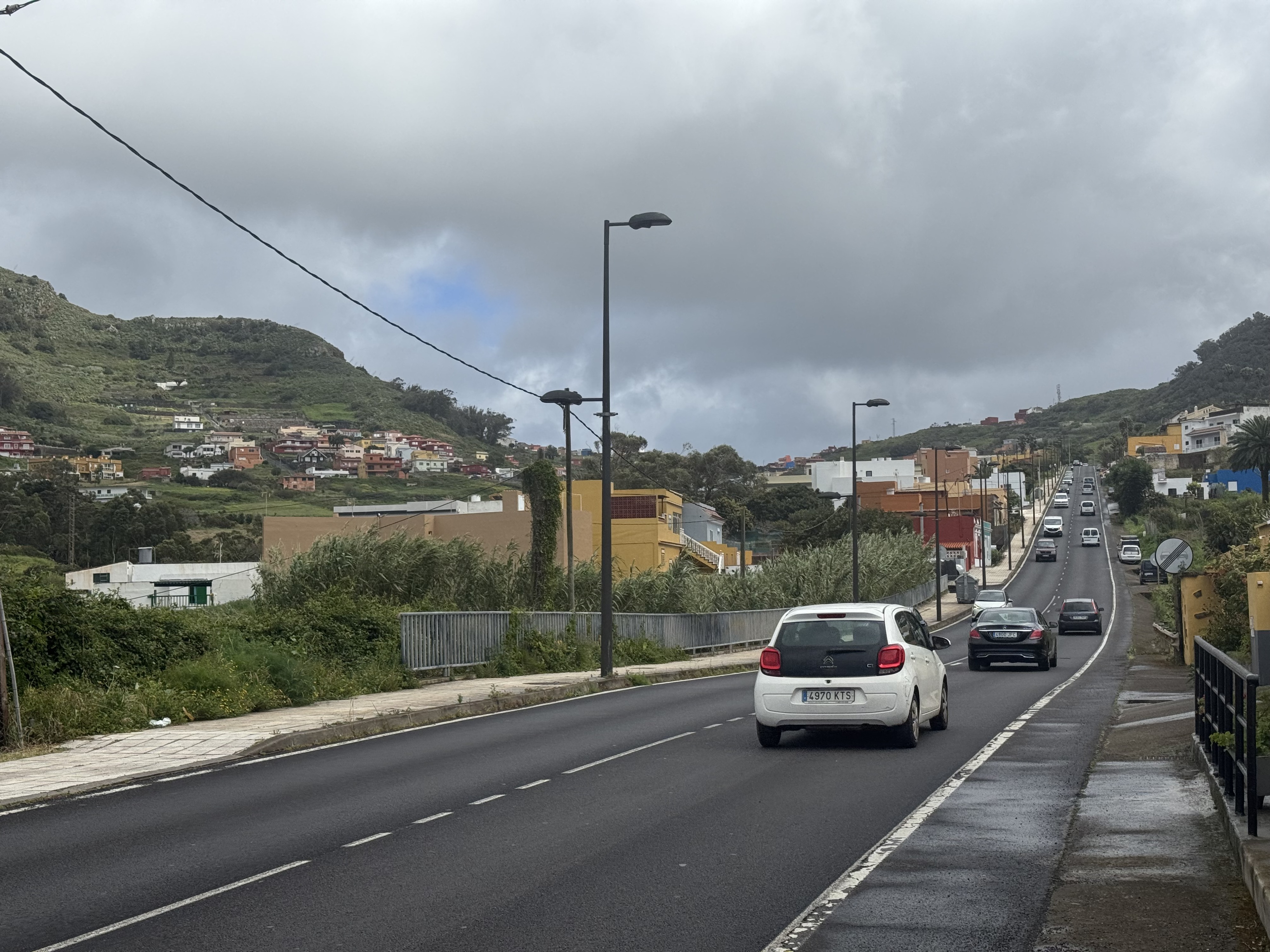
The route follows the coast: up and down, alternating between rain and sunshine. We are quite surprised by how densely built-up Tenerife is, even here in the northeast. On the other islands, the north has generally been much quieter—likely because it rains more often and fewer tourists venture that way.
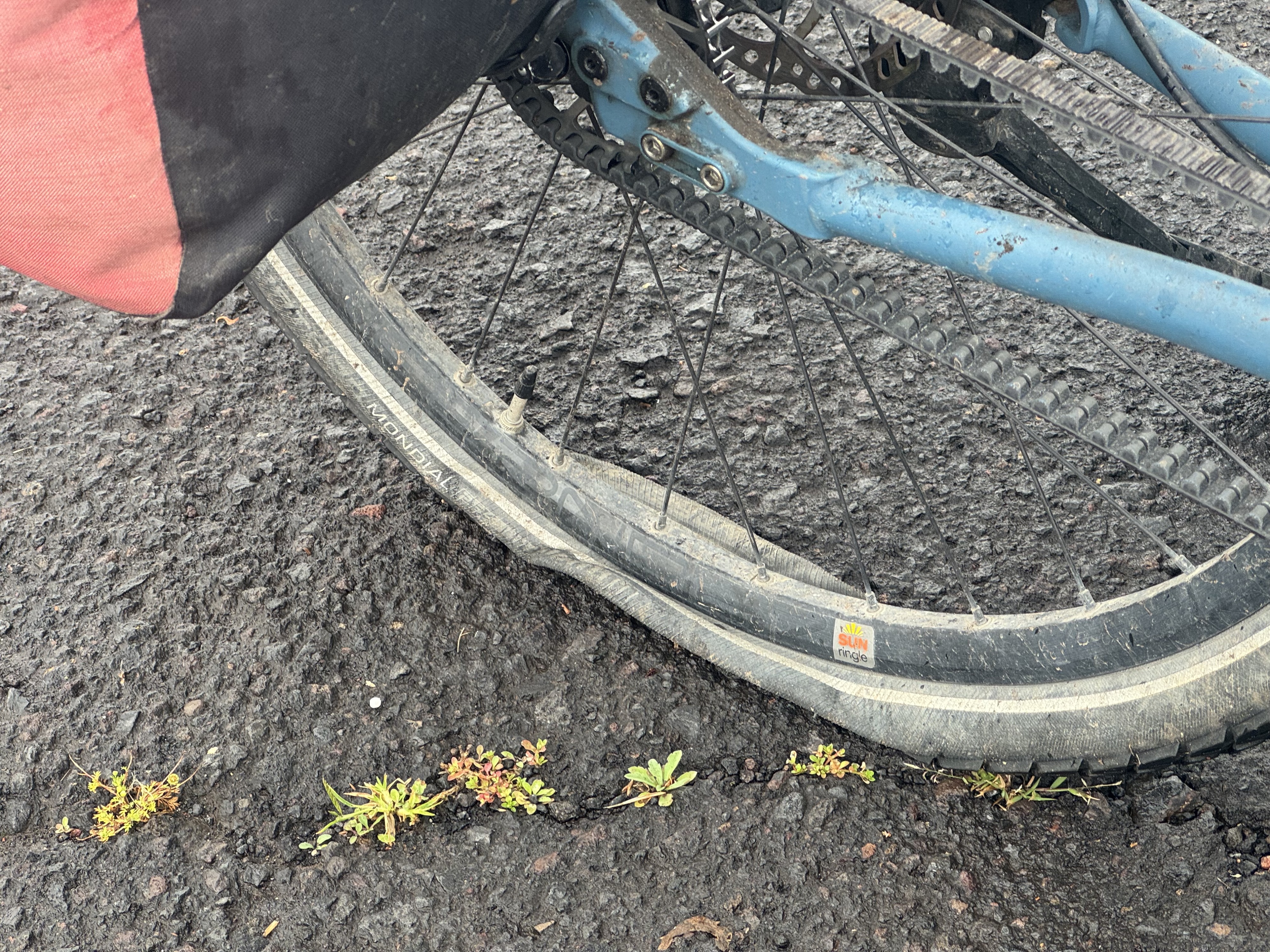
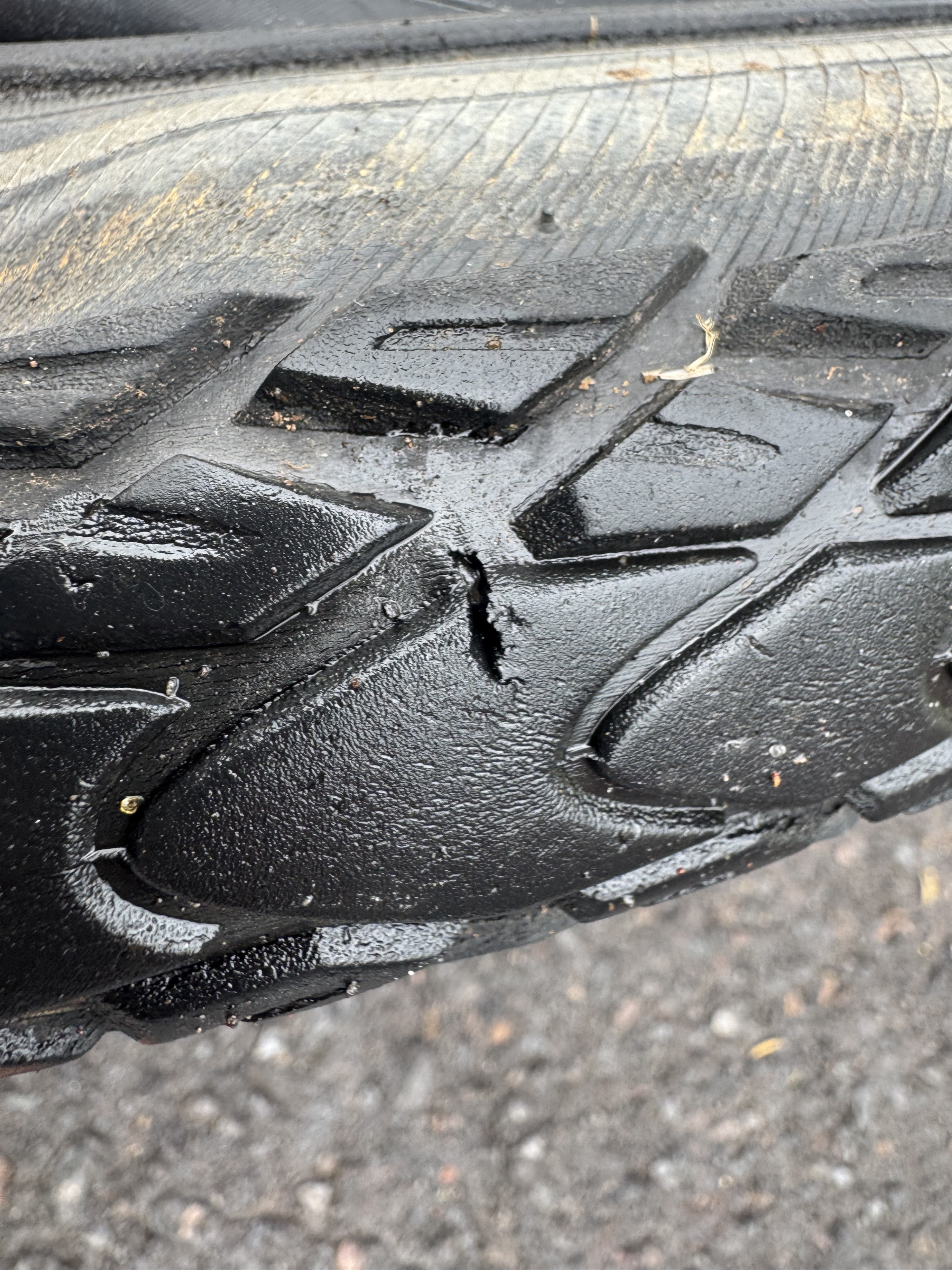
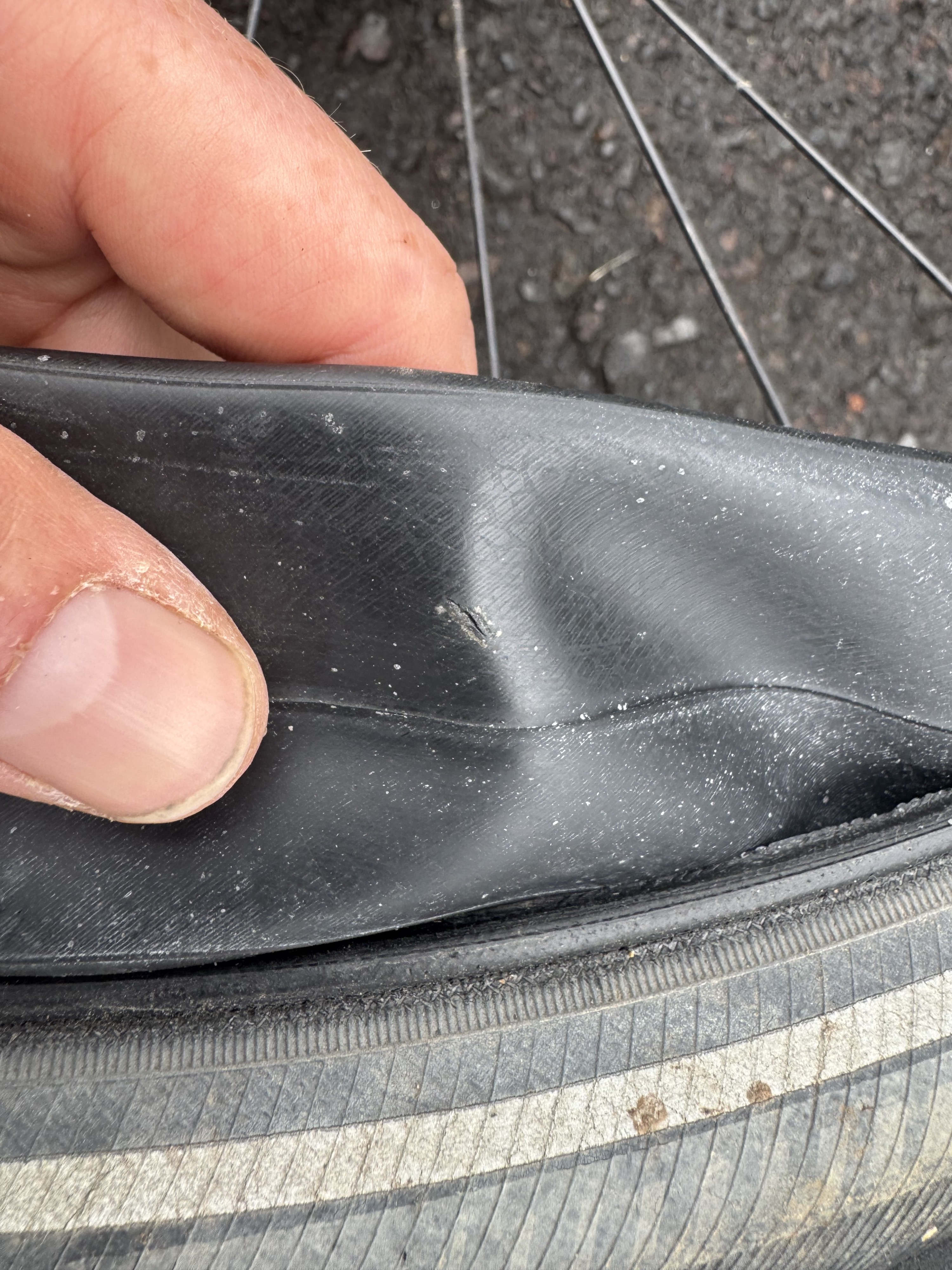
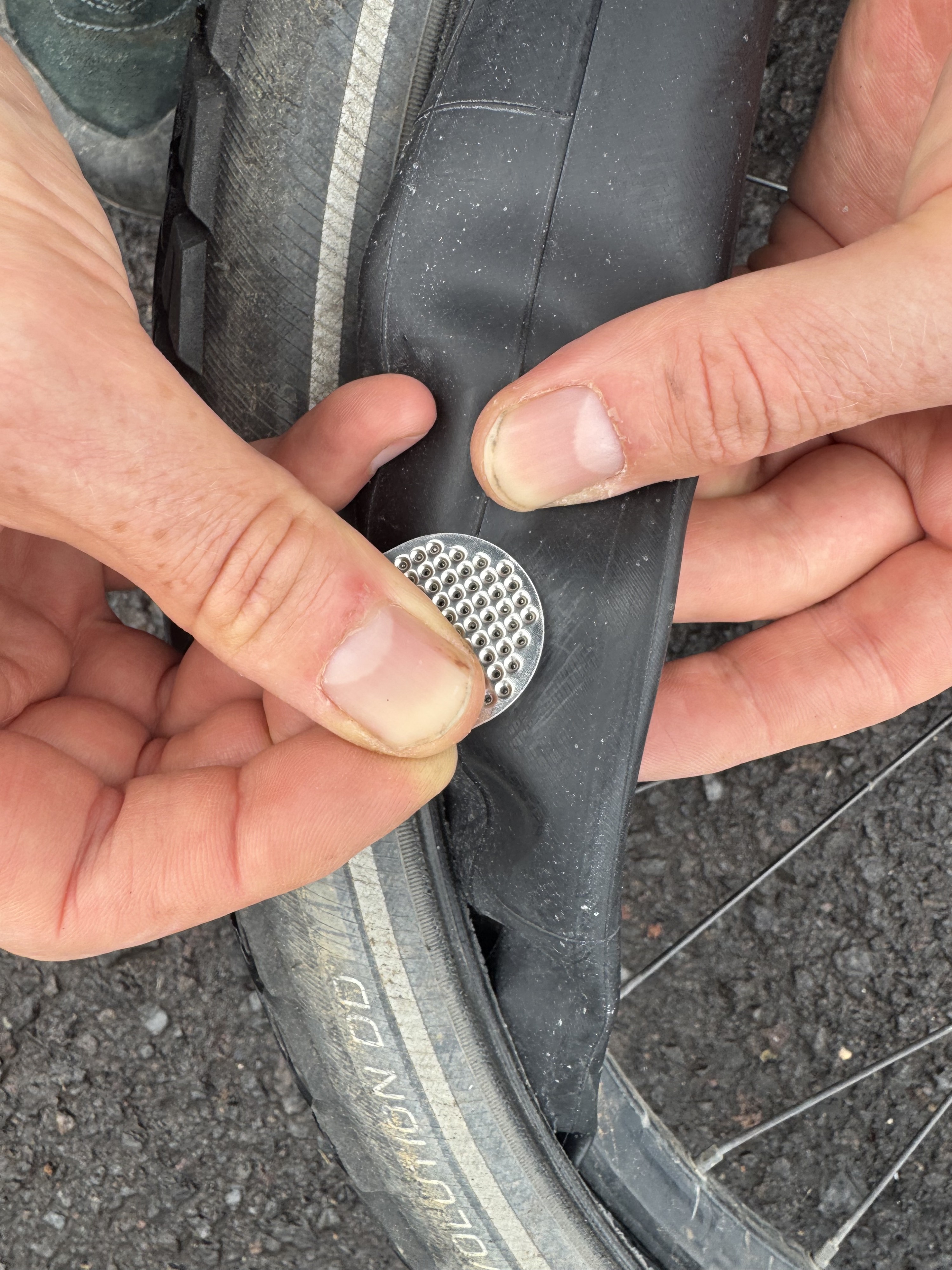
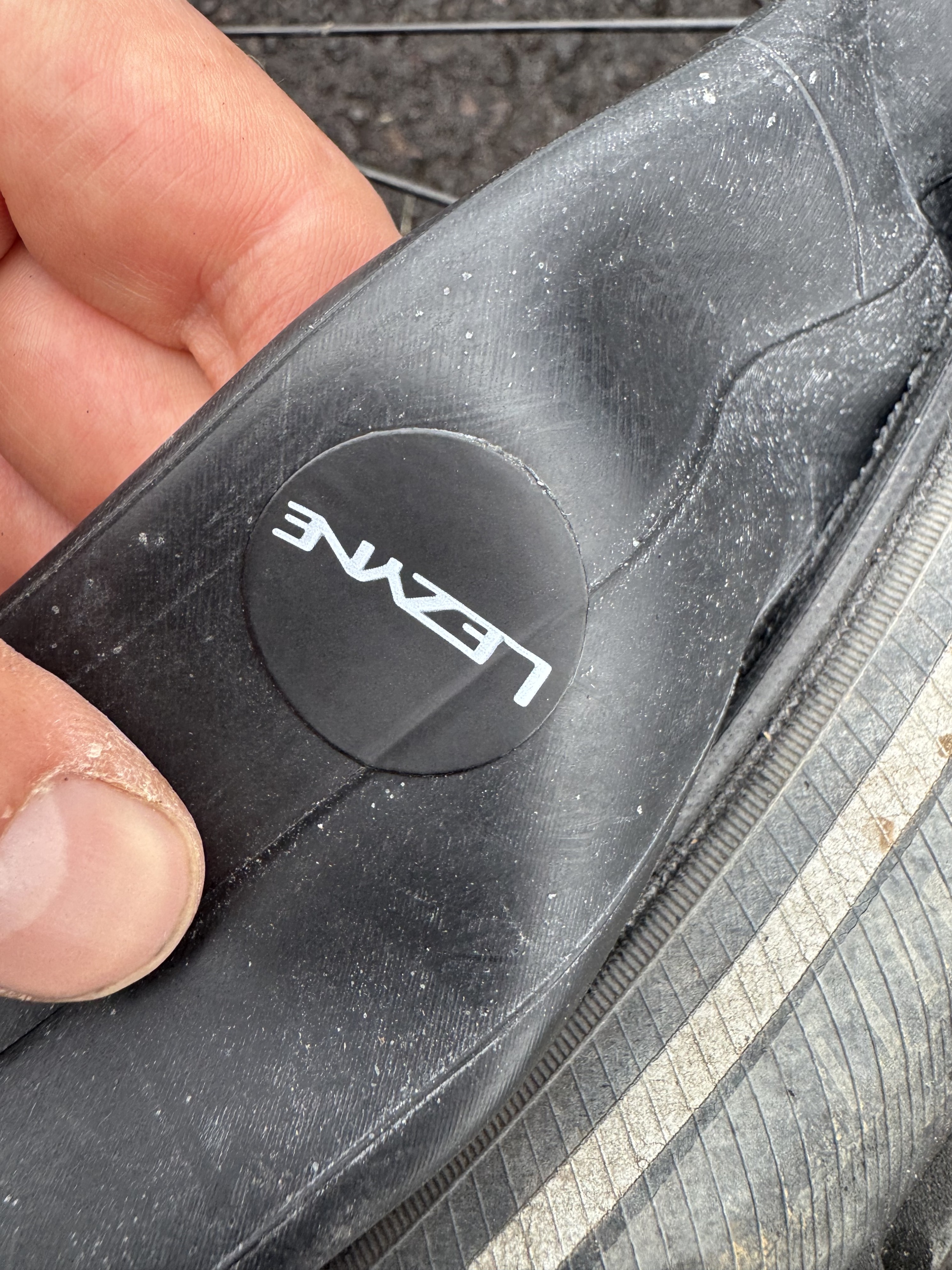
Just before reaching the campsite, it happens: our first flat tire. Fortunately, the hole is patched quickly, and our mood lifts instantly when a local spontaneously gifts us a whole bunch of bananas.
Once we arrive at the campsite, our first priority is making the tent storm-proof. We tension the guy lines and go hunting for two sturdy wooden sticks. Our tent actually has a feature where you can integrate trekking poles for extra stability—except we don’t have any with us.
With a bit of improvisation, the tent is eventually rock-solid, and we can finally head off in search of a warm shower. Afterward, we grab some groceries for the upcoming stormy day, which we’ll likely spend hunkered down in the tent.
While settling in, we notice the… “unique” location of this campsite: right in the main wind direction—the northeast trade winds usually blow from the northeast—sits a sewage treatment plant. This means you get to enjoy the “fragrance” all day long… let’s just put it that way 🙈💩.
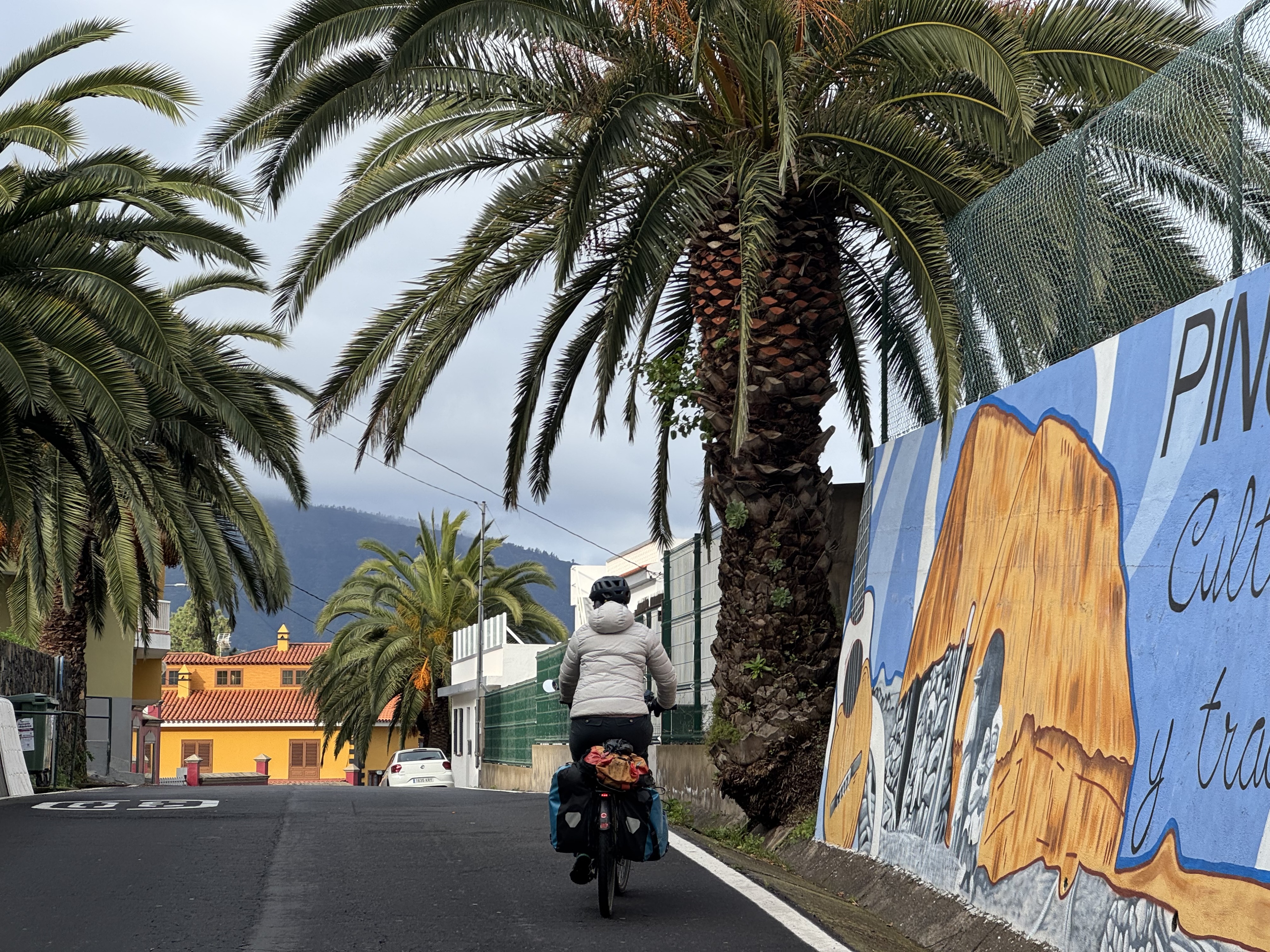
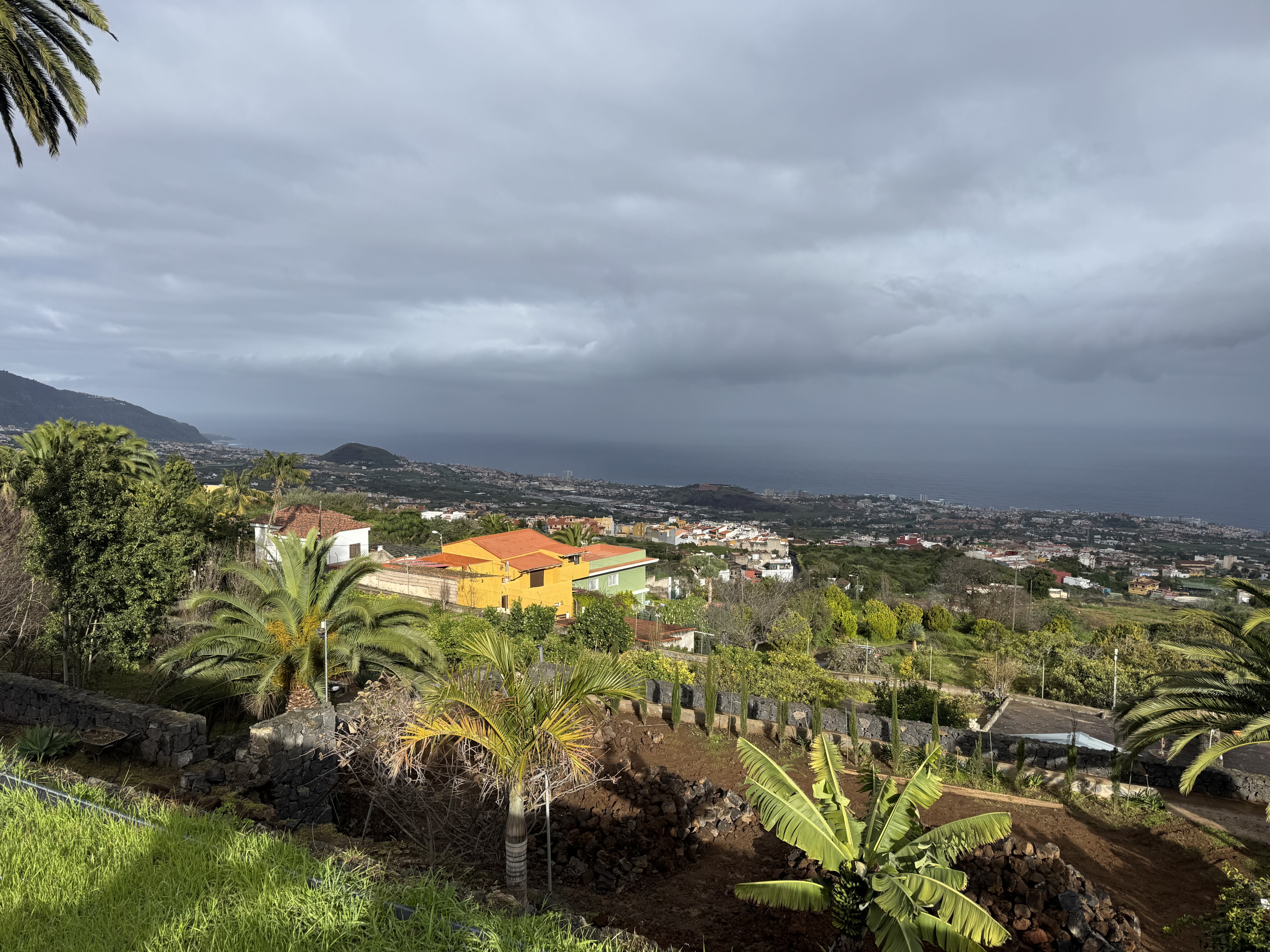
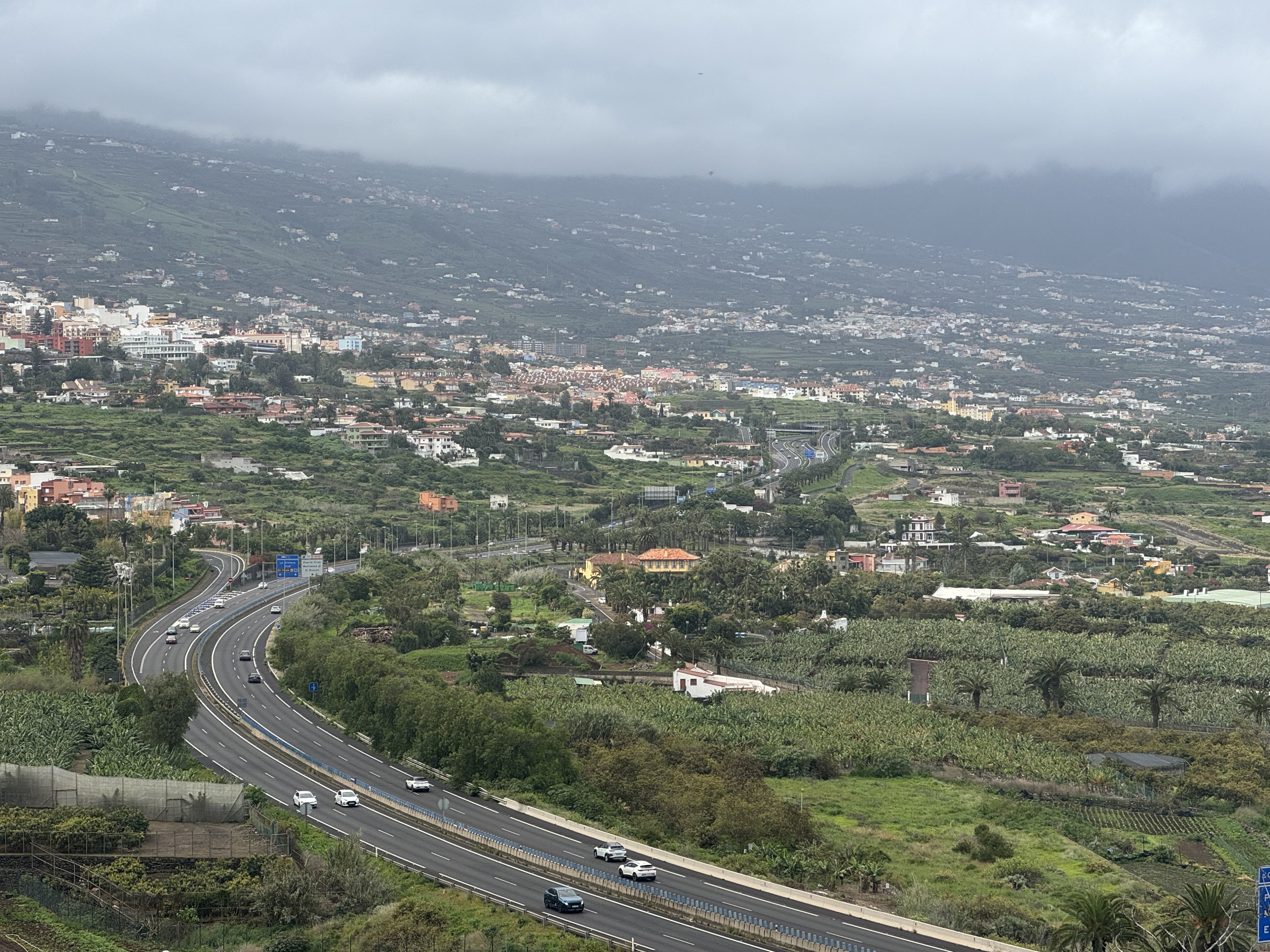
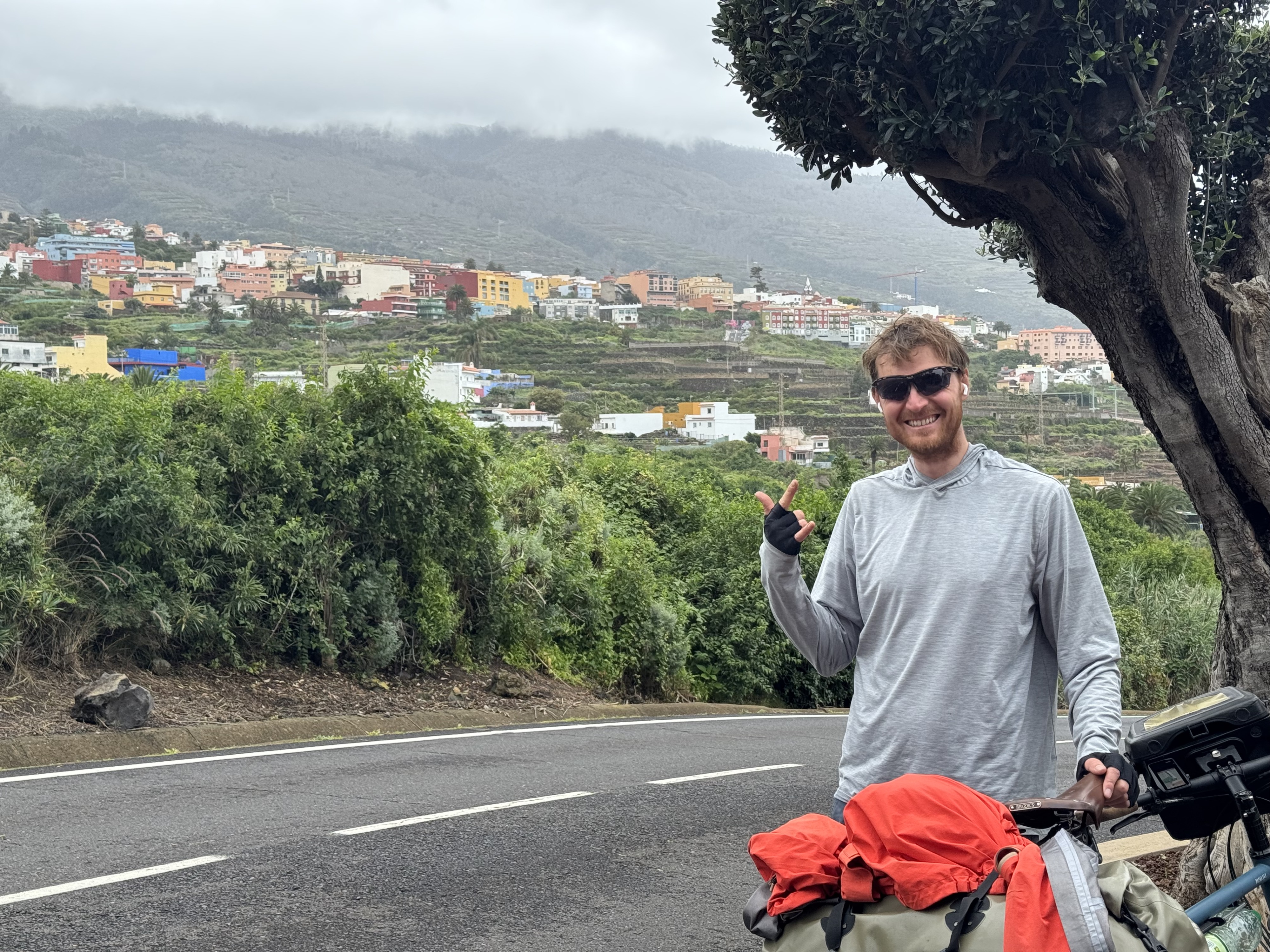
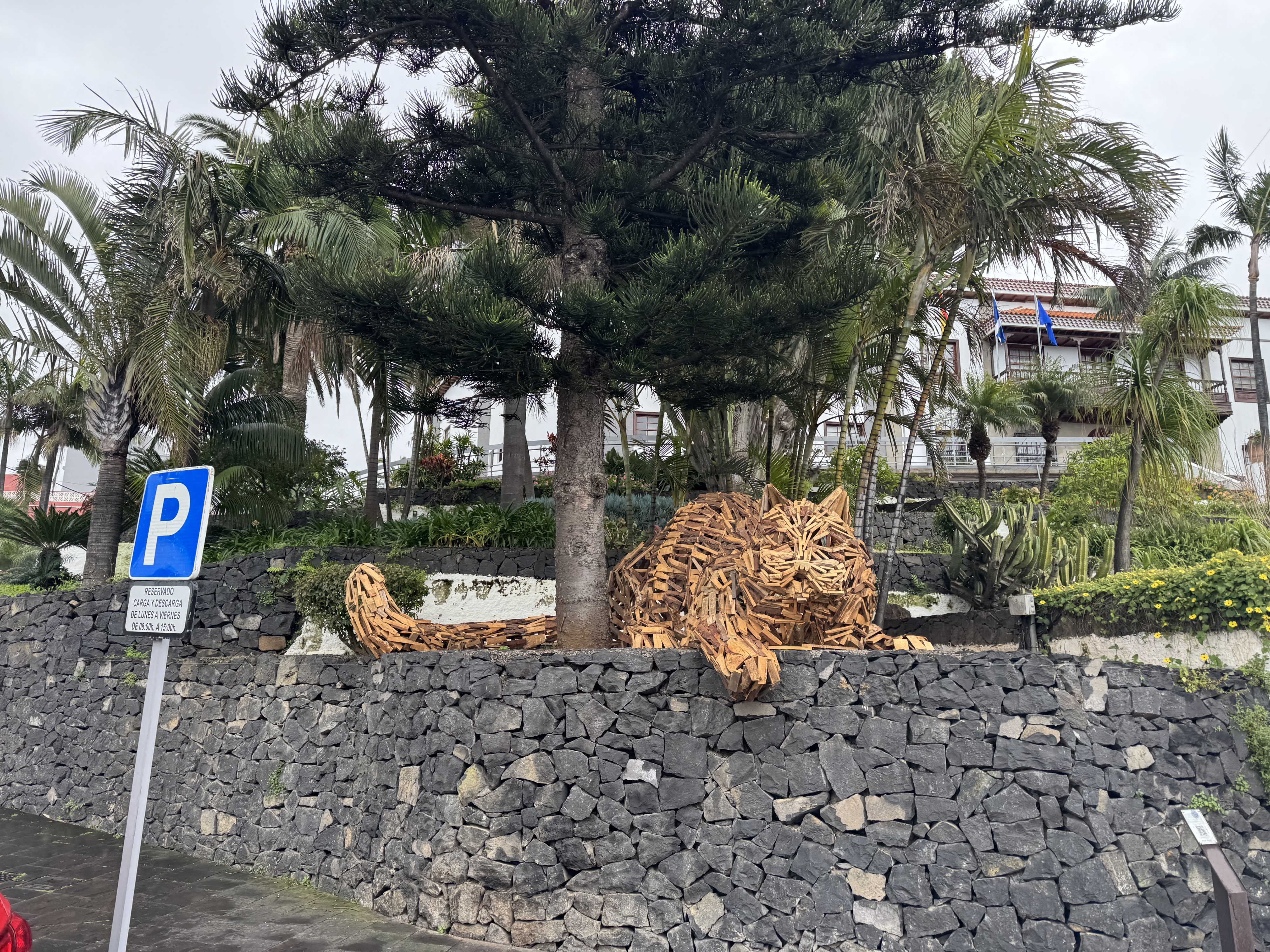


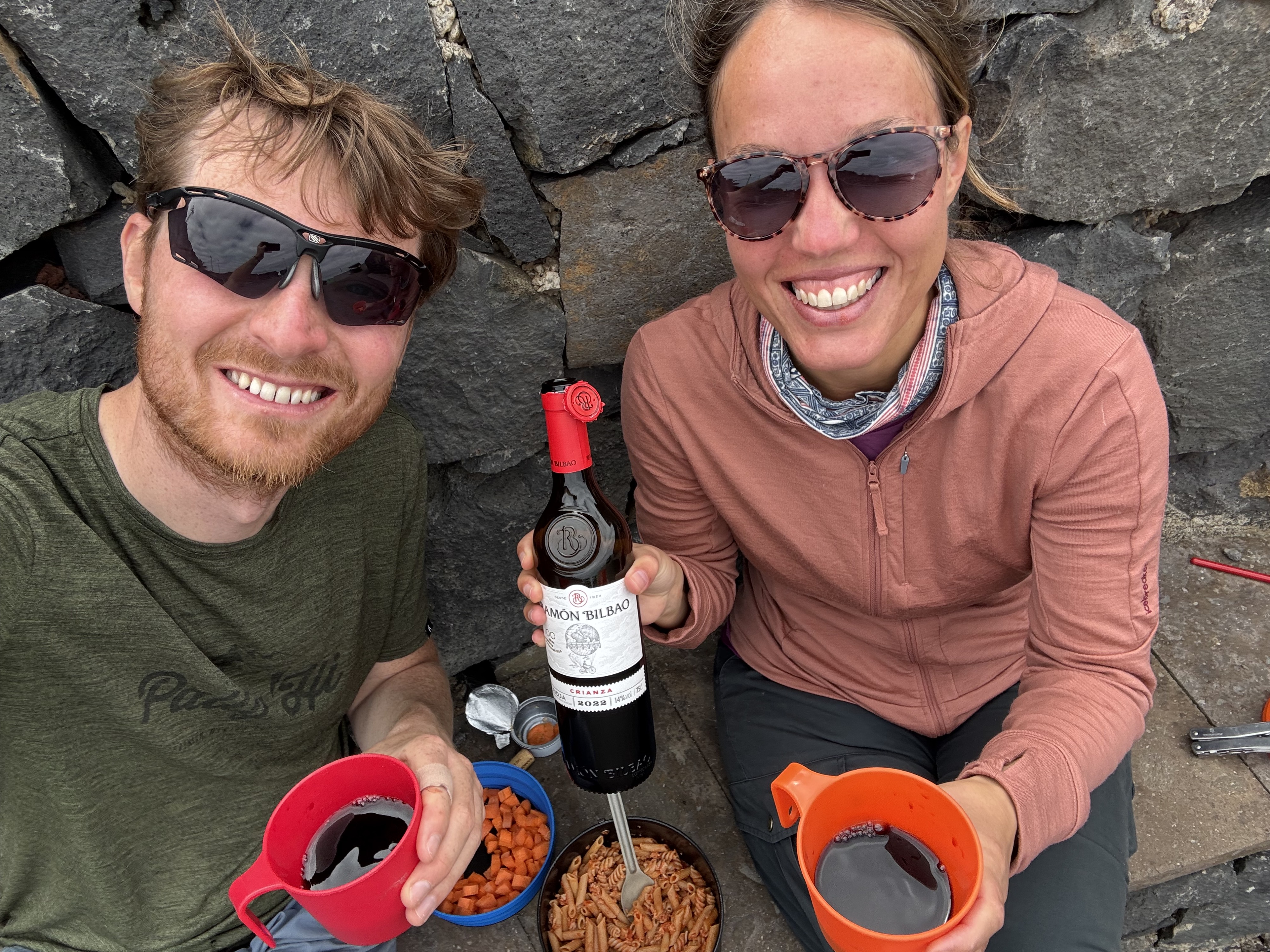
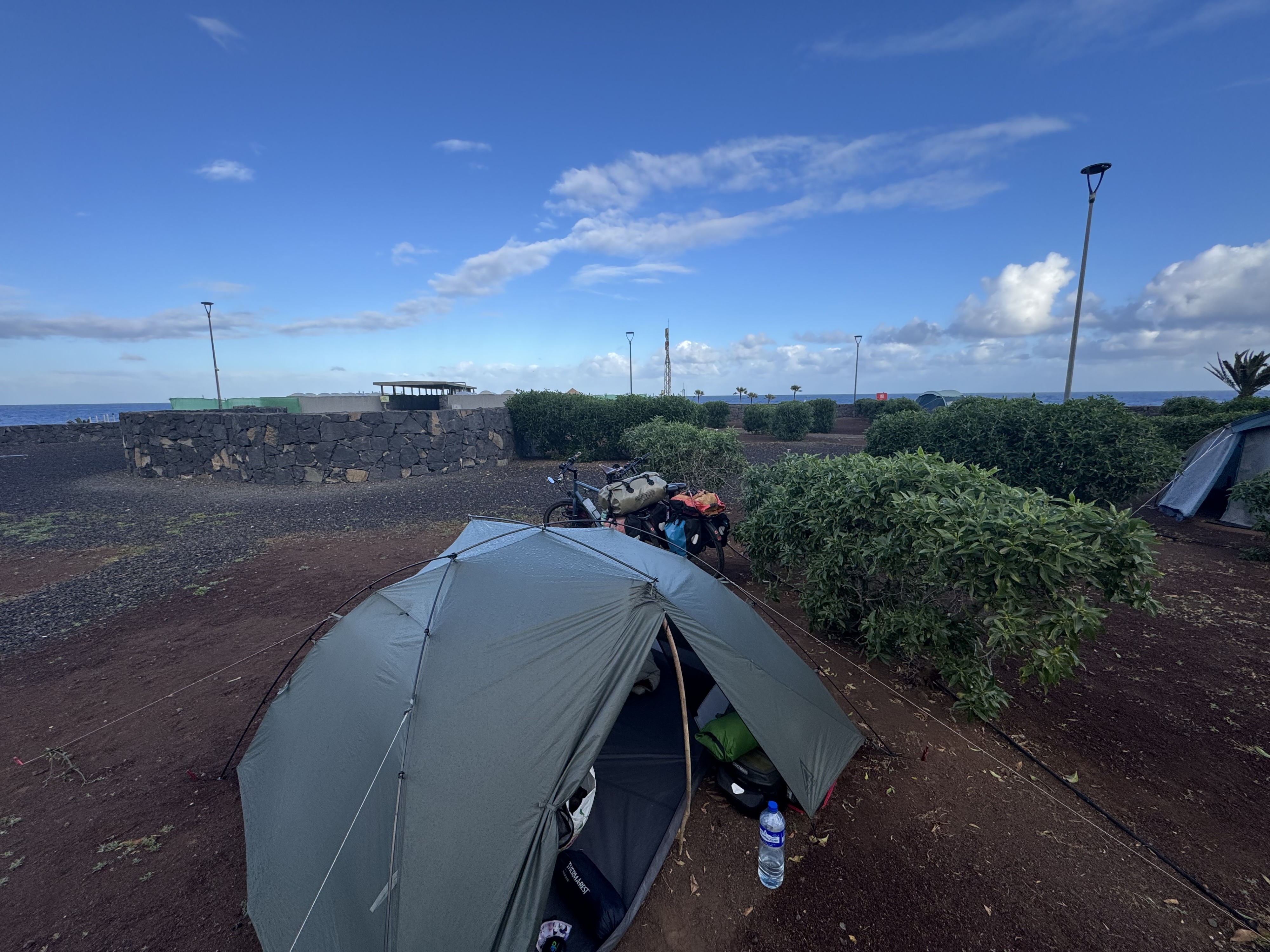
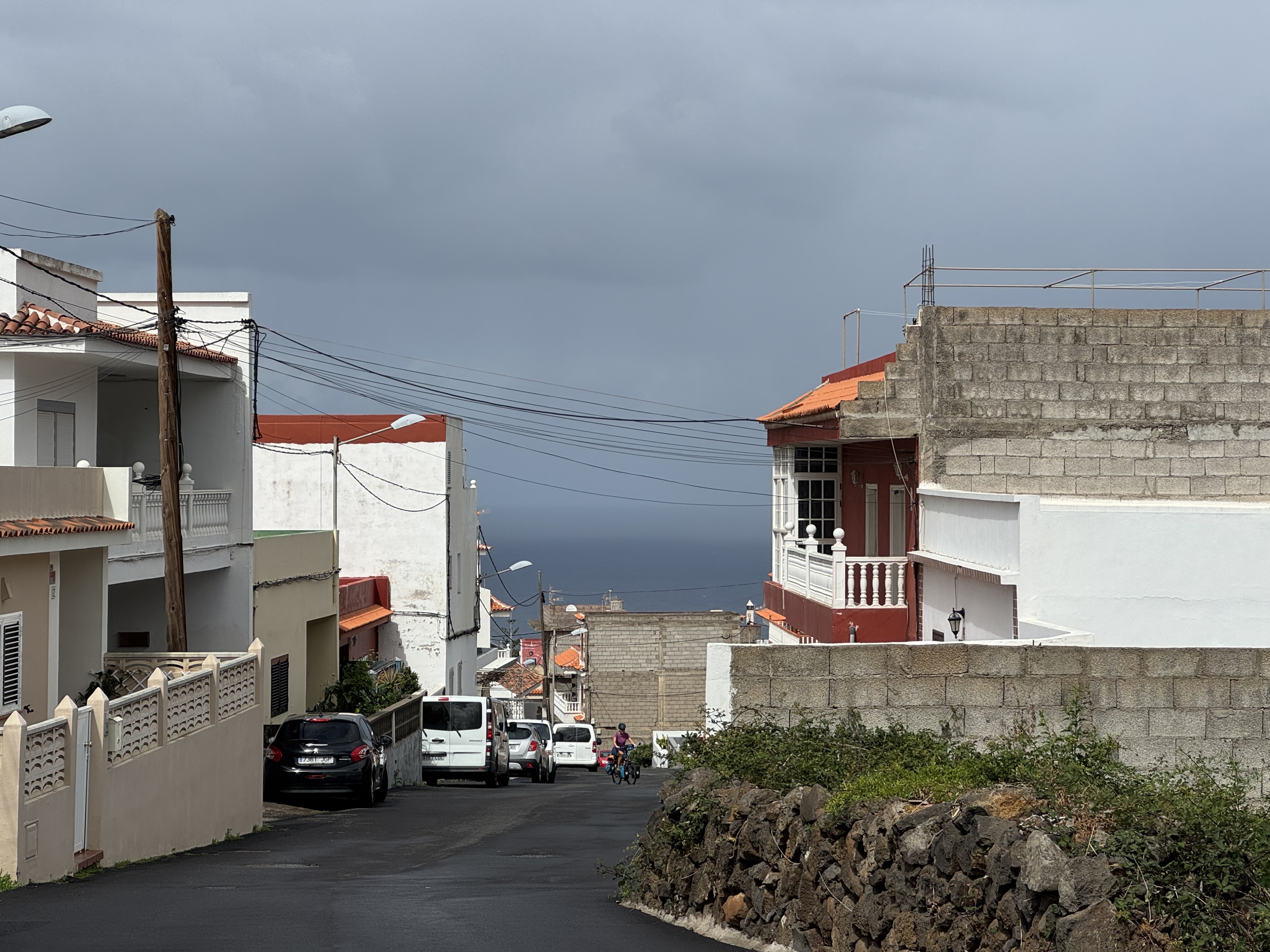
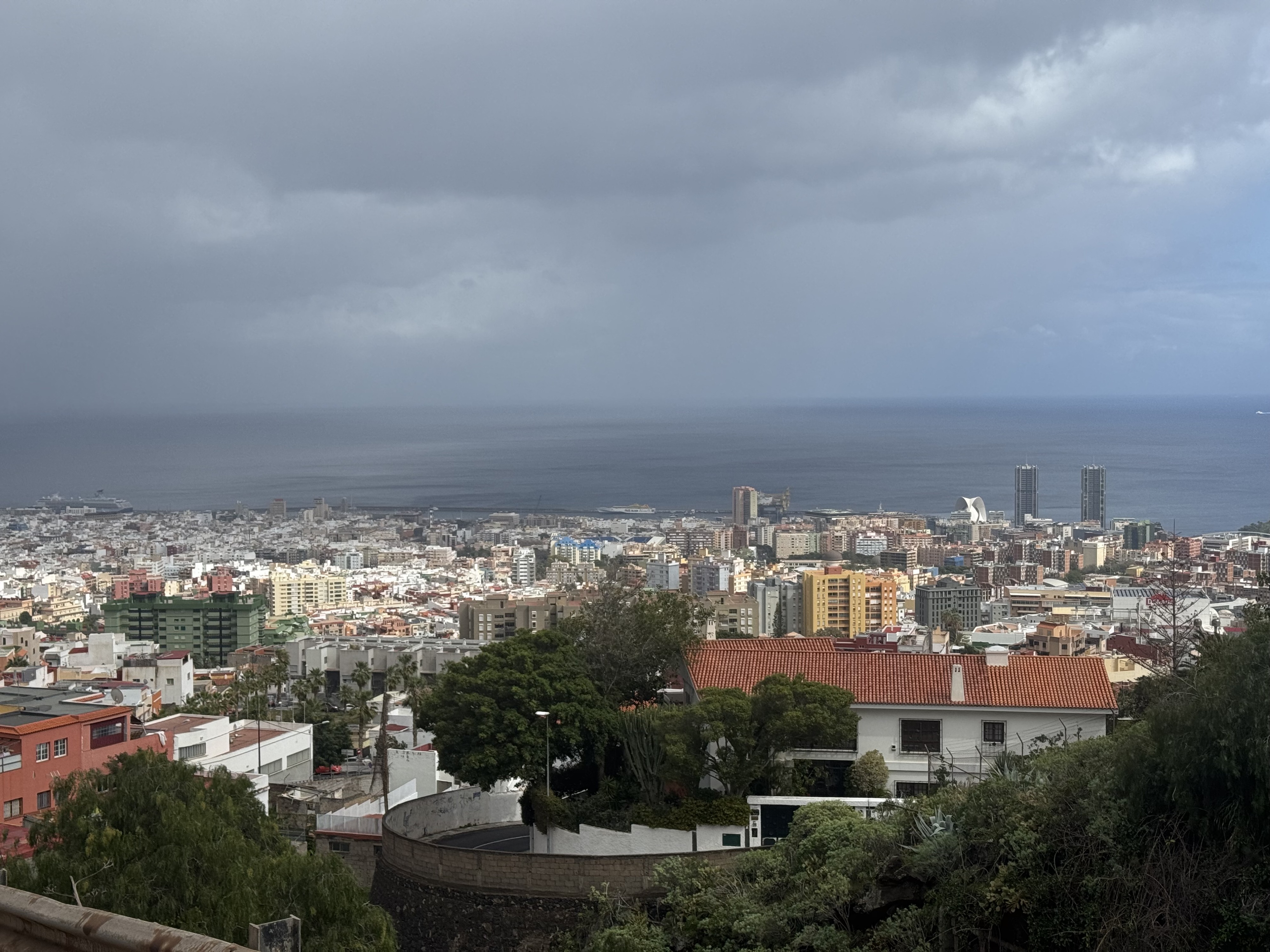
On our day off, we didn’t just drink wine—we also booked the ferry to Gran Canaria for the next day. To put it bluntly, we’ve had enough of Tenerife. Apart from Teide National Park, the island didn’t appeal to us at all. It just doesn’t have any charm and seems a bit superficial to us. Our drive over to the capital, Santa Cruz de Tenerife, only confirmed this. On the final stretch to the ferry, we got soaked to the skin again—a clear sign to us that we made the right decision; we’re looking forward to the next island 😂!

For even more insight into our everyday cycling life, check out our latest video: