Route to the blog:
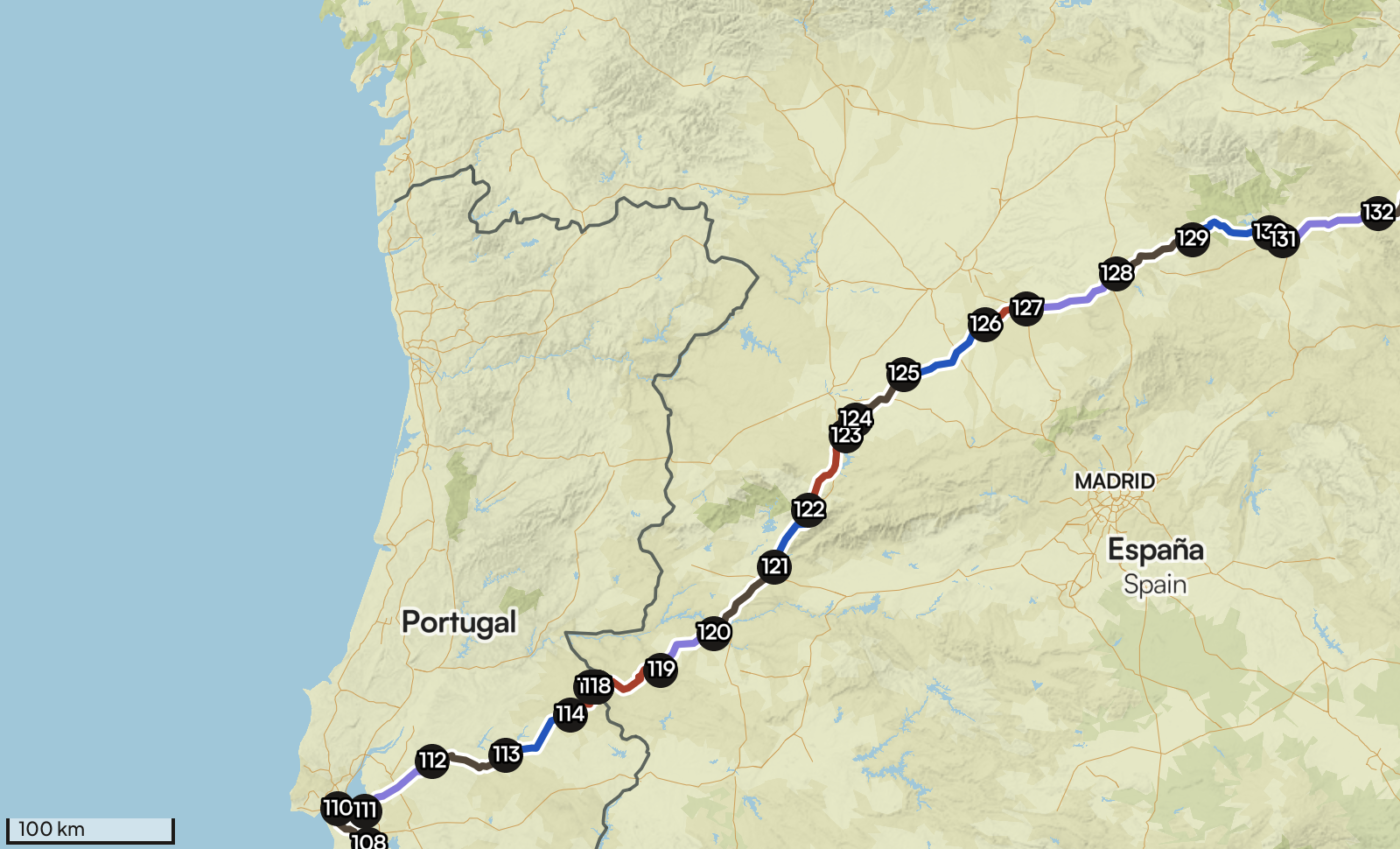
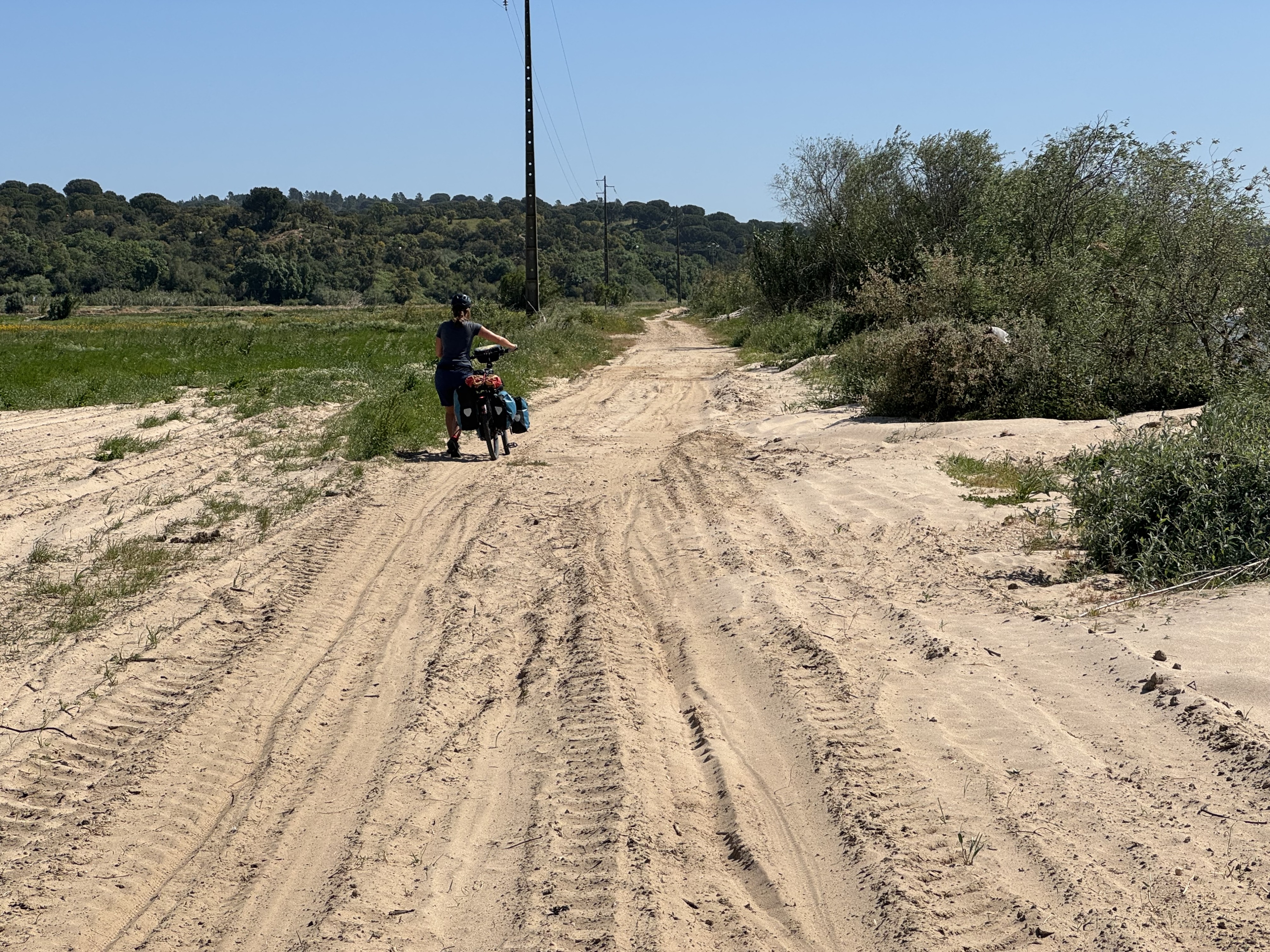
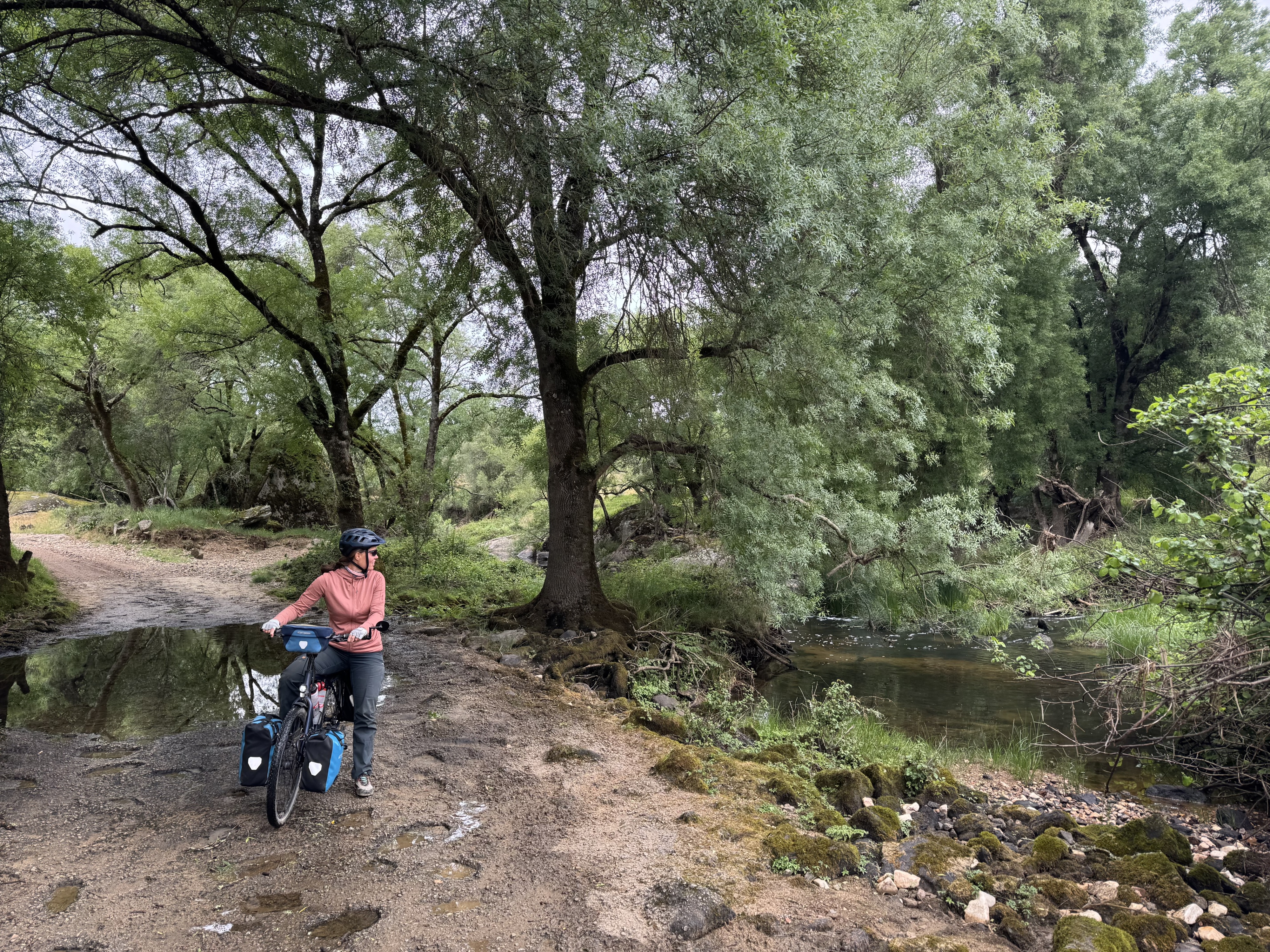
In Lisbon, we decide to stop following the coastal bike path and instead head inland toward the Spanish border. If we continued north along the coast, we’d face strong headwinds for the next few days, and to be honest, we’re fed up with EuroVelo 1. So, full of hope, we set off, curious to see what kind of terrain and traffic await us. We end up on paths that are mainly used for farming and, due to flooding, are full of ruts and partly consist of sandy and grassy sections—making them quite an adventure to ride or push through 😅😄.
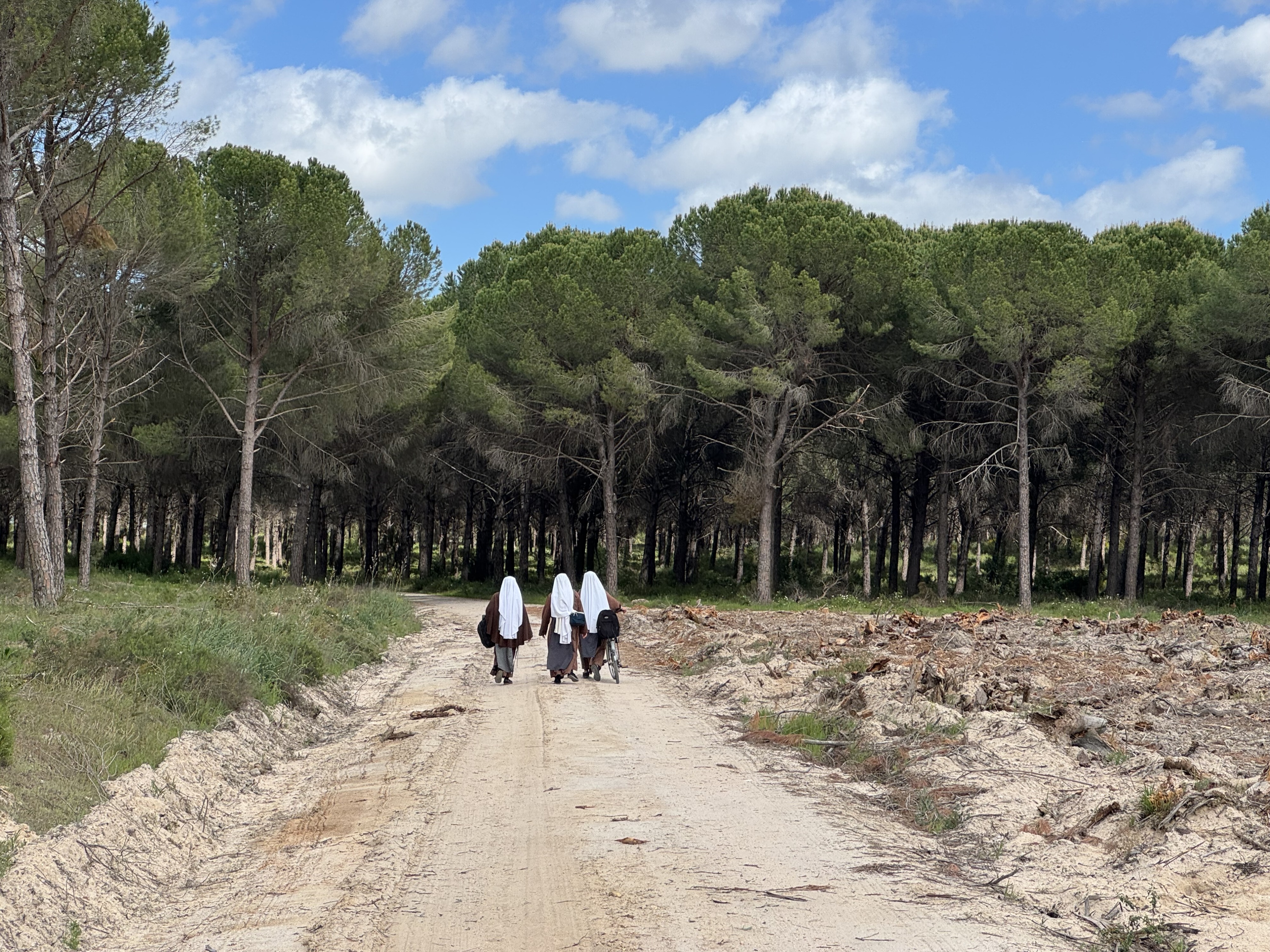
It’s a curious area; for example, we once came across three nuns in a remote forest, strolling leisurely along the path—they’d probably been gathering something in the woods.
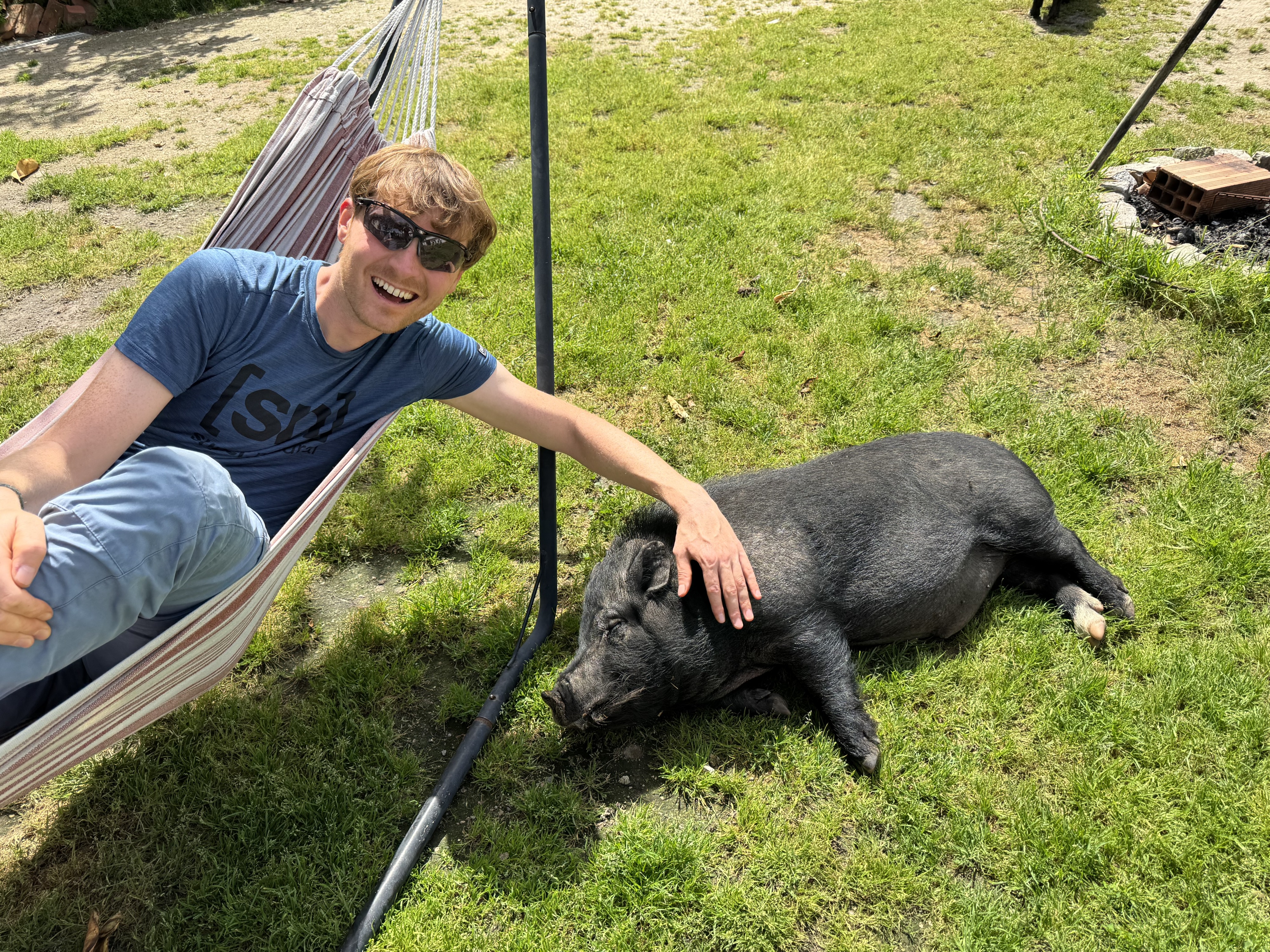
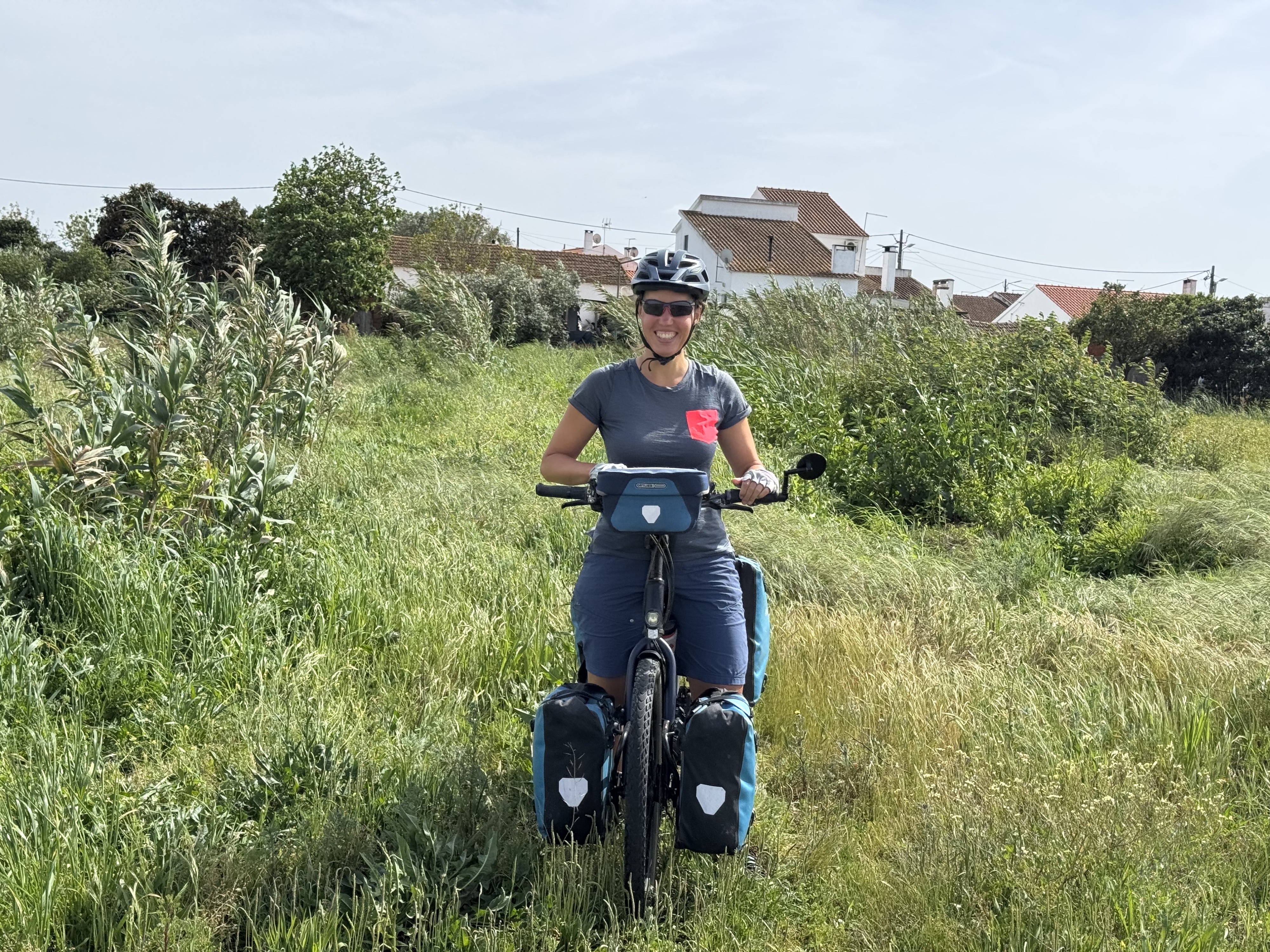
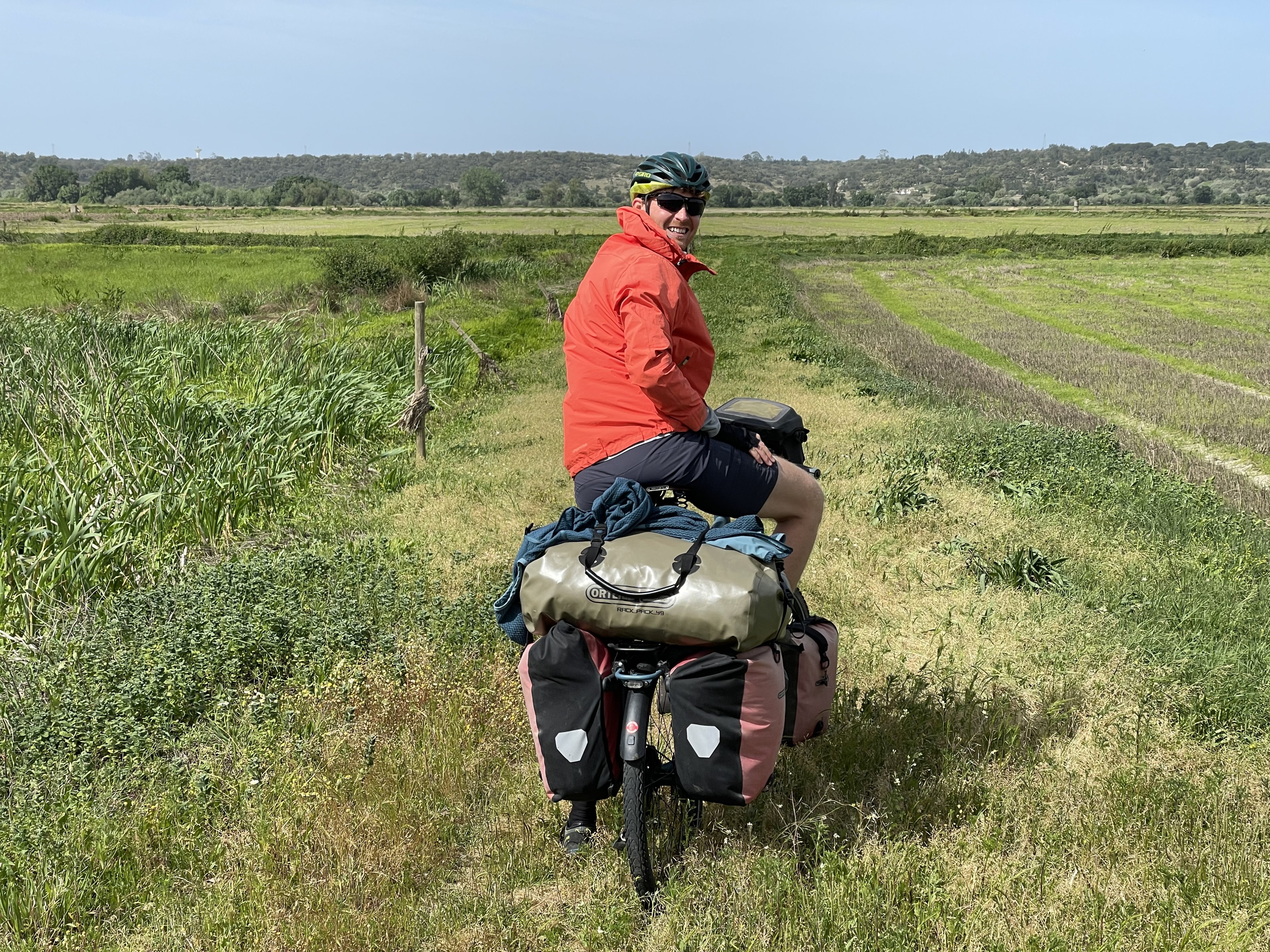
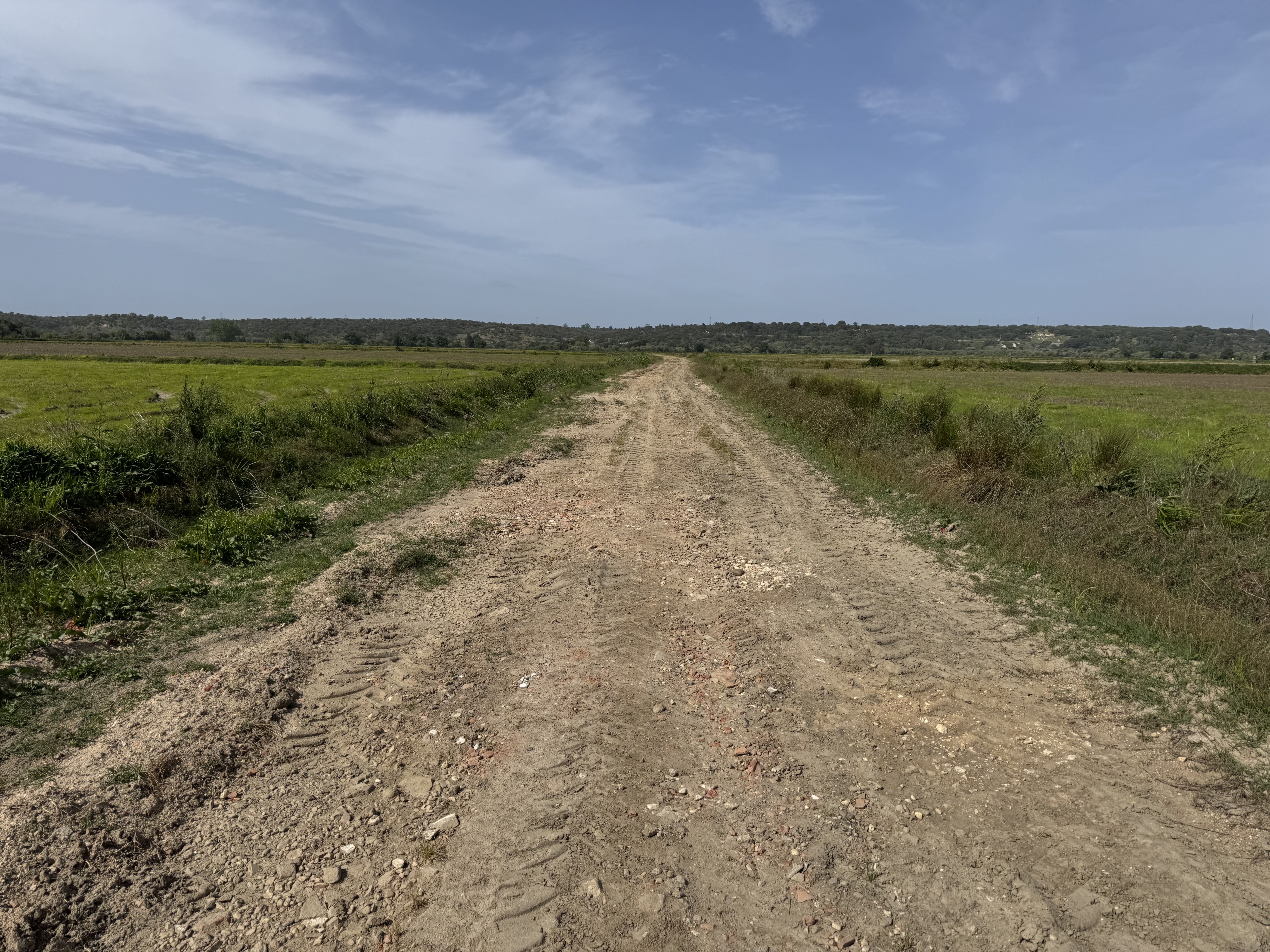
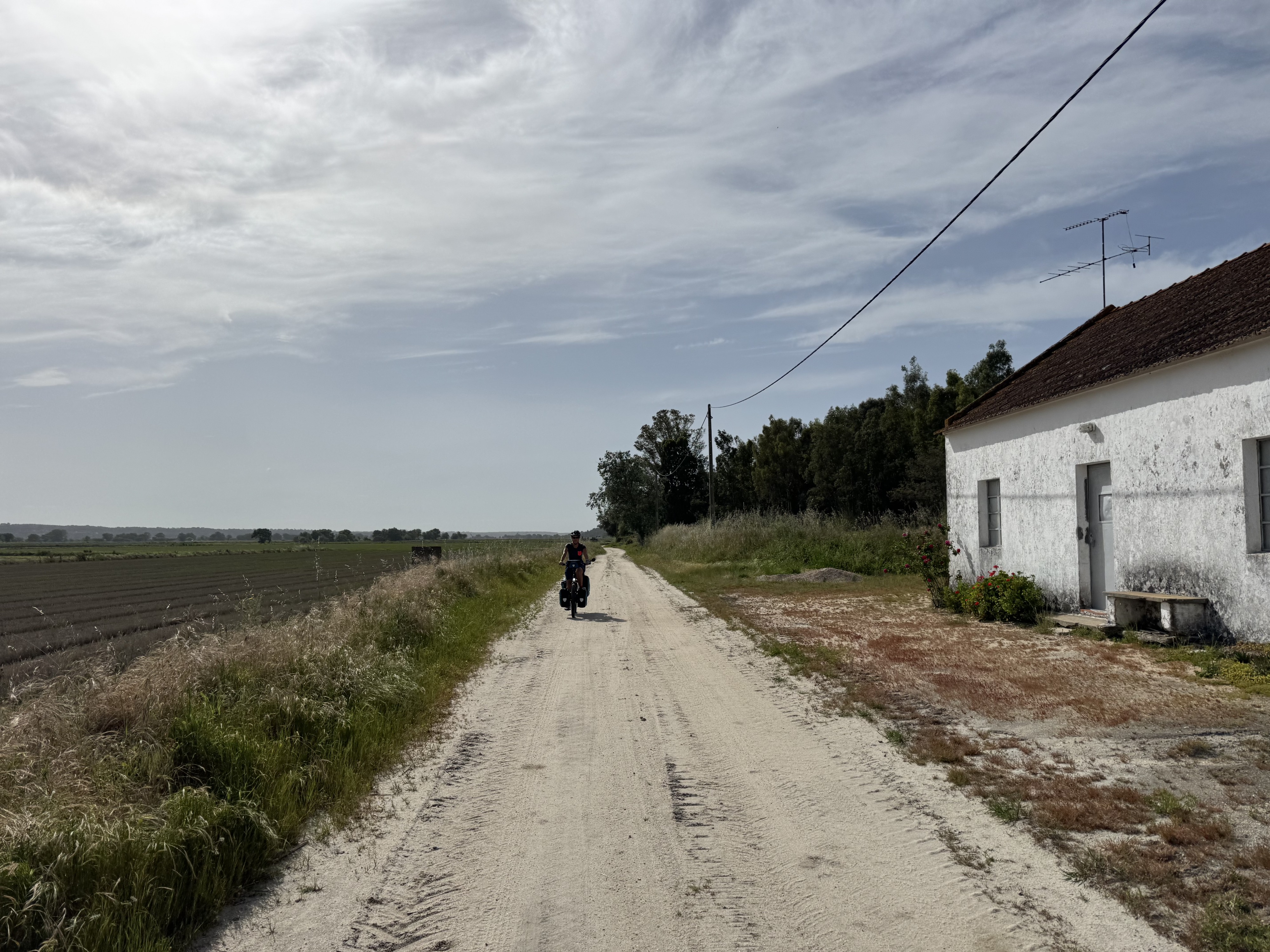
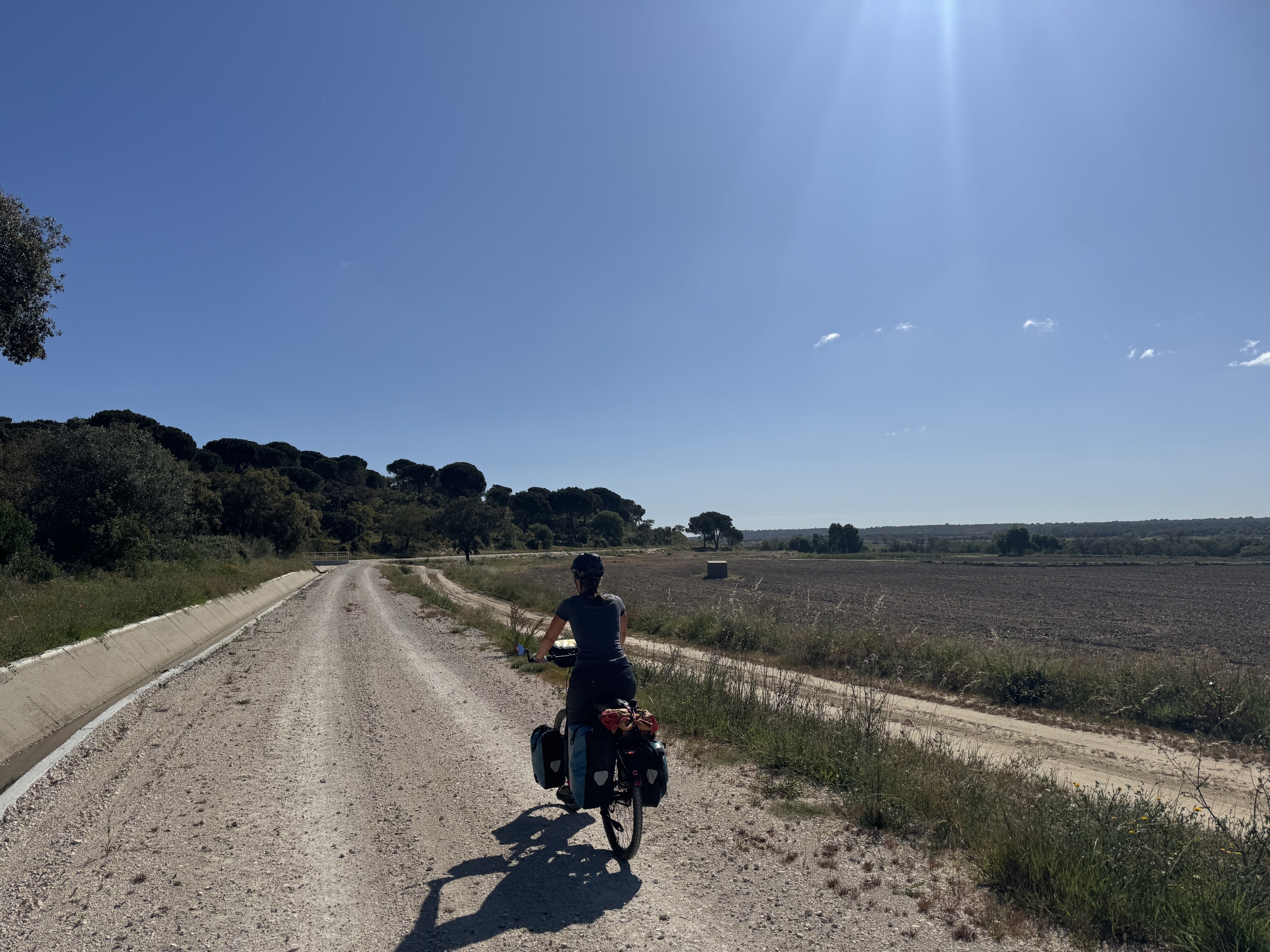
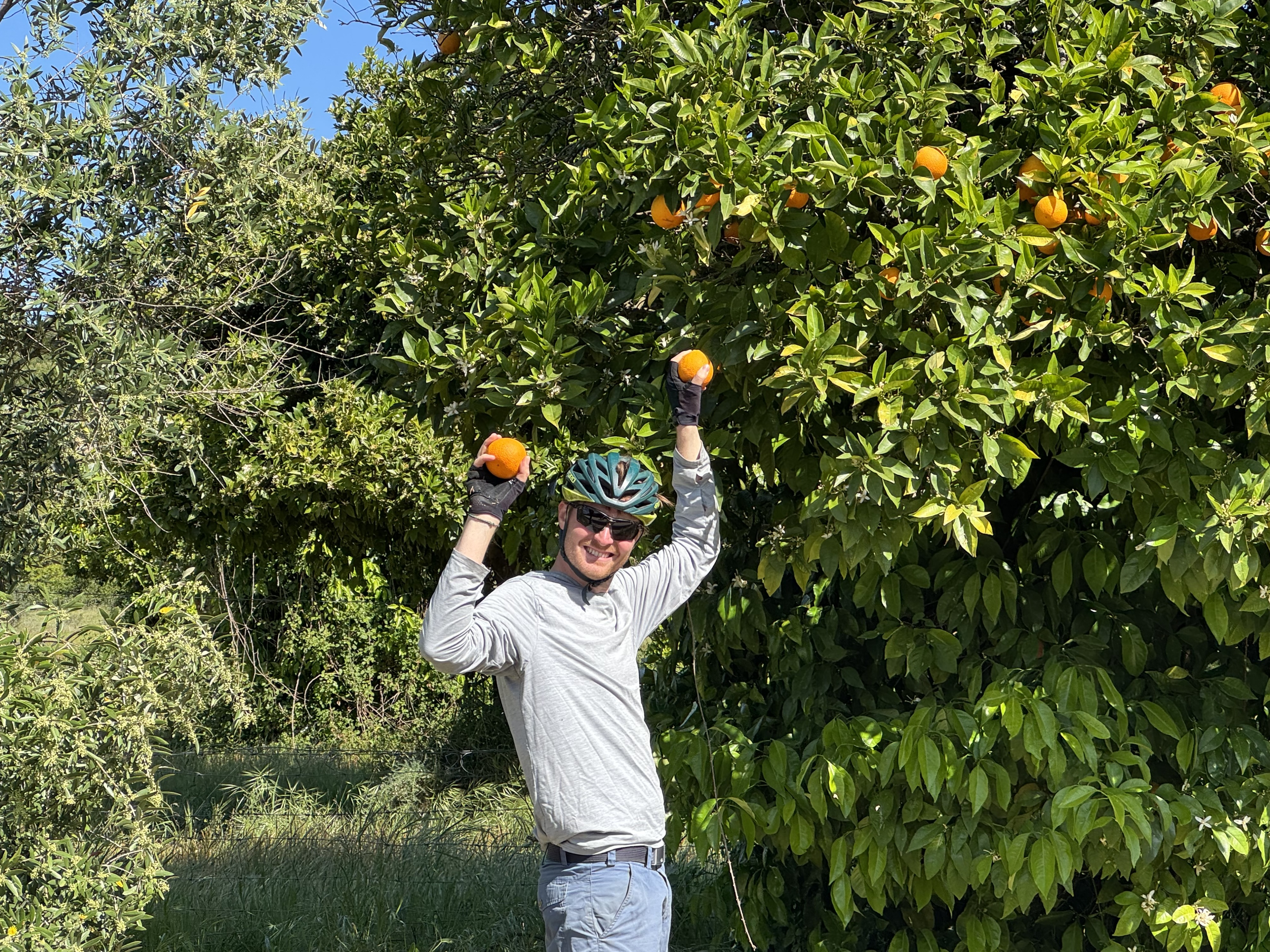
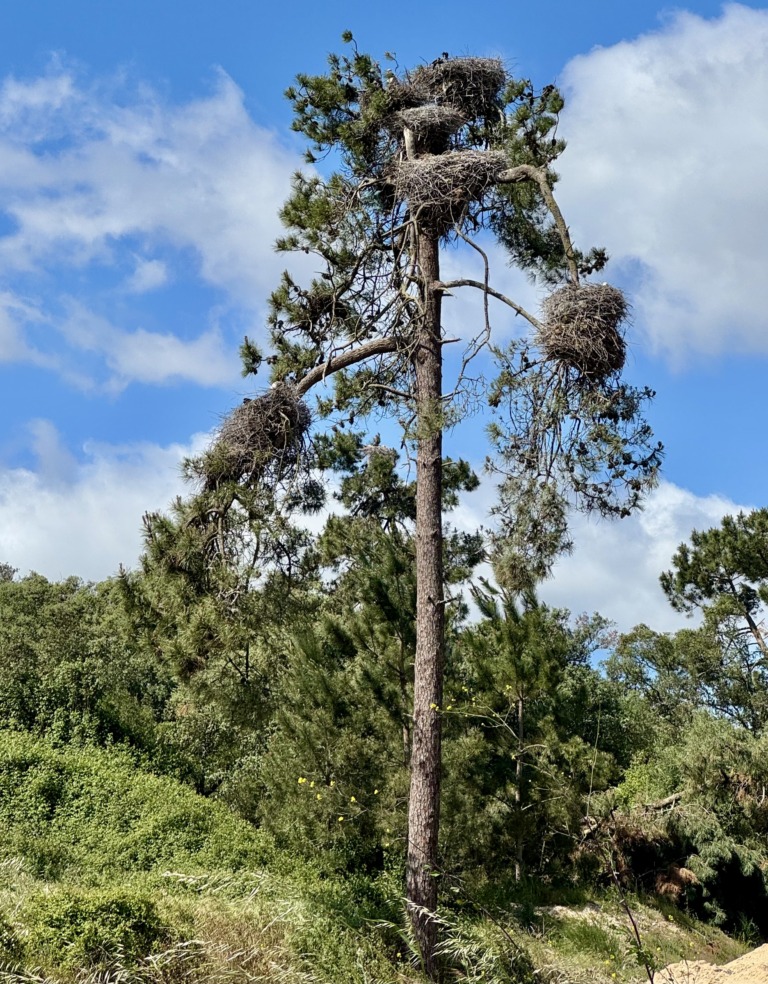
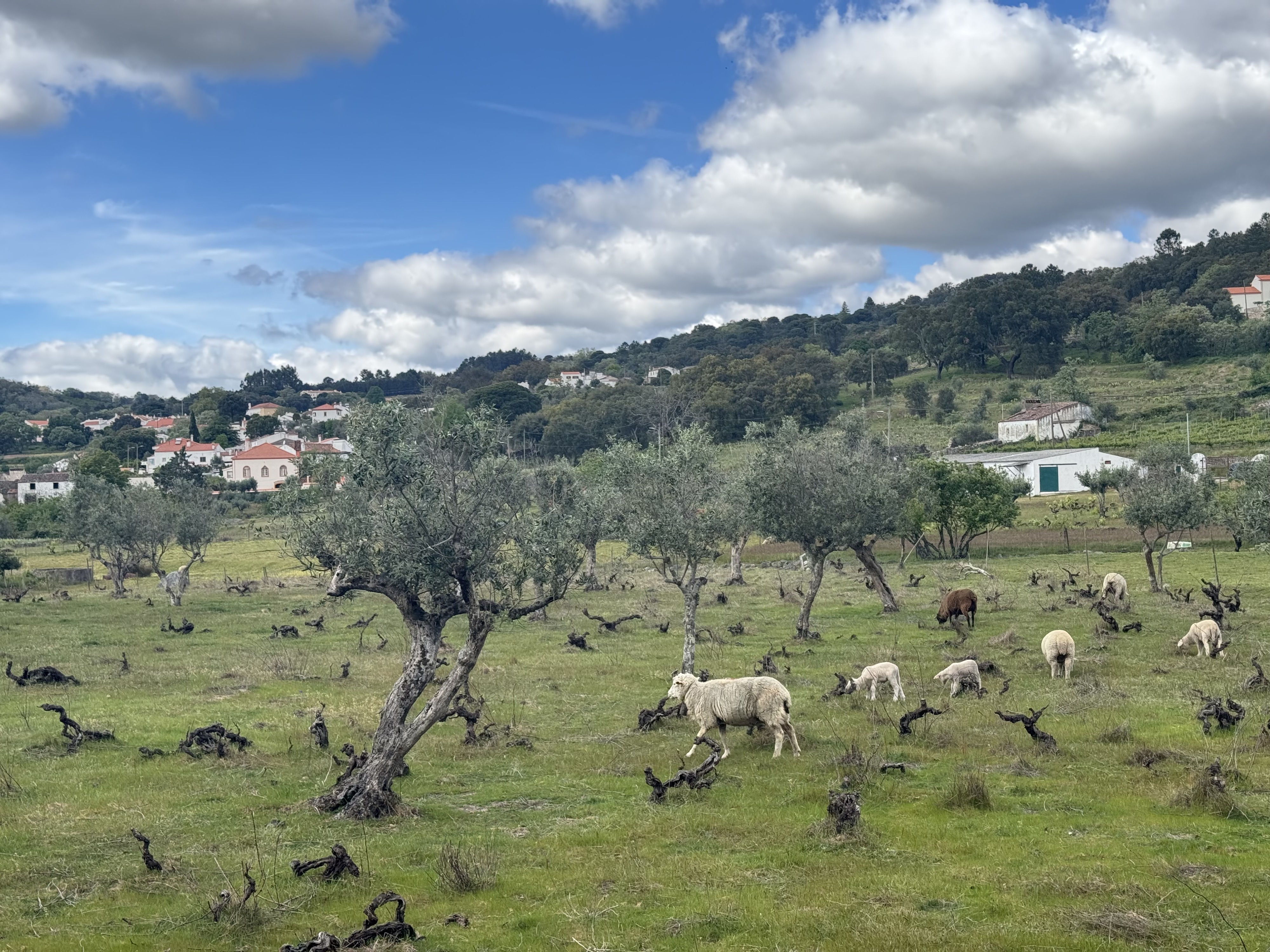
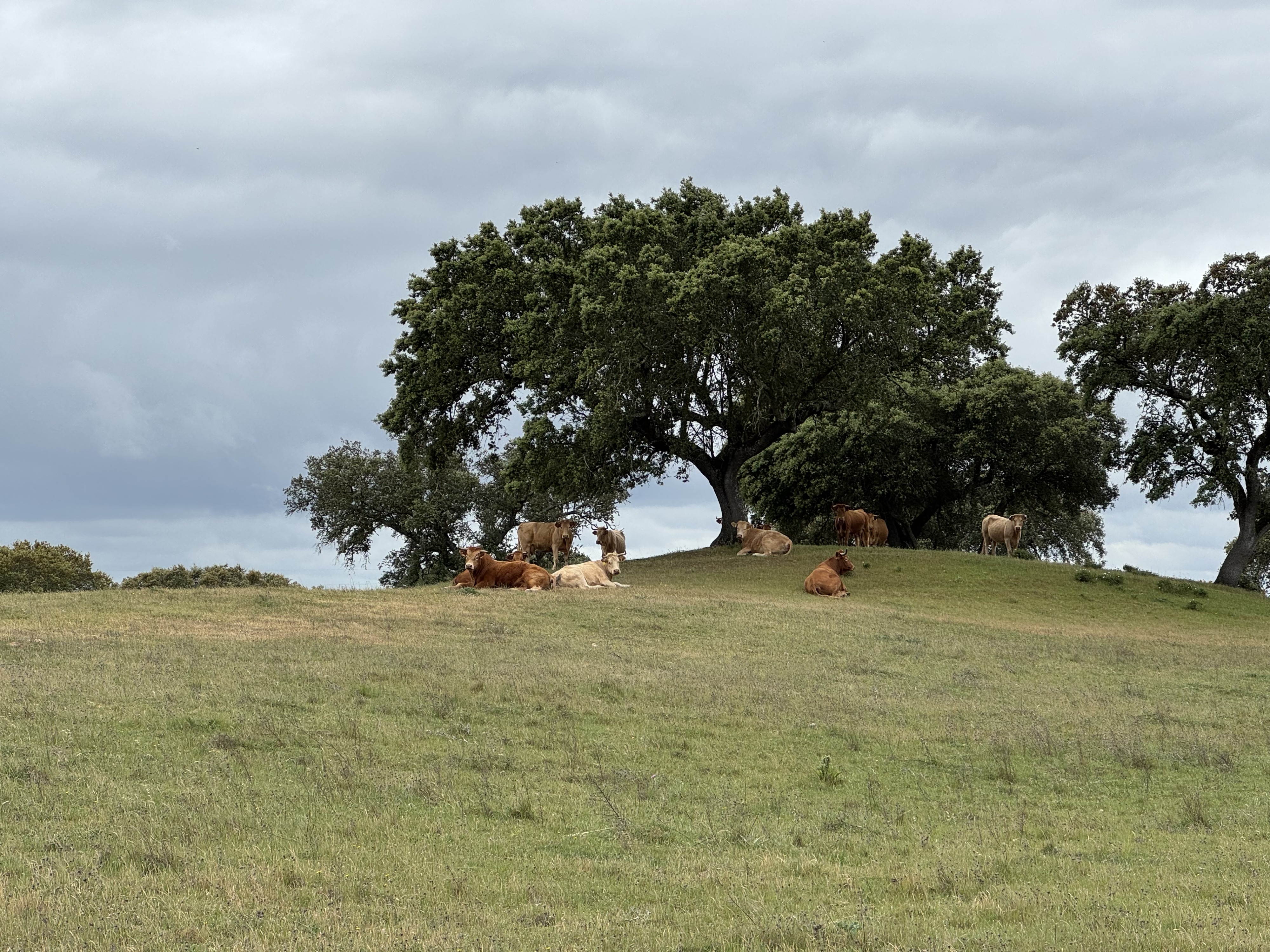
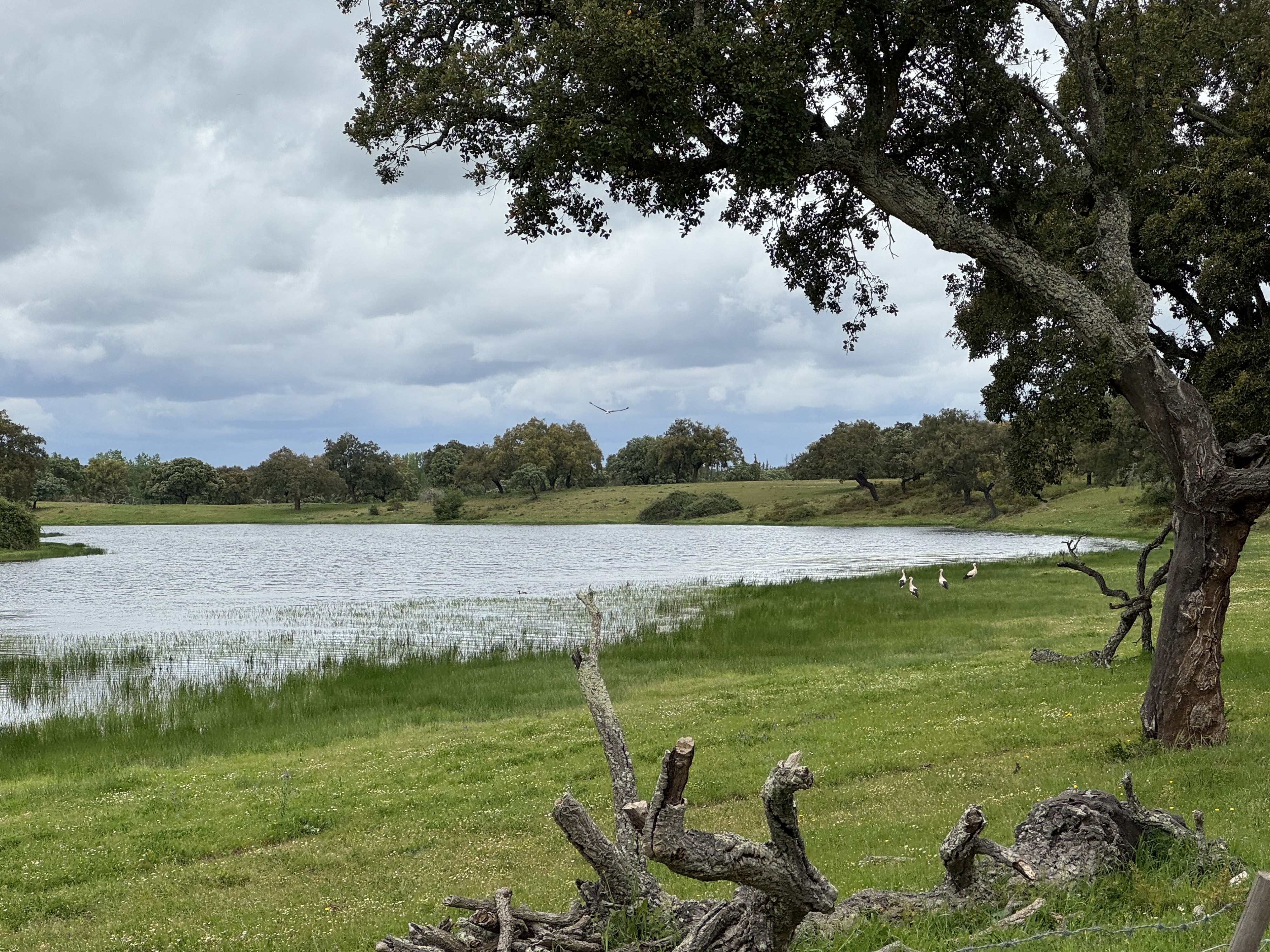
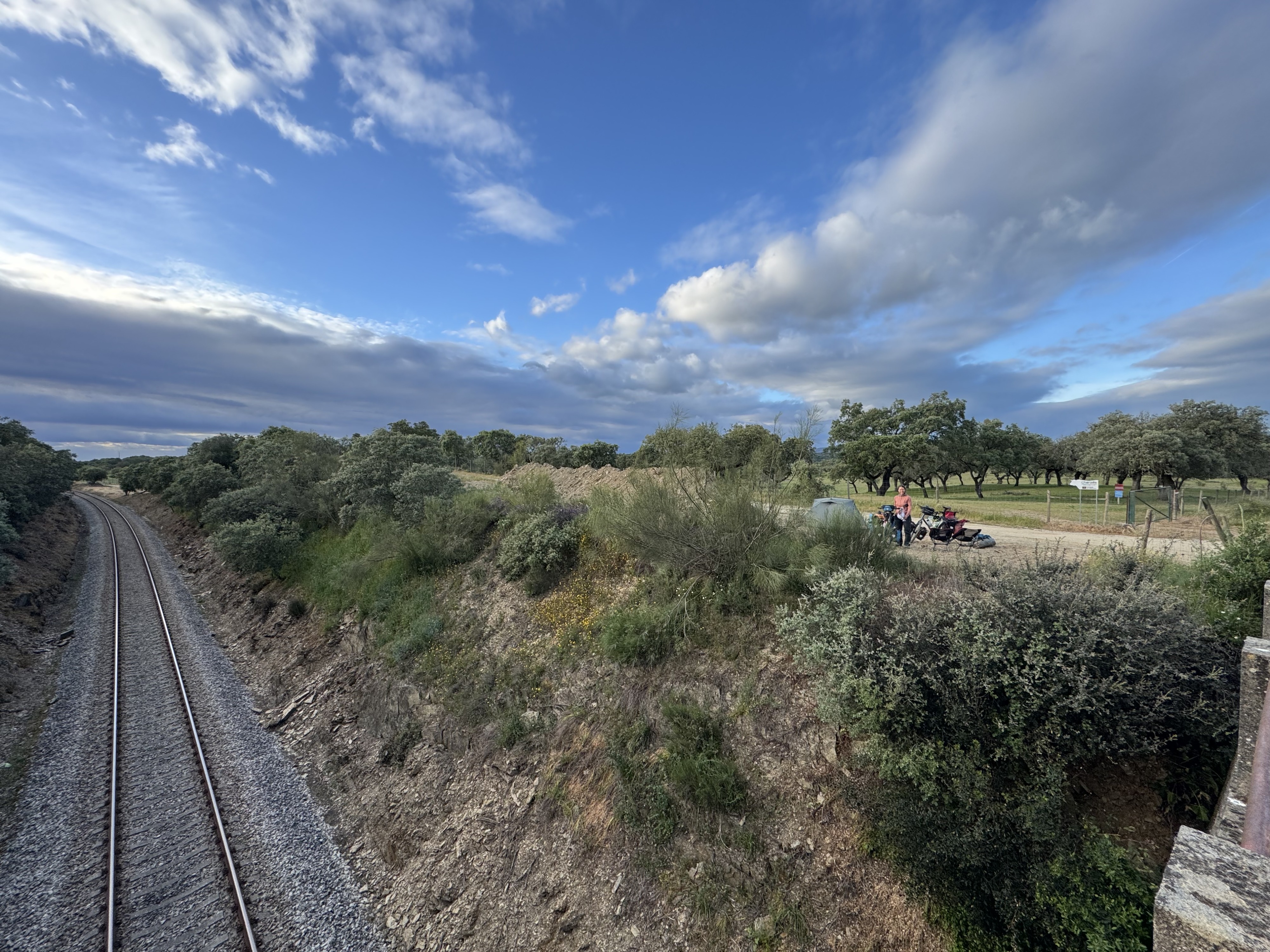
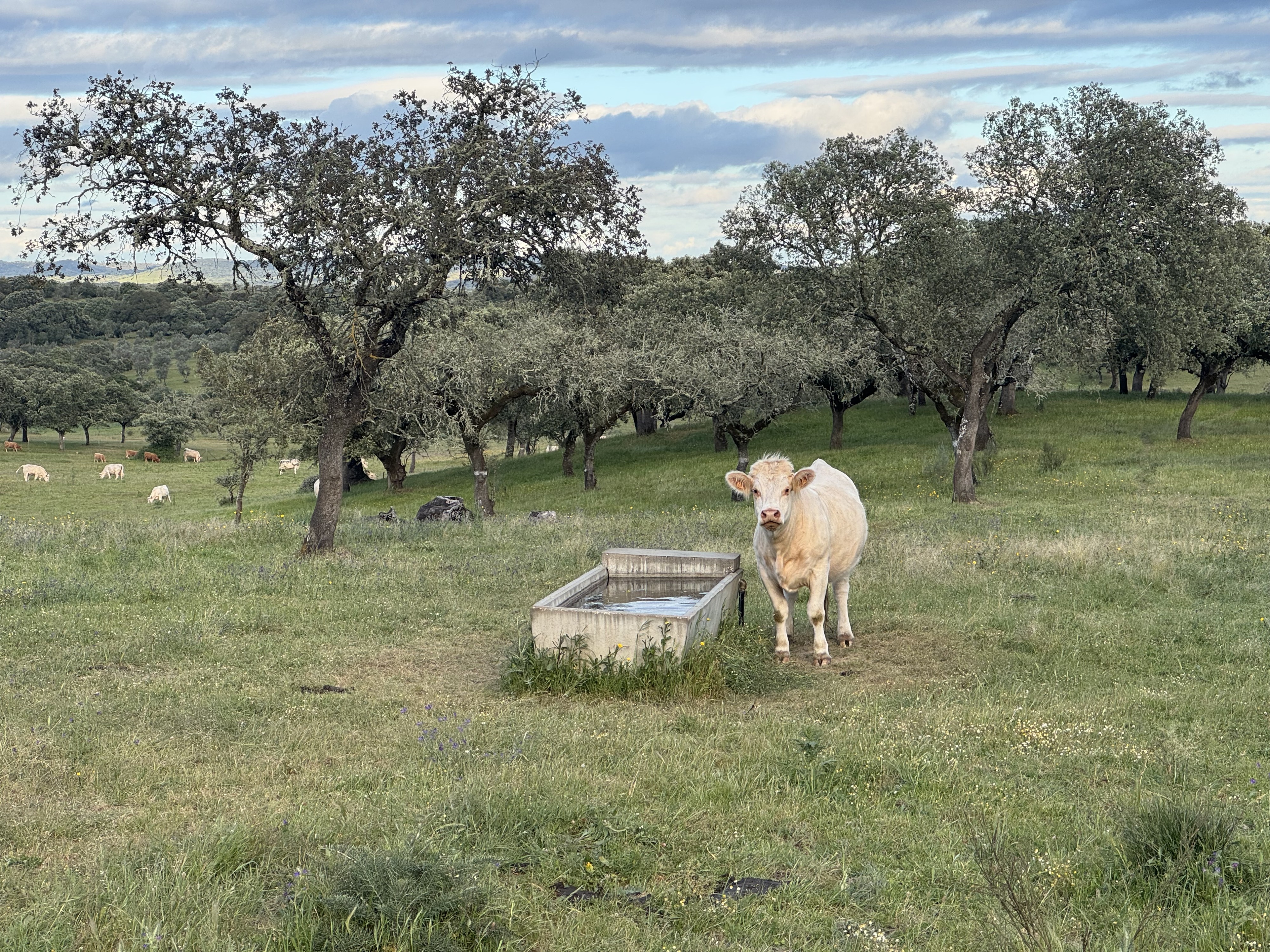
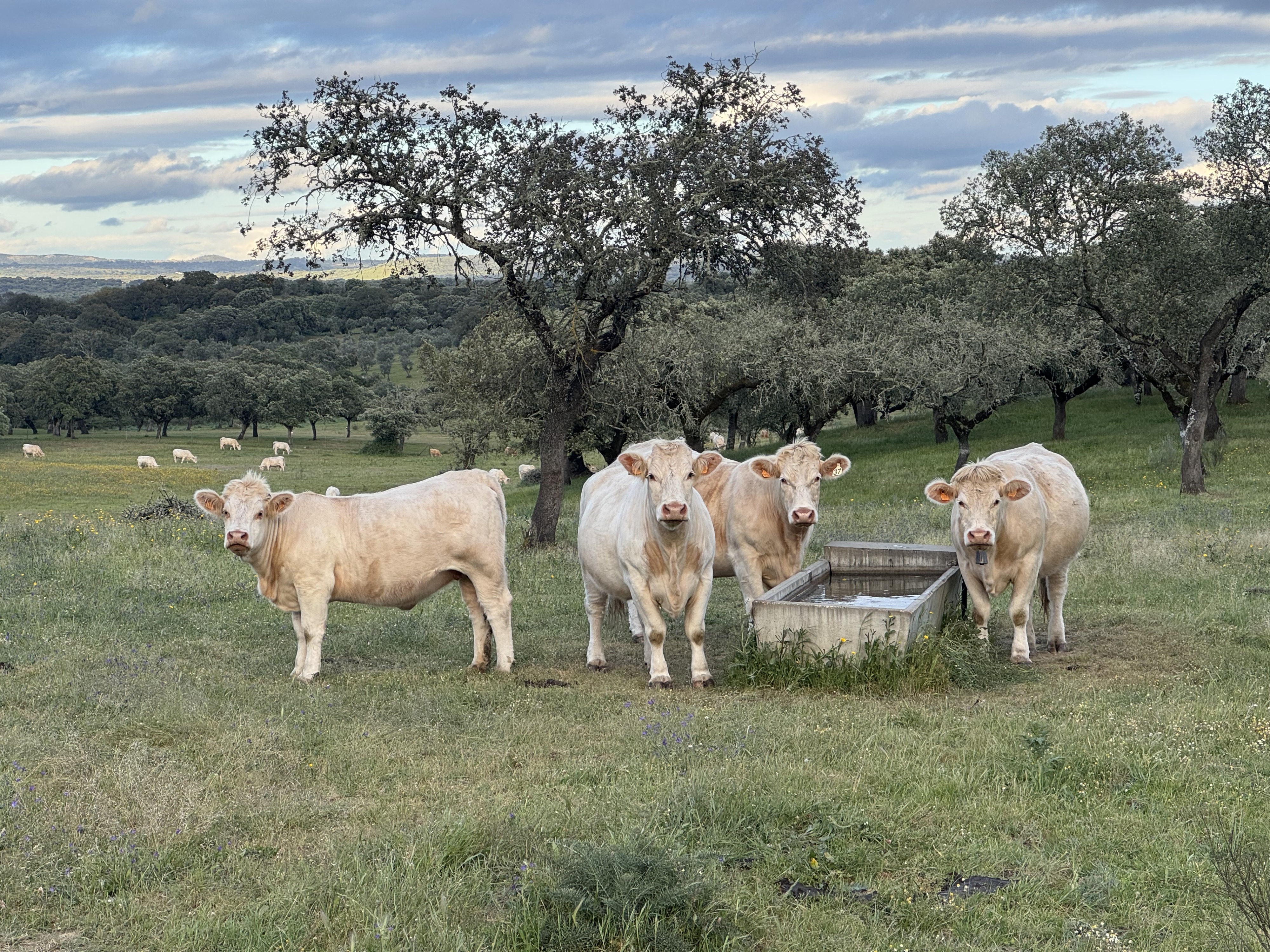
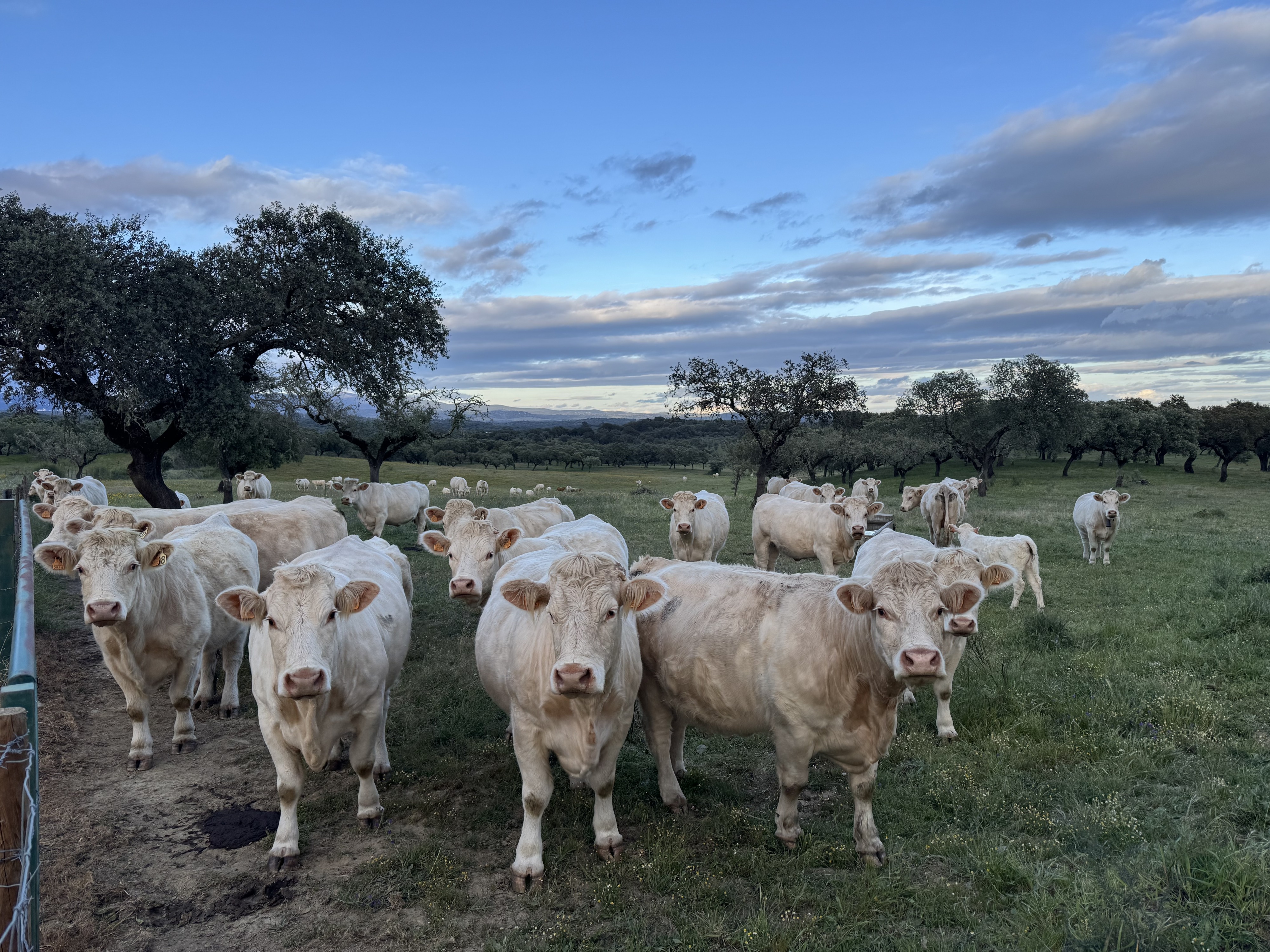
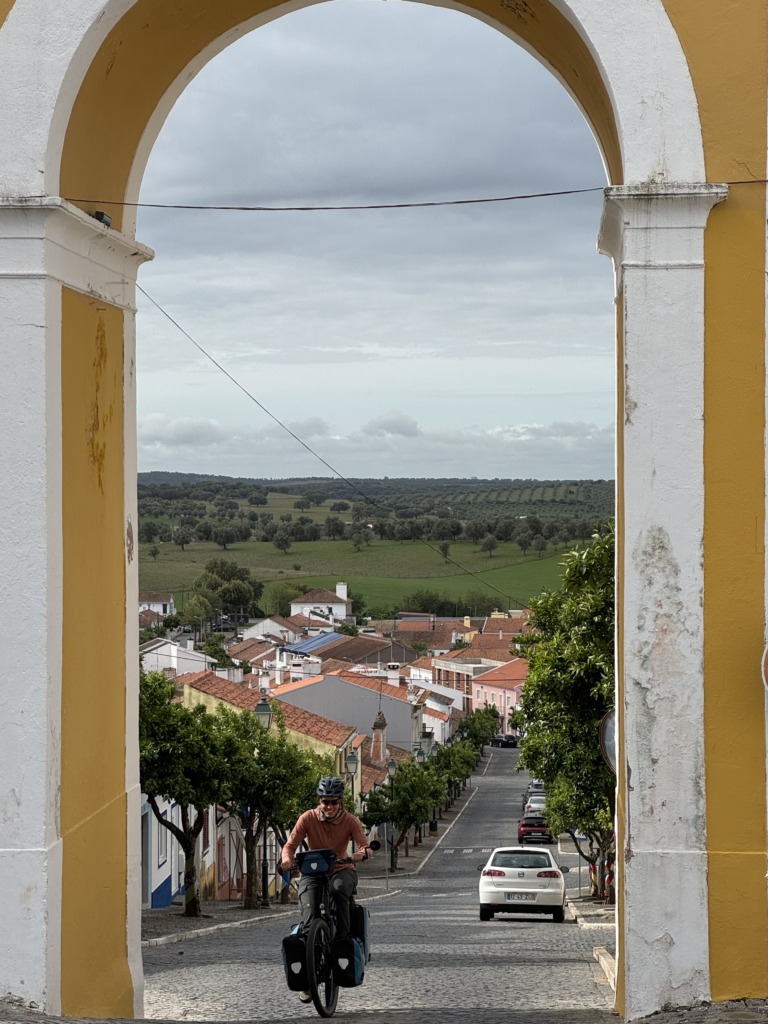
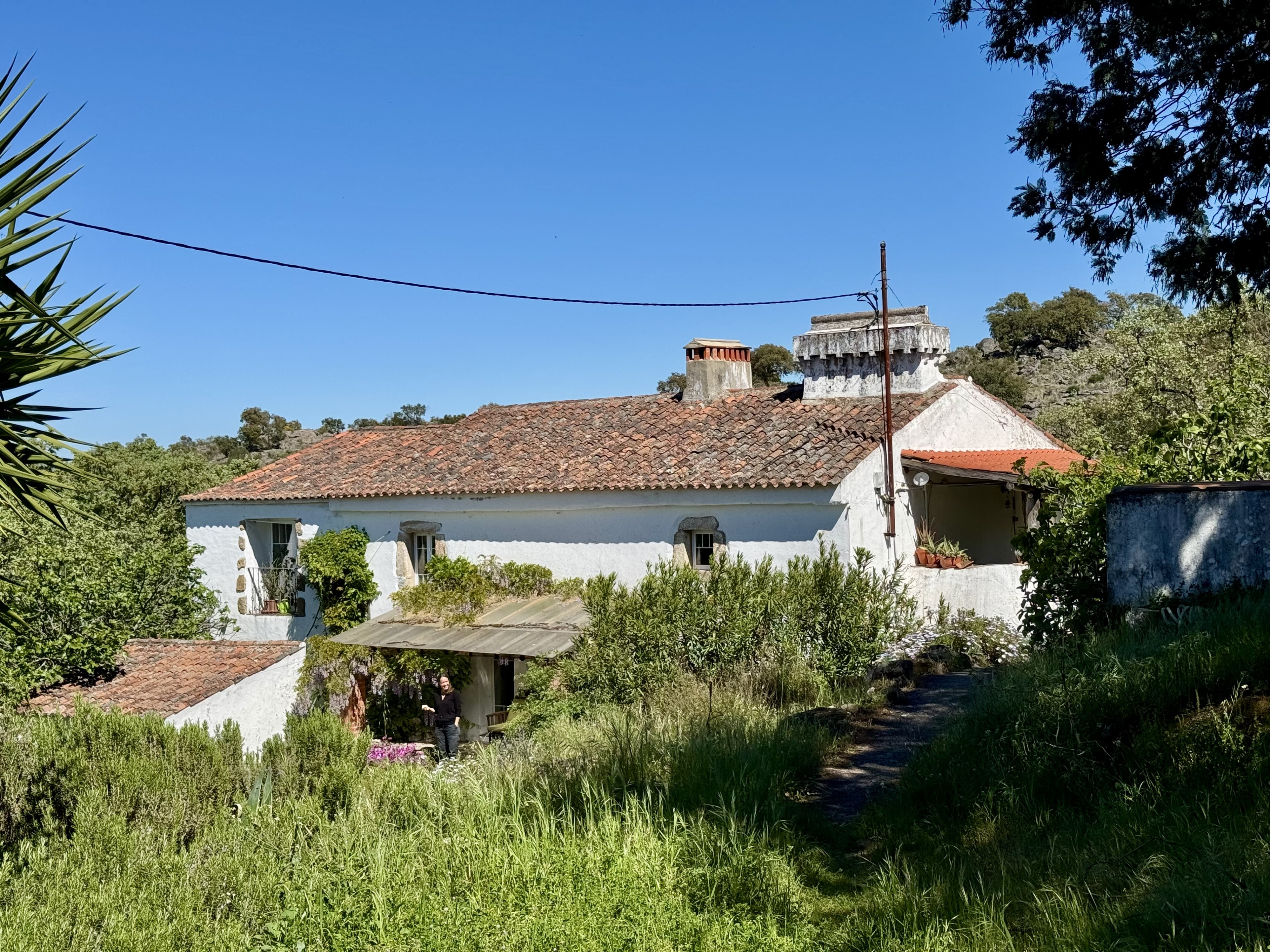
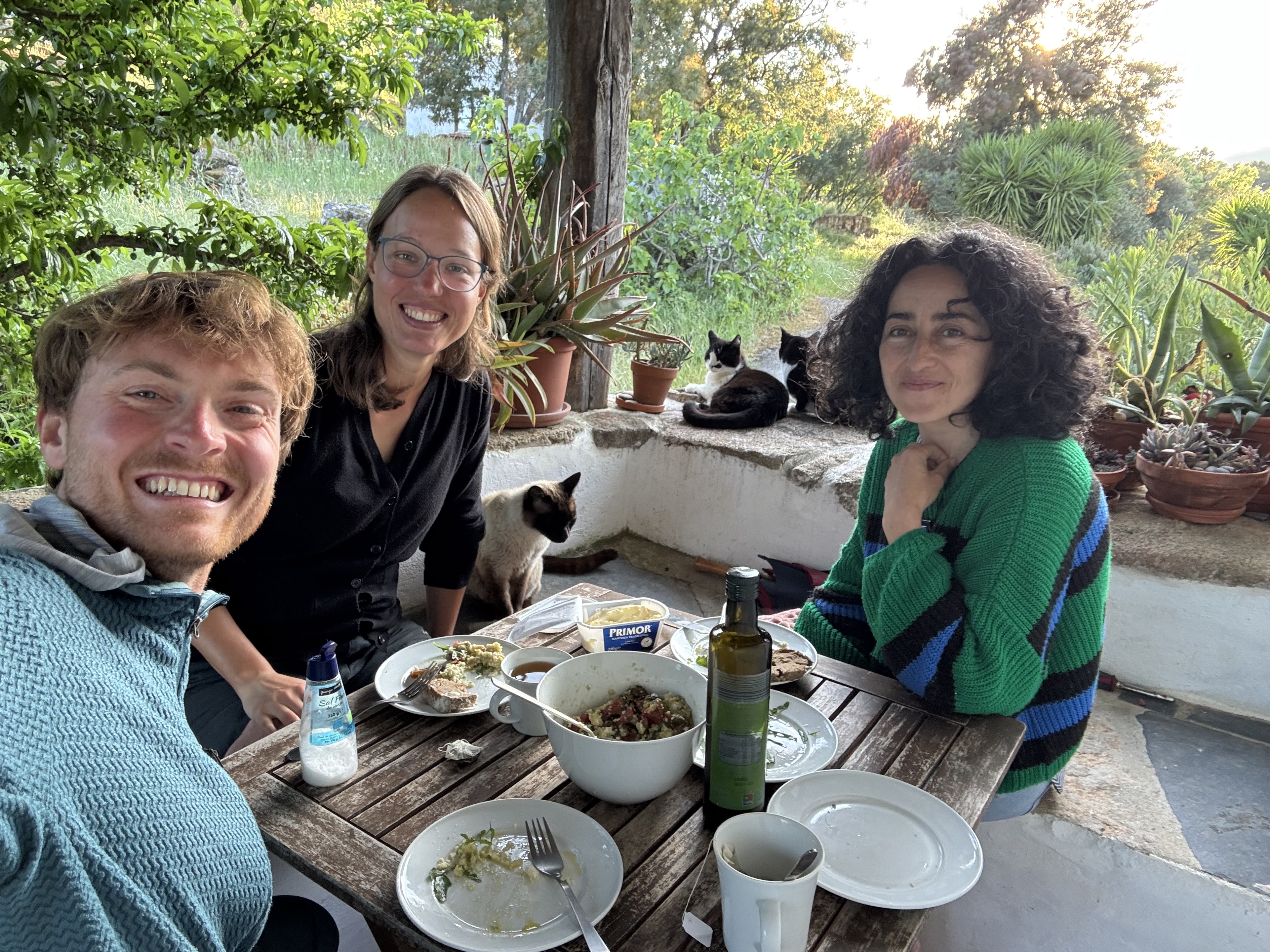
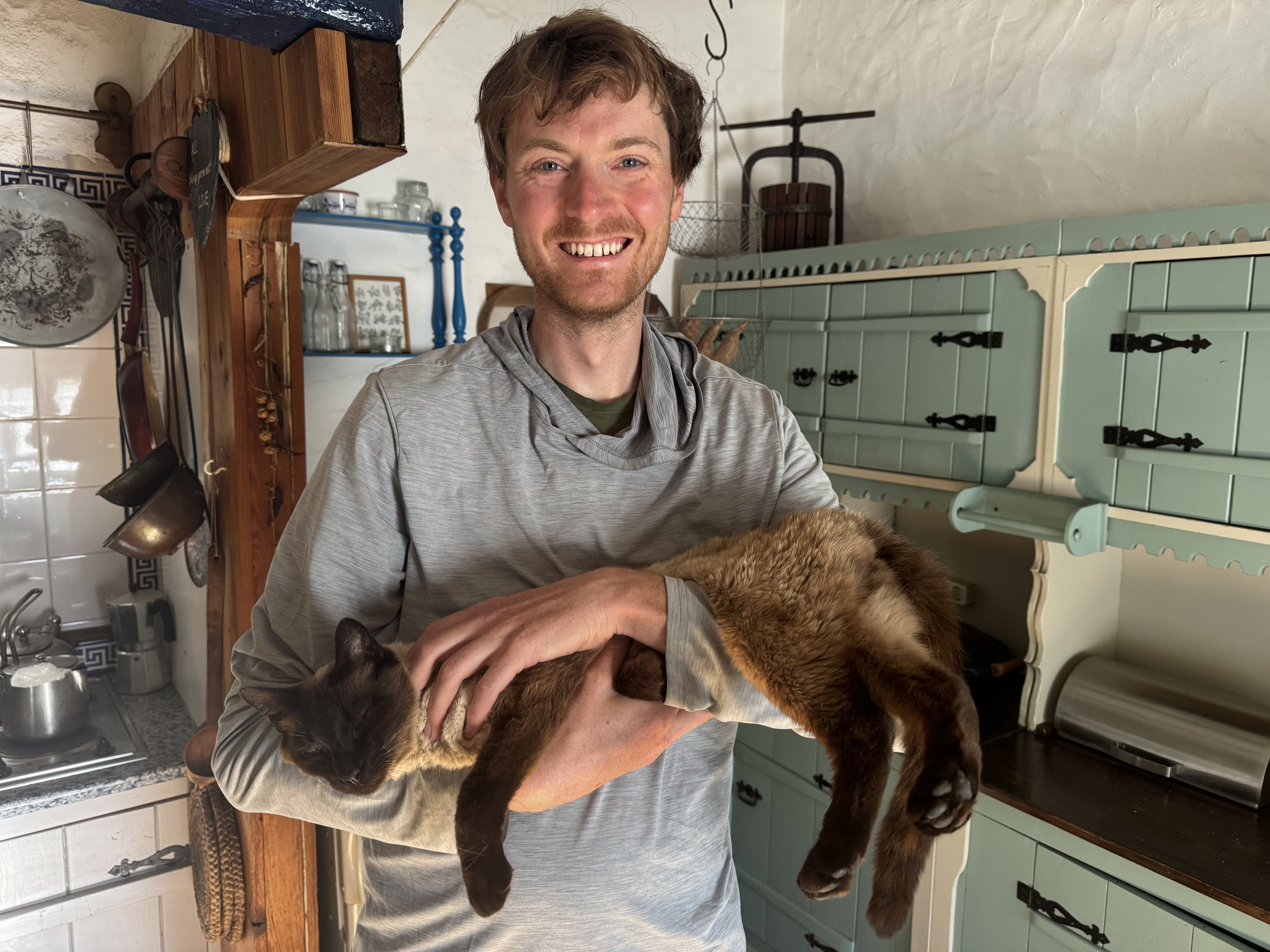
The rest of the route isn’t particularly spectacular—there are a few pretty little villages here and there, but for the most part the region is heavily farmed, and we ride past pastures filled with cows, horses, and sheep. This also means that practically everything is fenced in, making it difficult to find a spot for wild camping. These fenced-in pastures are often so large that you almost get the feeling the animals are free and we’re the ones locked in. At one point, we meet a farmer whom we ask if we can pitch our tent right by the road, between the railroad tracks and the pasture fence. Luckily, only one train passes by, and otherwise it’s wonderfully quiet; we only hear the cows mooing now and then. On these somewhat boring stretches, we always try to find something that fills us with anticipation and keeps our motivation high—in this case, it’s the prospect of staying with Rocio (a Warmshowers host) for two nights right on the Spanish border. For one thing, we always enjoy interacting with other bike travelers, and for another, she lives so off the beaten path that it piques our curiosity. And as if that weren’t reason enough to be happy, it also gives Beni a chance to let his paraglider get some fresh air again. So we have a lovely destination ahead of us, and we ride cheerfully through picturesque little villages before being warmly welcomed by Rocio in her little stone cottage in the very backwoods of the Portuguese/Spanish border region. And here’s a little fun fact: It’s not actually Rocio’s little house at all, but that of a Swiss couple who are currently spending six months in Mexico; during this time, Rocio is house-sitting for them, looking after the house and their three cats, and is allowed to host other guests there. It’s really fascinating to hear about this way of living—house-sitting for other people and getting to stay there for free in return. And that’s not the only fascinating thing we learn from Rocio, because she’s a well-traveled woman—she spent six years! cycling from Japan to Spain. She tells us that at the beginning she traveled completely without a cell phone and simply asked people on the side of the road for directions, and through these interactions she was often invited into people’s homes. Later on, she did have a cell phone, but without internet, just so she could take photos. We could hardly imagine that; above all, we asked her how she was able to stay in touch with home, and she said that unfortunately she doesn’t have any close friends, since she moved around a lot as a child, and she doesn’t know her father, and she doesn’t have the closest relationship with her mother either. That is, of course, very sad. And we realize that this used to be the norm—that sometimes, for weeks on end, you wouldn’t know how things were going for the people back home, or vice versa for those who were traveling.
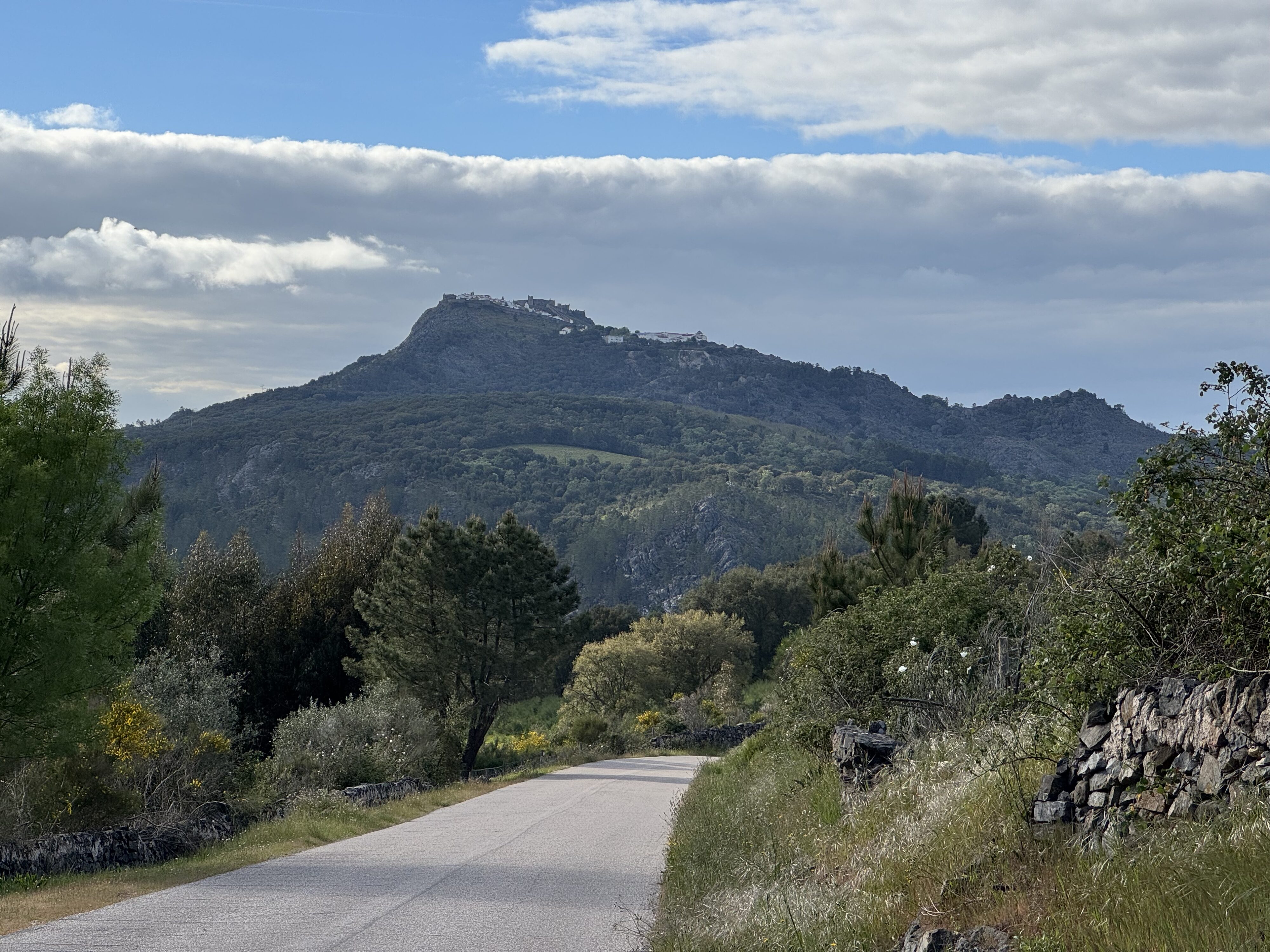
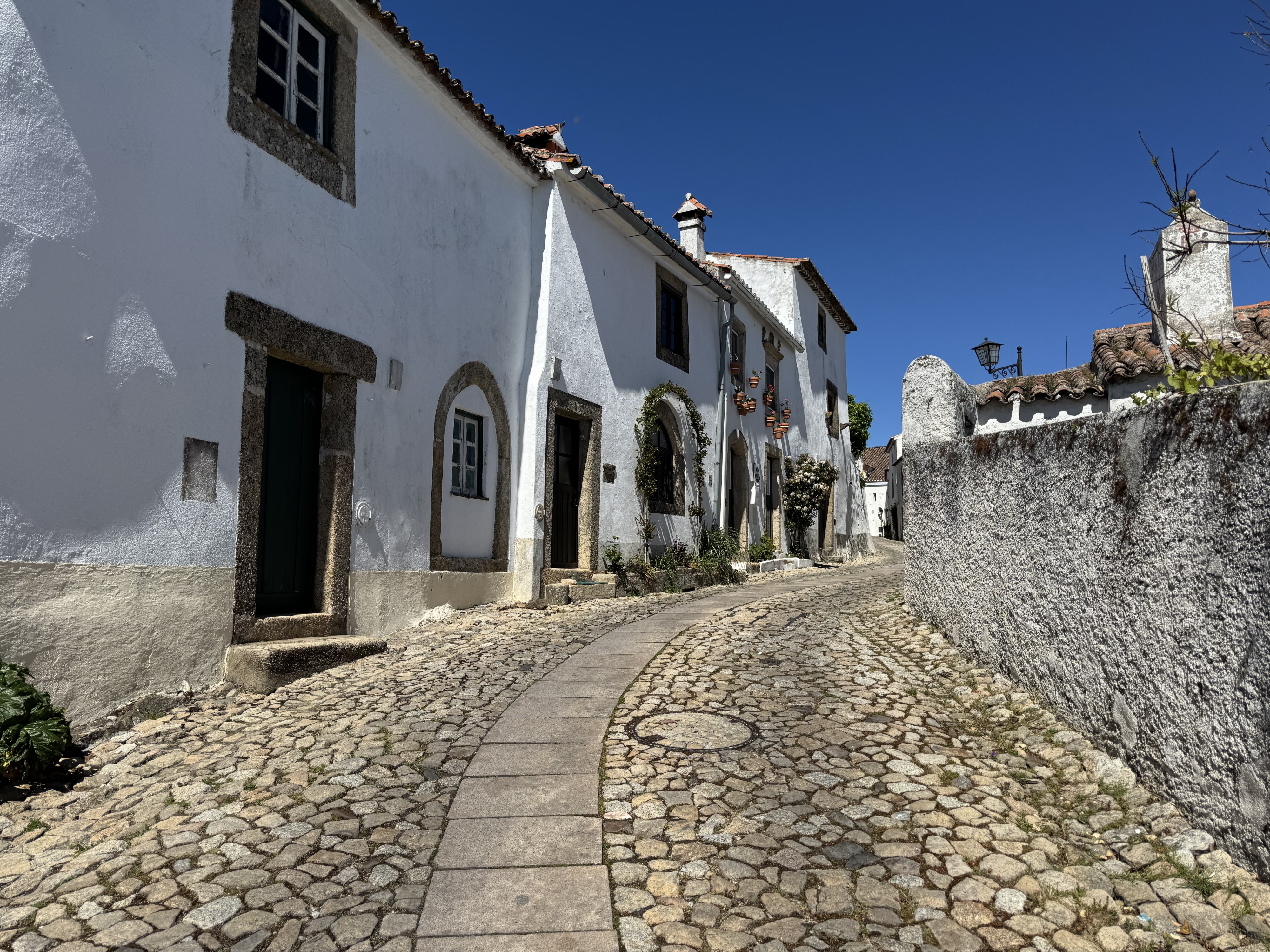
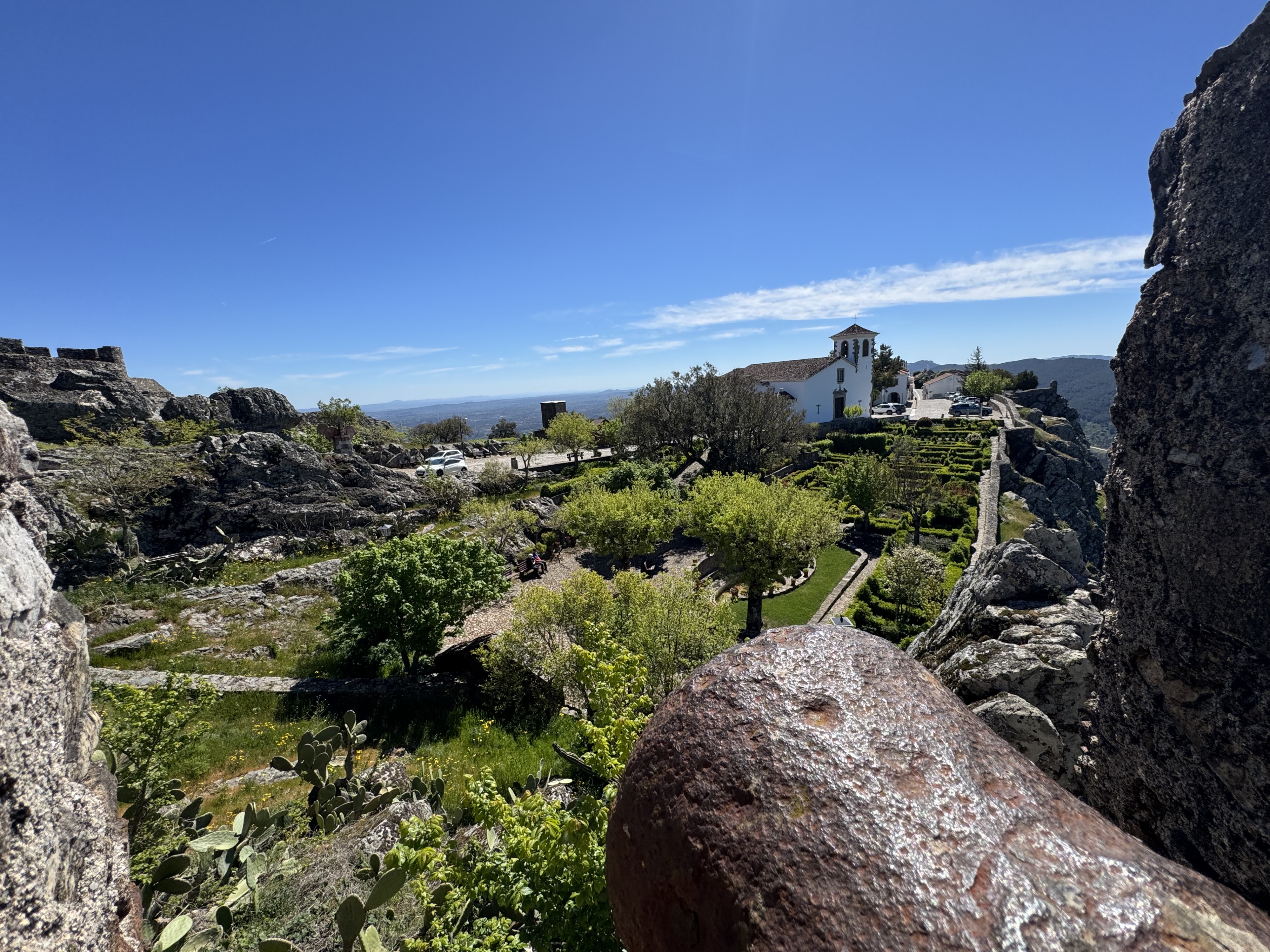
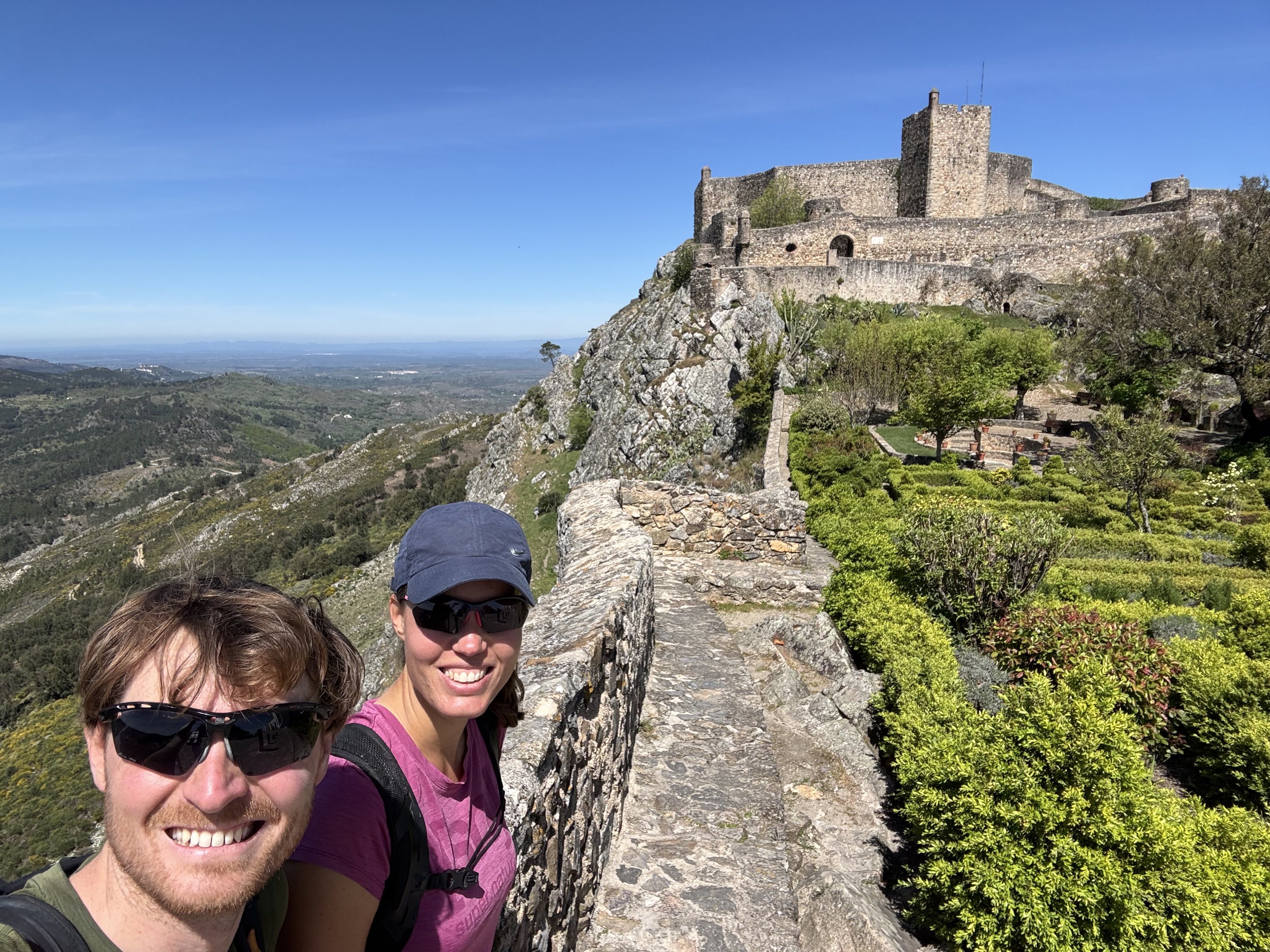
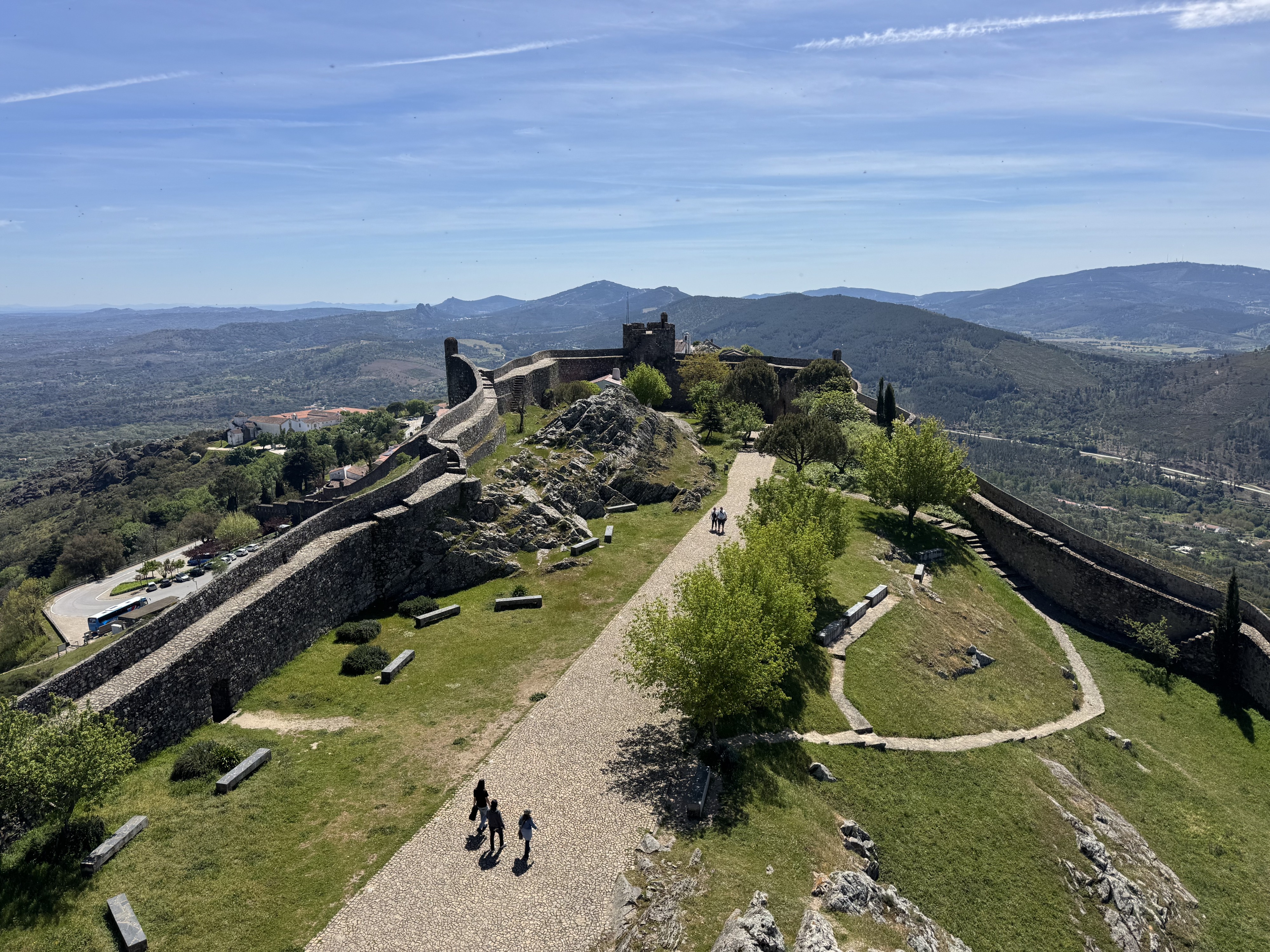
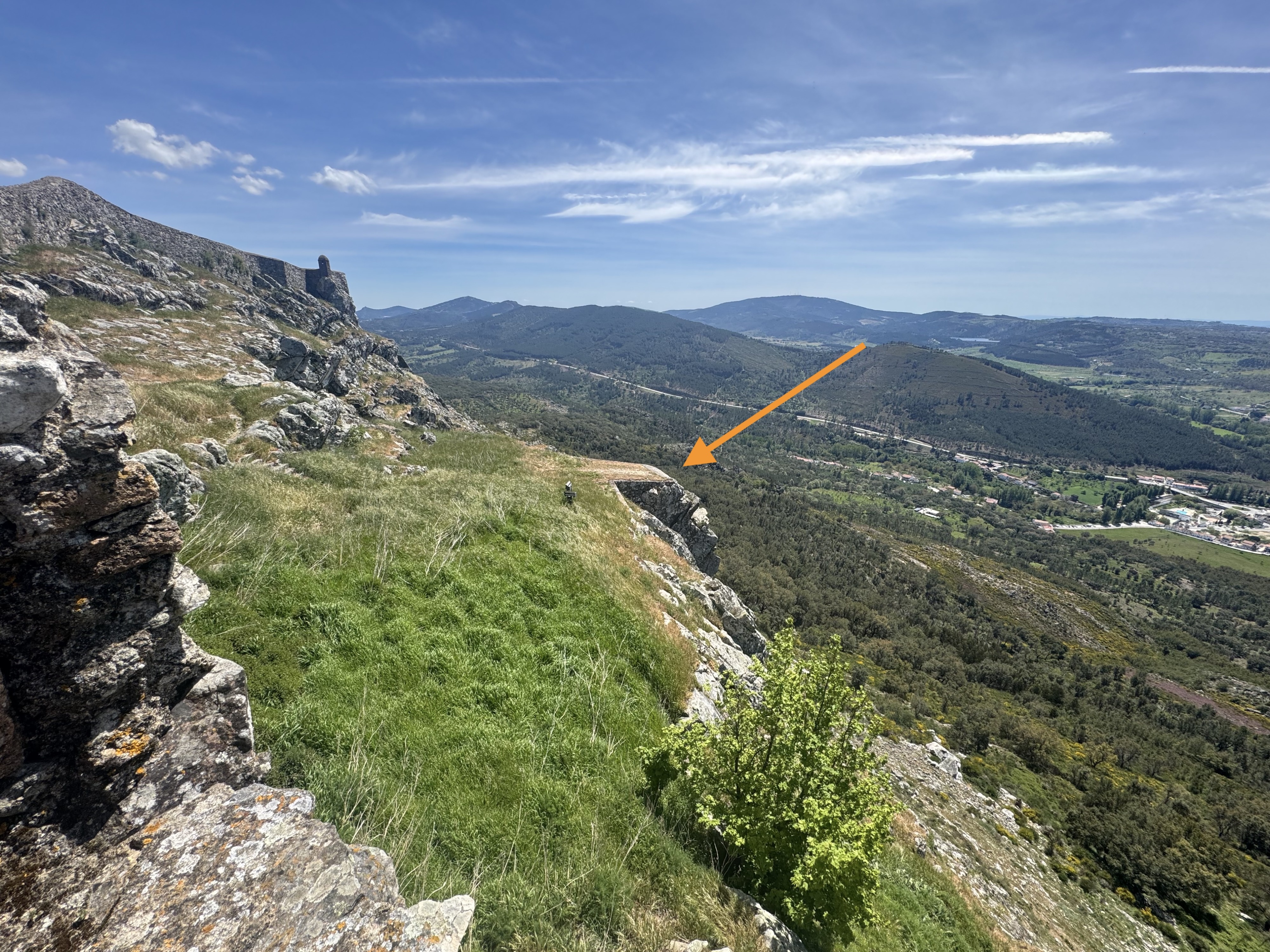
Rocio and we get along so well that we decide to stay one more night. This gives us plenty of time to explore the impressive medieval town of Marvão, which sits spectacularly perched on a rock overlooking the Alentejo.
As we stroll through the narrow streets and along the old city walls, we enjoy the special tranquility and the sweeping view over the rolling countryside all the way to the Spanish border.
As the crowning finale, Beni pulls off a spectacular cliff launch with his paraglider. He soared above the city walls alongside huge griffon vultures and landed right next to Rocio’s house a good hour later. Nicole proved herself to be a professional launch assistant and helped Beni get the glider airborne at the launch site, which had poor airflow.


With a touch of sadness, we say goodbye to Rocio and drive the few kilometers to the Spanish border. The tiny border crossing is completely unremarkable—there isn’t even a sign with the countries’ names.
Just a few minutes later, we hear a car approaching from behind and say to each other, “Do you think they’ll start passing us with more space now that we’re in Spain?”
And sure enough: Almost every car overtakes us carefully and politely again—what a blessing 😃! Borders always seem a bit surreal anyway: In one country, you’re almost run over by every car, and in the other, they overtake you in a relaxed manner, giving you plenty of space, as if someone had flipped a switch. There are plenty of other examples like that.
Now we’re driving right across the Extremadura region. It covers about 8.3% of Spain’s land area, but with only about 25 inhabitants per square kilometer, it’s home to just 2.6% of the Spanish population.
On the road, it feels like we’re in the middle of nowhere: endless expanses, hardly anyone around, but well-maintained, empty roads. This sense of space and silence is truly impressive.
After three memorable days in the “boondocks,” we finally reach a somewhat larger town again: Plasencia. The town is located in the province of Cáceres on the banks of the Jerte River. After a short break in Plasencia, we continue along the Jerte for a few kilometers.
In addition to the beautiful views of the deep gorges, there’s a special highlight: we’re finally back on a Via Verde. These are disused railway lines that are now reserved exclusively for hikers and cyclists. They’re usually in very good condition and allow you to focus entirely on the landscape, without traffic or distractions.
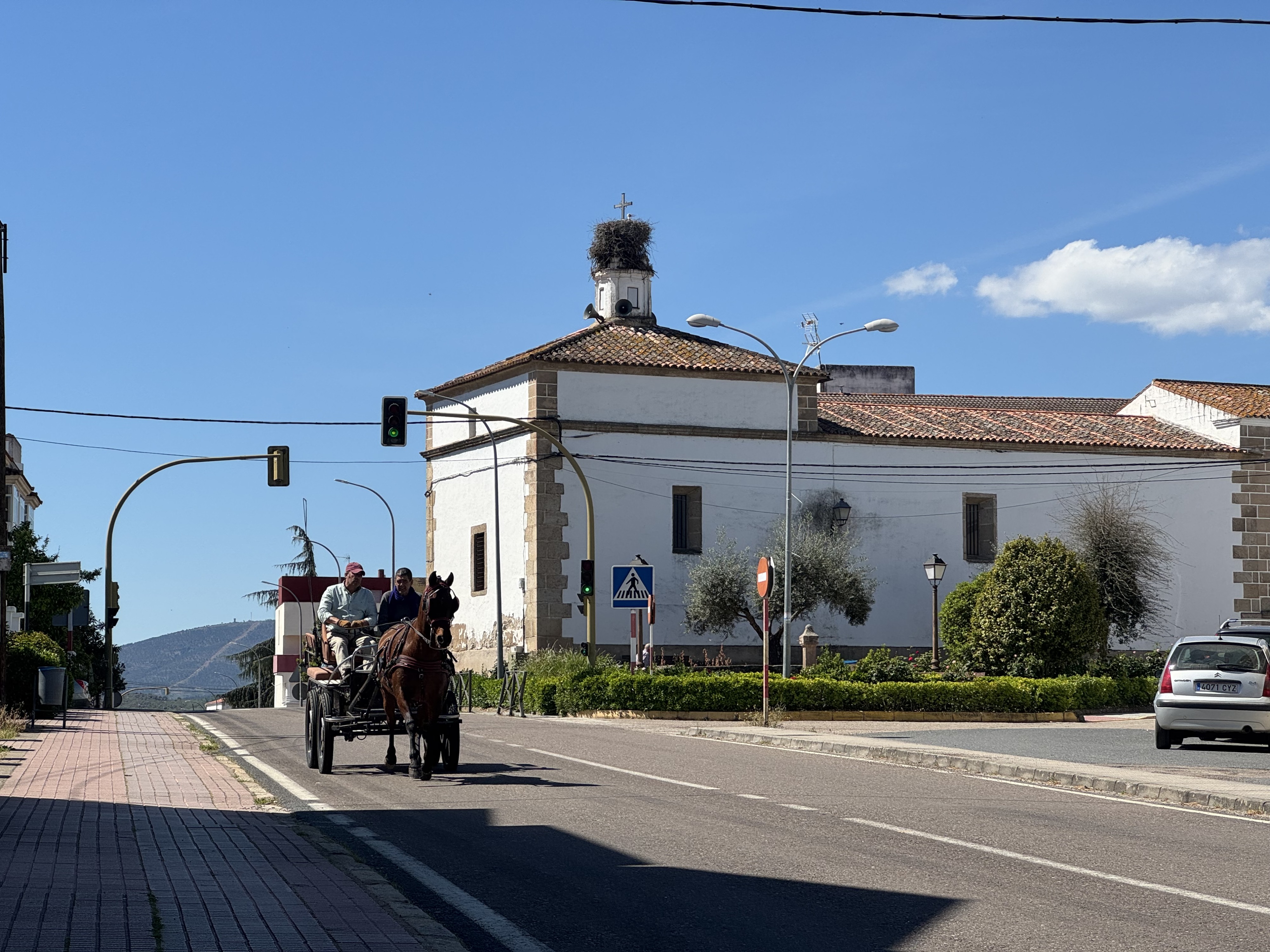
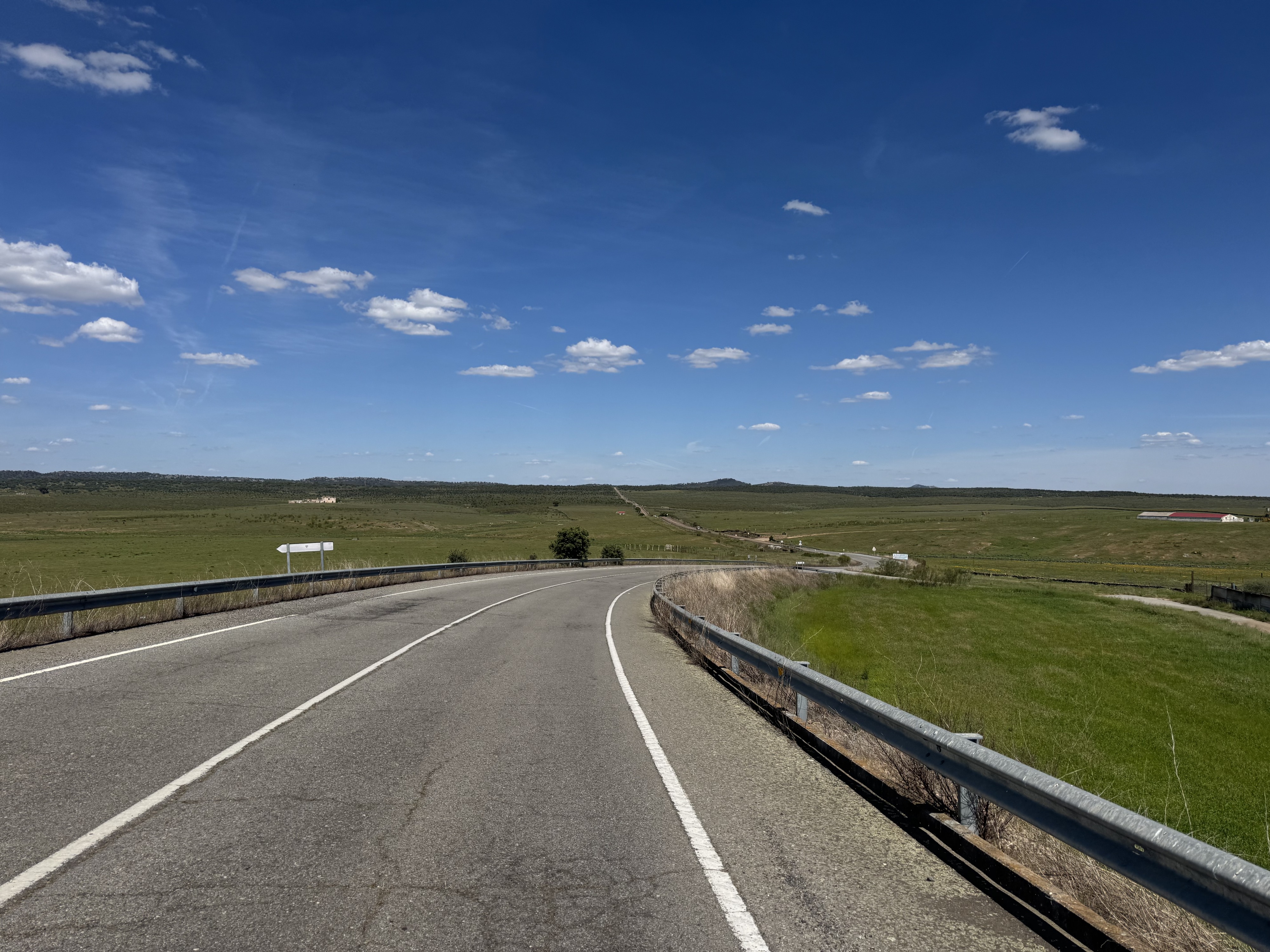
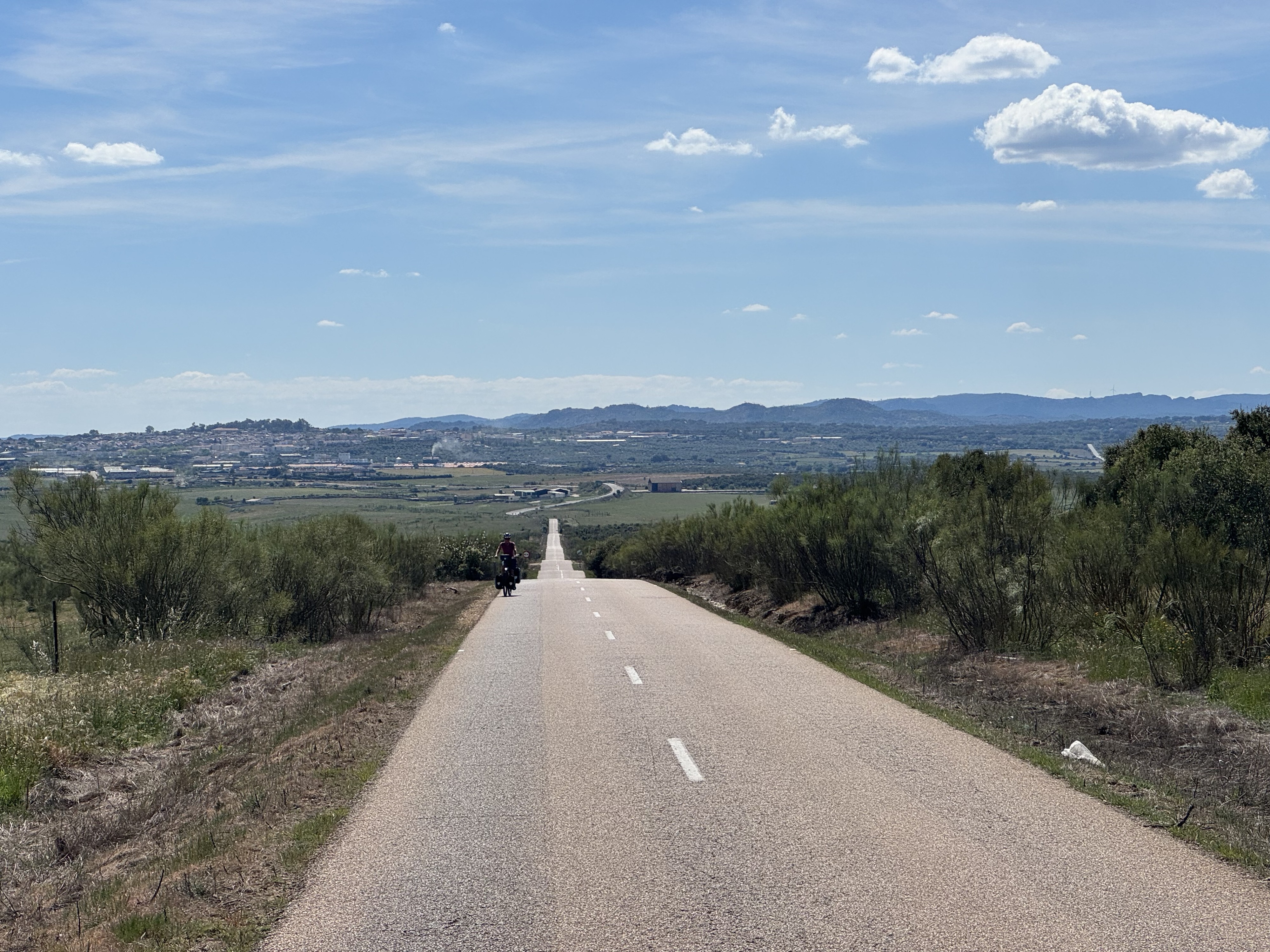
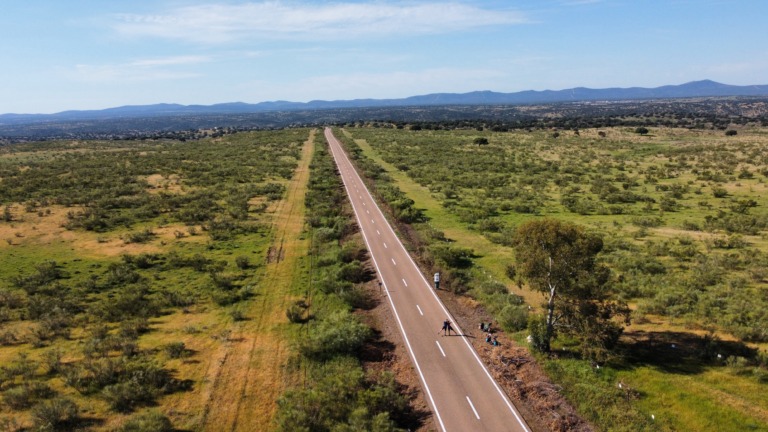
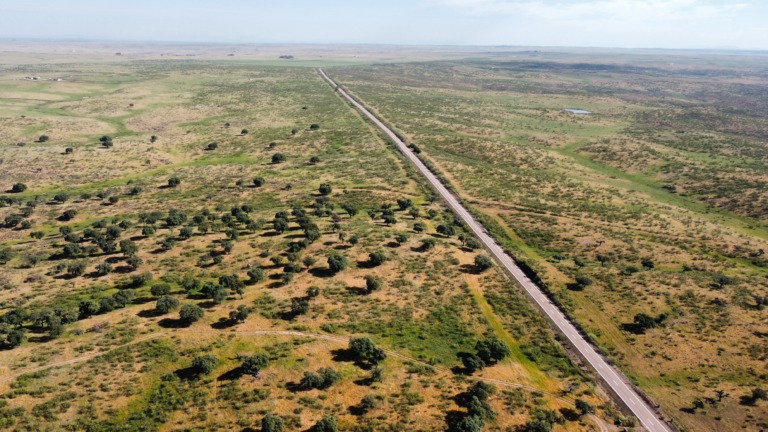
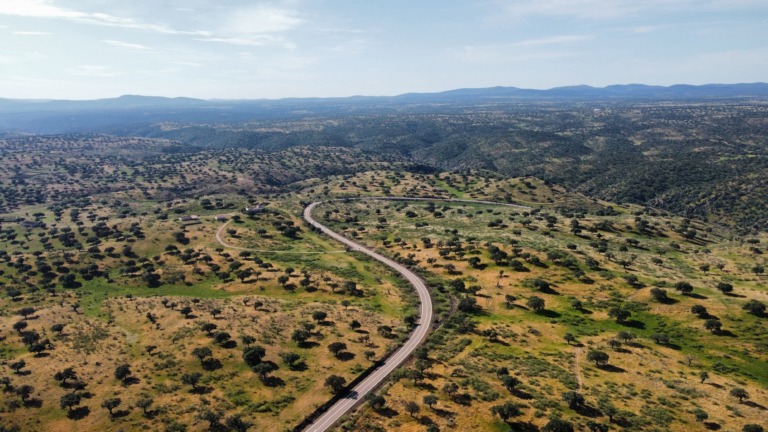
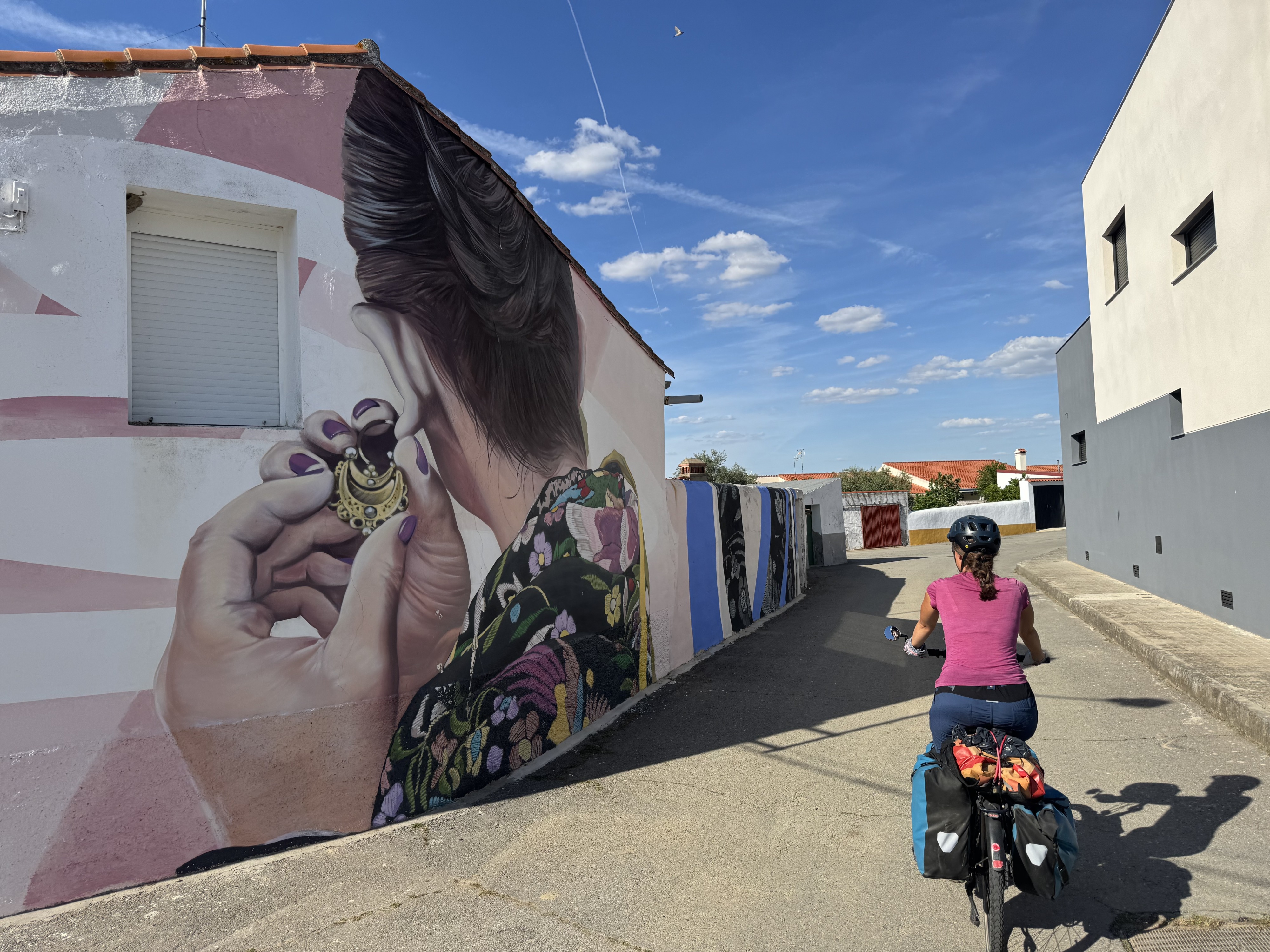
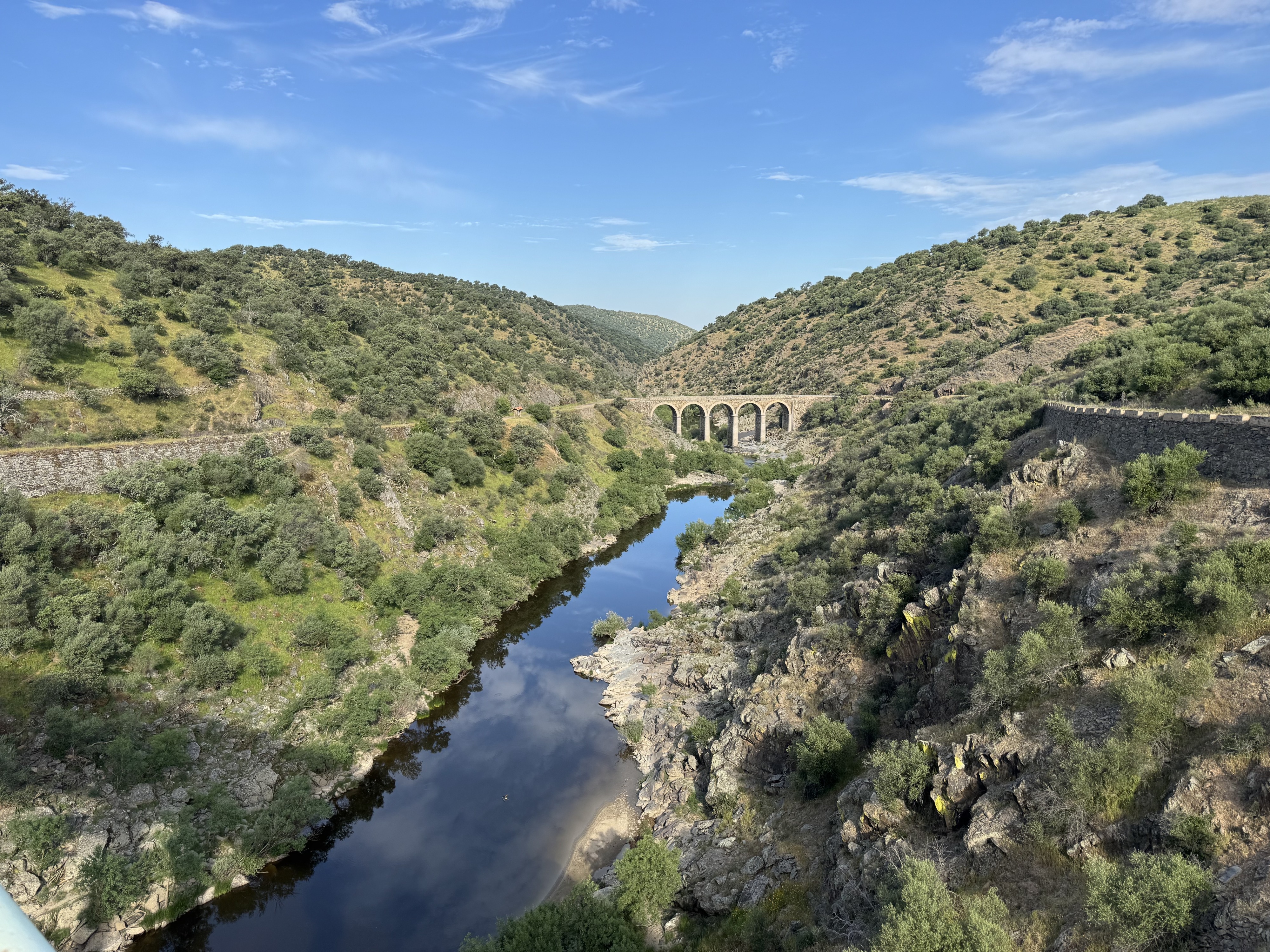
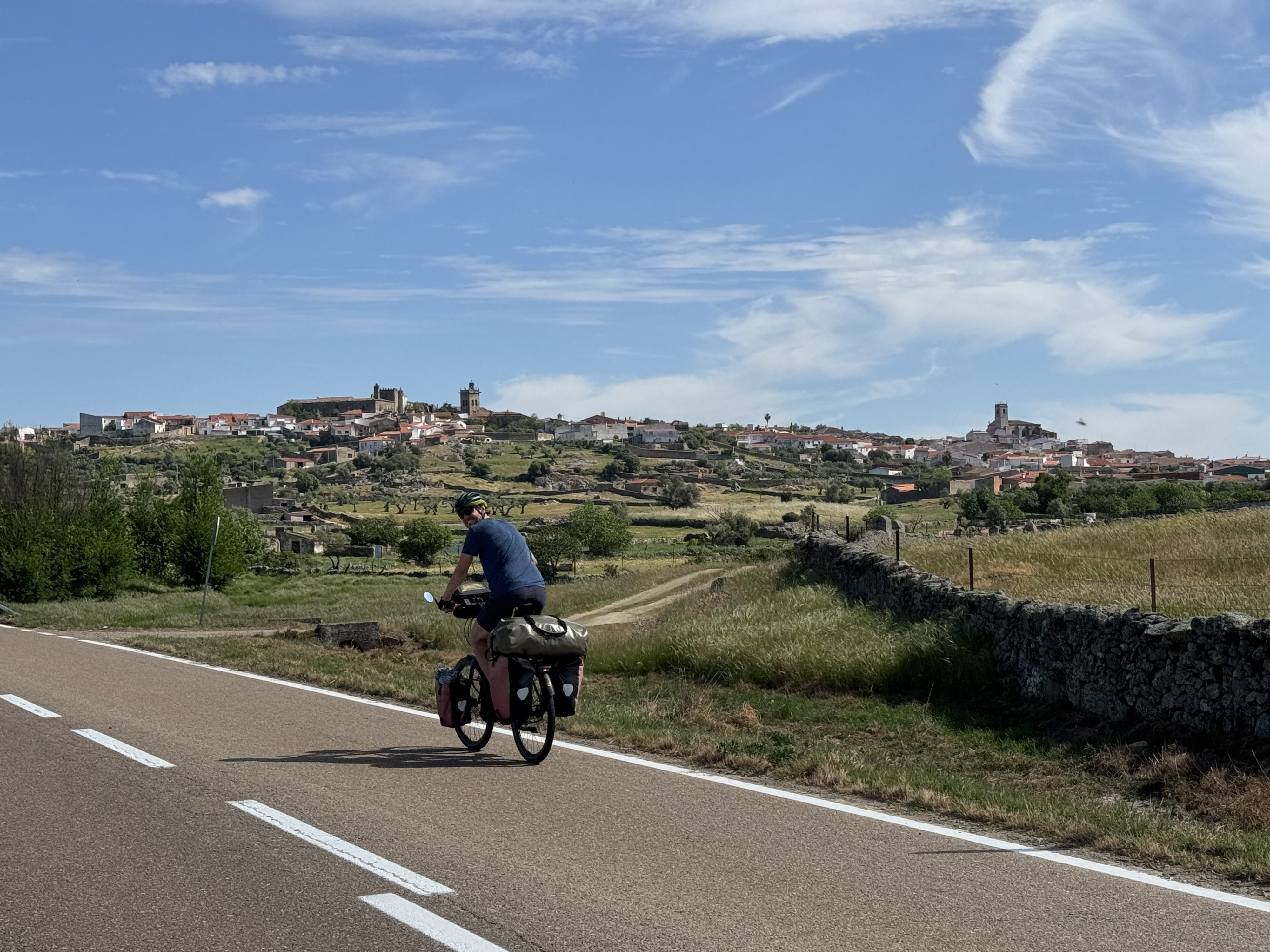
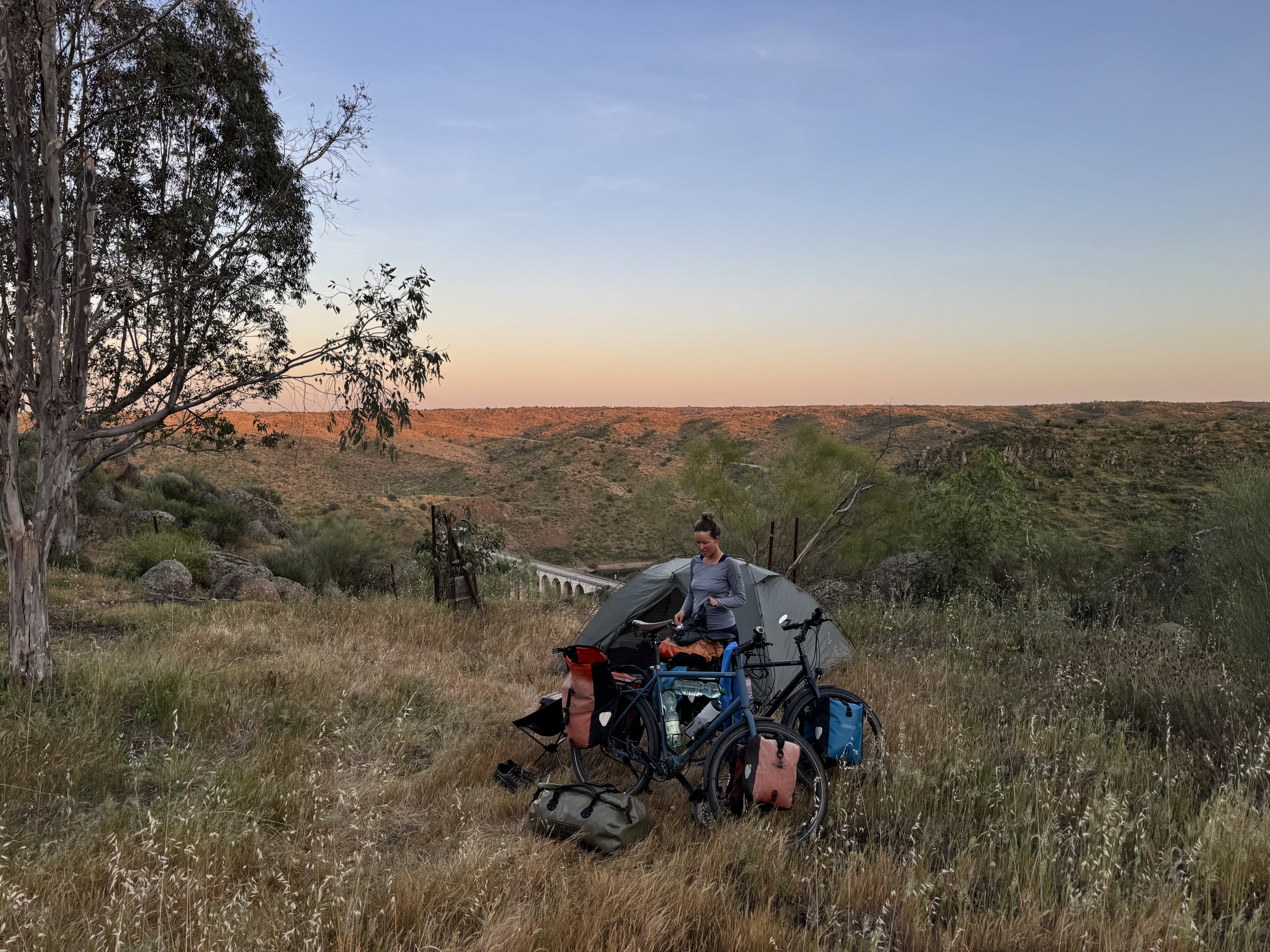
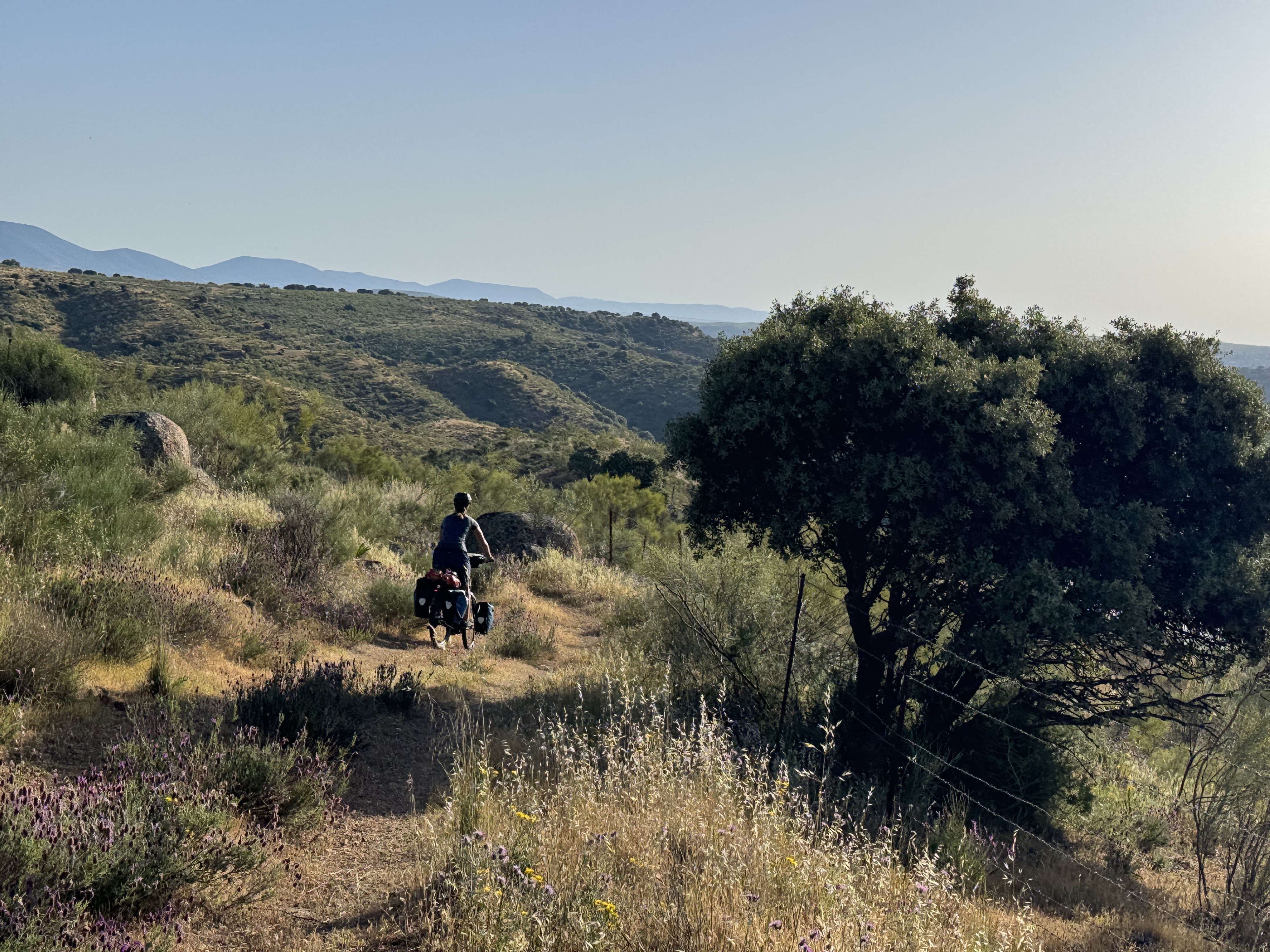
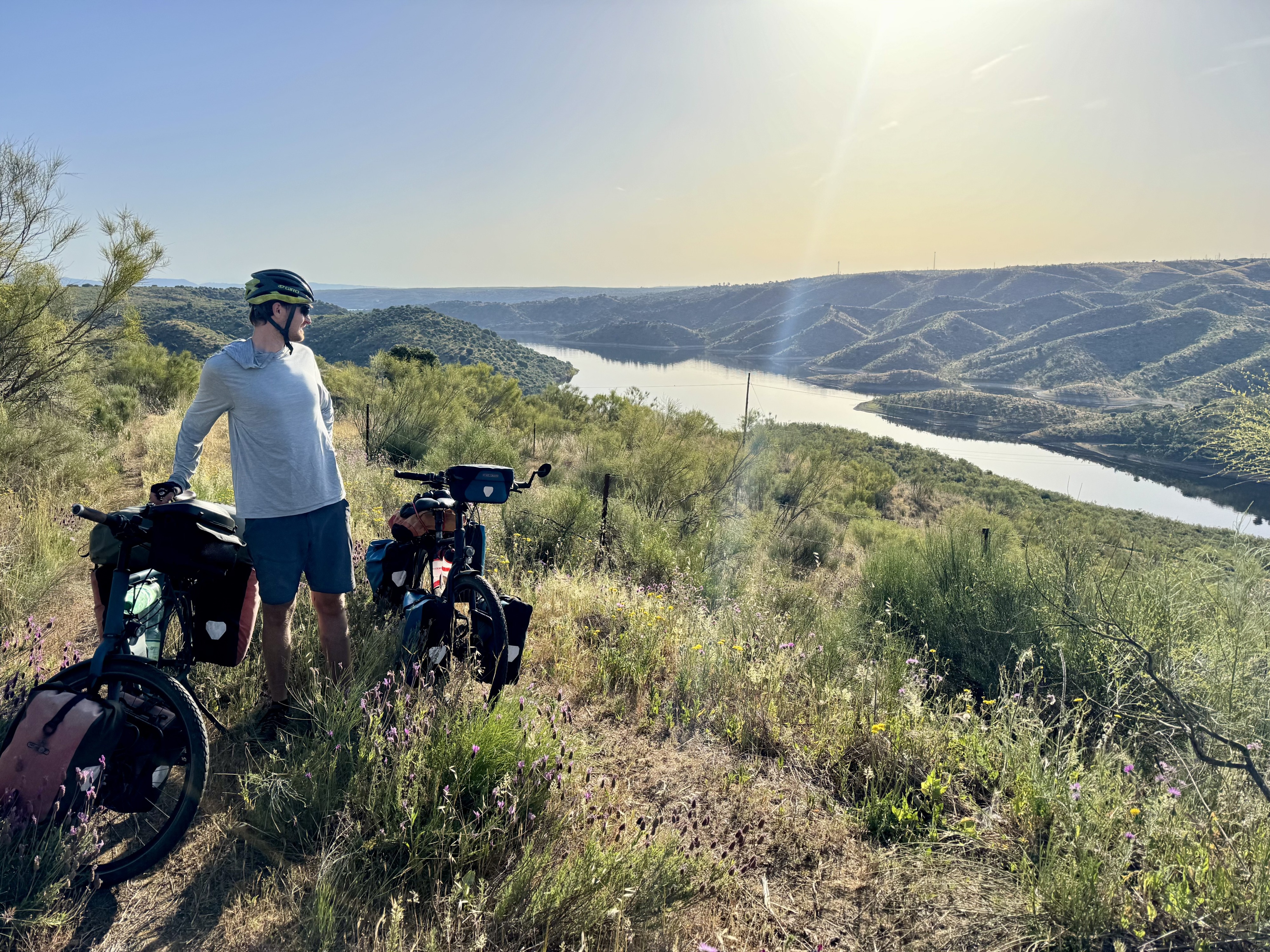
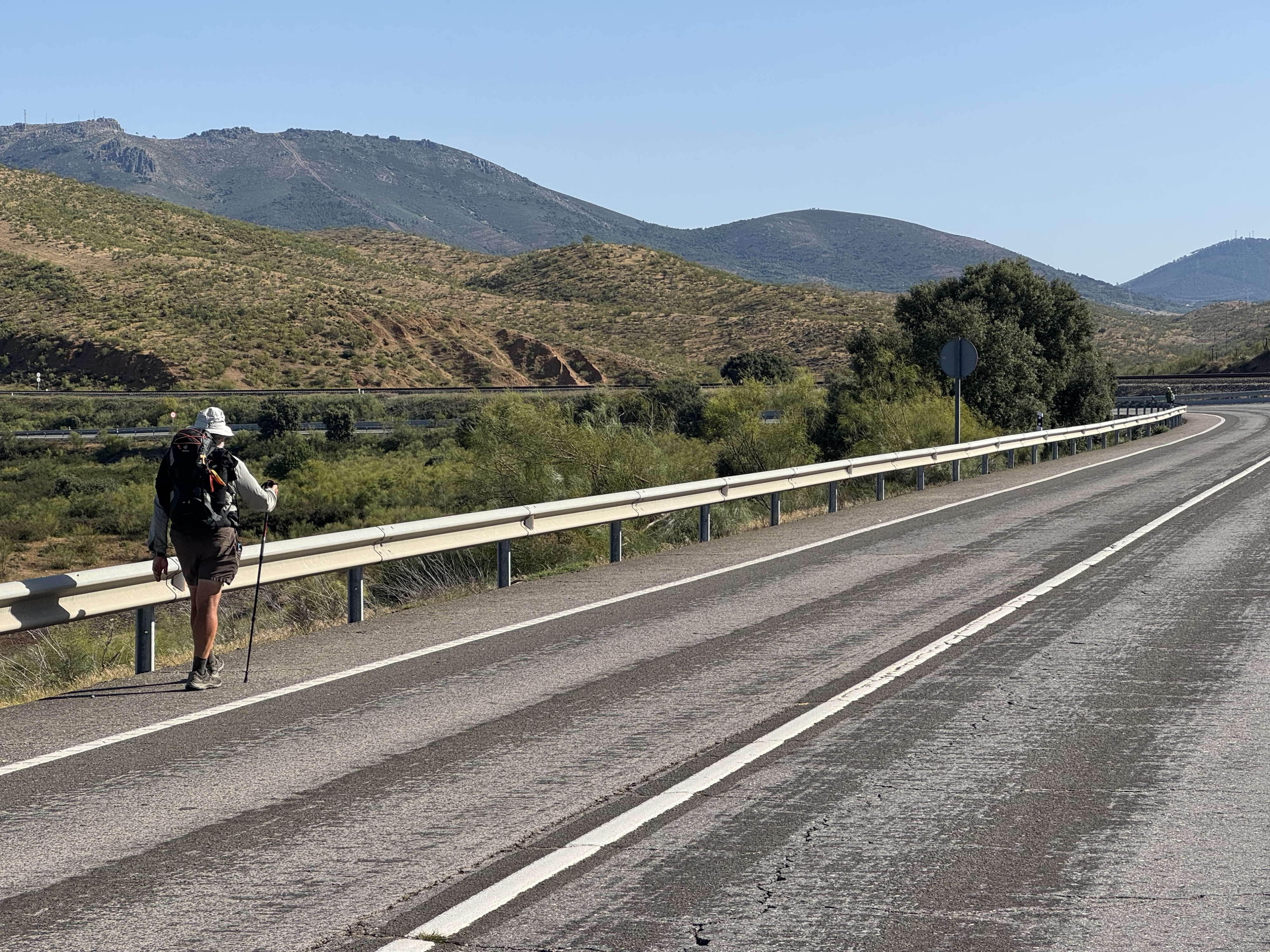
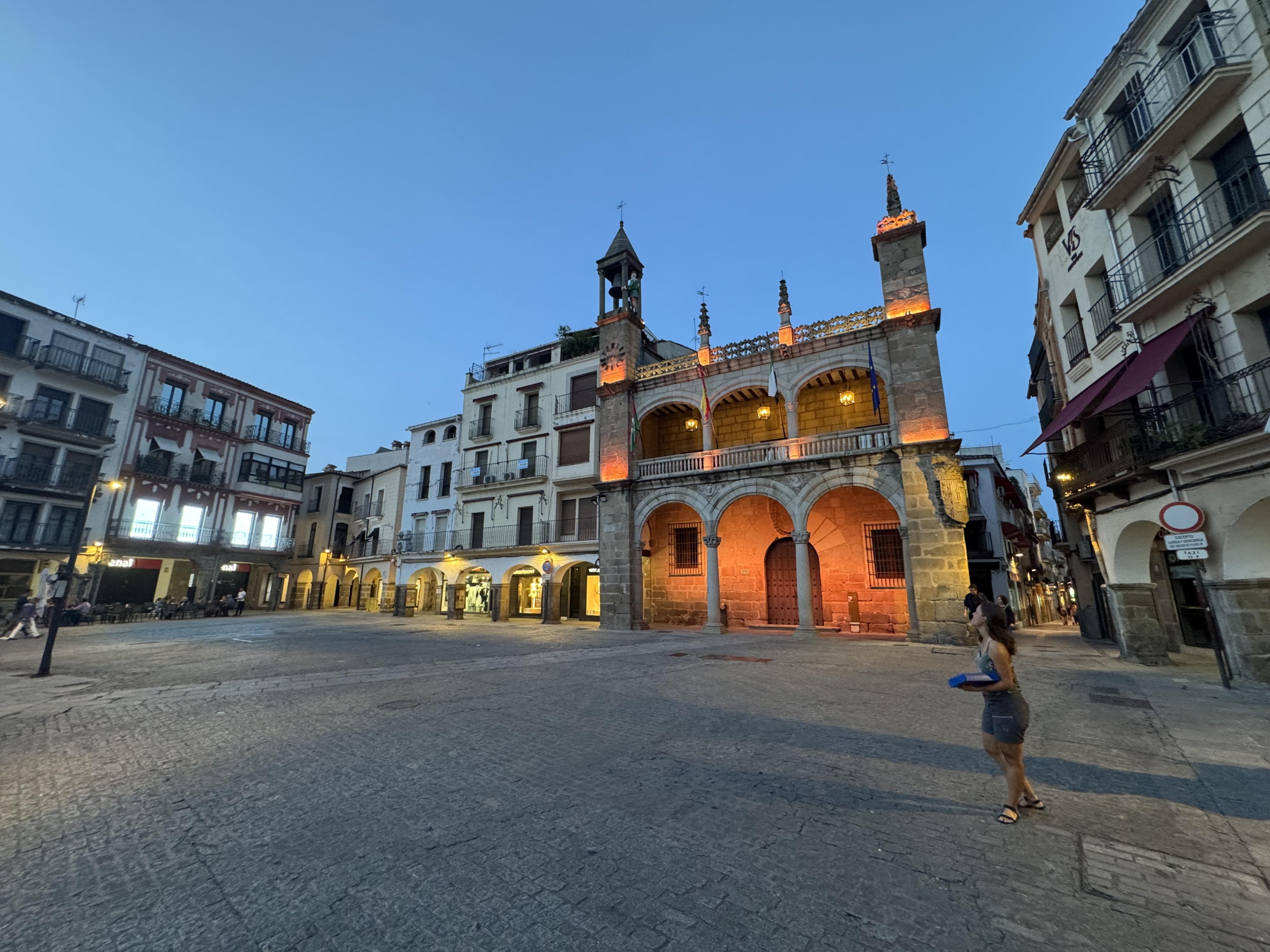
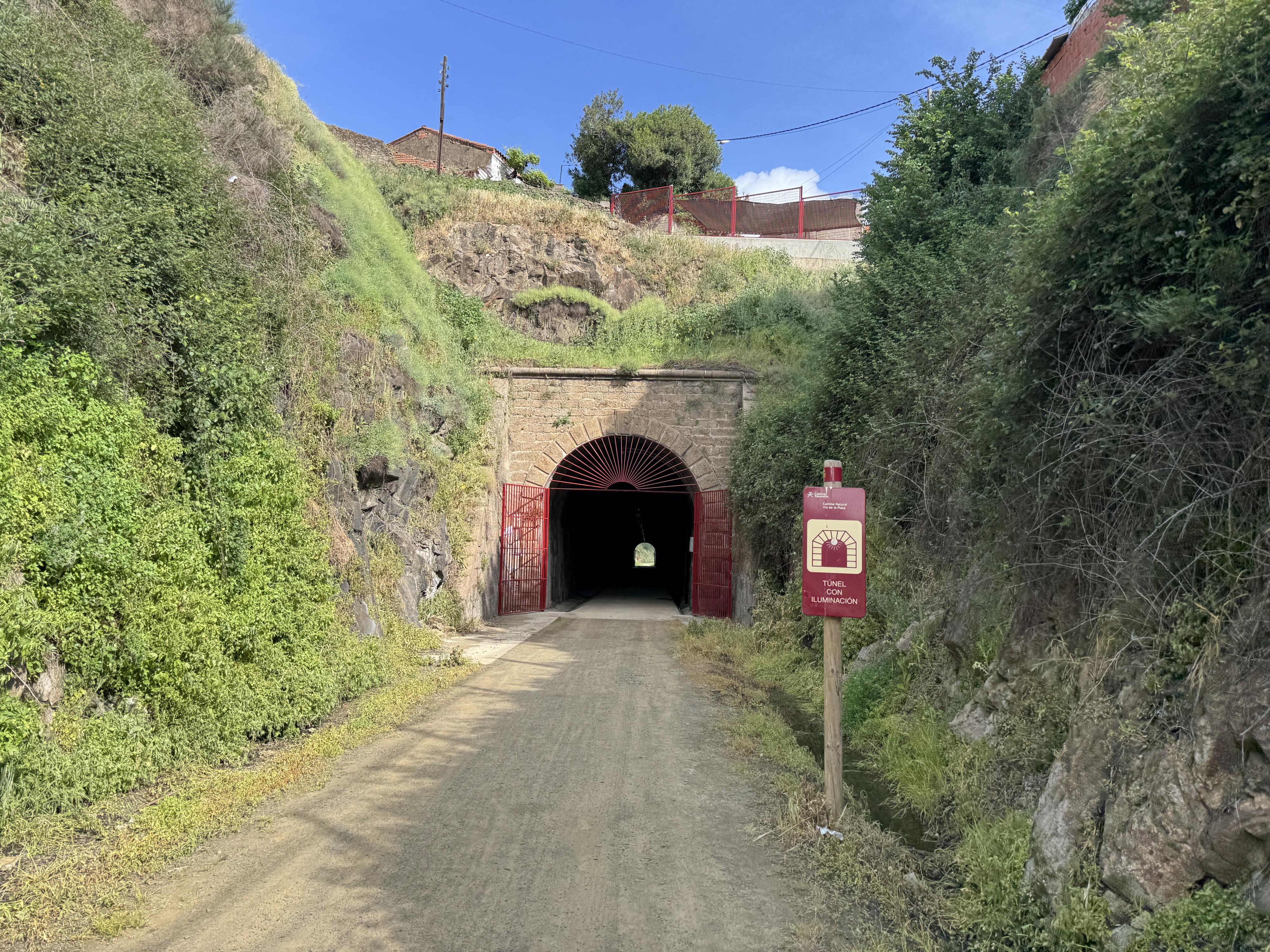
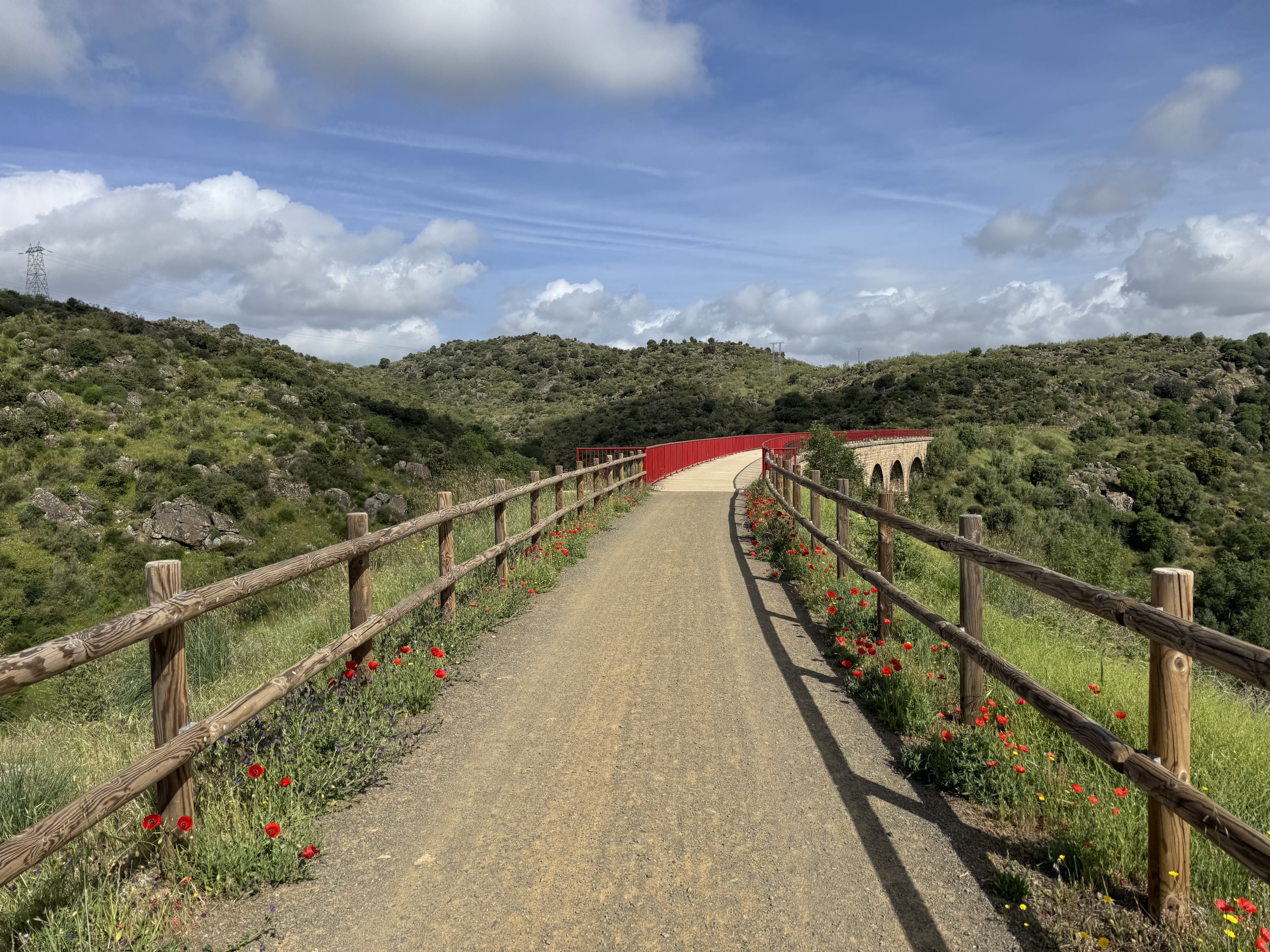
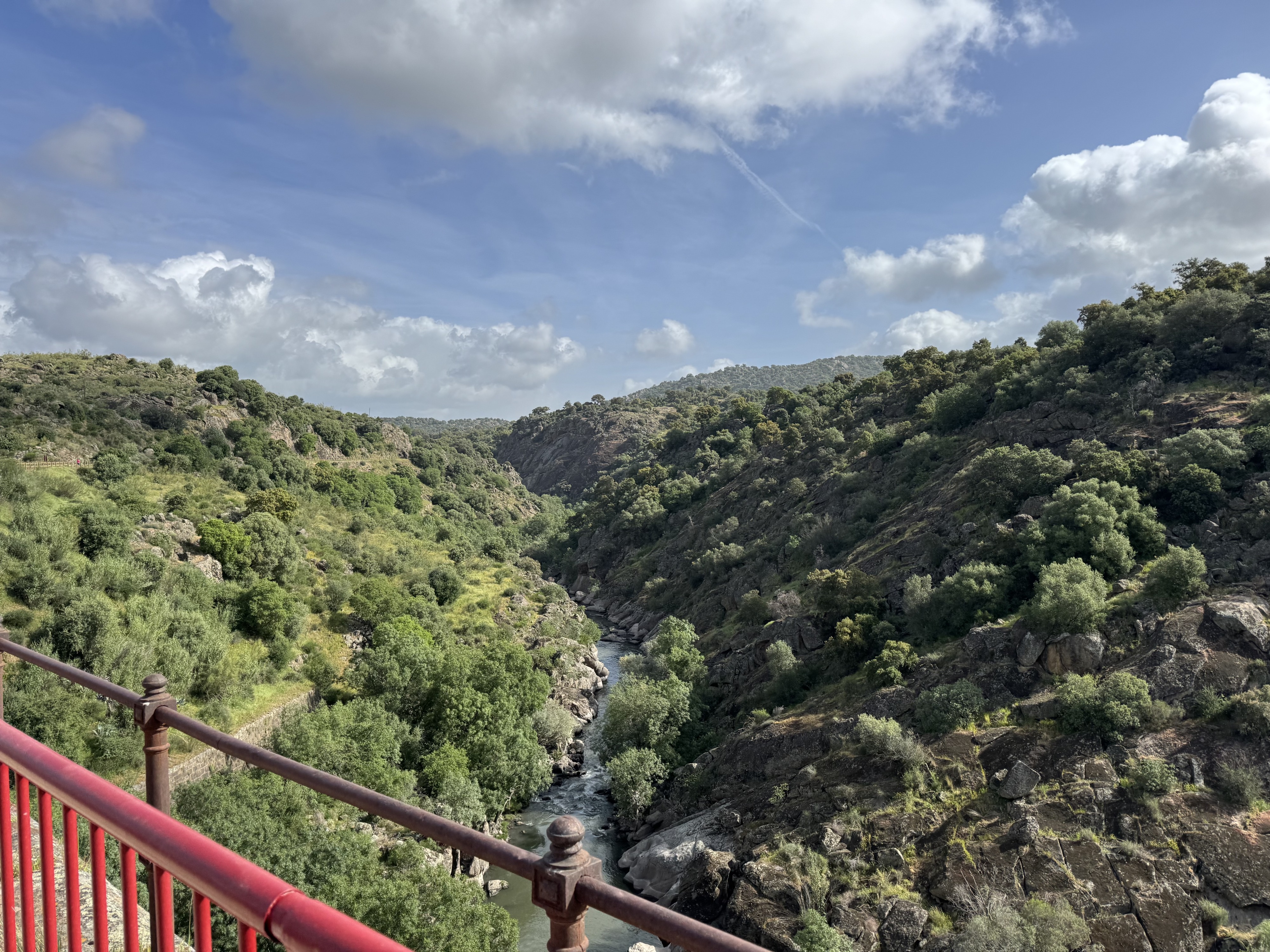
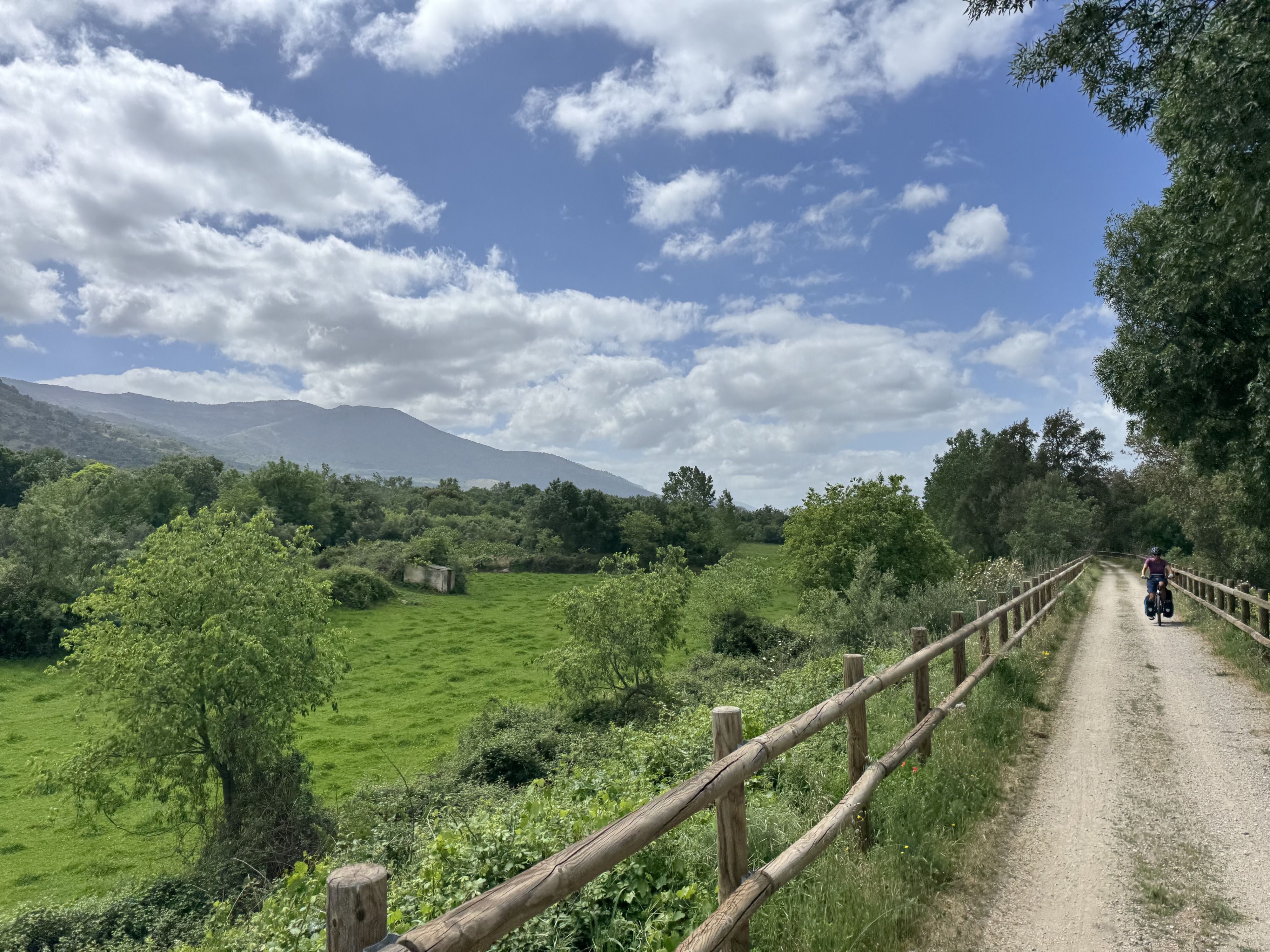
Since we’ve had such a great experience cycling through the “boondocks” and had been somewhat disappointed by EuroVelo before, we decide to skip the major tourist cities like Salamanca on the rest of our journey and try our luck again on the small village roads.
In terms of traffic, it works perfectly: we’re once again driving on nearly empty, well-maintained roads. But the scenery becomes more monotonous to our eyes with each passing day. For days on end, we ride alongside fields—always the same view: 15 kilometers of farmland, then a tiny village of 100 souls with a church, a town hall complete with a clock that doesn’t work, and people staring at us as if we were from another planet. Greetings are rare; much of it seems deserted and somewhat lifeless.
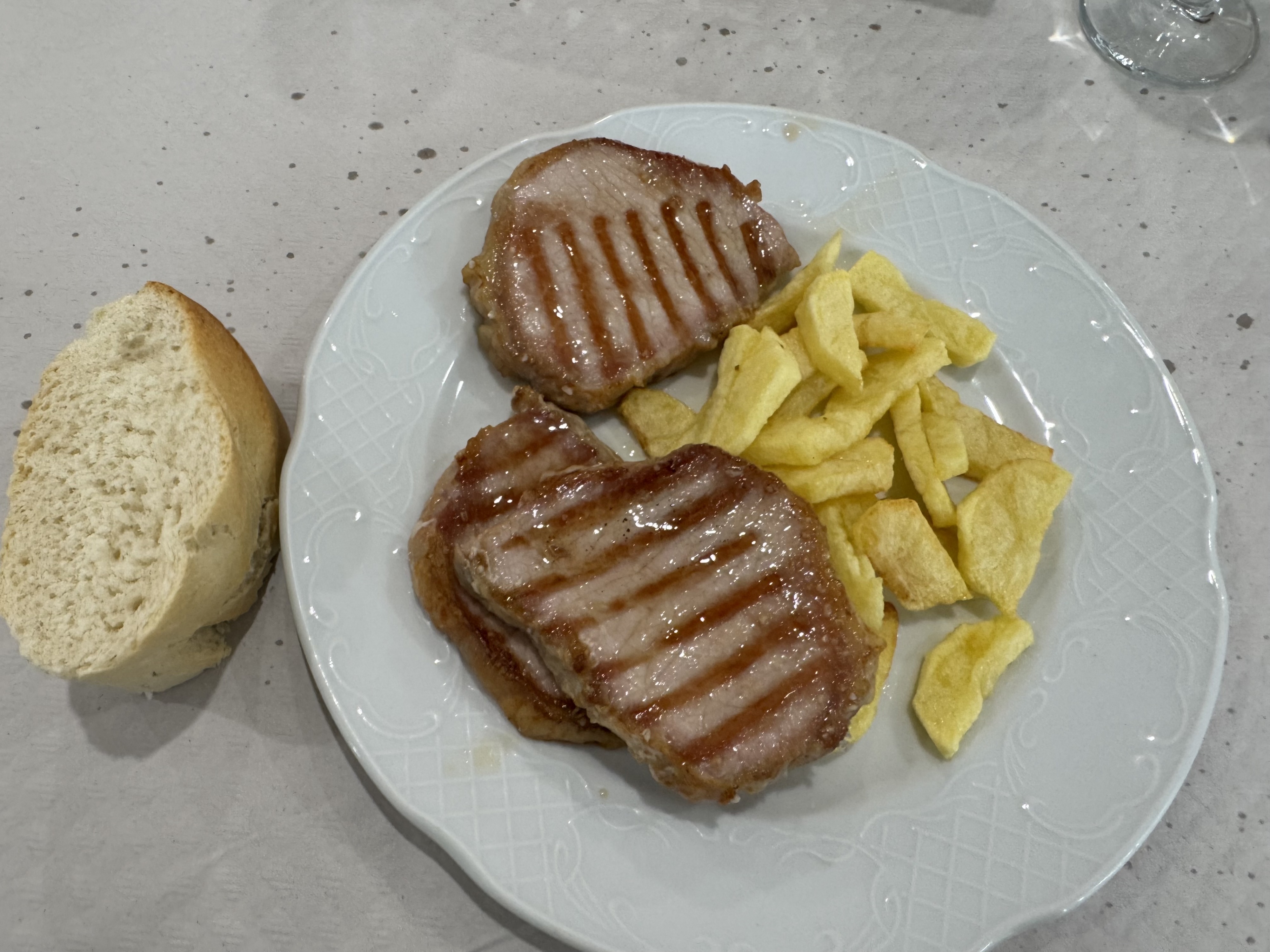
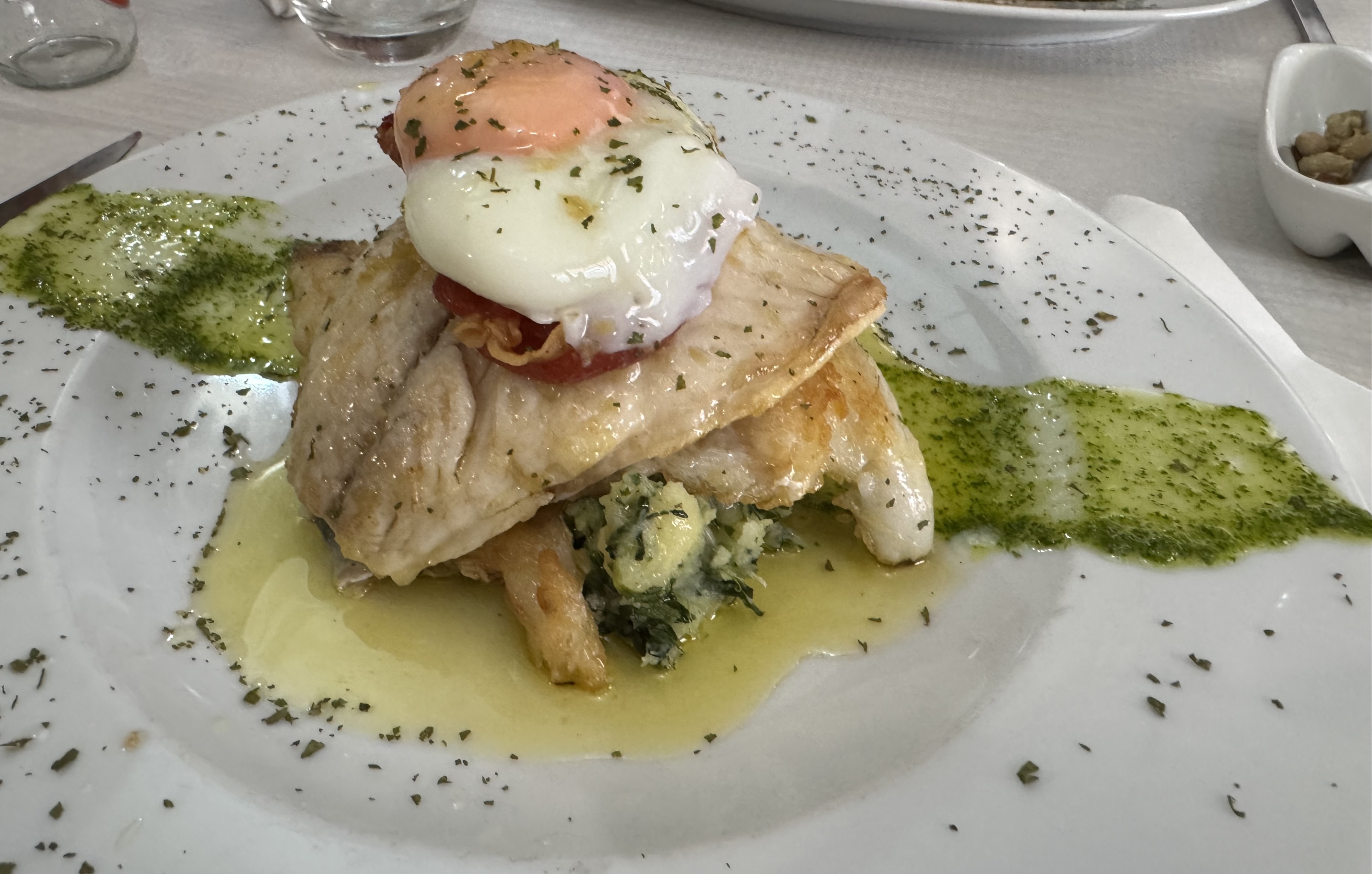
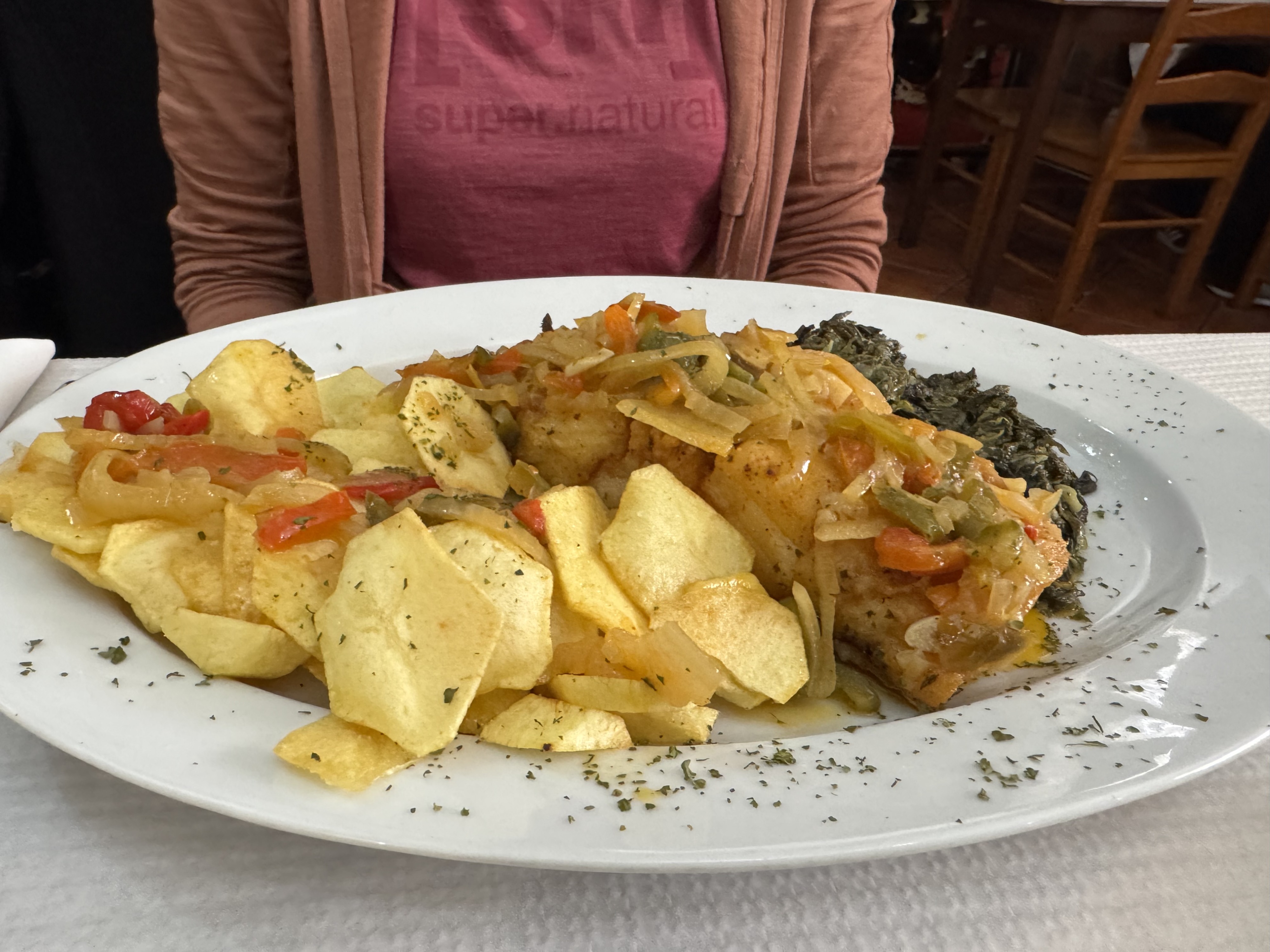
The food is also very repetitive: practically every restaurant serves meat or fish with fries, always without vegetables. Luckily, we have our gas stove with us and can balance out our vitamin and fiber intake ourselves with plenty of vegetables. Most of the time, we end up cooking for ourselves in the evening—it’s just practical because we’re already in a cozy spot and have everything set up anyway.
For lunch, on the other hand, we’re happy if we can find a restaurant and don’t have to cook ourselves. Then we enjoy it all the more to just stop in for a bit, get something warm, and recharge our batteries for the next few miles.
The meat-heavy lunch menu is served with water, beer, or wine. If you order wine, you’ll be served a full 0.75-liter bottle with your meal. Since this house wine is often of very poor quality, it’s often mixed with La Casera, a Spanish lemonade—this mixture is called Tinto de Verano.
Time and again, we’re amazed—almost baffled—by just how much people drink here. Even the workers we run into later on the streets casually share a bottle of wine between the two of them at lunchtime 🫣. Maybe that’s why they pass us with such a wide berth 😂😅?
Here are a few examples of the cuisine:
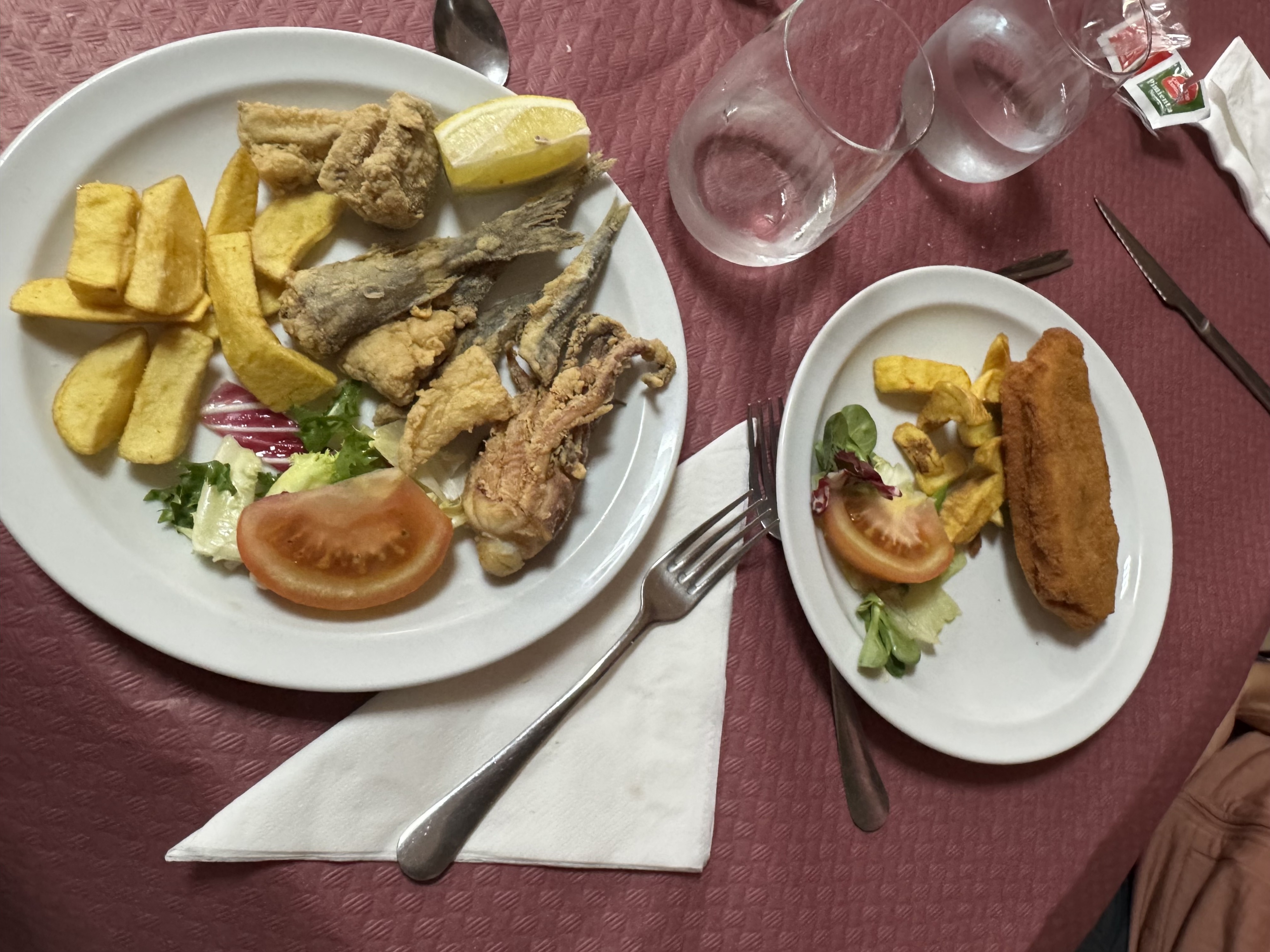
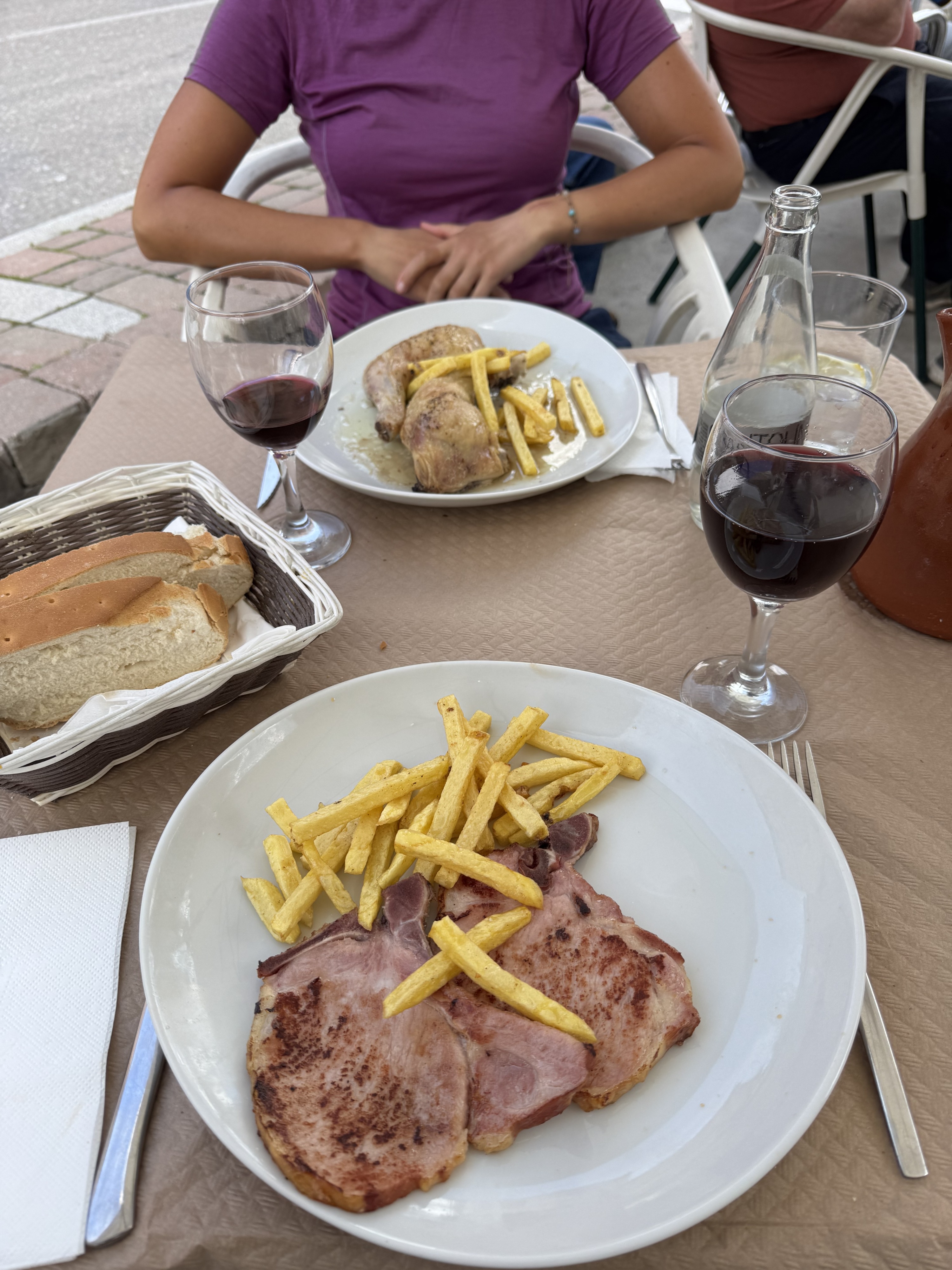
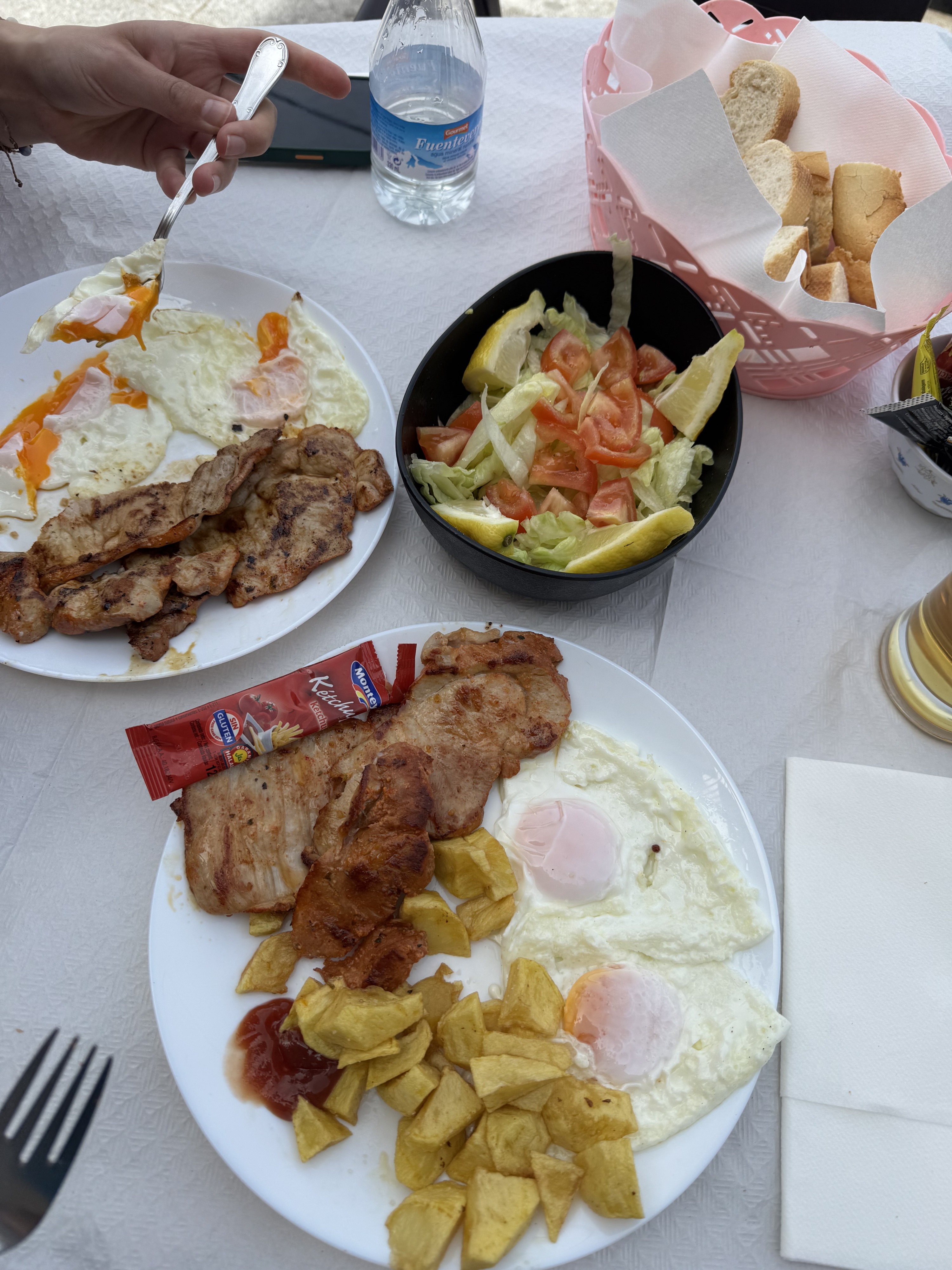
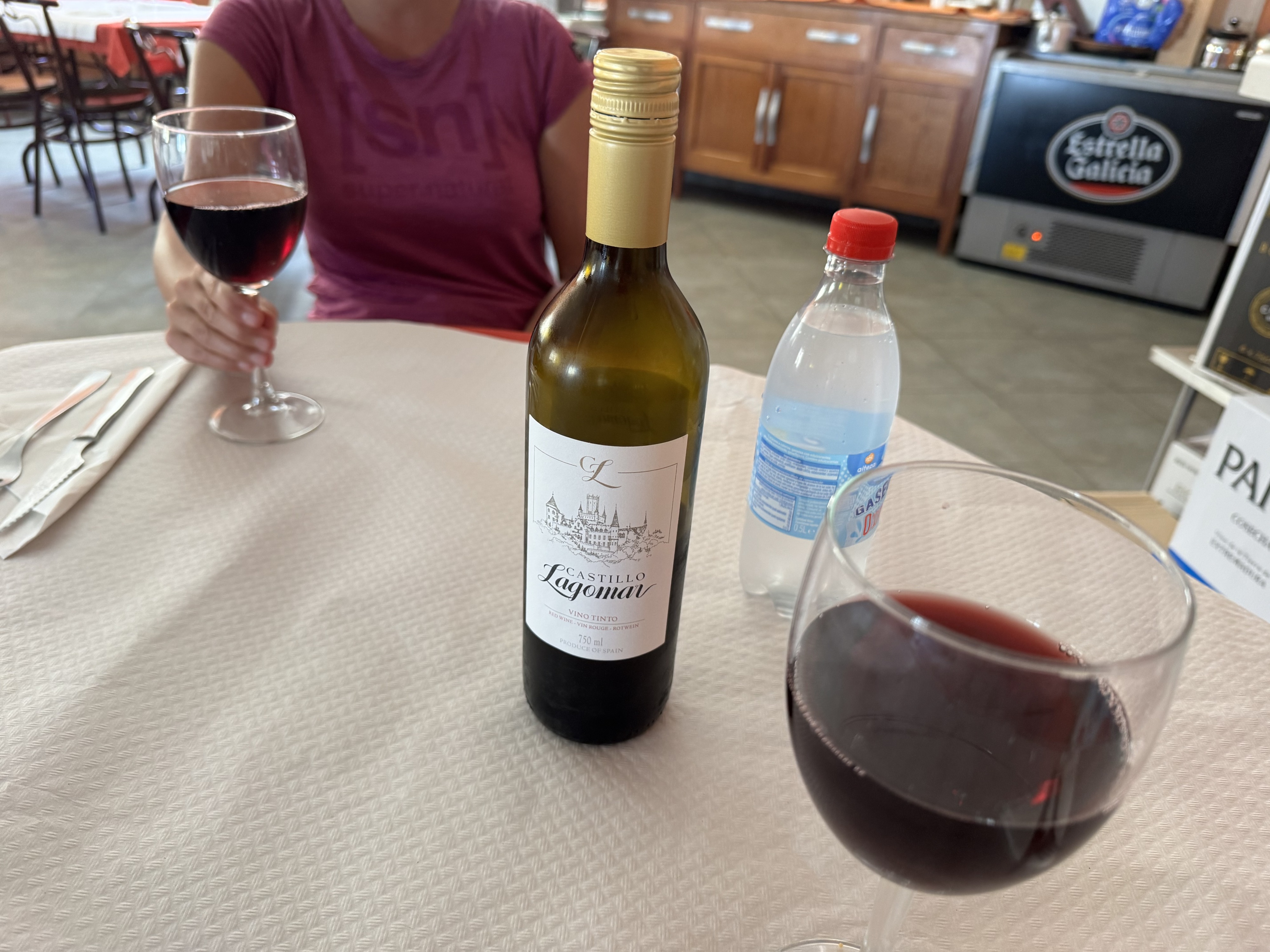
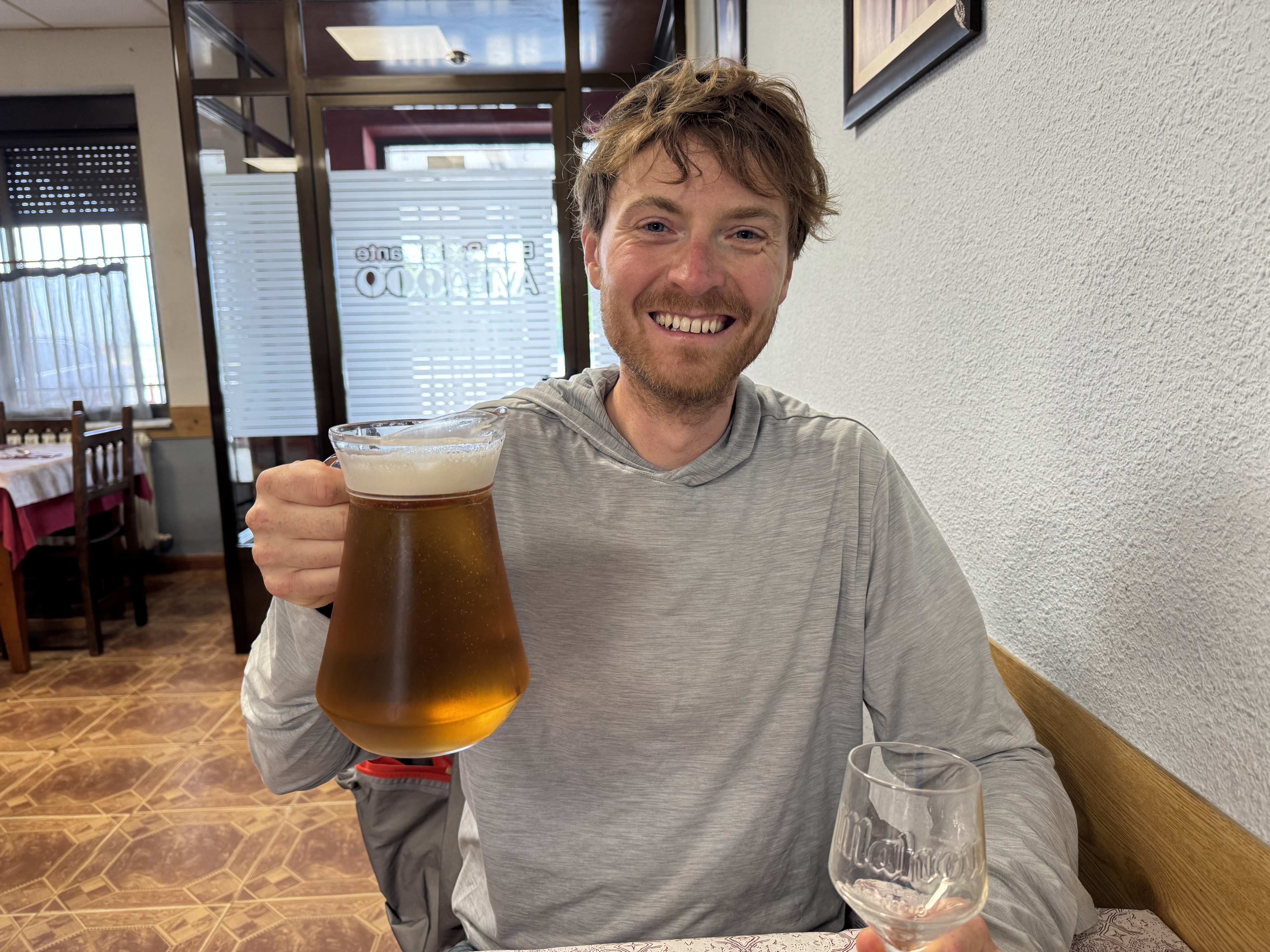
While we were at a campground in Alba de Tormes, we struck up a conversation with the very friendly couple who run the place, and they, too, told us about the alcohol problems in the country. They had even decided not to open their bar this season because the locals often drank to excess, which ended up scaring away the campground guests. Fun fact: As a welcome at the campground, they brought us a whole pitcher of sangria to our tent 😂:

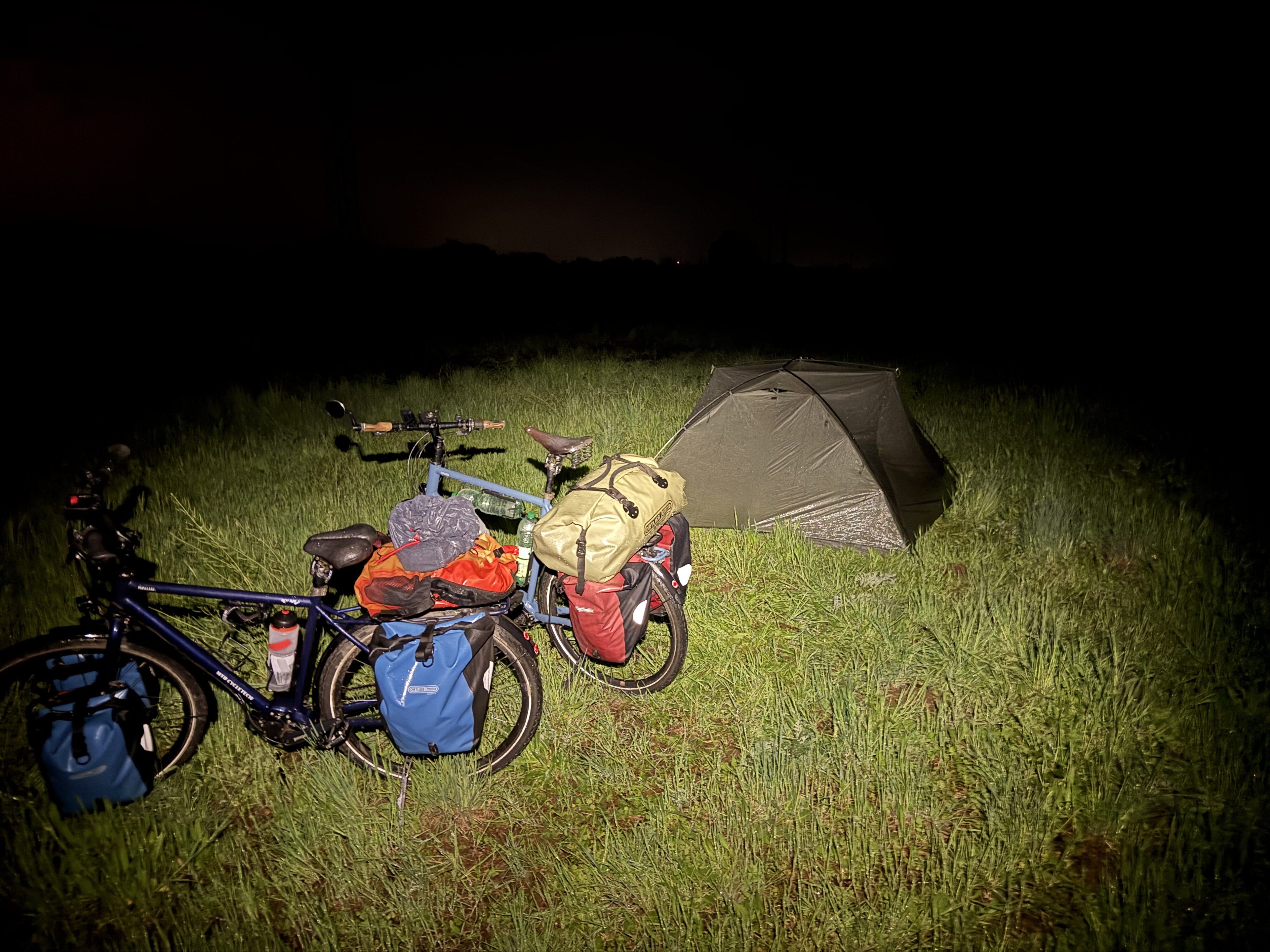
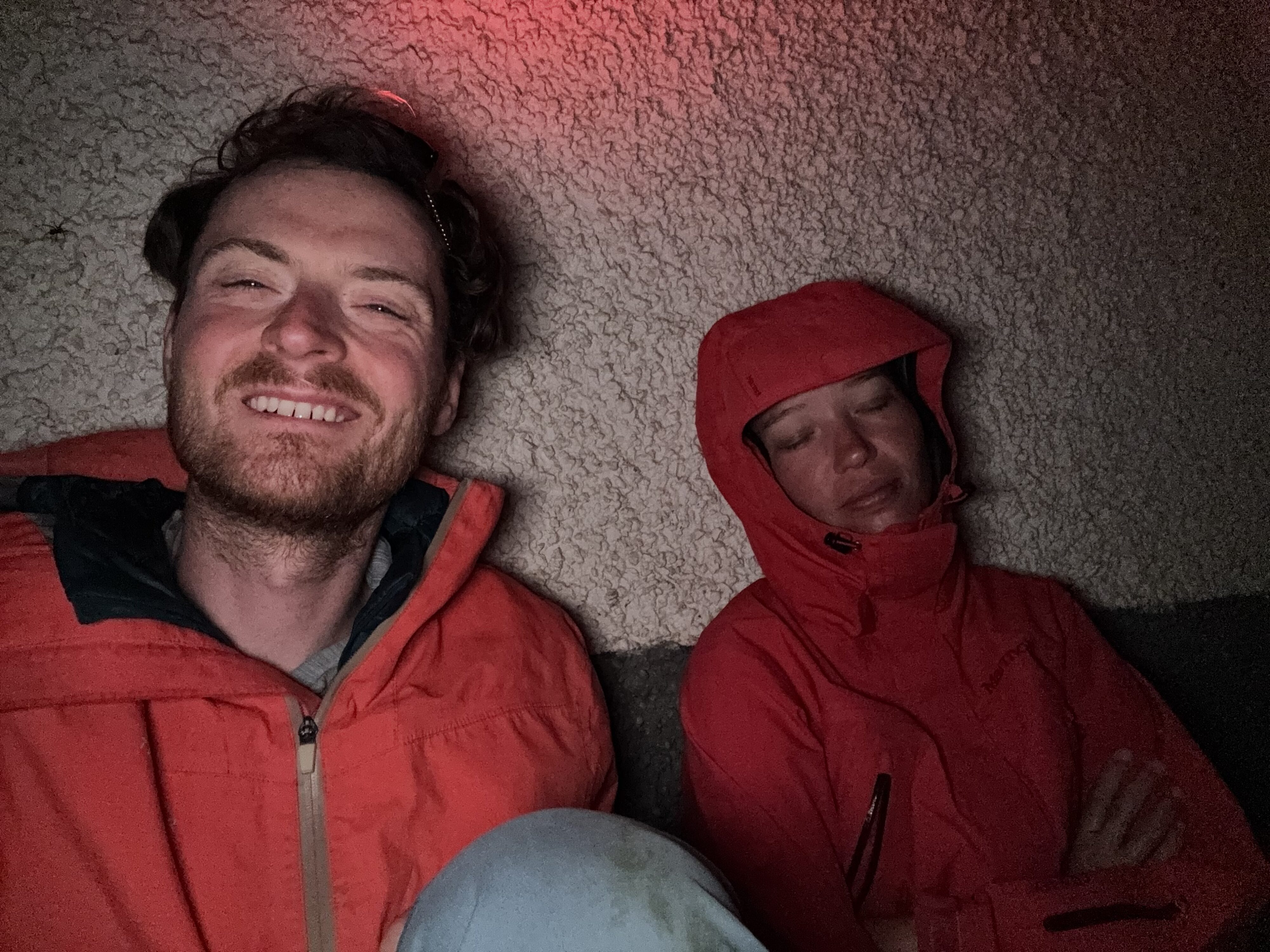
On top of driving through the wilderness, the weather is now getting really strange. Every day we see massive thunderstorm cells building up and behaving in extremely unpredictable ways. We’ve also realized we can’t rely on the weather forecast, because one evening we were expecting just a half-hour thunderstorm, and eight hours later it still wasn’t over. It was so intense that we sought shelter in a nearby building and didn’t get a wink of sleep.

We realize that this rather monotonous landscape is making us homesick, but we’re still trying to enjoy the trip and have planned a highlight: a visit to the Bardenas Reales semi-desert, which we’ll write about in our next blog post.
For even more insight into our everyday cycling life, check out our latest video: