Route to the blog:

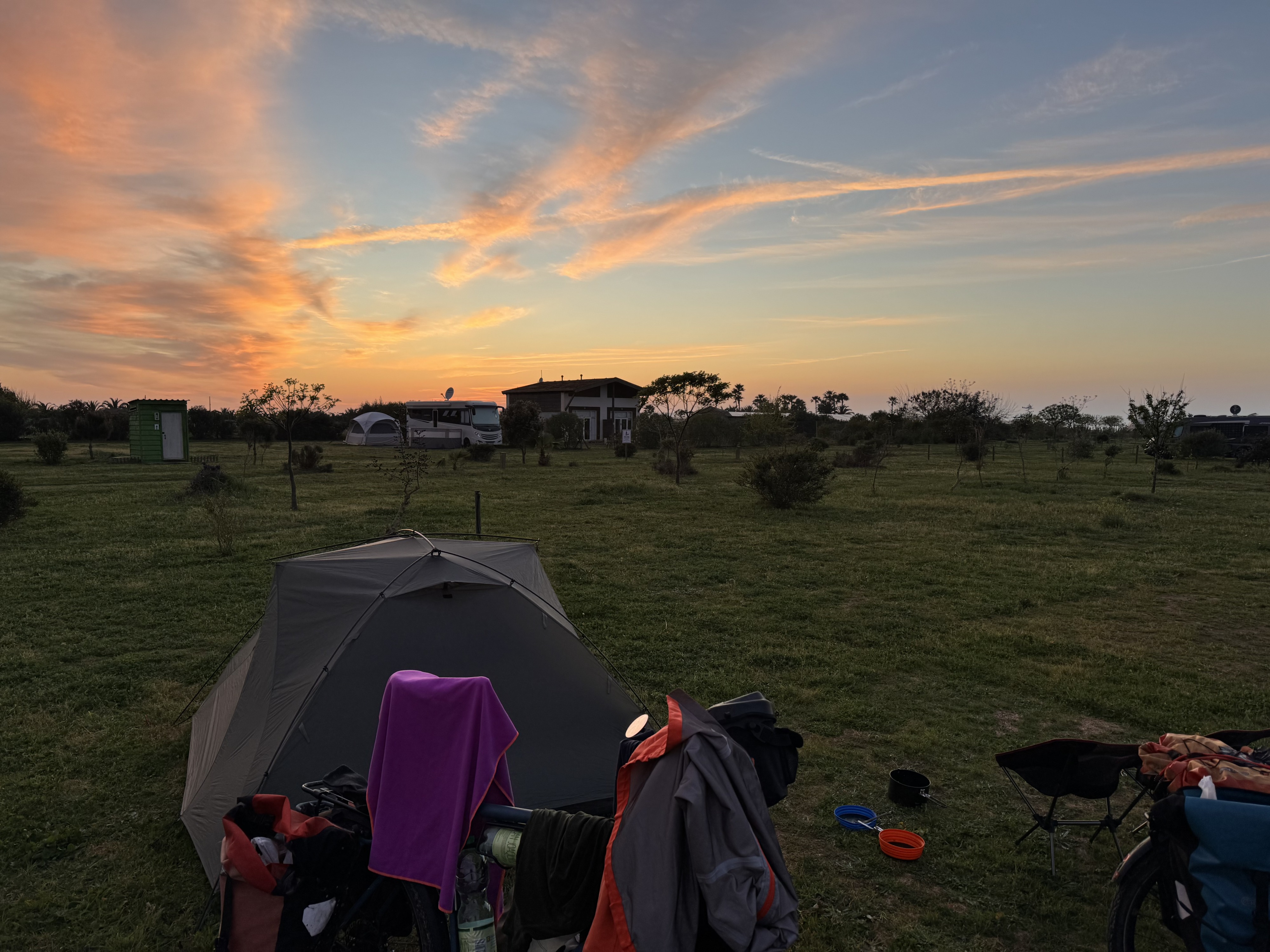
We arrive in Cádiz by ferry right on time at 8 a.m. Our rough plan is to first ride along the coast toward Portugal. However, we make our first stop in Chipiona, because just at that moment we receive a message from our Warmshower host saying that Beni’s air mattress has been delivered to him by mail 🎉😃! What a stroke of luck. After the handoff, we hit the road again right away: We decide to pitch our tent a few kilometers further on. Since we really need a shower, we head to the “Camping La Siesta de la Gaviota” campground.
Since we’ve been wearing our helmets almost all day, the receptionist at the campground immediately asks us if we’re traveling by bike. When we say yes, they tell us: “Since our boss wants to support cyclists, your first night is free.” A brilliant offer we don’t want to miss. We set up our tent on the beautiful meadow. Then it’s time to inflate the air mattress and sleep—without having to patch things up.
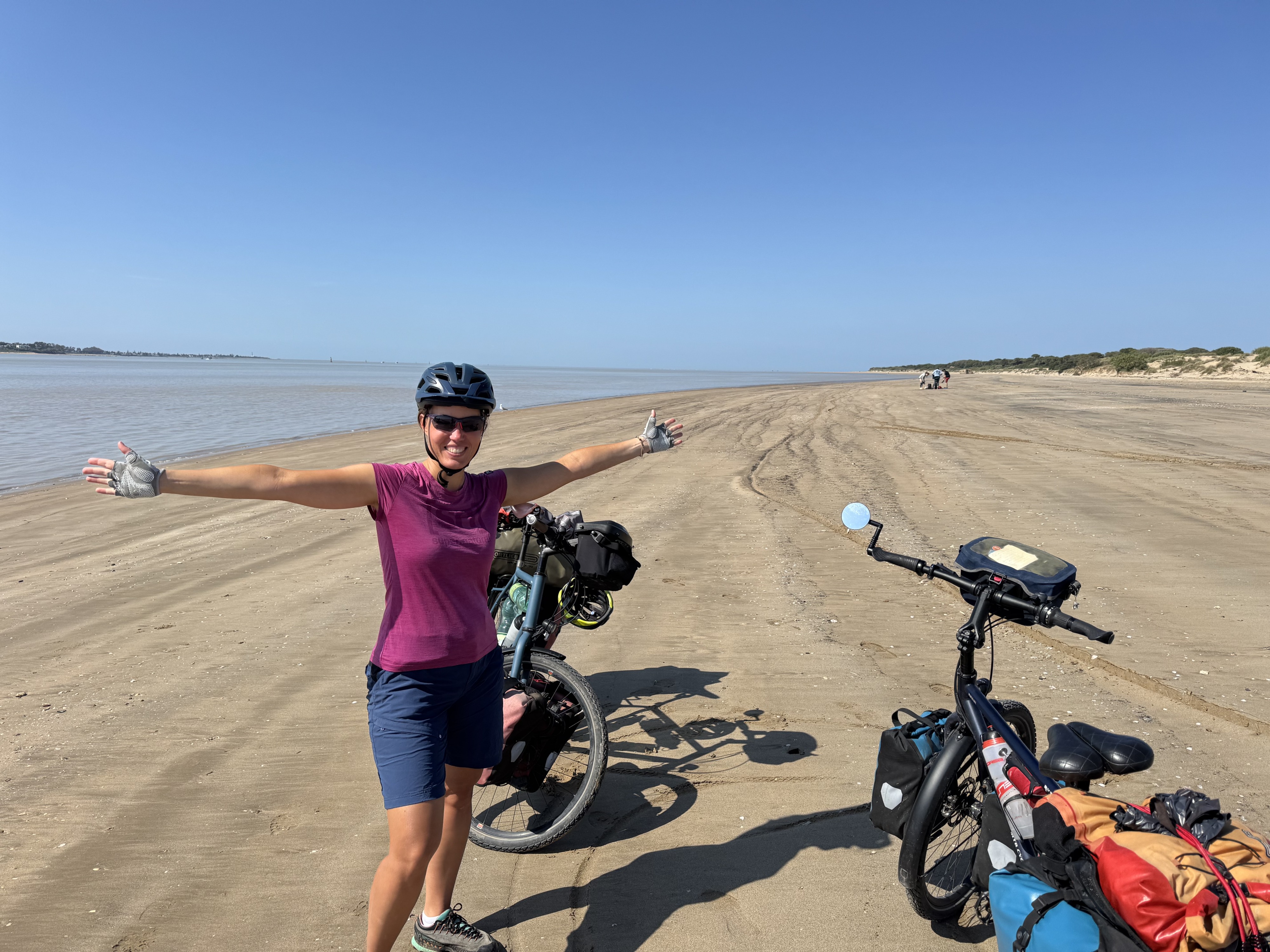
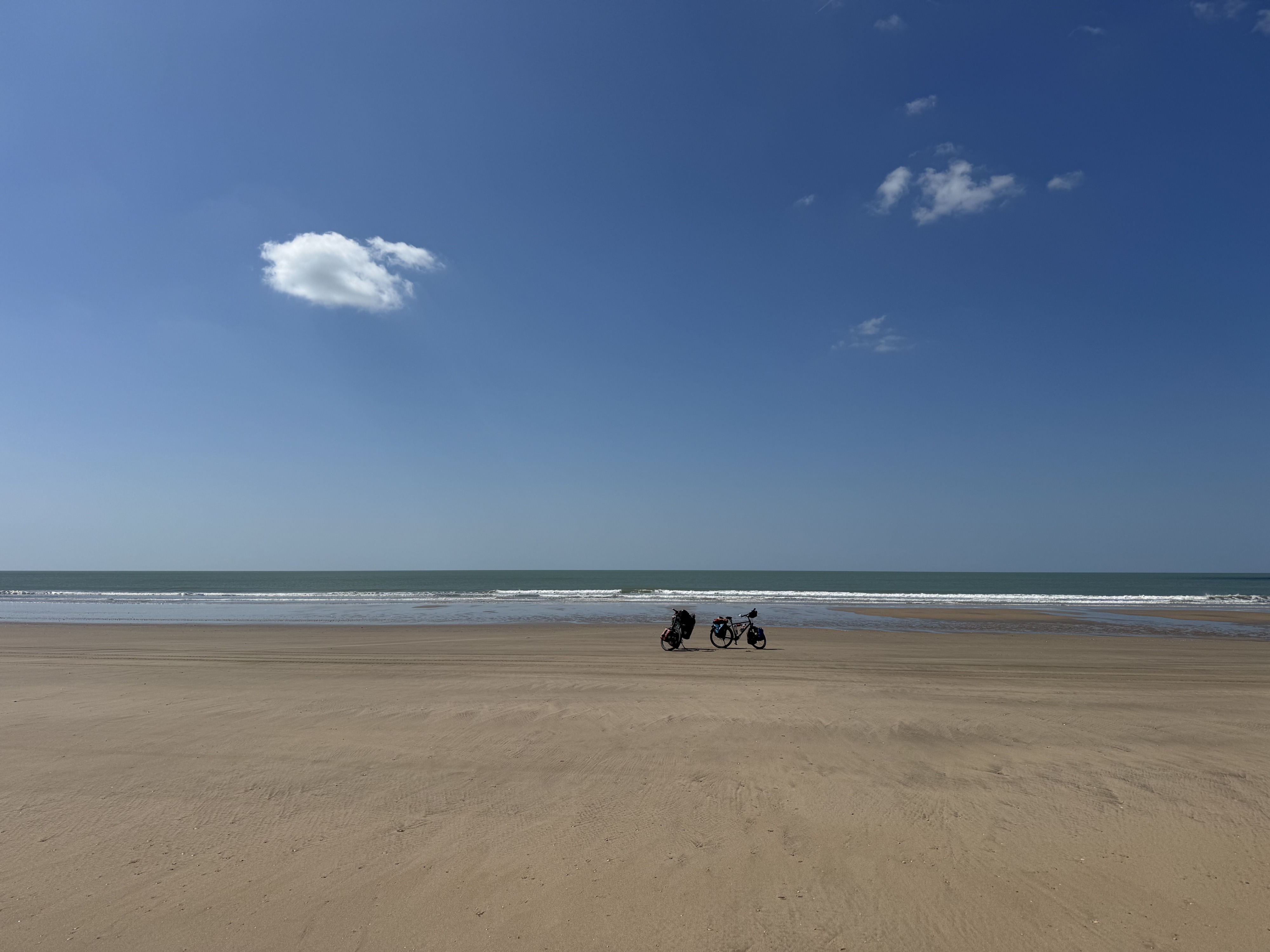
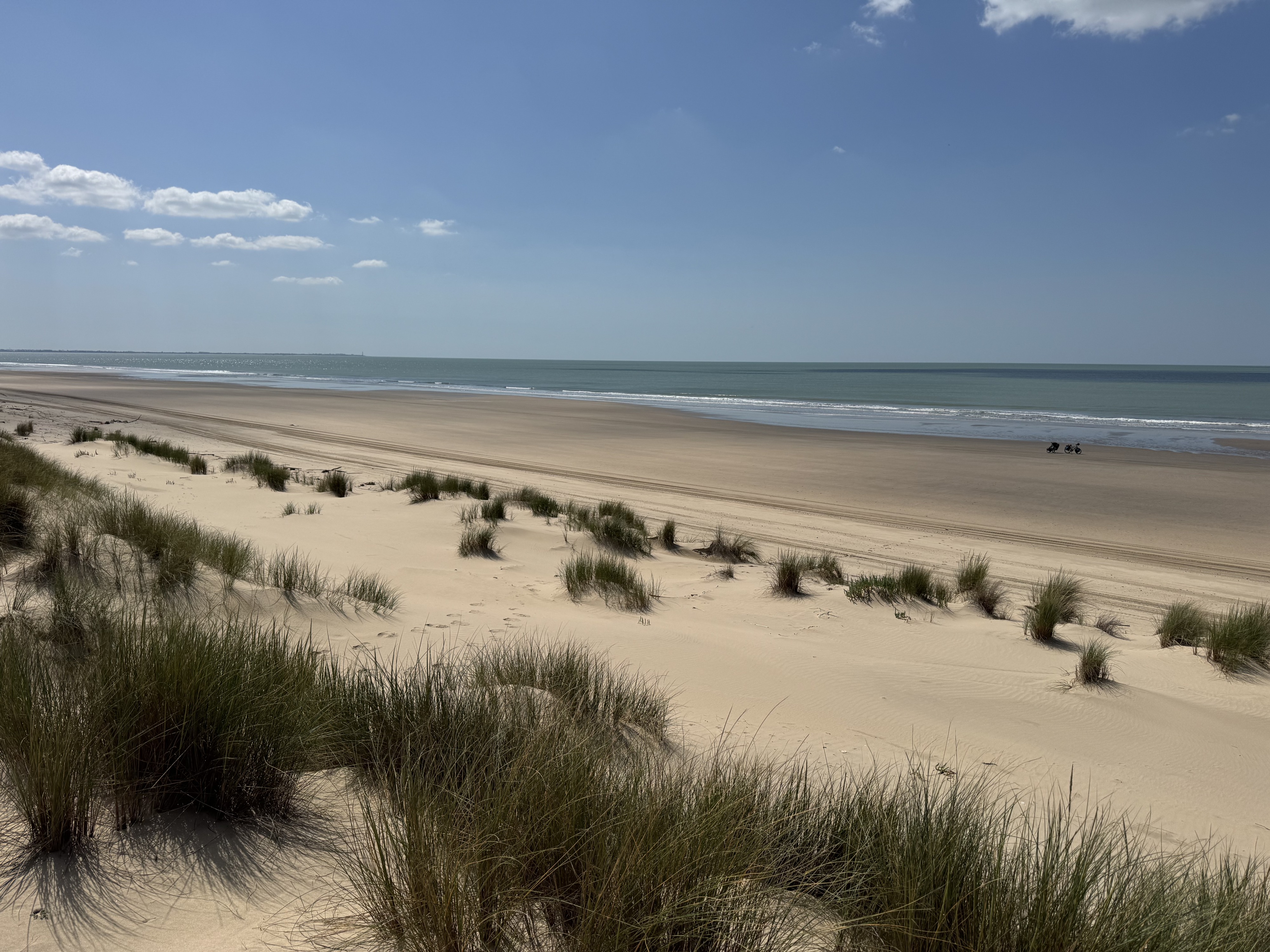
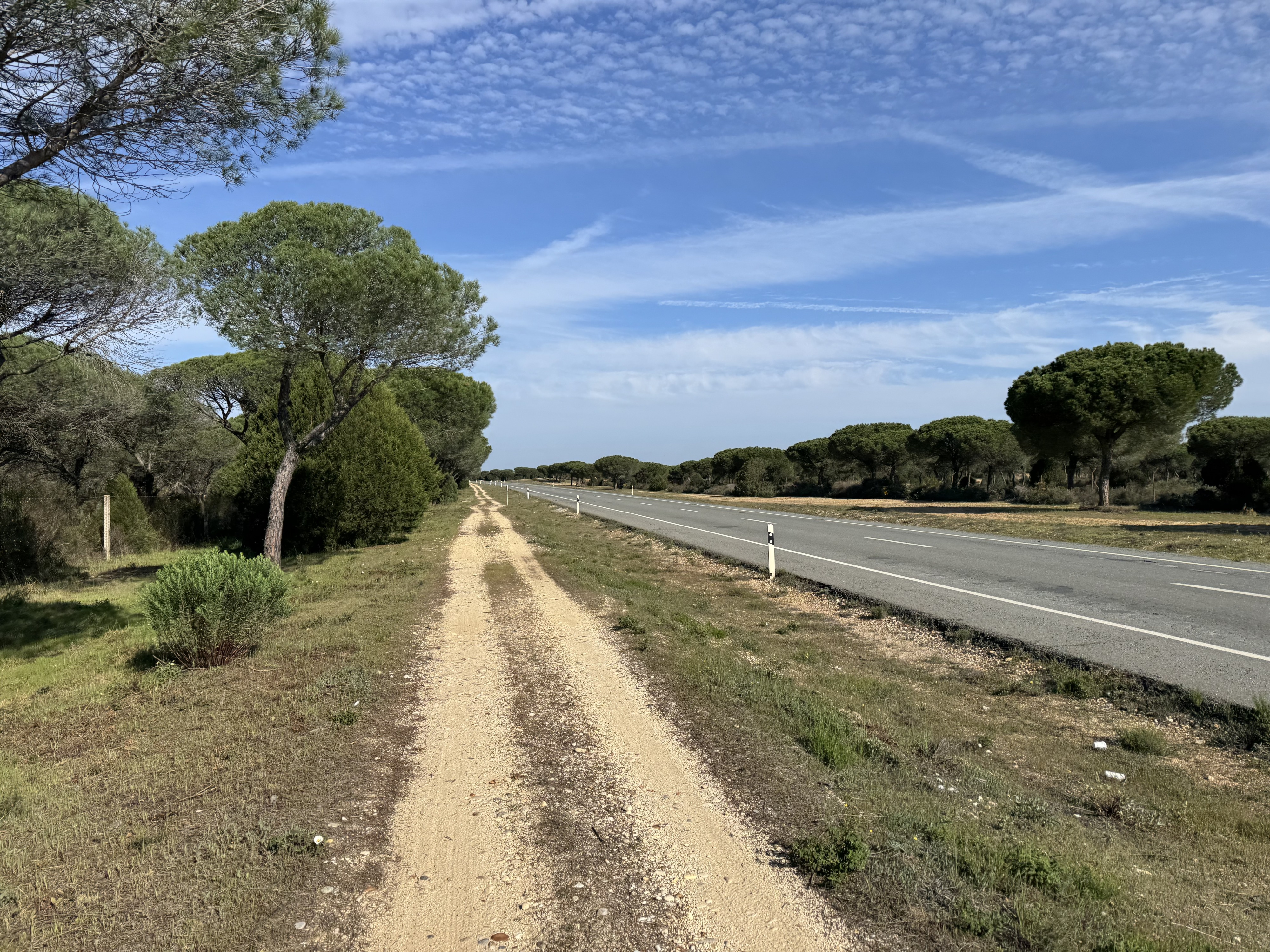
After two nights on the ferry, we really needed that good night’s sleep, because the next adventure is already waiting: a roughly 30-kilometer stretch of beach in the Doñana Nature Reserve between Sanlúcar and Matalascañas, which is more or less passable. There are really only two options: either you take a long detour through Seville with heavy traffic, or you venture across the sand.
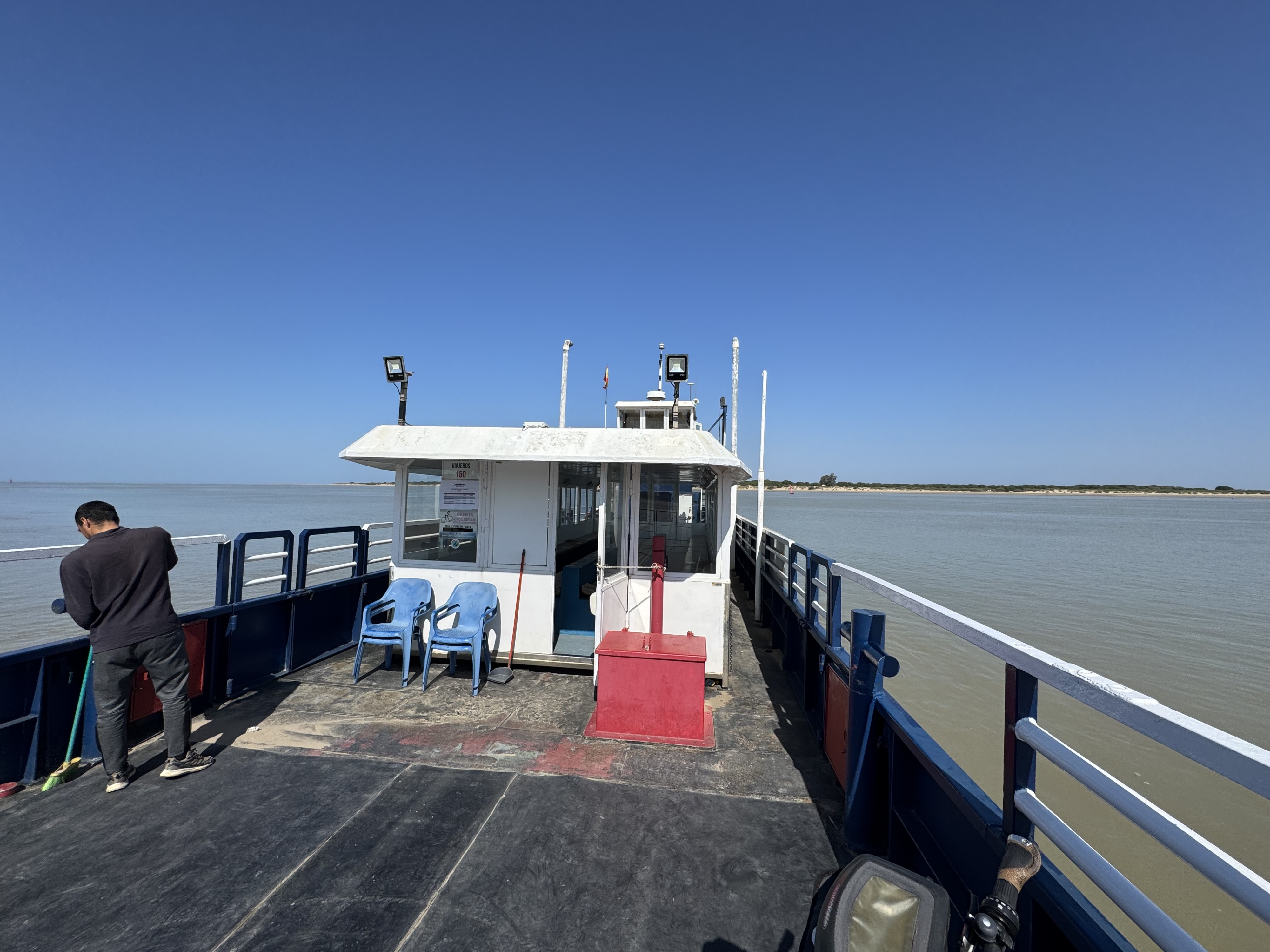
A tiny ferry takes us across the Guadalquivir River into the nature reserve—and drops us right back onto the sand. Here, you’re only allowed to hike or bike. Plus, you’re warned what feels like a hundred times that camping is prohibited and the route is challenging.
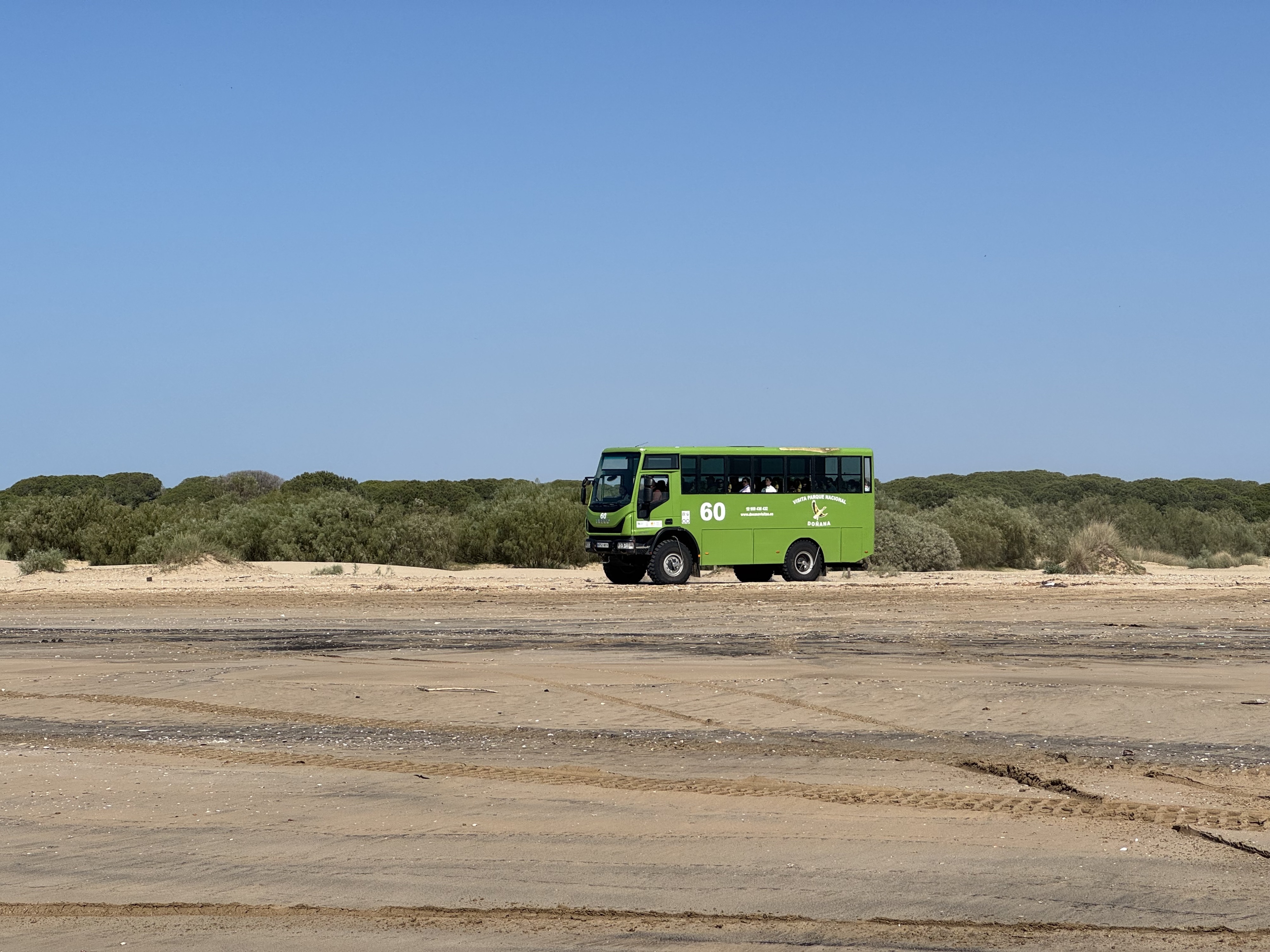
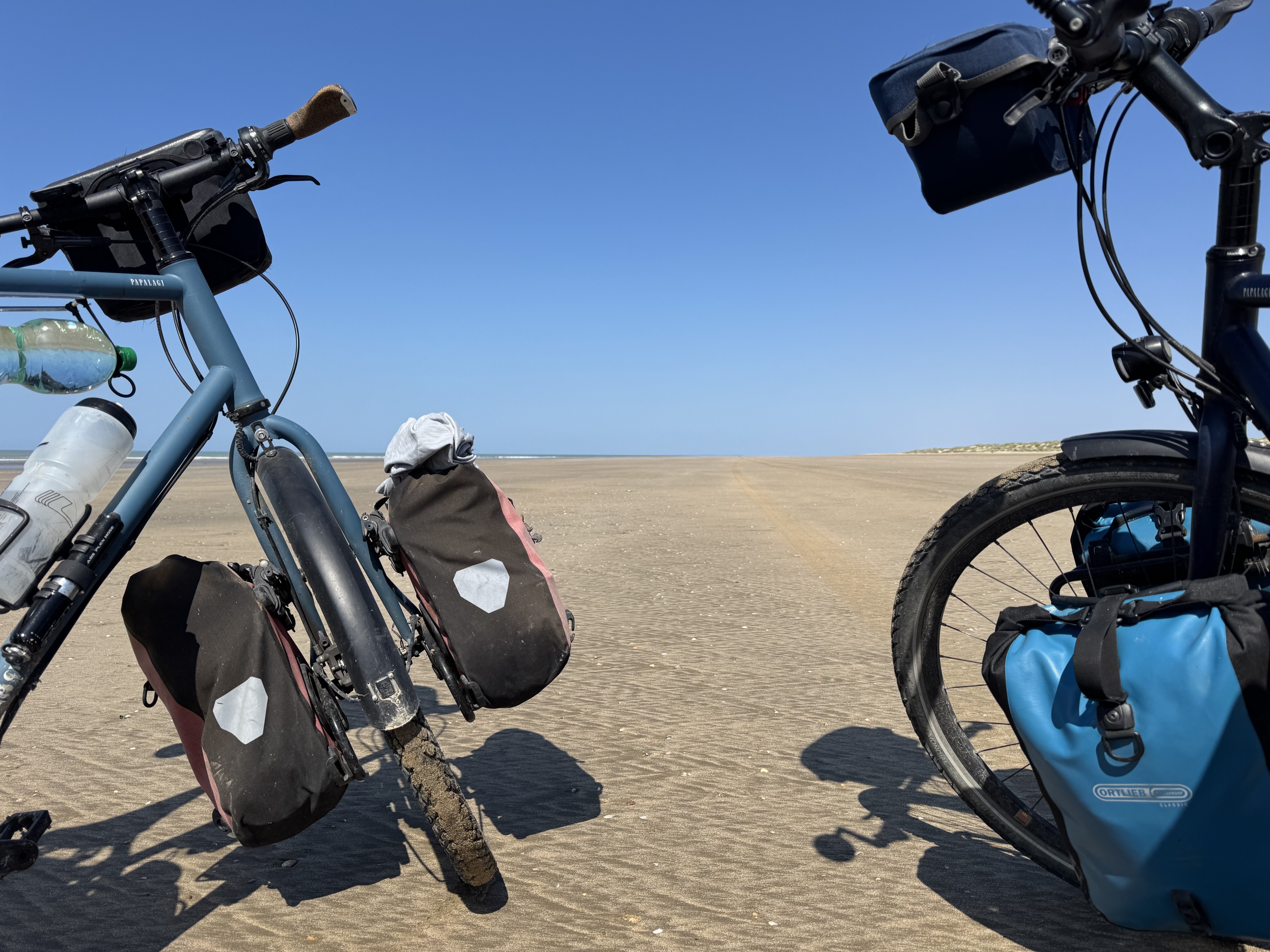
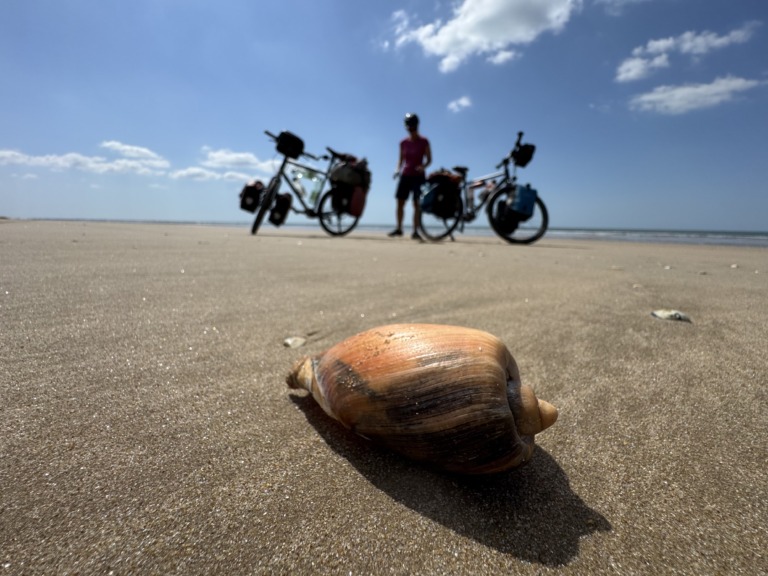
The first 15 km feel really good. We make good progress and enjoy the complete seclusion—just us and 30 km of sandy beach. About halfway through, however, the sand becomes softer in places, and the last few kilometers turn into a real challenge. At times, we have to push the bikes. Despite everything, it remains a unique experience. Only the occasional off-road tour buses passing by and the washed-up trash dampen the mood a bit.


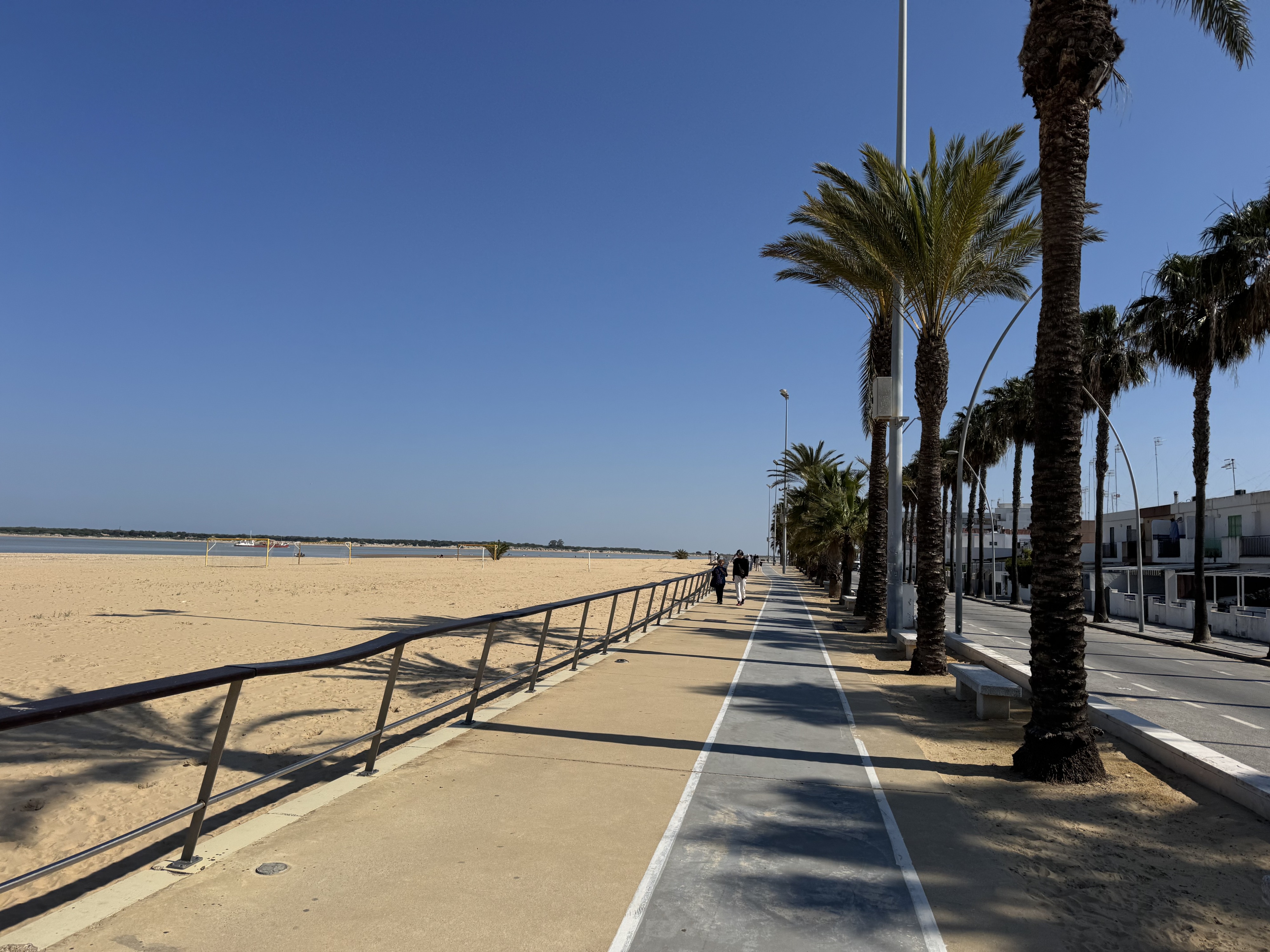



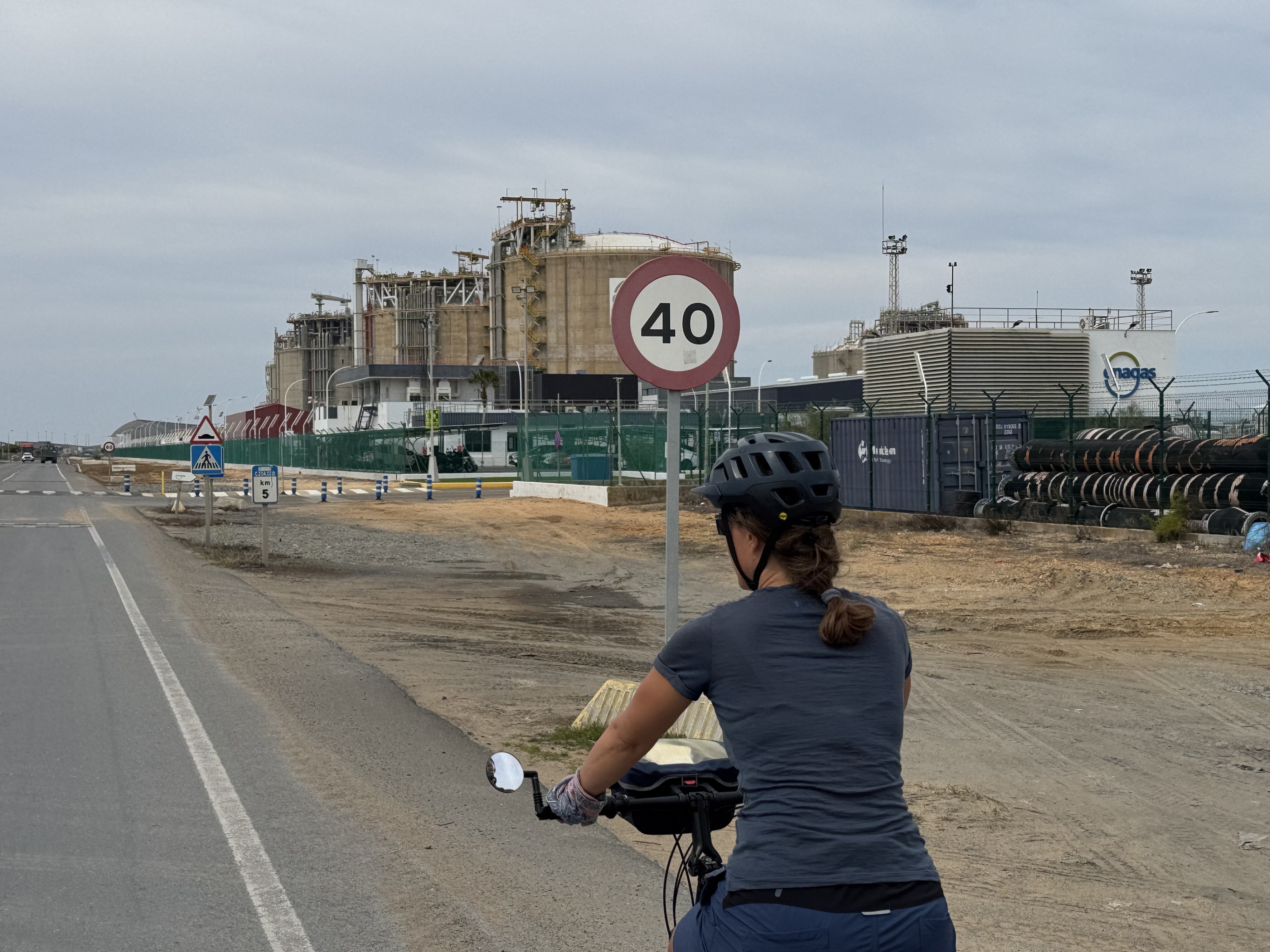
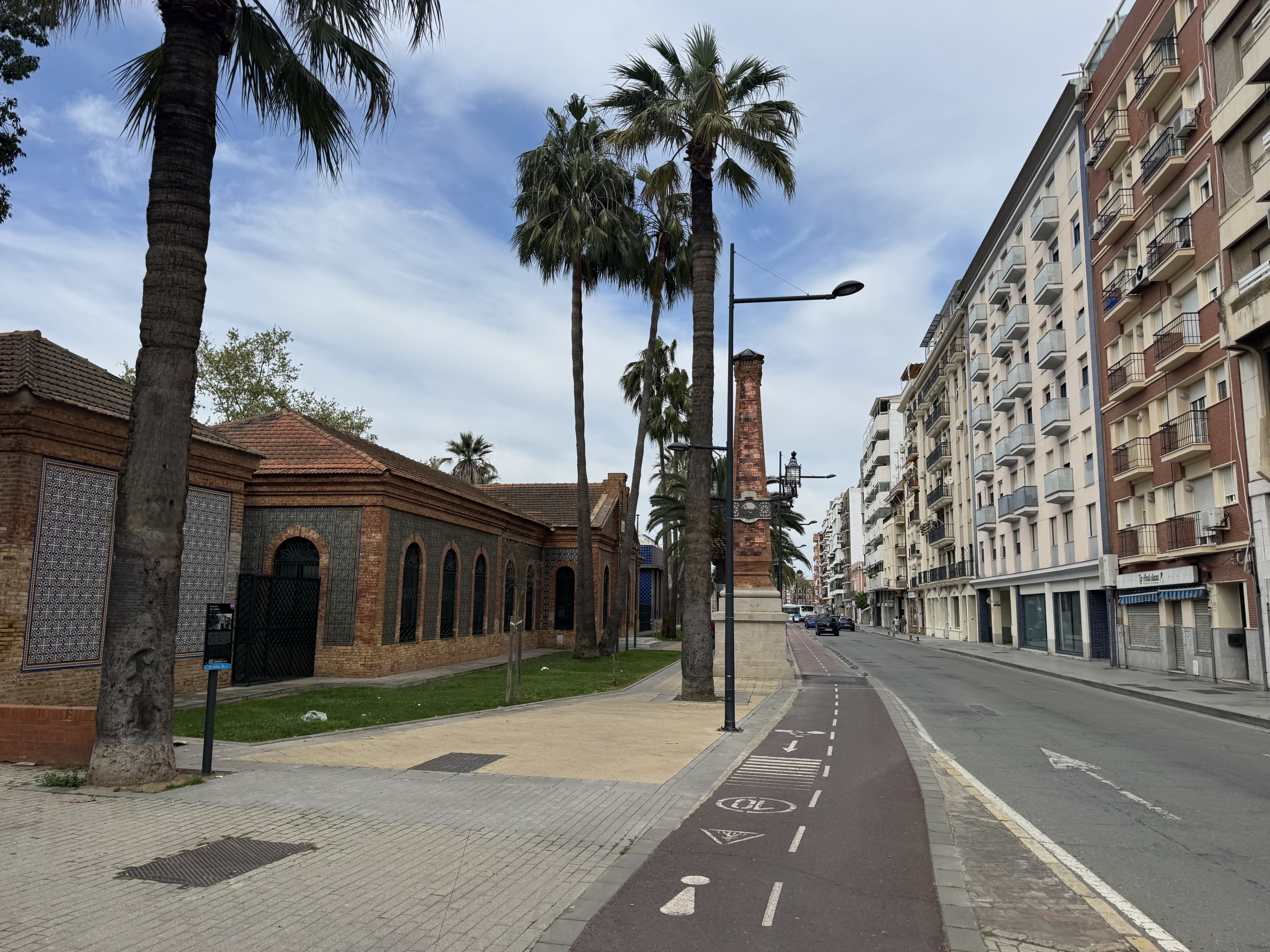
The next stretch, past the port of Huelva, is, on the other hand, rather unattractive. Everywhere there are huge industrial complexes, black smoke, and poor bike paths, some of which simply end at a heavily trafficked bridge where cycling is prohibited 🫣. Nevertheless, the city of Huelva also offers some beautiful views and buildings.
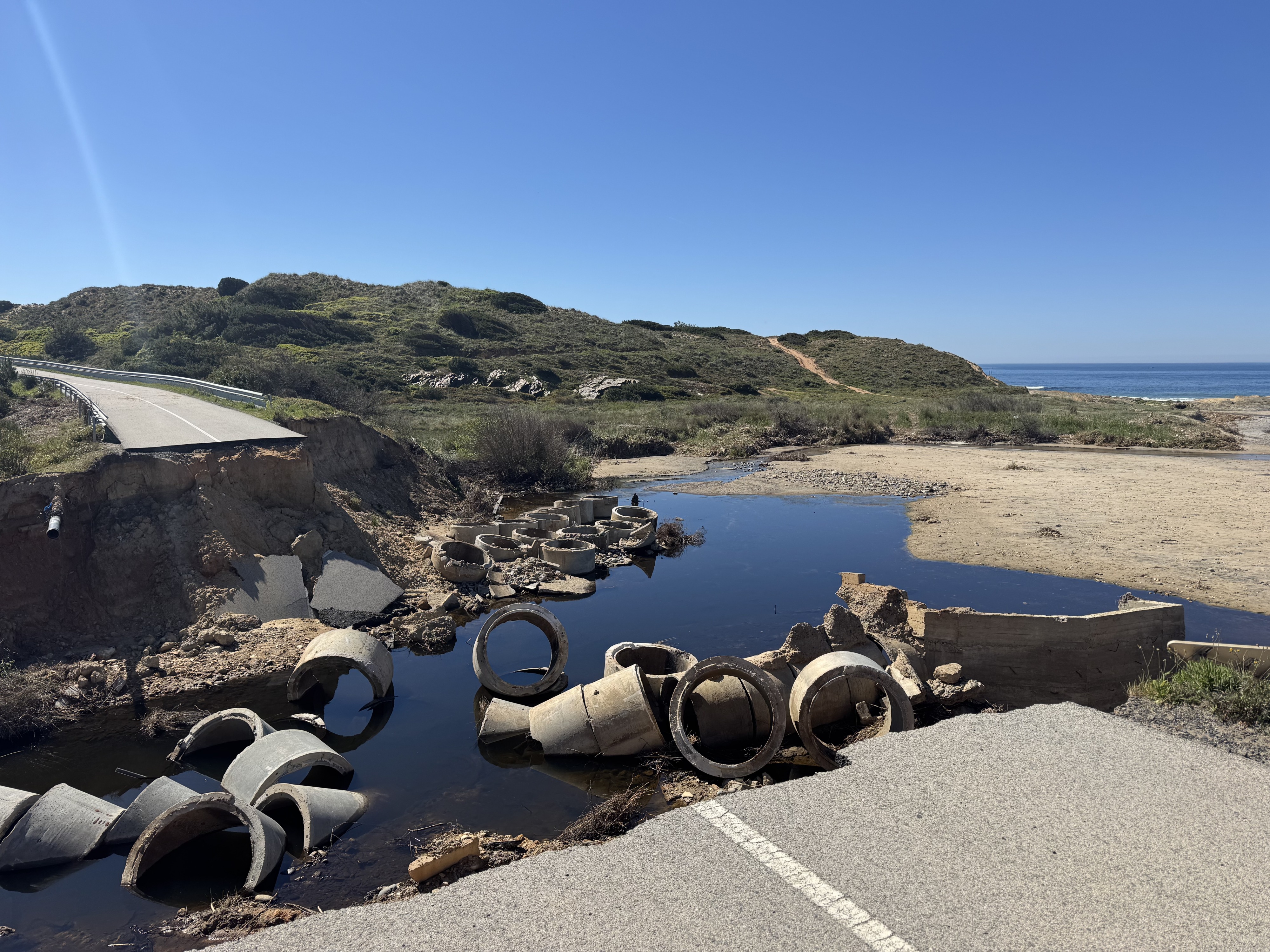
Now it’s not far to the Portuguese border. We’re enjoying the weather to the fullest—a great decision to leave the Canary Islands and return to the mainland. Just in time for our arrival, the weather has improved significantly. As you may have noticed, winter in southern Spain and Portugal was marked by numerous floods and extreme rainfall. Now the sun is smiling down on us every day in the weather forecast.
Finally, we reach the border town of Ayamonte, where we take another small ferry to Portugal. Finally, a new country again.
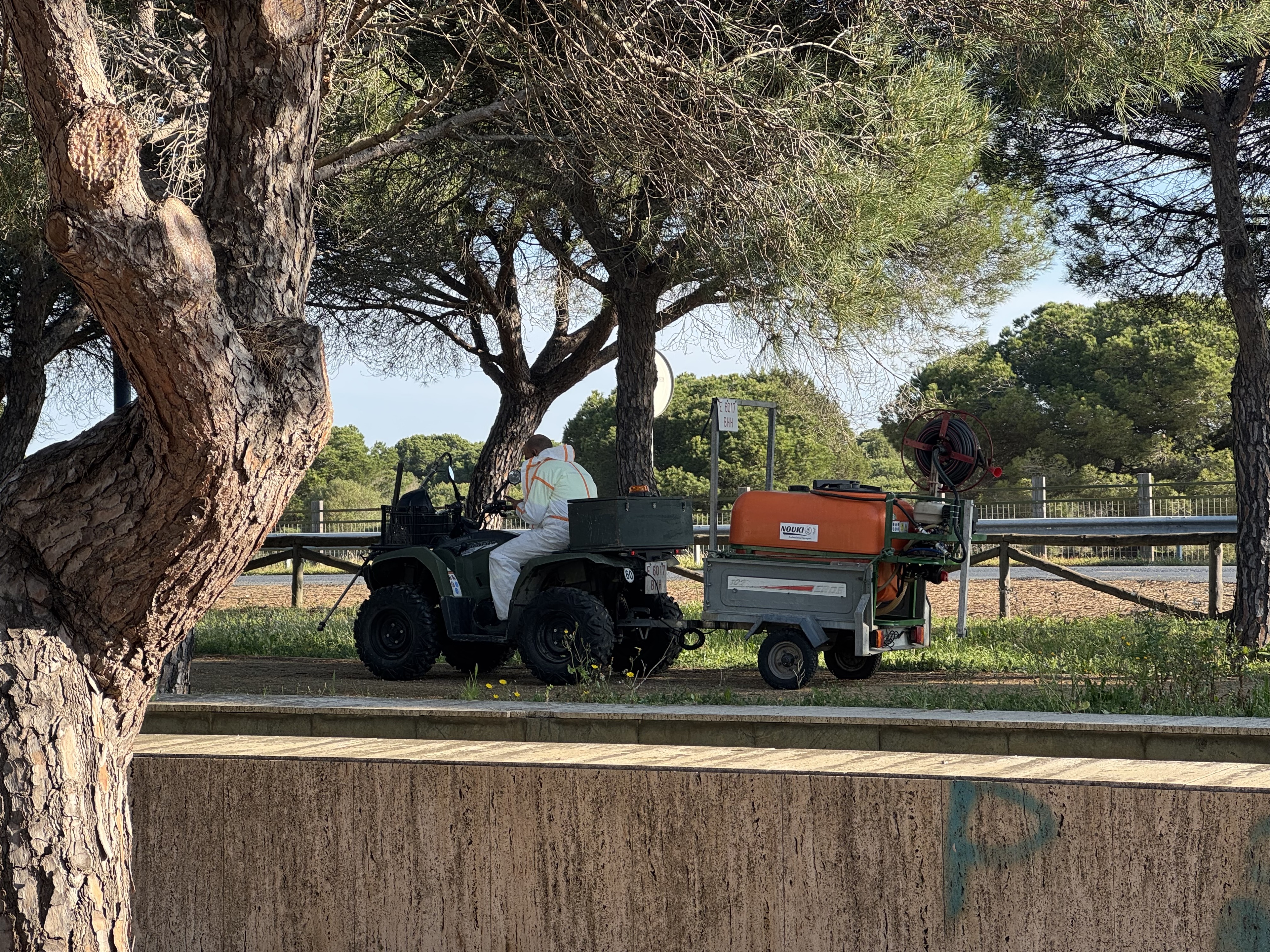

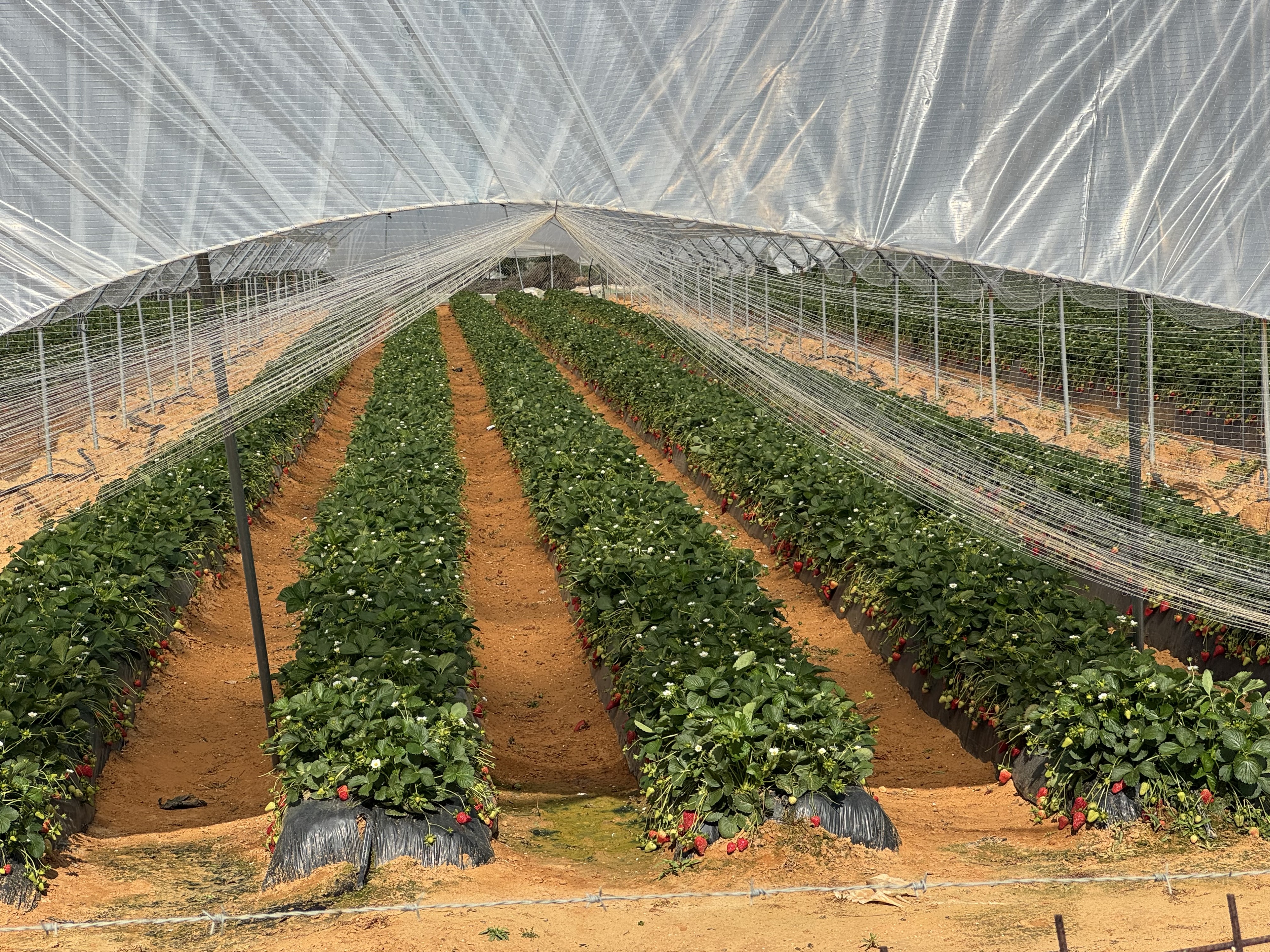
TREATMENT
WITH HERBICIDES
WE APOLOGIZE FOR THE INCONVENIENCE”







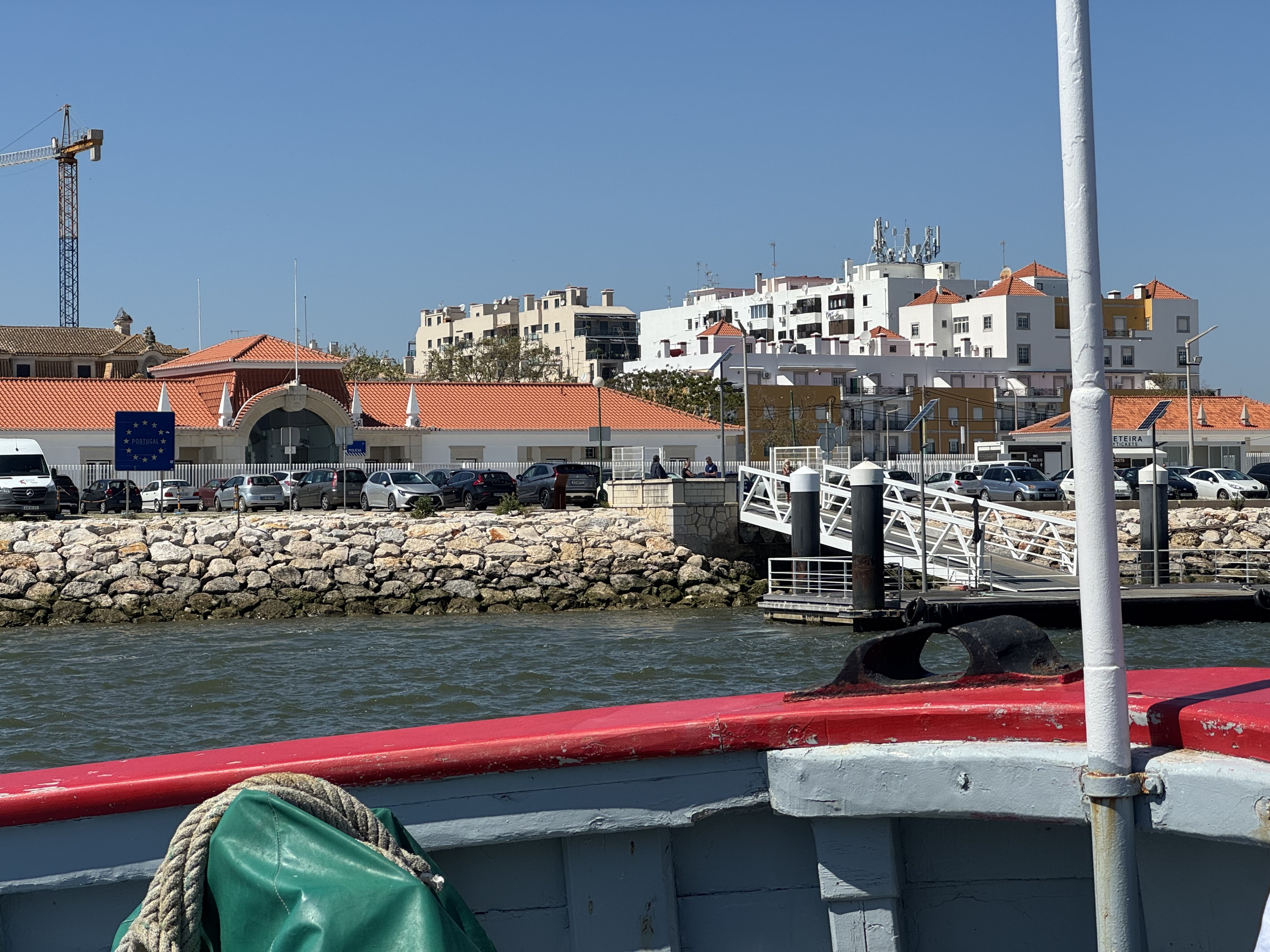
We quickly realize that our limited Spanish won’t get us very far here. The words often look similar, but the language sounds completely different—almost as if someone were speaking Spanish with a strong Russian accent 😅. At least the Portuguese speak English much better than the Spanish, so we manage just fine.
Aside from the language, the driving behavior of motorists also changes noticeably—unfortunately for the worse. In Spain, we’re almost always passed at a safe distance, while in Portugal it feels like every other car is cutting us off. Since we’re now mostly traveling along EuroVelo 1 through the Algarve, we initially think it’ll be fine. But we were wrong: Aside from a few beautiful sections funded by the EU, EuroVelo 1 is often simply synonymous with heavily trafficked main roads—a real outrage. It should actually be possible to revoke the EV1 status from such routes!
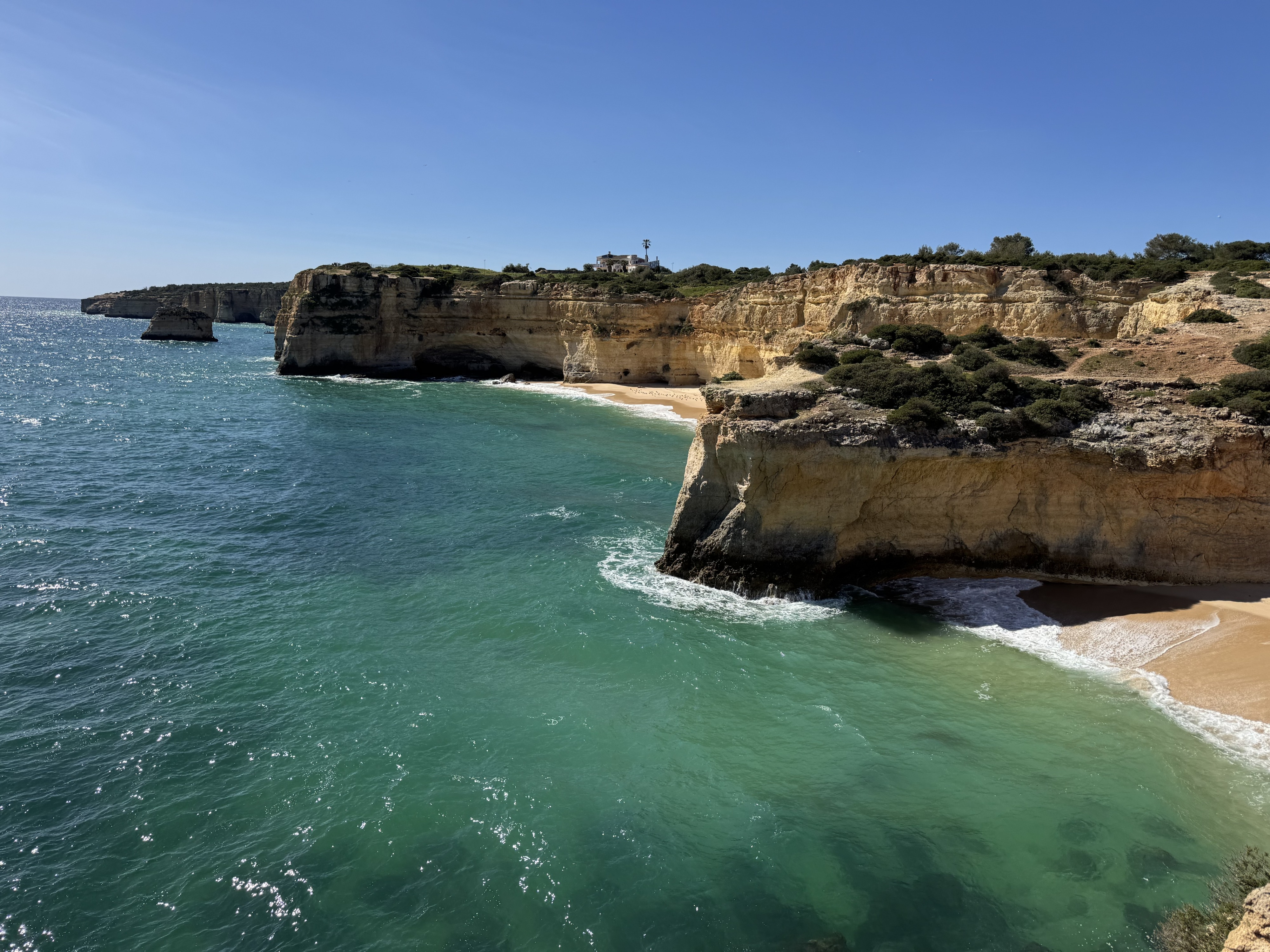
Otherwise, the Algarve hasn’t really wowed us so far. Sure, every now and then we come across those spectacular cliff landscapes you see in pictures. But most of the time we aren’t driving directly along the coast at all, but through tourist towns that seem to alternate endlessly with massive golf courses. And there are a surprising number of them here: over 40 golf courses, with about 1.5 million rounds played here annually—a massive economic factor that contributes around 4.2 billion euros to Portugal’s GDP.
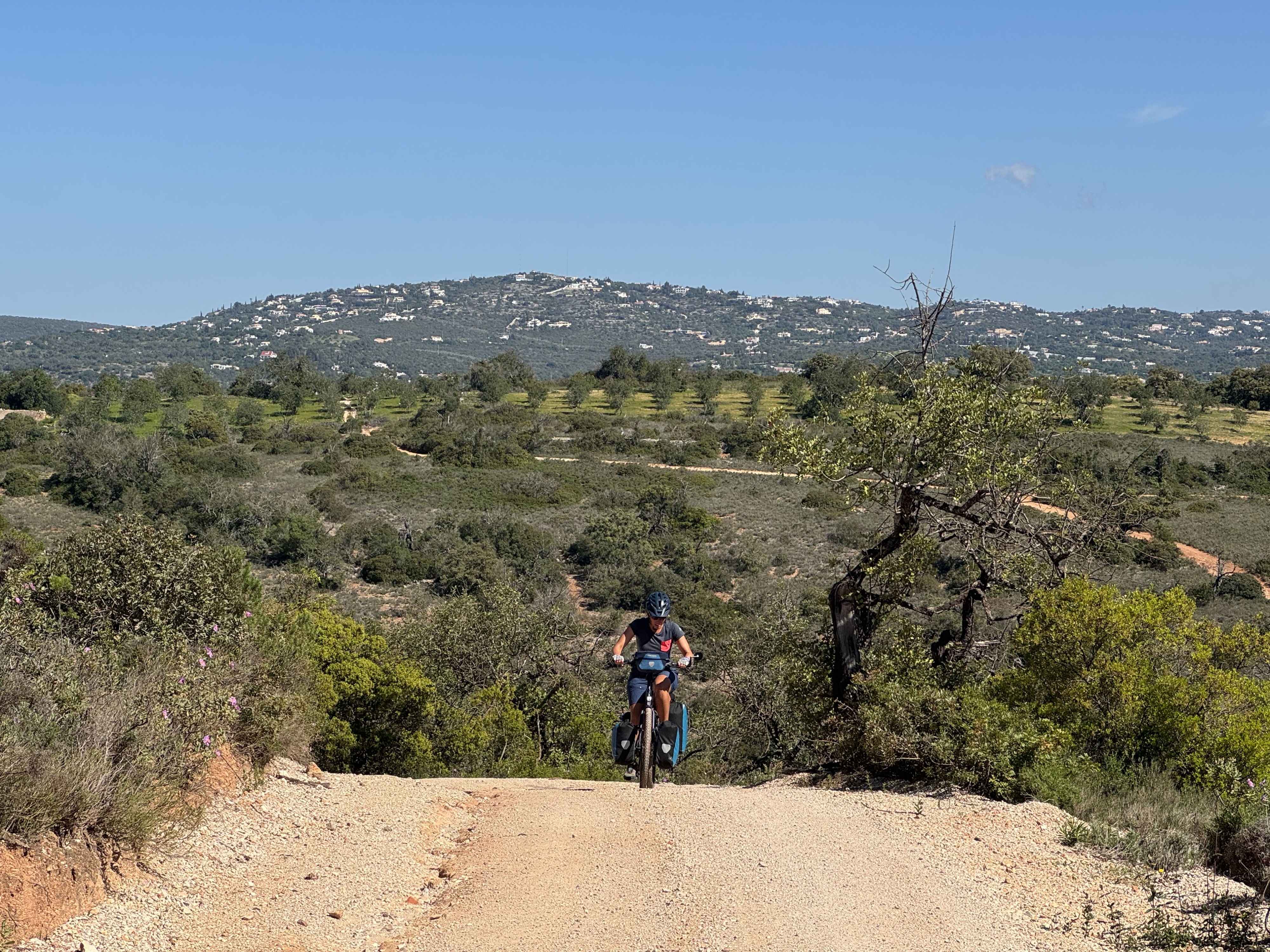
We need a break from the coast and decide to head inland for a bit. There, purely by chance of course 😉, we also find a paragliding launch site.
This short detour inland—including two amazing paragliding flights with perfect landings—has definitely reignited our motivation to give the coast another chance.
Since the bike path once again runs mainly alongside golf courses and tourist resorts, we decide on the spot to “park” our bikes for half a day at a restaurant and explore part of the “Seven Hanging Valleys” hike on foot. This is the only way to truly enjoy the most beautiful stretches of the Algarve coast.
And indeed: Wow. The landscape is spectacular. At the same time, we’re surprised by how many people are out and about here—despite it being off-season and the water being freezing cold. But the detour is definitely worth it and significantly enhances our Algarve experience.
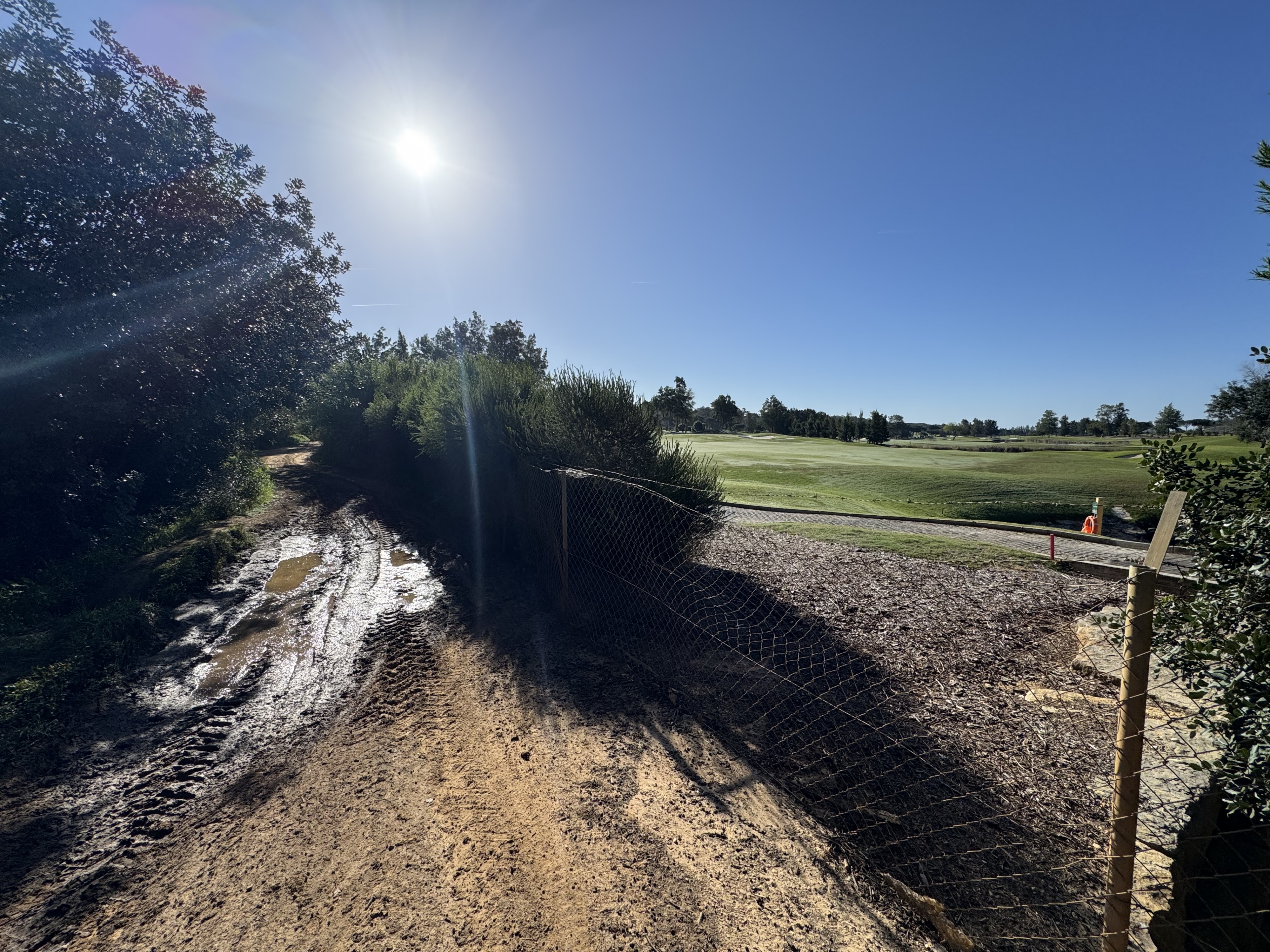
In the evening, we set out again in search of a place to sleep. We discover a secluded road and follow it curiously all the way to the top—and suddenly find ourselves on what appears to be an abandoned golf course. The grass looks patchy, with small bushes growing everywhere. Perfect.
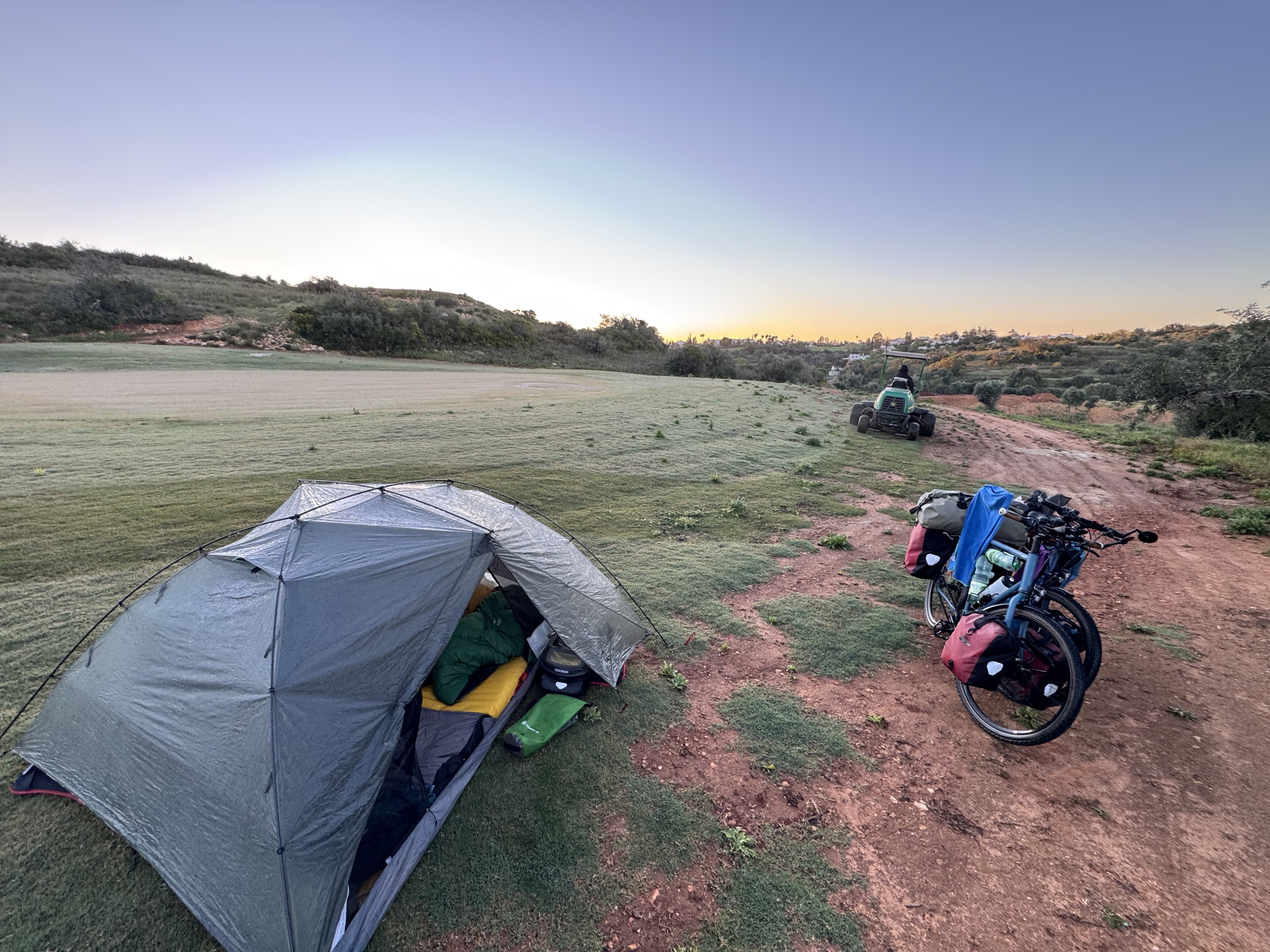
“Actually, we’ve always wanted to camp on a golf course,” we think to ourselves—and pitch our tent right at the edge of the fairway.
We sleep surprisingly soundly. Too soundly, as it turns out.
Around 6:30 a.m., we’re suddenly woken by a loud hissing sound. Half-asleep, we first think it’s the wind. But after a few seconds, it clicks: the sprinkler system.
And not just any wind—but one that spins leisurely in circles… and completely drenches our tent and bikes at regular intervals 😂. You could practically count the seconds until the water jet hit us again with full force.
Luckily, the involuntary tent shower only lasts a few minutes.
No sooner had things quieted down than we heard the next sound: a loud humming. We looked out—and saw a young man driving straight toward us on a state-of-the-art John Deere lawn tractor 🙈. Oops.
He stopped in front of our tent, turned off the engine—and burst out laughing. Instantly likeable 😄. We apologize and explain that the place really didn’t look like it was in operation.
His reply: The golf course is brand new and won’t open for about another month. That’s why everything still looks a bit “wild”—after all, the Algarve is still missing a few golf courses 😅.
He stays calm and says we should take our time so the sun can dry the tent again. We chat for a while longer about our trip—he’s clearly interested—and then say goodbye with a smile on our faces.
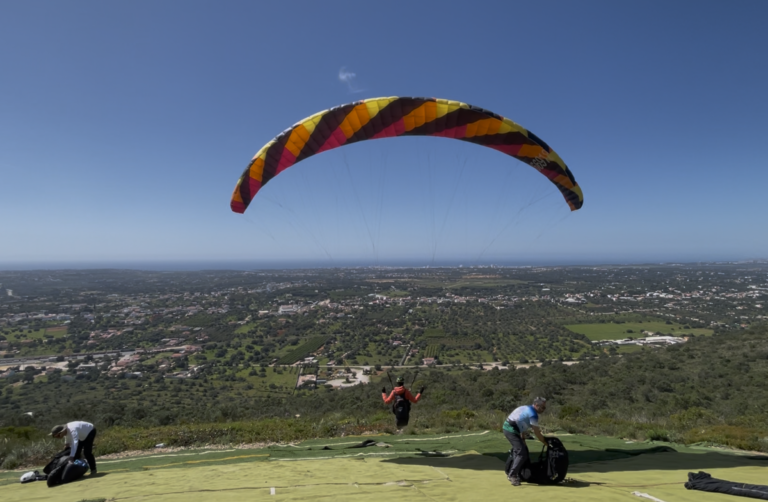
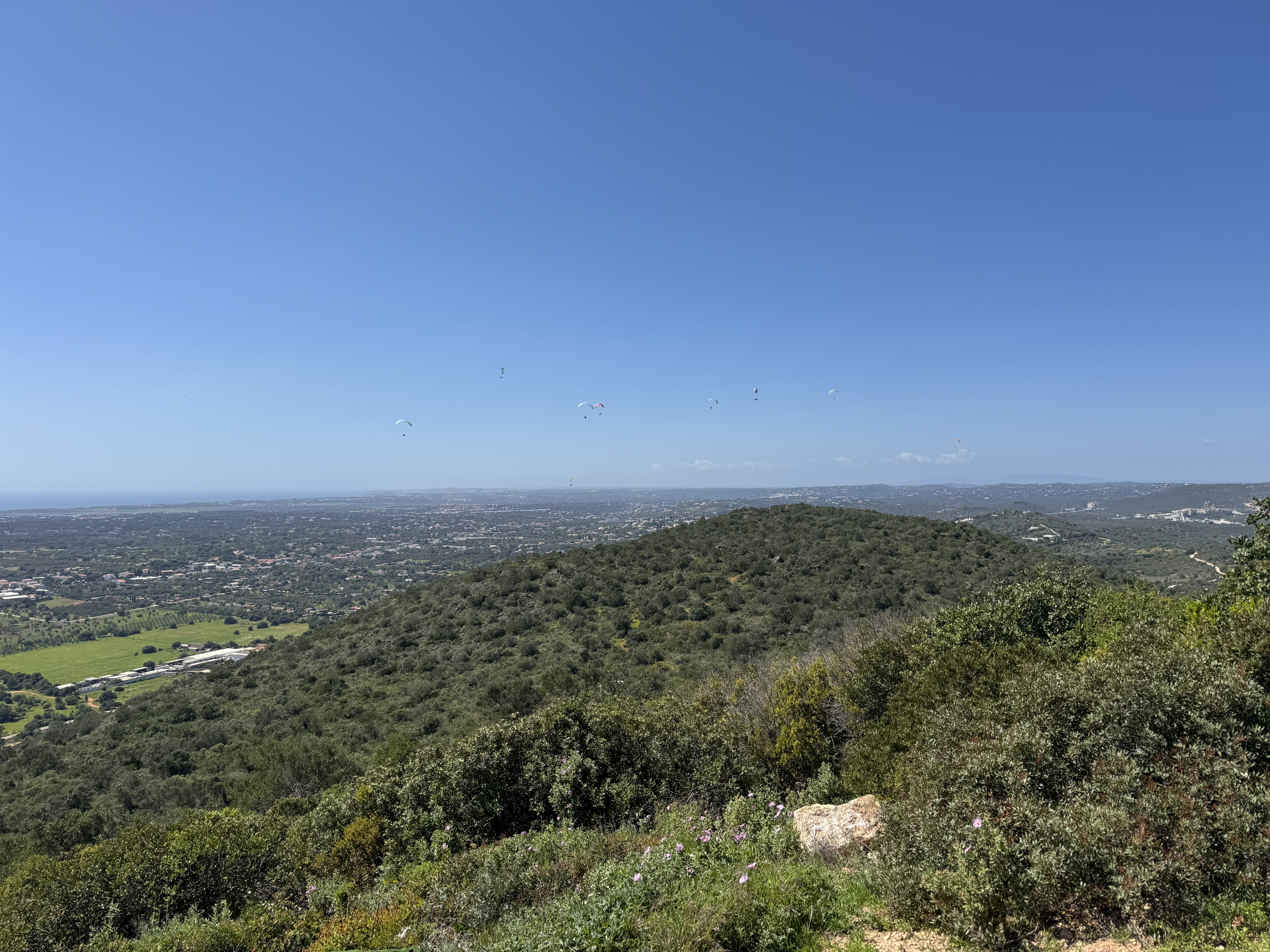


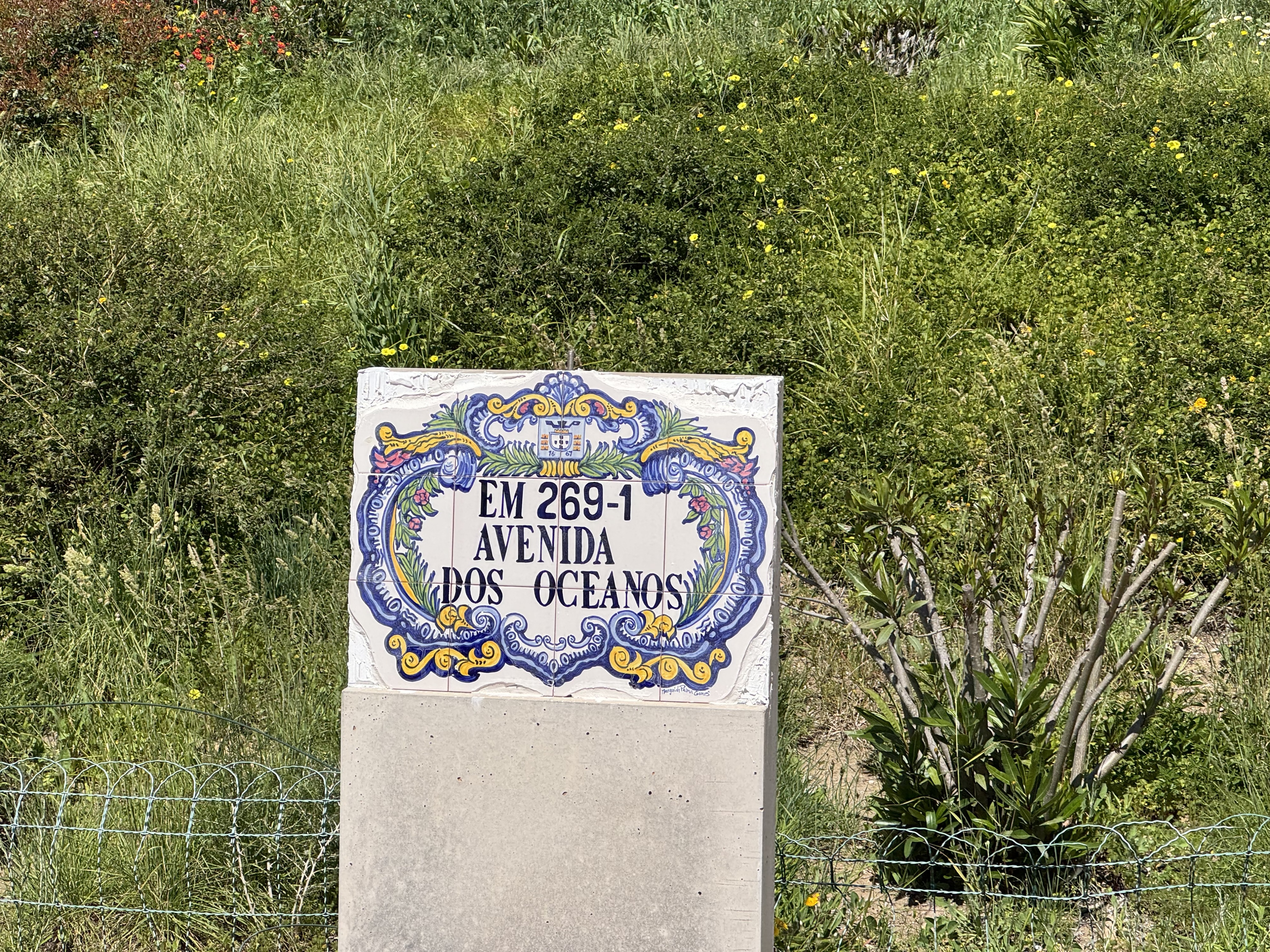




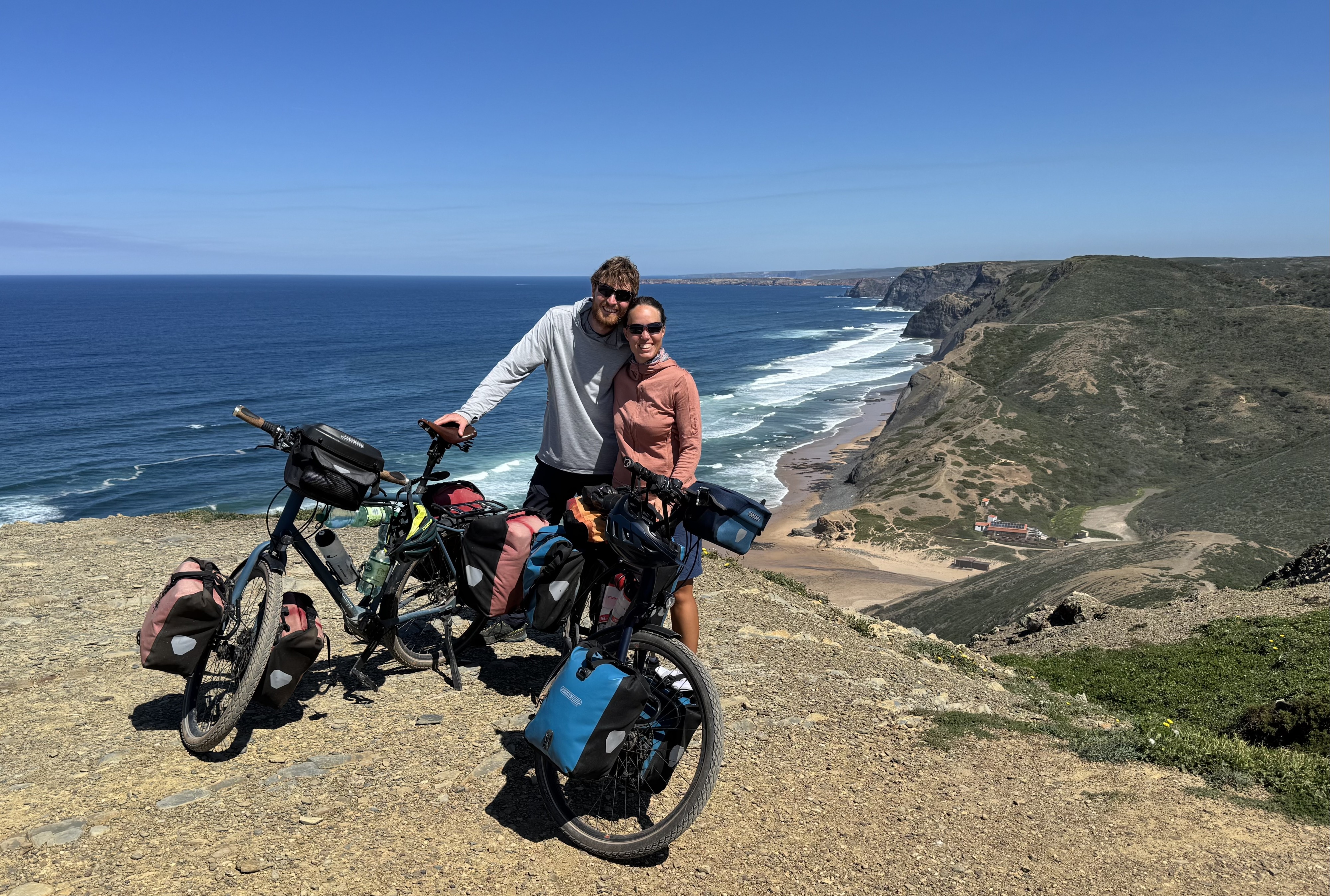
After Lagos, things finally calm down a bit: less traffic, fewer tourists, and lush green landscapes instead. Our next destination is the paragliding launch site “Miradouro da Cordoama.”
This place isn’t just a highlight for pilots. Rarely have we just stood there for so long, simply marveling. The combination of steep cliffs, the rough Atlantic, and this vast expanse is simply breathtaking.
Thanks to paragliding, we keep ending up in places like this—and, as a bonus, we quickly strike up conversations with other pilots. So Beni takes off here for a breathtaking flight and glides along the coast. Meanwhile, Nicole enjoys chatting in Swiss German with a few other Swiss people at the launch site for the first time in a long while.
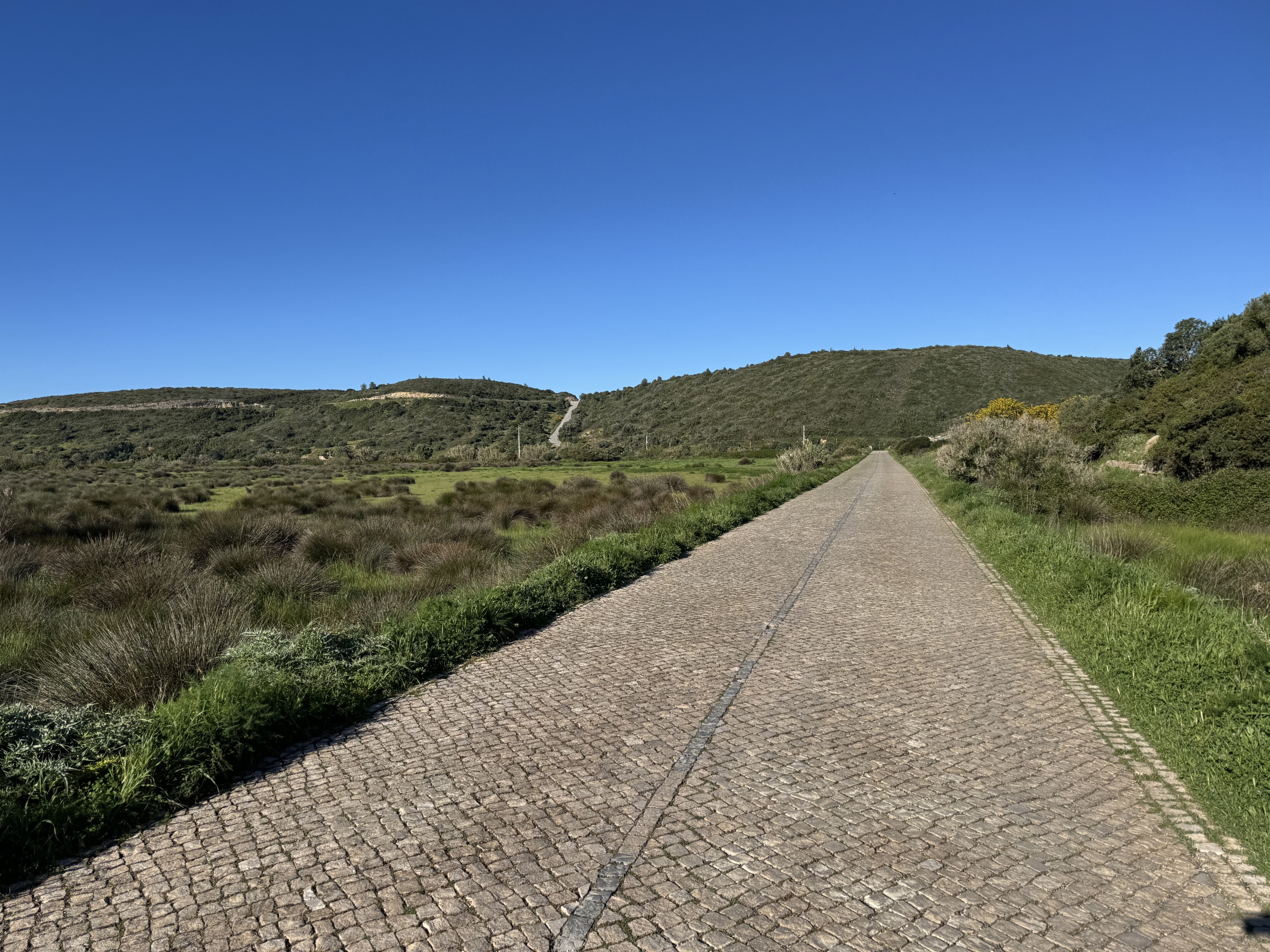
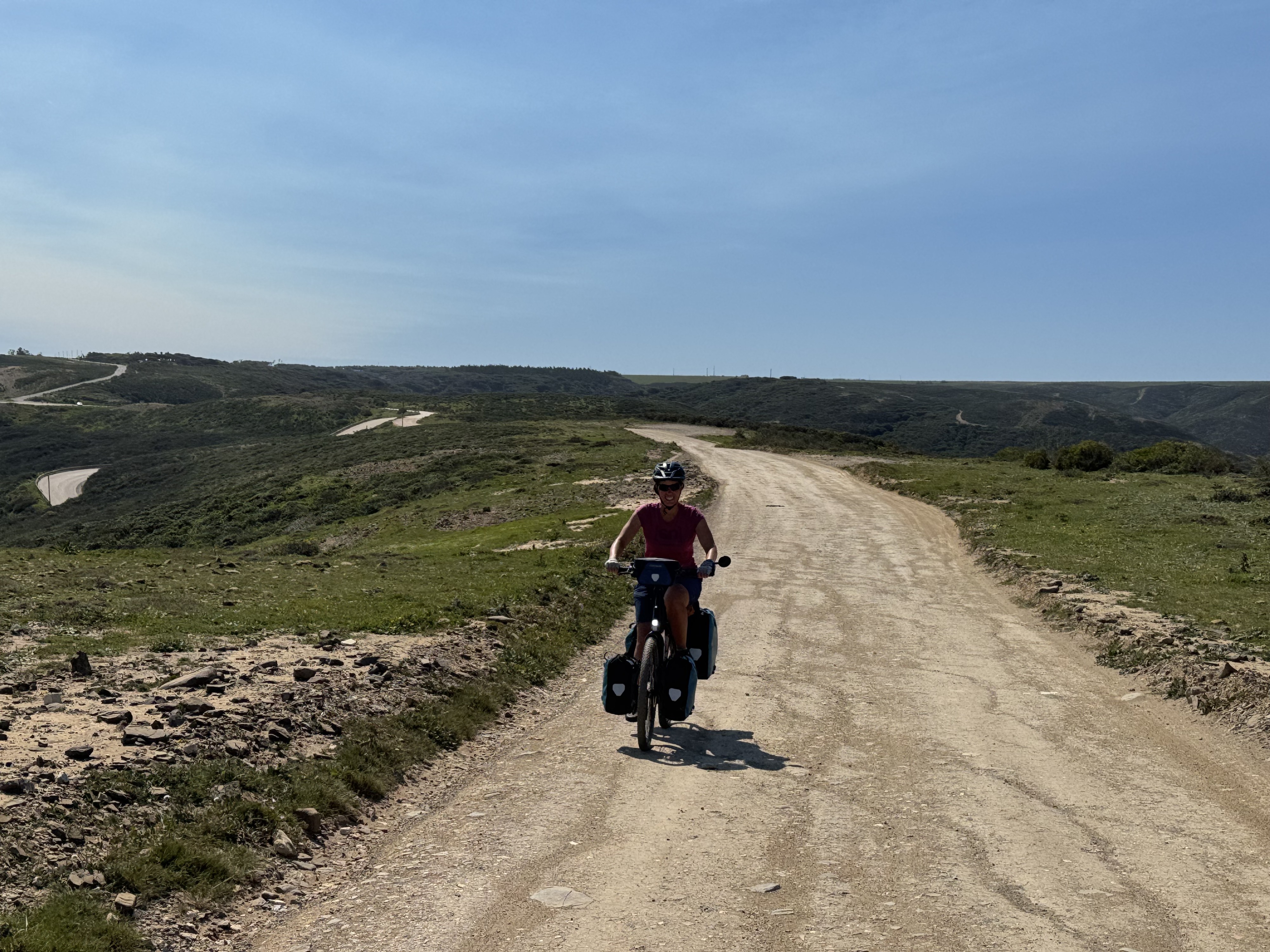
The “Miradouro da Cordoama” also marks our westernmost point in Portugal. From here on, we head north again, back onto EuroVelo 1, with Lisbon as our next major destination.
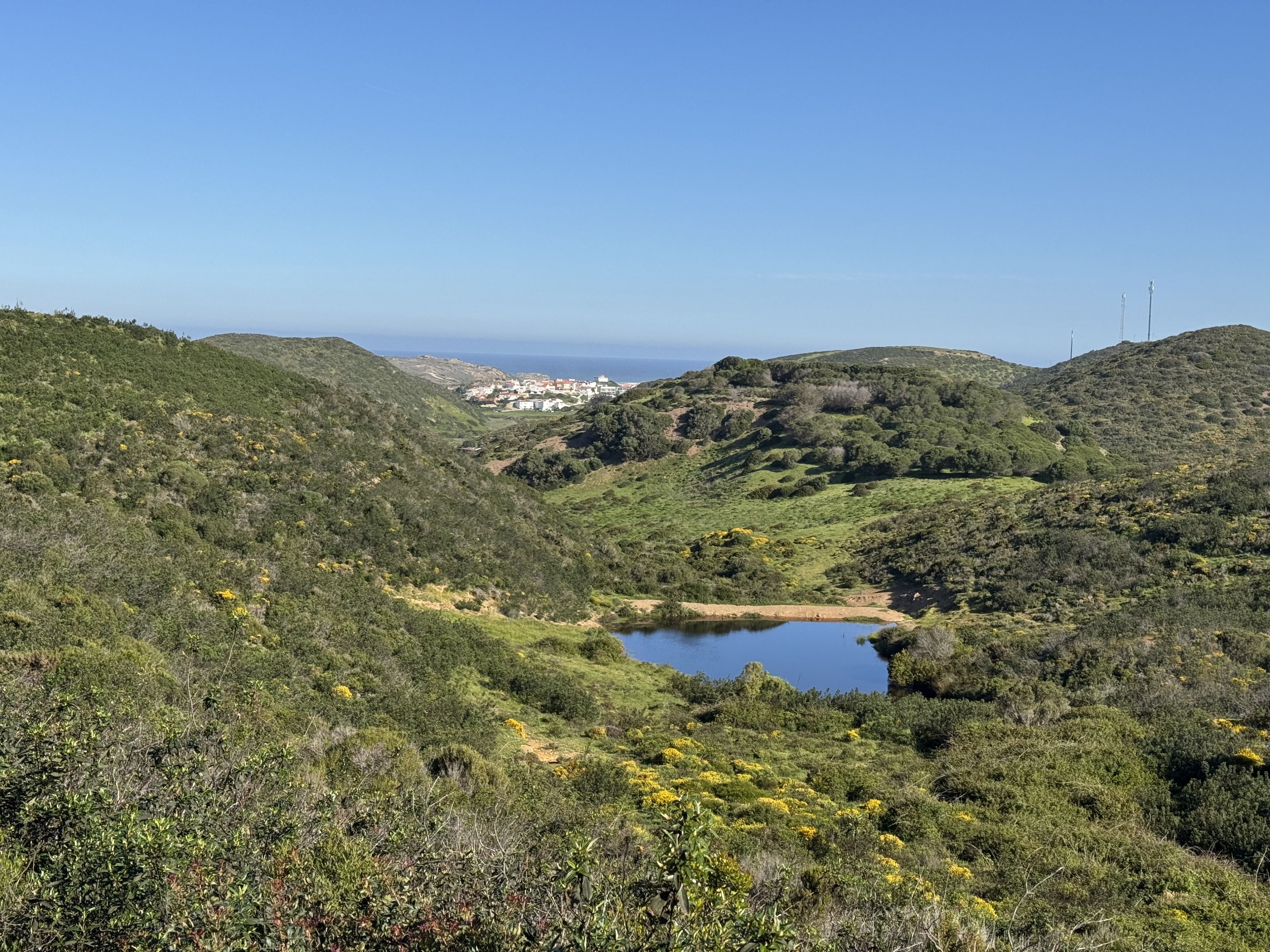
But it’s still a good 250 km to Lisbon. Along the coast, we encounter a surprising number of hikers—most of whom are likely on the famous “Fisherman’s Trail.” We don’t see a single other cyclist, however.
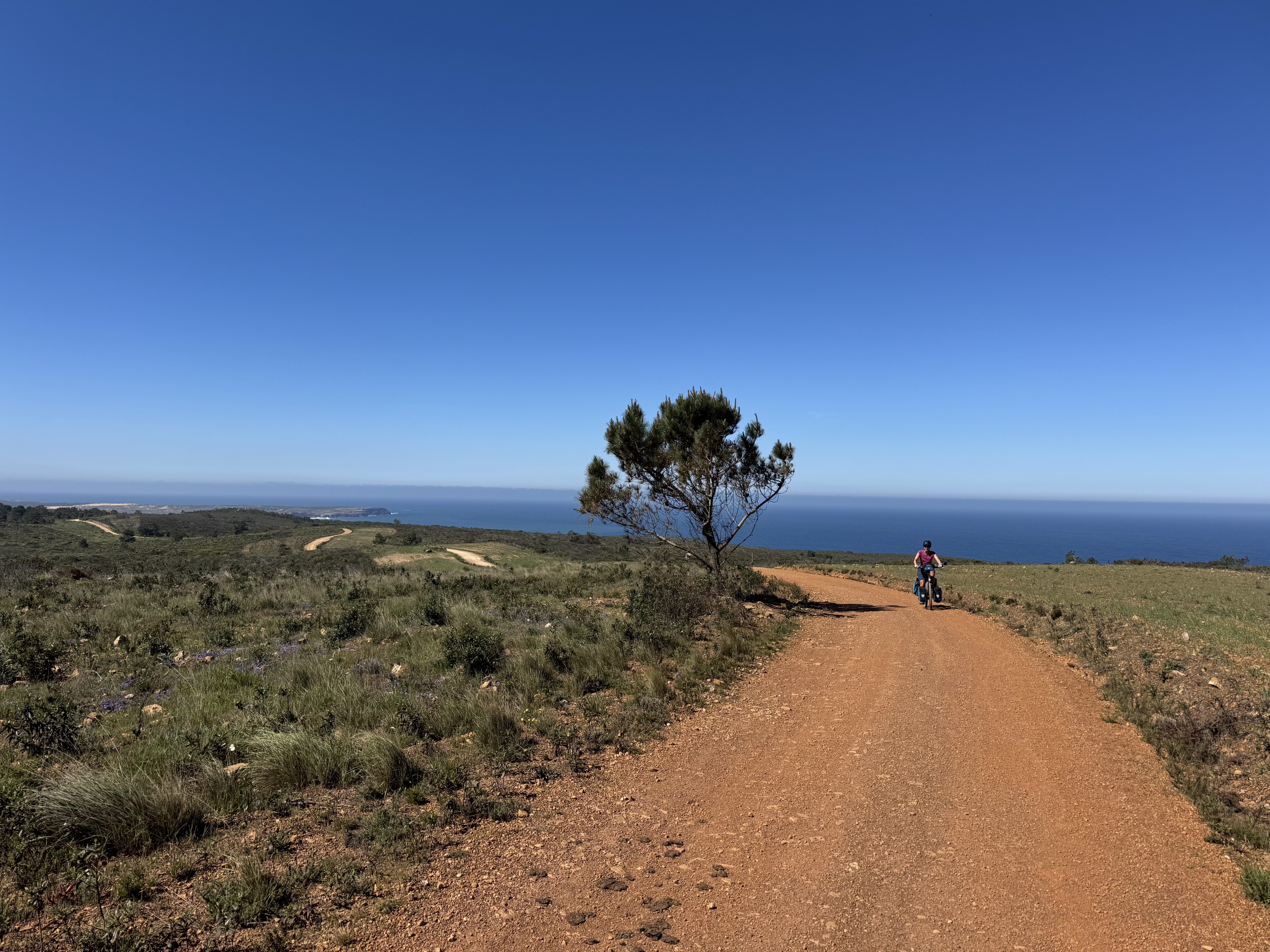
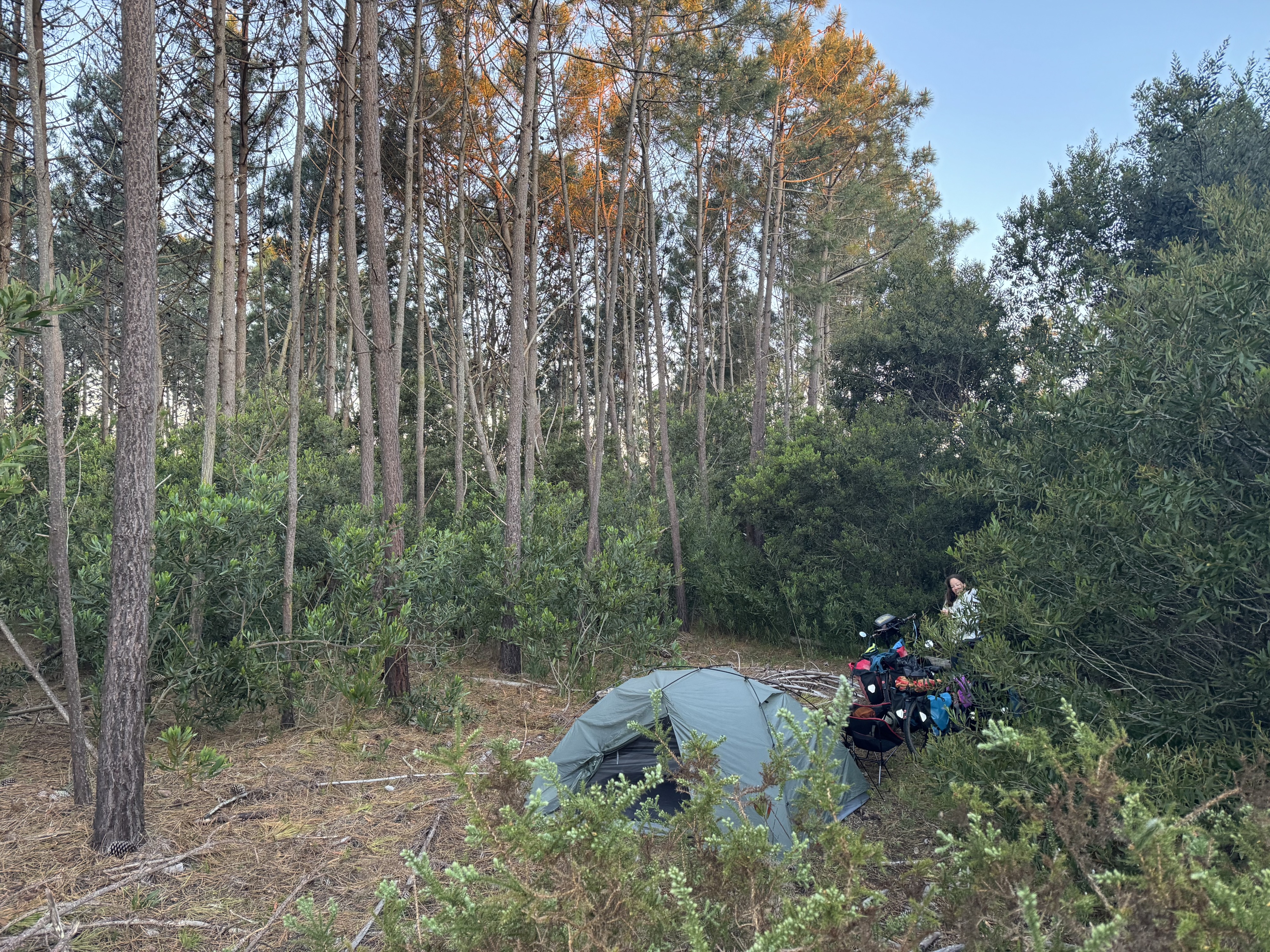
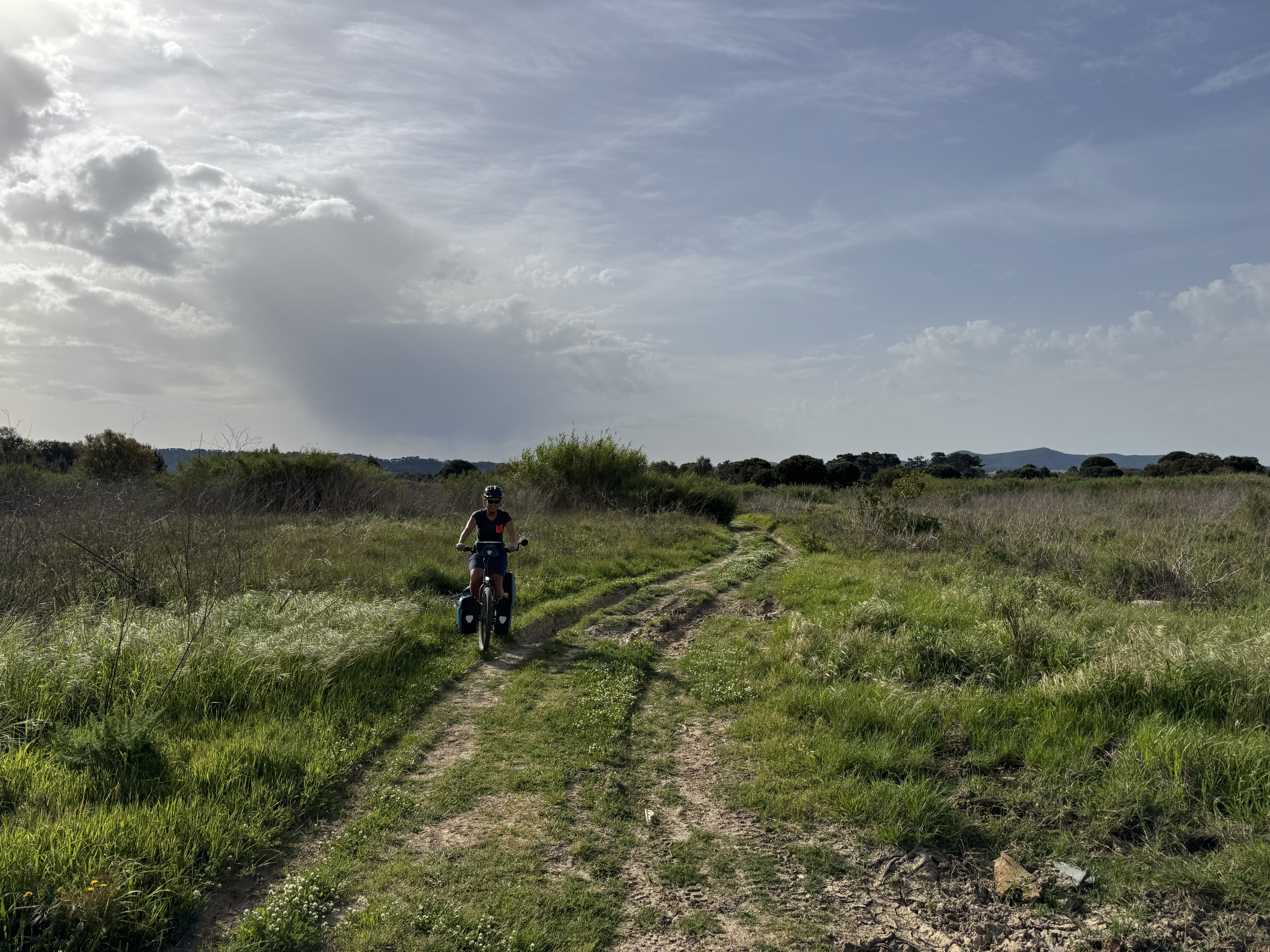
We often pitch our tents deep within wonderfully fragrant eucalyptus or pine forests, as hidden spots are otherwise rather scarce here. On the other hand, the EuroVelo route runs much more frequently right along the coast in this section, and we usually encounter hardly any traffic. We even venture into the ice-cold water twice 😃.
Slowly, however, we realize: We need a few days’ break again and a proper roof over our heads. So we try our luck on the Warmshowers platform and message about ten people in Lisbon. And sure enough: Yair and Aline are the only ones who get back to us and offer to let us stay with them for three nights—in a prime location, no less.
We’re really happy about this, because so far we’ve found hospitality in Spain and Portugal to be pretty much nonexistent. That’s why we’re not entirely surprised that the Warmshowers community isn’t as active here. In other countries, we’ve usually found a place after just two or three requests.
For the next two days, the EuroVelo turns into a main road once again. Some of the passing maneuvers feel… let’s just say: aggressive. So we resort to our tried-and-true tool again—the infamous “Fuck-Off Stick”: a long, pointed branch, attached crosswise to the luggage rack, which very subtly reminds drivers to keep their distance 😁. It works surprisingly well.
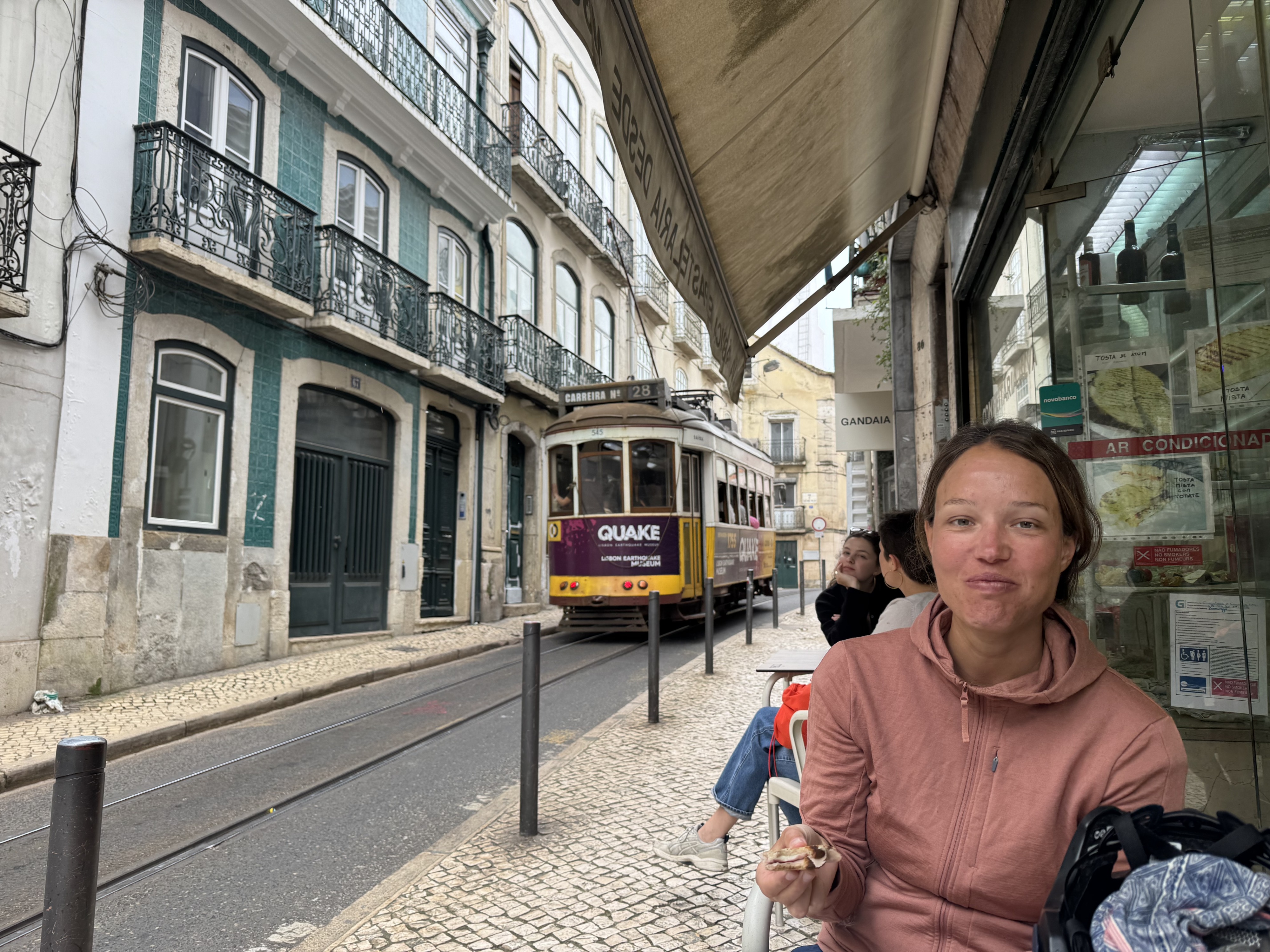
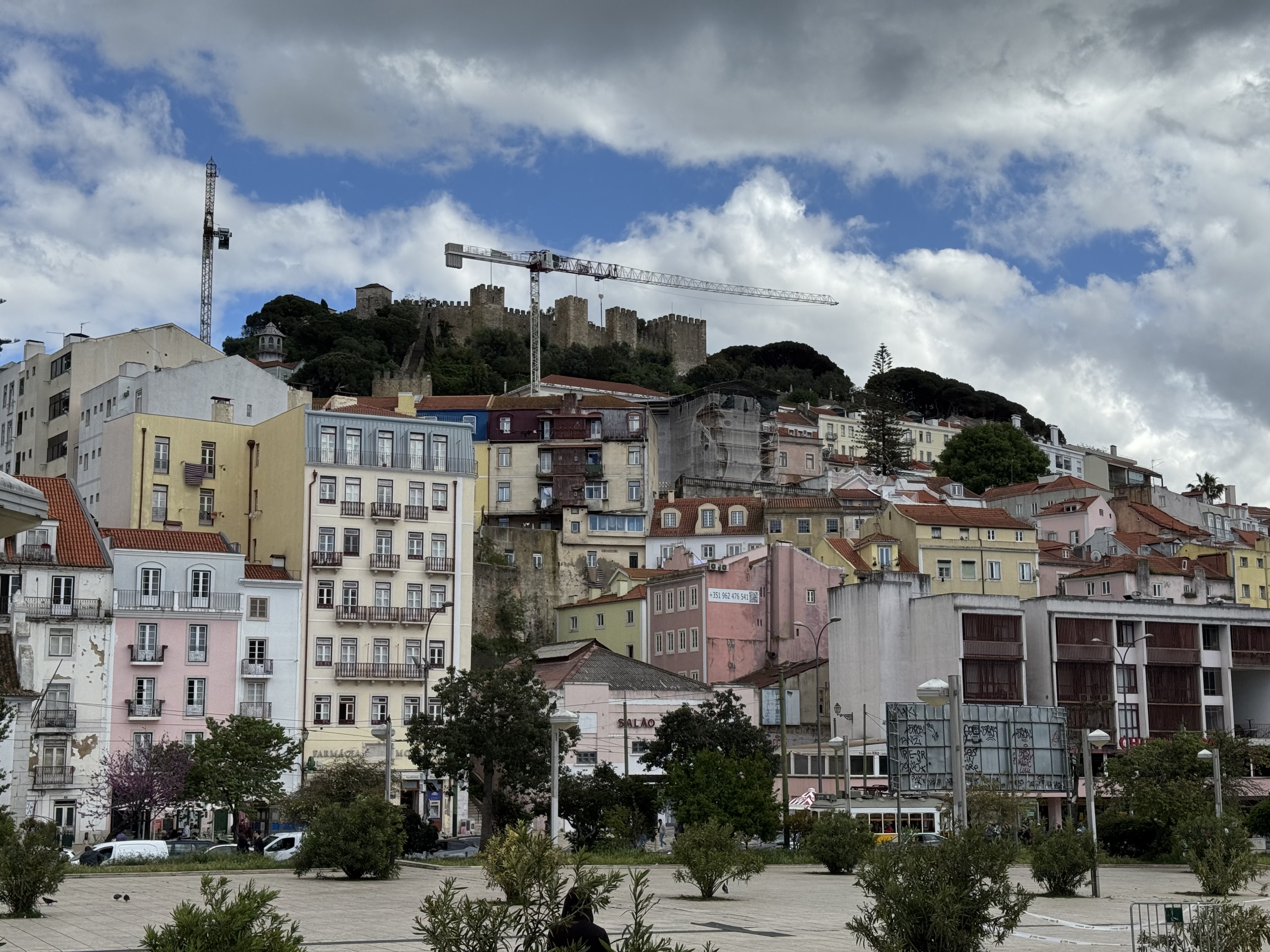
The final stretch takes us across the Tagus River by ferry once again—and suddenly we find ourselves right in the heart of Portugal’s capital.
Our WarmShowers hosts give us a warm welcome. We spend the next few days relaxing: we work on the blog, explore the city on our own, and generally take it easy, since our hosts have to work.
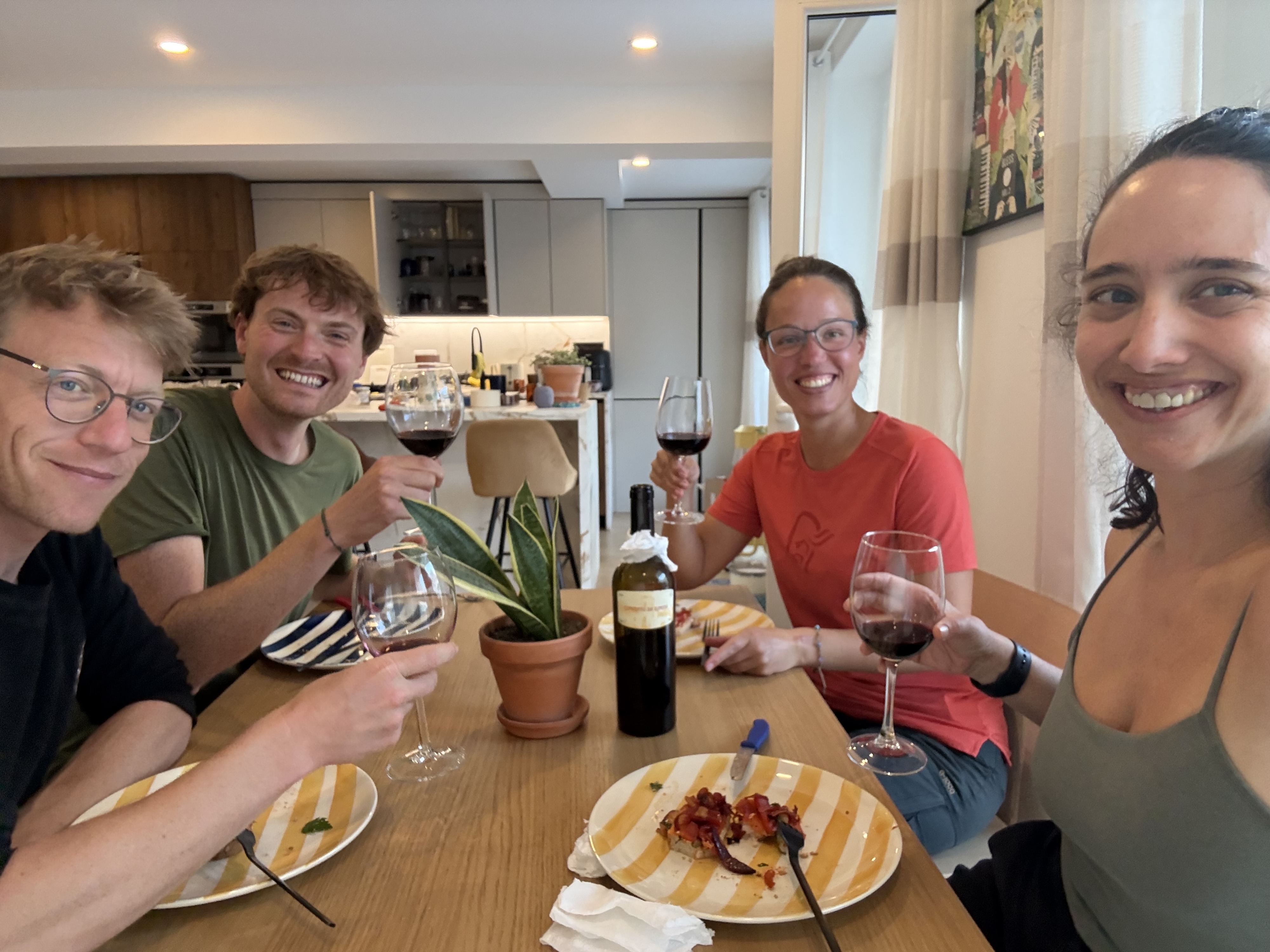
As a small token of our appreciation, we cook them a delicious dinner—for us, that’s just part of giving something back. With some good Portuguese wine, the evening quickly turns into a lively gathering; we laugh a lot and have fascinating conversations. They’ve only been living here for two years and are originally from Israel—which makes their stories and perspectives all the more interesting.














Find out in our next blog post whether EuroVelo 1 will take us away from the coast 🙋♀️🙋♂️.
For even more insight into our everyday cycling life, check out our latest video: