
From the roads of Andalusia to the open sea – and back to life on La Palma
Published on 04.01.2026
Route to the blog:
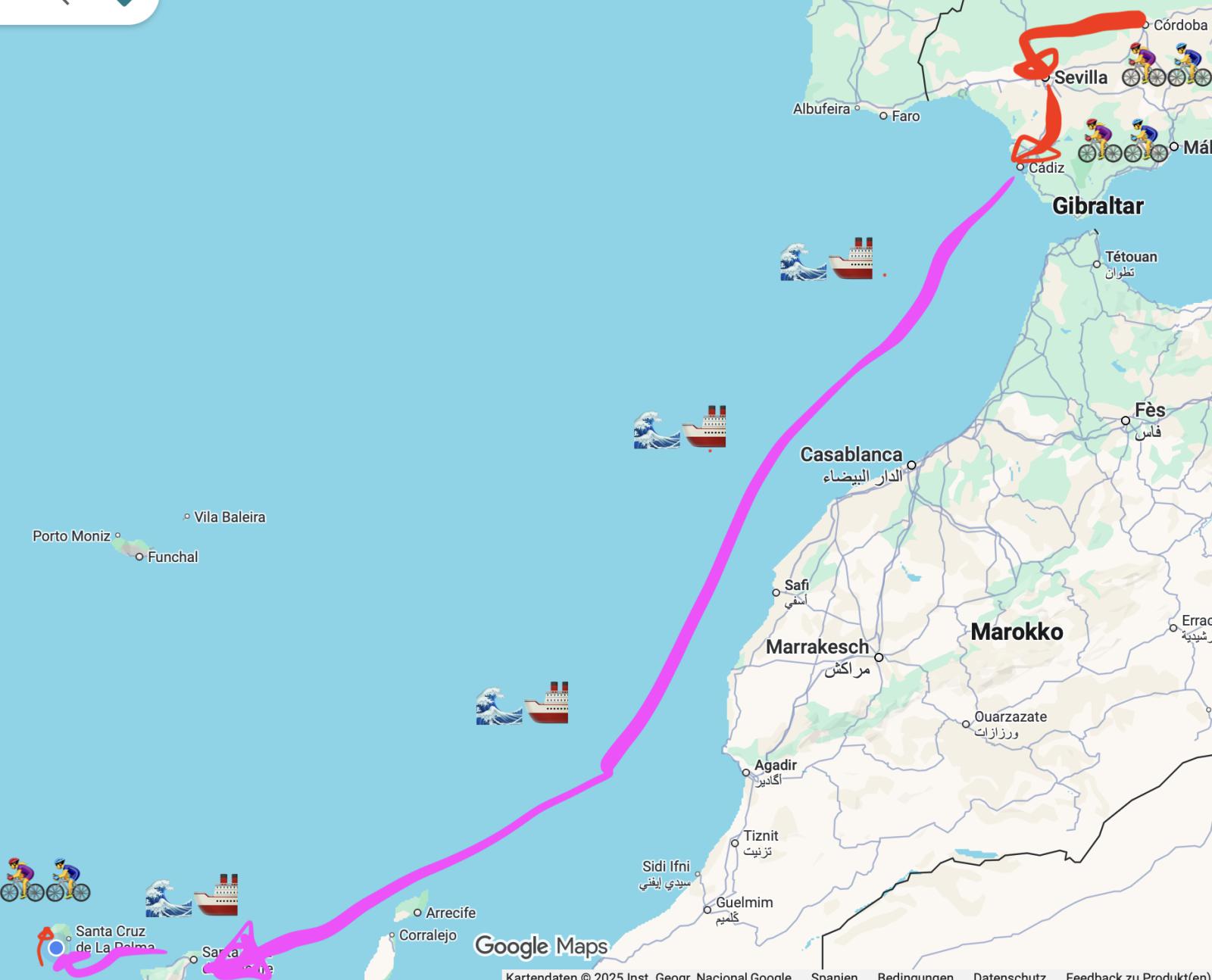
Olive groves, olive groves, and more olive groves. We desperately needed a change of scenery. So we decided to take a little detour via the Sierra de Hornachuelos Nature Park. But first, the route took us through the beautiful city of Córdoba. Unfortunately, persistent rain made this stage of the journey rather unpleasant. Luckily, we had been traveling almost exclusively in sunshine up to that point. At least it gave us the opportunity to put our new ponchos through their paces once again.
Conclusion: they definitely keep you dry longer than conventional rainwear – but you still sweat quite a bit underneath them.
Conclusion of the conclusion: if possible, stick to sunny routes ☀️😂.
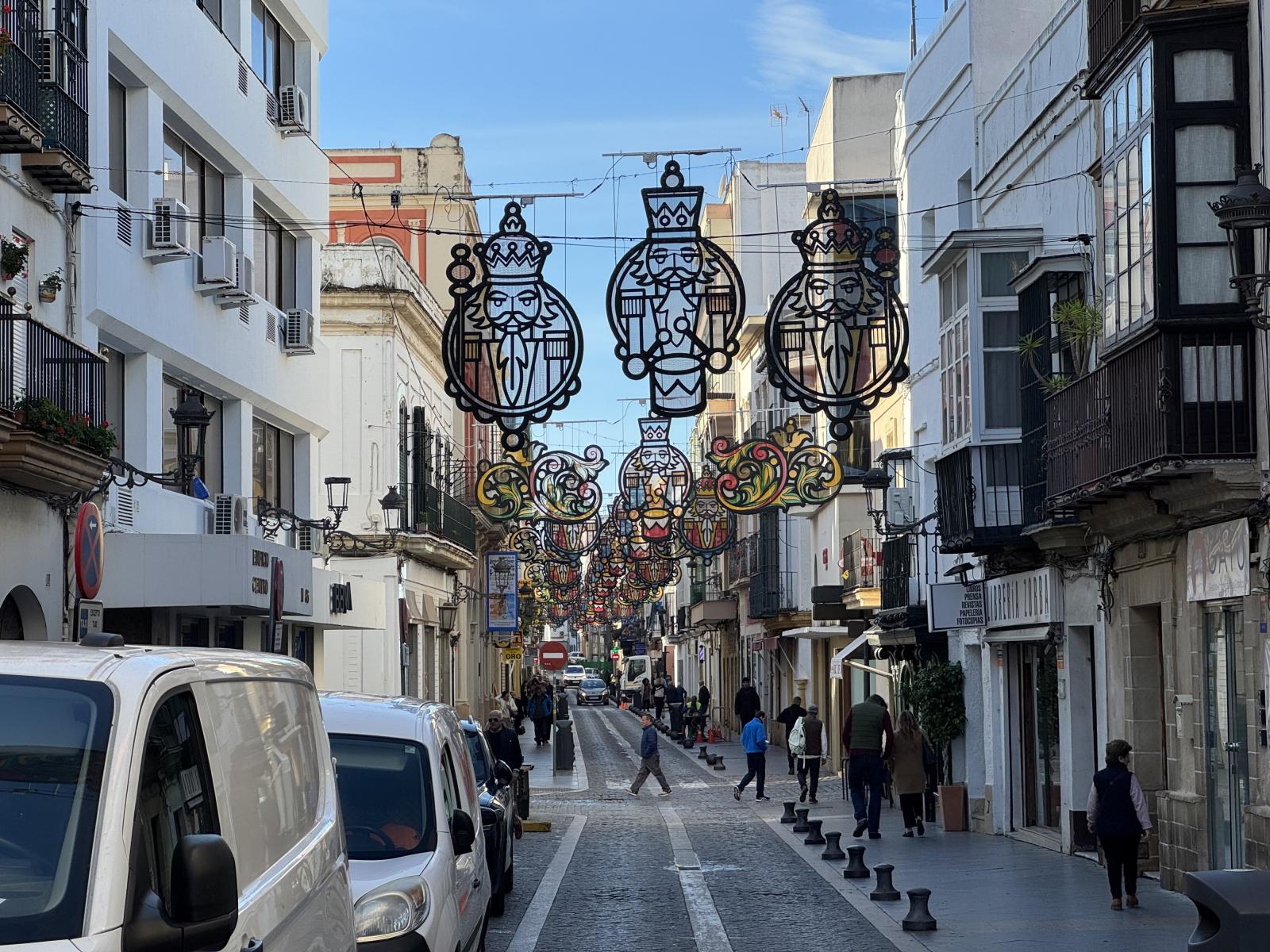
In larger cities, we try to visit restaurants serving non-Spanish cuisine whenever possible. This is because as soon as you leave urban areas, there are almost exclusively Spanish restaurants – and they all seem to have the same menu. We have nothing against Spanish cuisine, it is delicious, but it is very meat and fish-heavy. We also really enjoy having some vegetables on our plates.
Here, we realize once again how spoiled we are in Switzerland with culinary diversity. This is also evident on cold days when we would like to sit down in a restaurant to warm up. Because here it quickly becomes clear: while we in Switzerland complain when the temperature drops below 21 degrees in winter, here there is simply no heating anywhere 🥶. So the locals sit in damp, cold bars wearing winter jackets and drink their ice-cold beer from frosty glasses. I have no idea how they do it – the glass is so cold that beer ice forms immediately when it is poured.
Not really surprised that olives are grown even in the nature park, we nevertheless enjoyed the changes in the landscape. Finally, a little more variety again: hills, streams, rivers, and reservoirs. Since the tourist season was long over and the weather forecast was not particularly inviting, we had the roads virtually to ourselves. That makes a huge difference—it's the only way to get into an almost meditative state. You drift off into daydreams, have plenty of time to reflect on yourself and ask yourself: Am I living the life I want? What are my/our goals?
There is far too little room for all these thoughts in normal everyday life. This time, when you are only dealing with yourself, is not always pleasant. Sometimes thoughts or fears arise—all the things you would otherwise like to suppress by endlessly scrolling through Facebook, TikTok, or Instagram.
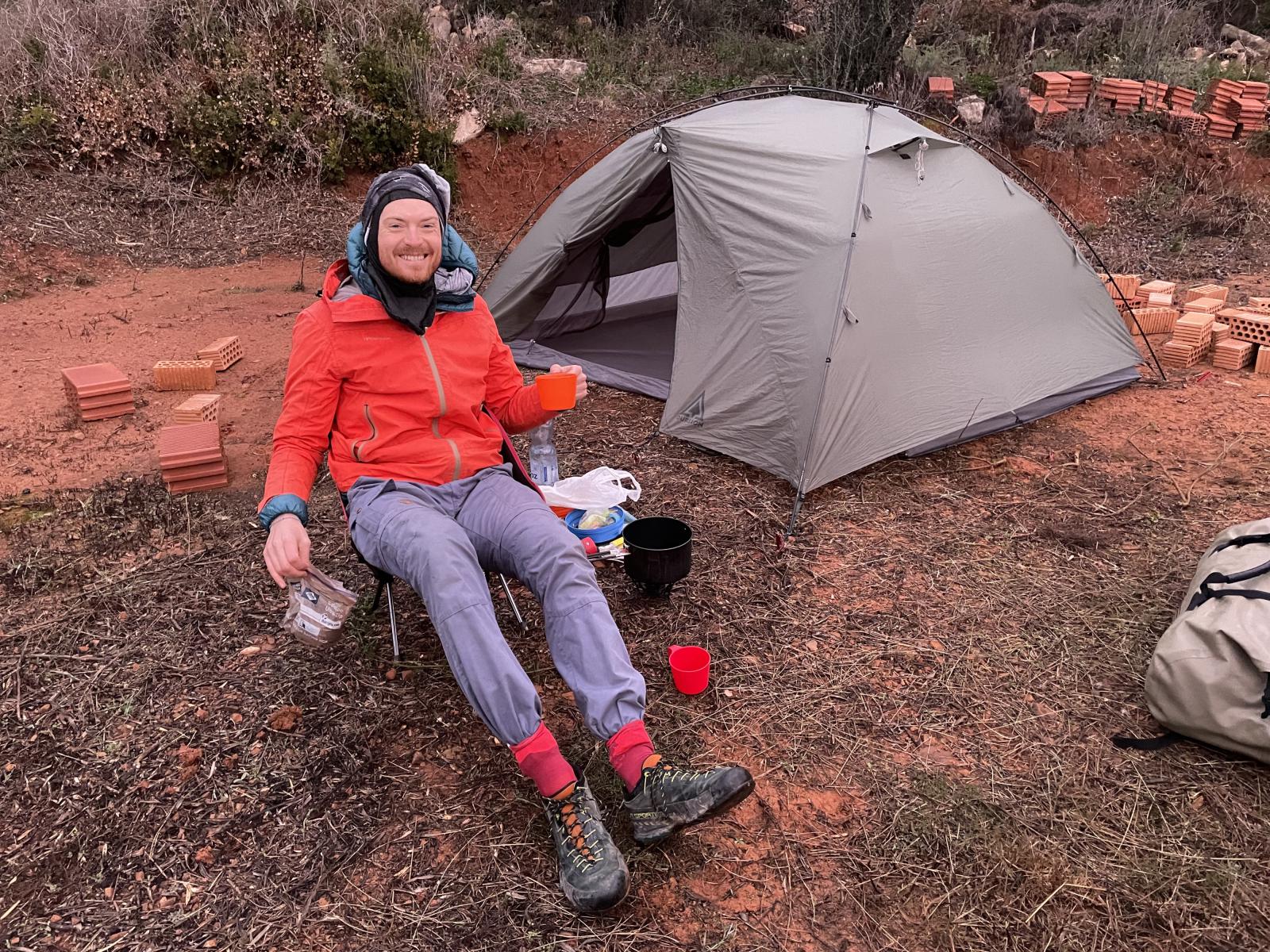
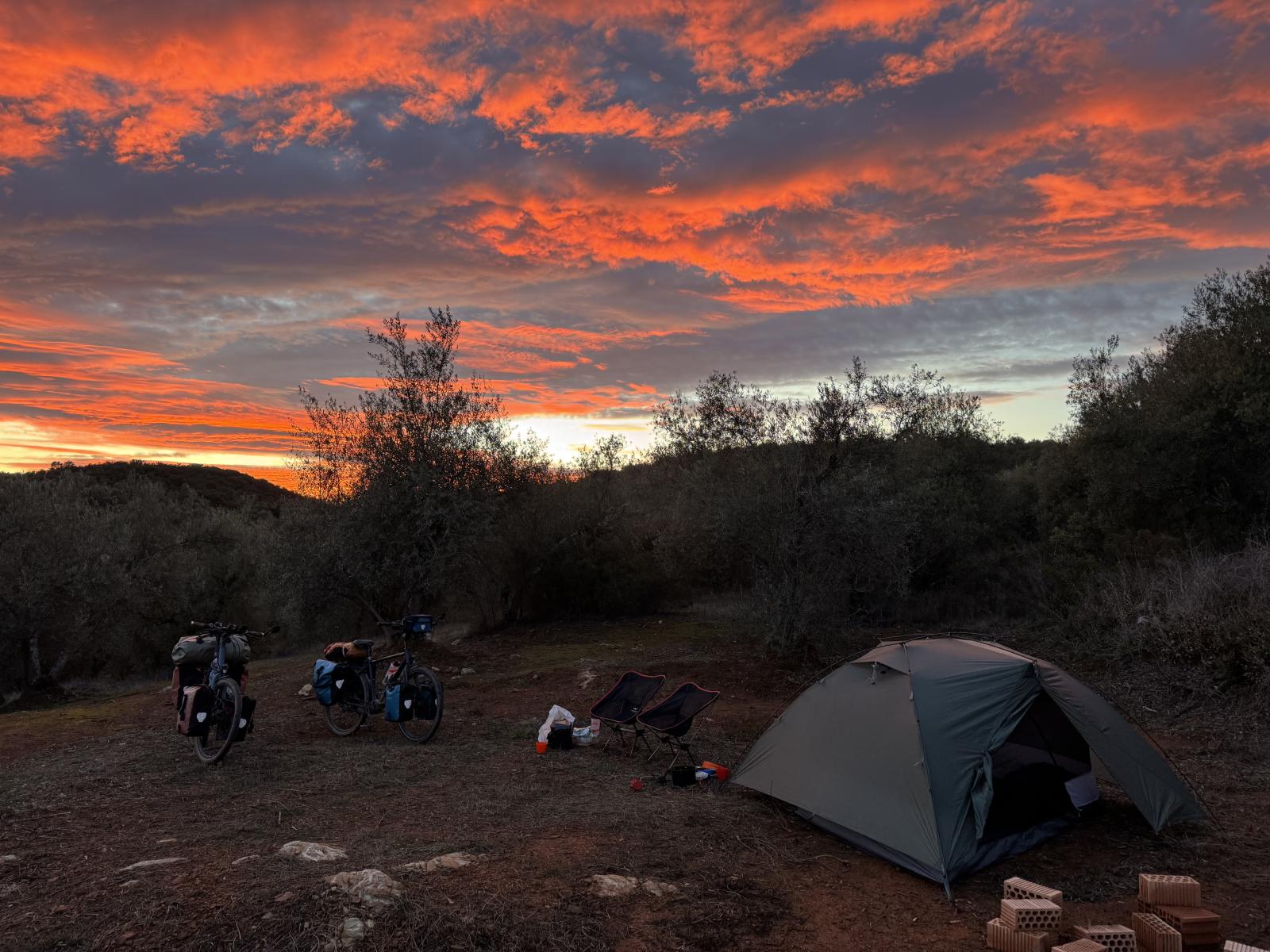
We pitch our tent again in the nature park, this time among olive groves. The sun sets with a beautiful evening sky—and disappears for the next few days.


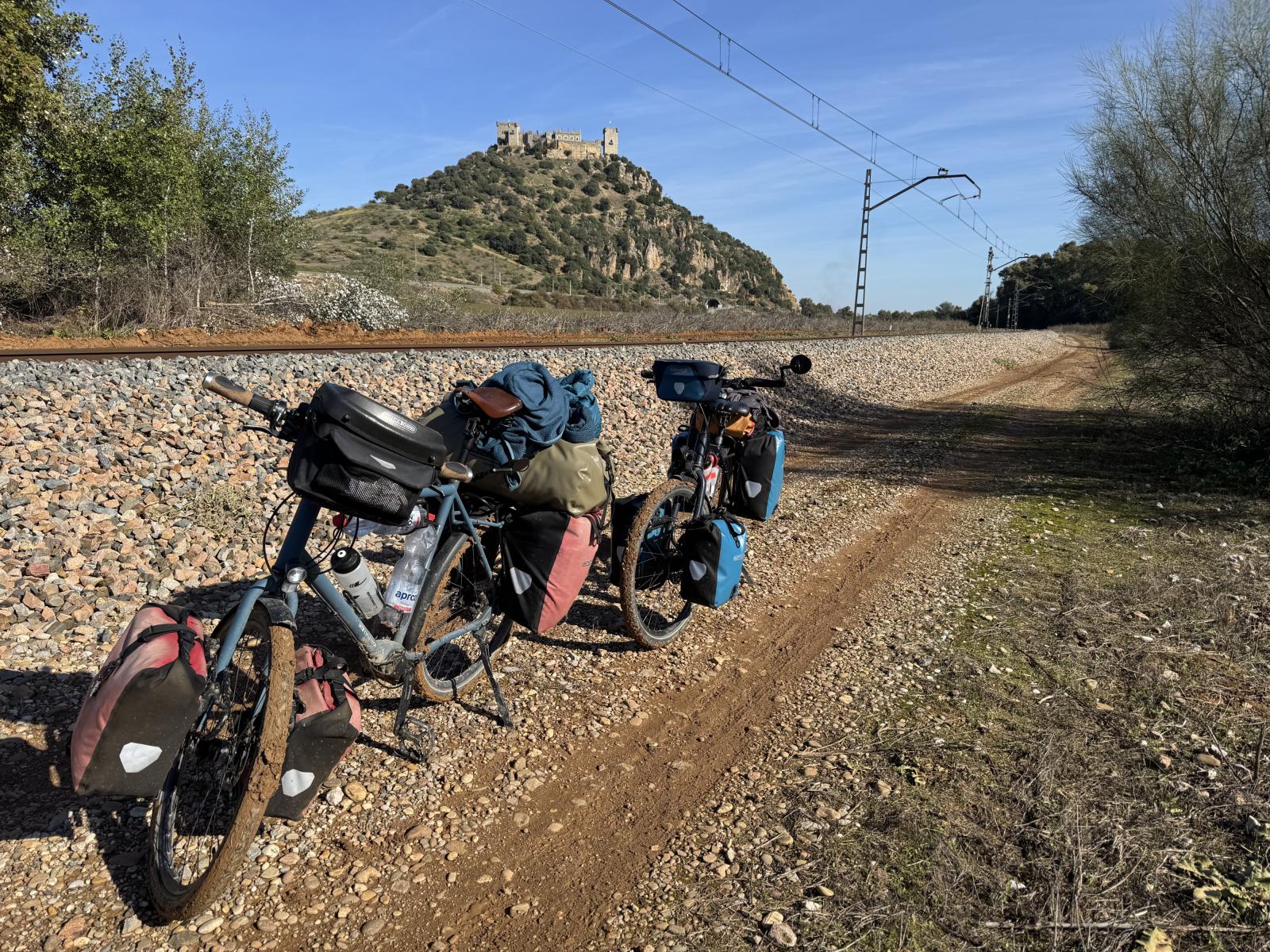




Now we have to pedal hard again so that we can arrive in the village of Cazalla de la Sierra in time and spend the worst day of rain in accommodation. Fortunately, most of the route follows an enchanting cycle path, the Vía Verde de la Sierra Norte. This runs along the former railway line that once connected the Zafra–Seville train line with the mines of Cerro del Hierro.
The temperature is not rising above 11 degrees. For us, that means getting out of the mountains and down into the warmer lowlands. In any case, our ferry is leaving Cádiz for La Palma in a few days.
However, it wasn't quite as simple as we had imagined it would be with the ferry. Basically, we had two options:
- Cádiz → La Palma
53 hours of travel, no transfers, but with various stops along the way – and no cabin. - Cádiz → Tenerife → La Palma
33 hours from Cádiz to Tenerife, without changing boats or making any stops (unfortunately, all cabins were fully booked), then another 2.5 hours from Tenerife to La Palma the next day, direct.
Since we couldn't imagine "sleeping" on our air mattresses somewhere on the floor of a ferry for two nights without a cabin, we opted for option two. However, it was only after purchasing our tickets that we realized the ferry arrives in northern Tenerife at 8:30 p.m. and the onward journey to La Palma starts the next morning in the south of the island 😂. We'll tell you later how we solved this little logistical problem.
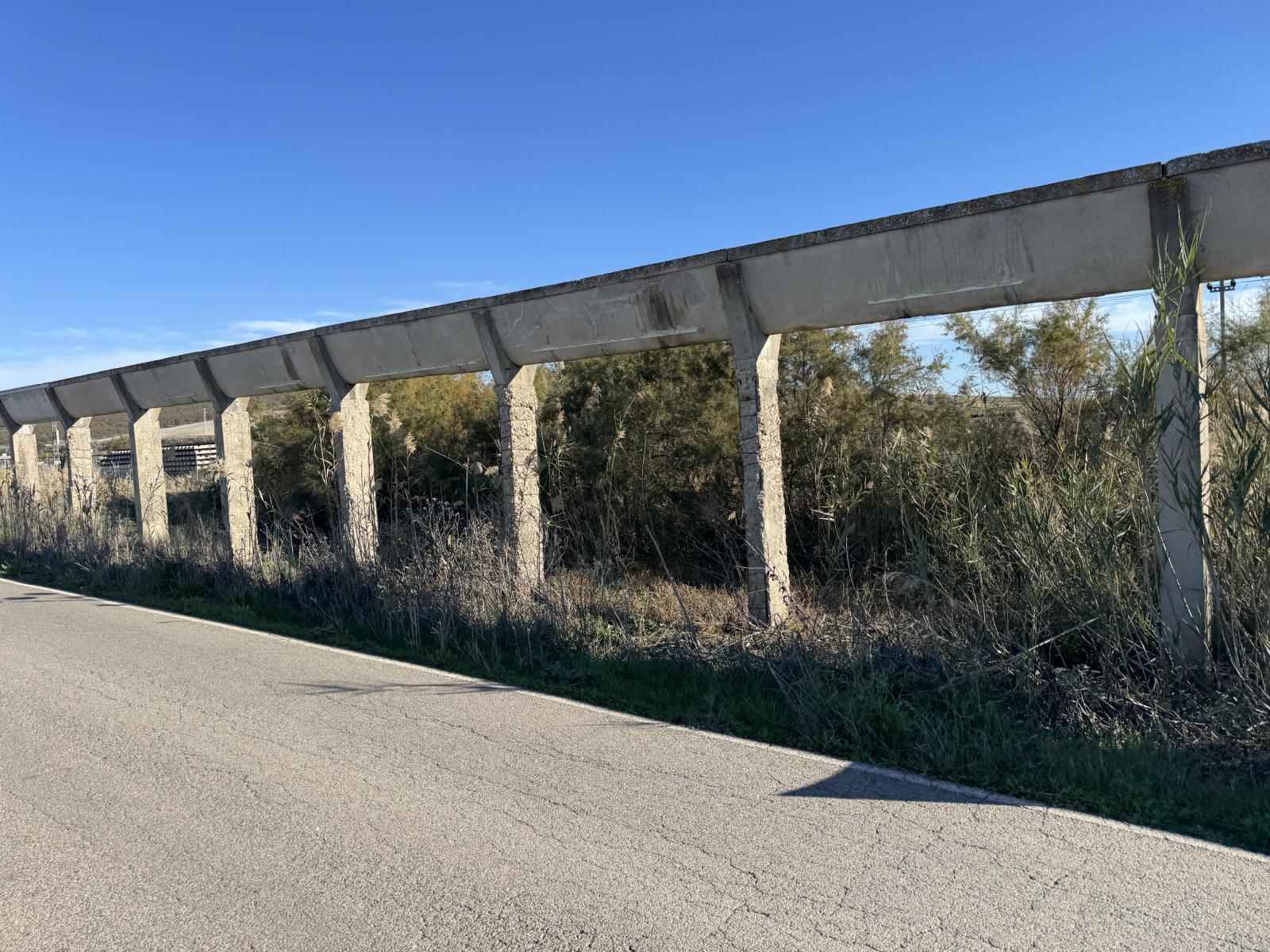
The rest of the journey to the south coast of Spain—via Seville and Jerez de la Frontera, among other places—was mostly through flat or gently rolling countryside. For miles on end, we rode through vast agricultural fields, accompanied by endless irrigation canals, interspersed with solar farms and the occasional small village.
To avoid major highways and freeways, we decided to take a small detour. We planned one last stop at an ALDI grocery store a few kilometers outside of Seville. As we approached what we thought was an ALDI, it struck us as odd that there were only huge trucks on the road and gigantic warehouses everywhere. Our mood took a turn for the worse when we realized that it was an ALDI distribution center – and that normal people simply can't buy anything there. Why on earth would anyone review an ALDI distribution center on Google Maps? That's deliberate deception 😂🙈.
Okay, we definitely could have done our research better.
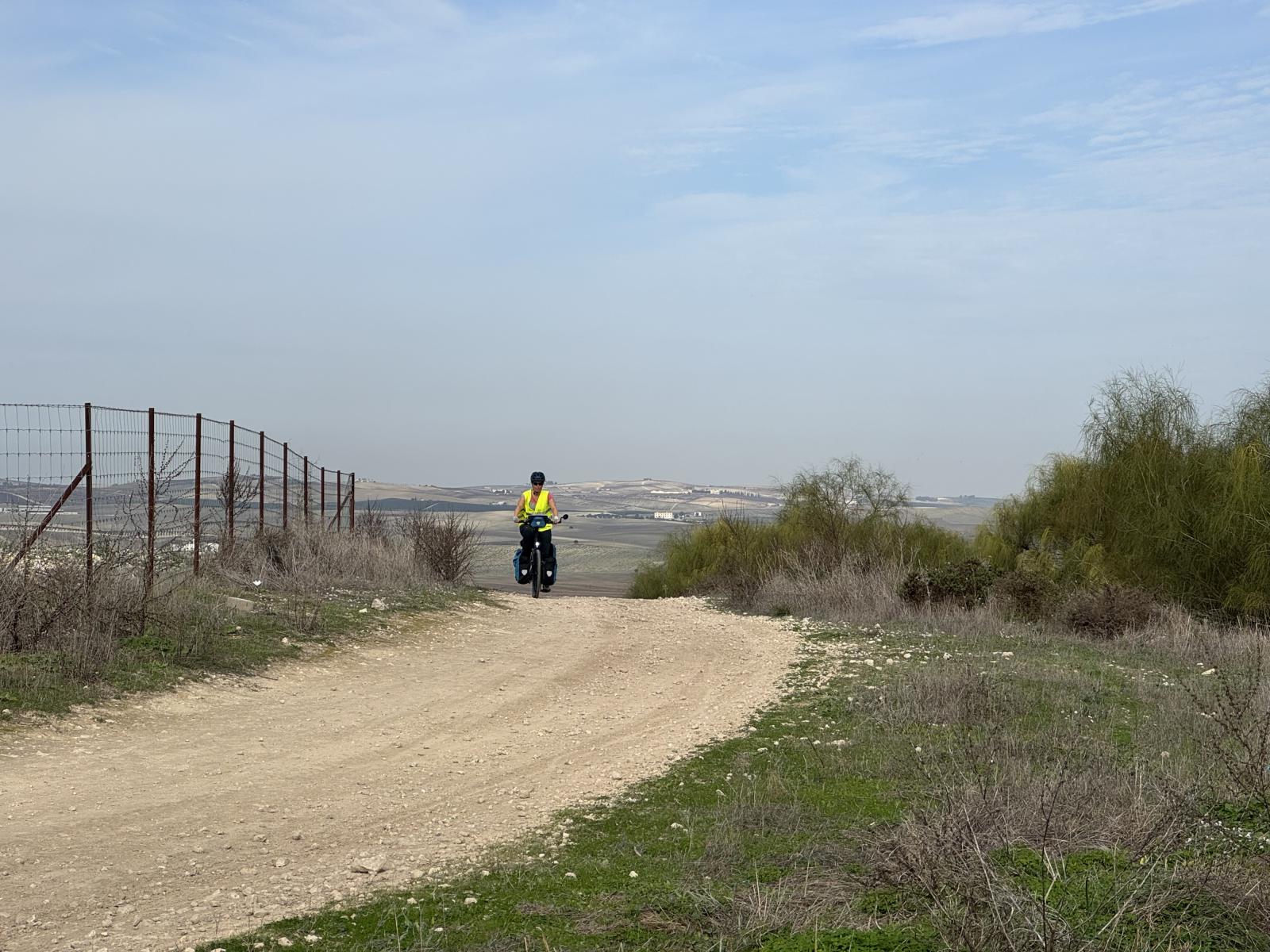
In any case, it was now clear: the small side roads towards the south coast were out of the question for the time being, otherwise we would either have nothing to eat or would have to drive all the way back to Seville. But soon we were pleasantly surprised. The supposed main roads we now had to take actually had hardly any traffic. And did we mention that the Spanish are by far the best at overtaking? We really didn't expect that. Sometimes it's almost uncomfortable: even when we're driving on the hard shoulder and there's oncoming traffic, they wait patiently until the road is clear, move completely to the other side of the road and only then overtake – with their indicator on!
Thanks to the good road conditions, we arrive on the south coast a few days early and take a break at a hotel.





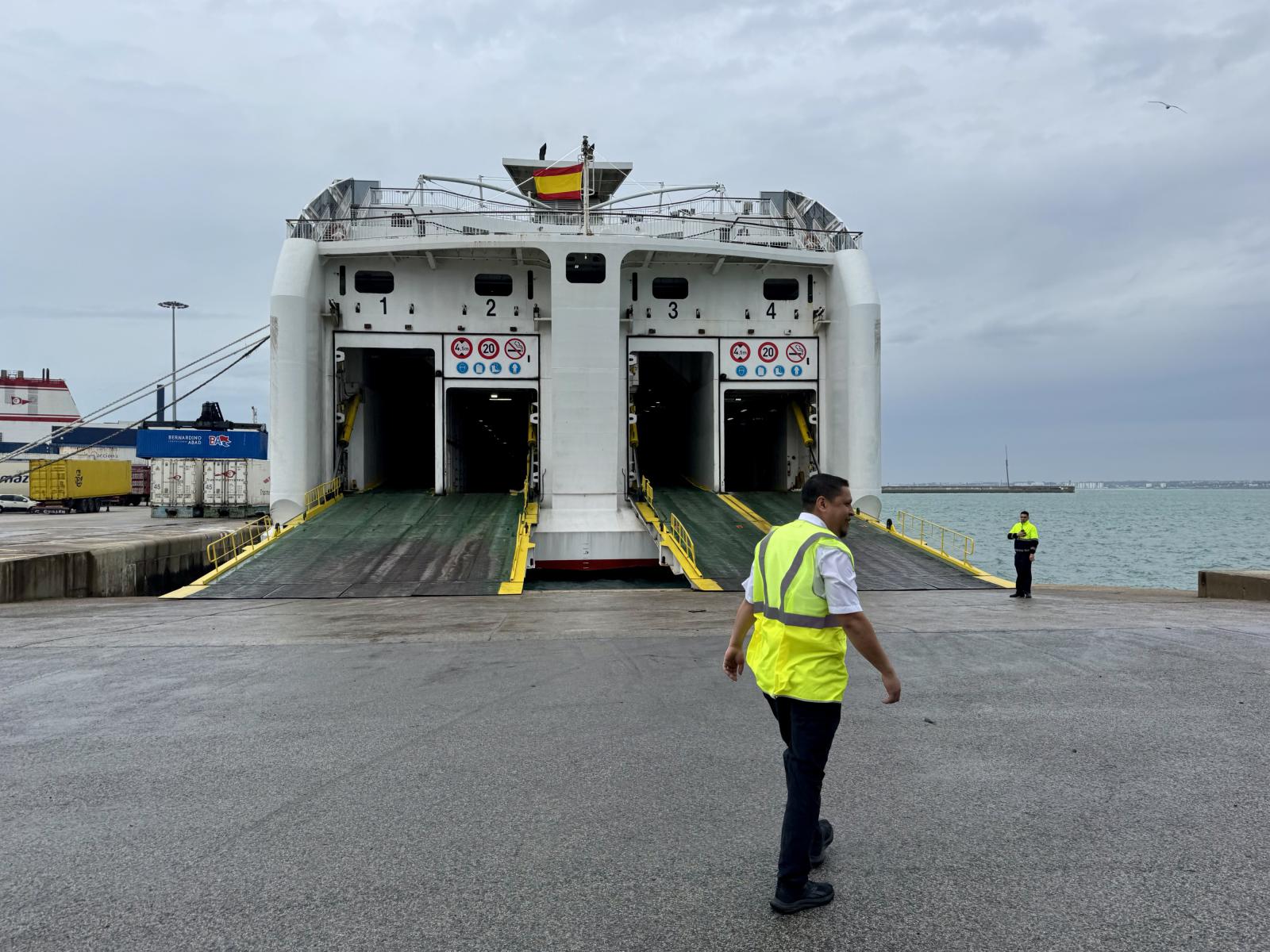
13.12.2025. Finally, the time has come: we're boarding the ferry – heading for the Canary Islands, heading for warmth. Excited, we roll our fully loaded bikes into the ferry waiting area and immediately strike up a conversation with Birgit and Frank, an older couple from Germany who have also joined the queue with their loaded bikes.
We hit it off right away and are impressed that they are still so uncomplicated and athletic at their age. So we've already found our conversation partners for the 33-hour crossing. Now we just need to find someone who can take us from the north of Tenerife to the south, which would save us the taxi fare to the next ferry.
The bikes are safely stowed away, and together with Birgit and Frank, we head to deck 7. There, we settle into comfortable, albeit somewhat outdated, leather armchairs and are amazed at how few people are on the ship. Soon Nicky joins us in our row of seats. This doesn't seem to be his first crossing – he is well equipped, including a kettle for his coffee and the obligatory English tea 😊.
We quickly strike up a conversation with him too. He tells us that he will be staying in Tenerife for a while with his camper van, as he has done many times before. Beni doesn't hesitate for long and asks if he is heading straight south after arriving and might have room for us and our bikes. His answer comes without hesitation: "Yes, of course."
Fate is smiling on us!
The sea gods, on the other hand, are not quite so gracious. Throughout the crossing, the ship rocks back and forth on waves up to seven meters high. We are glad we took our travel sickness tablets in time. And to be honest, in retrospect we are also glad that the completely overpriced cabins were sold out – we would probably have slept just as little in them as we did on our air mattresses on the floor.
Without sleep and after what feels like an eternity, we arrive in the north of Tenerife with a slight delay. The bikes survived the crossing well and we are escorted out of the port area by the staff. Just around the corner, Nicky is already waiting with his huge camper, ready to invite us in. Finally, solid ground under our feet again – but not for too long. It is already 9 p.m. and in twelve hours our next ferry will depart from the other side of the island towards La Palma.
So we don't waste any time. Shortly after 10 p.m., Nicky drops us off in a village just outside the slightly larger port town of Los Cristianos. Now we have to find a place to sleep as quickly as possible in complete darkness, pitch the tent, and catch up on at least a few hours of sleep. Our expectations are correspondingly modest: we pitch the tent right next to a side road.
At 5:45 a.m., after only a few hours of sleep, the alarm clock rings again. We want to cover the last few kilometers in time to be ready for check-in for the next ferry to La Palma.
For the crossing to La Palma, we thought: We don't need travel sickness tablets for these 2.5 hours, we can easily manage without them. However, we hadn't considered that this was a much smaller ferry, which rocks much more in the same waves 🤢. The crew was visibly stressed, collecting the passengers' filled sick bags and calming the screaming children of parents who were themselves on the verge of vomiting.
Unfortunately, Nicole also got sick. We really wanted to avoid that, because vomiting takes a lot of energy—and we would need a lot of that on this day, as we still had quite a few meters of elevation gain ahead of us.


Daher ging es für uns zuerst einmal an den Strand in Santa Cruz de La Palma, um uns auszuruhen und anzukommen, die letzten Tage ging es doch sehr turbulent zu und her.
Wir fühlten uns noch wie in einem Film, waren völlig übernächtigt und so konnten wir noch gar nicht richtig realisieren, was wir eigentlich geschafft haben.
Die grossen Emotionen überrollten uns dann erst am Tag darauf, als wir ausgeschlafen waren.
After a hearty lunch and some rest on the beach, we set off for Puerto Naos, where we would be staying for the night. Puerto Naos is practically on the opposite side of the island, also at sea level. This meant crossing the south of the island, going up and then down again to the west. On the way, we knew from Beni's hiking experience that there was a picnic area at El Pueblo, at just over 700 meters above sea level. We decided that this was the perfect place to spend the night, so we pitched our tent there and soon fell into a deep sleep.
We were woken up by the sunrise, crawled out of the tent, rubbed our eyes, had an incredible view of the sea, and realized for the first time what an extreme milestone and what a miracle it is for us that we arrived here completely healthy after three hard years. For us, this means not only having made it here, but also having fought our way back into life. So much has happened in our minds during these two months; we felt like we could leave all the trauma we had experienced behind with every kilometer we covered.
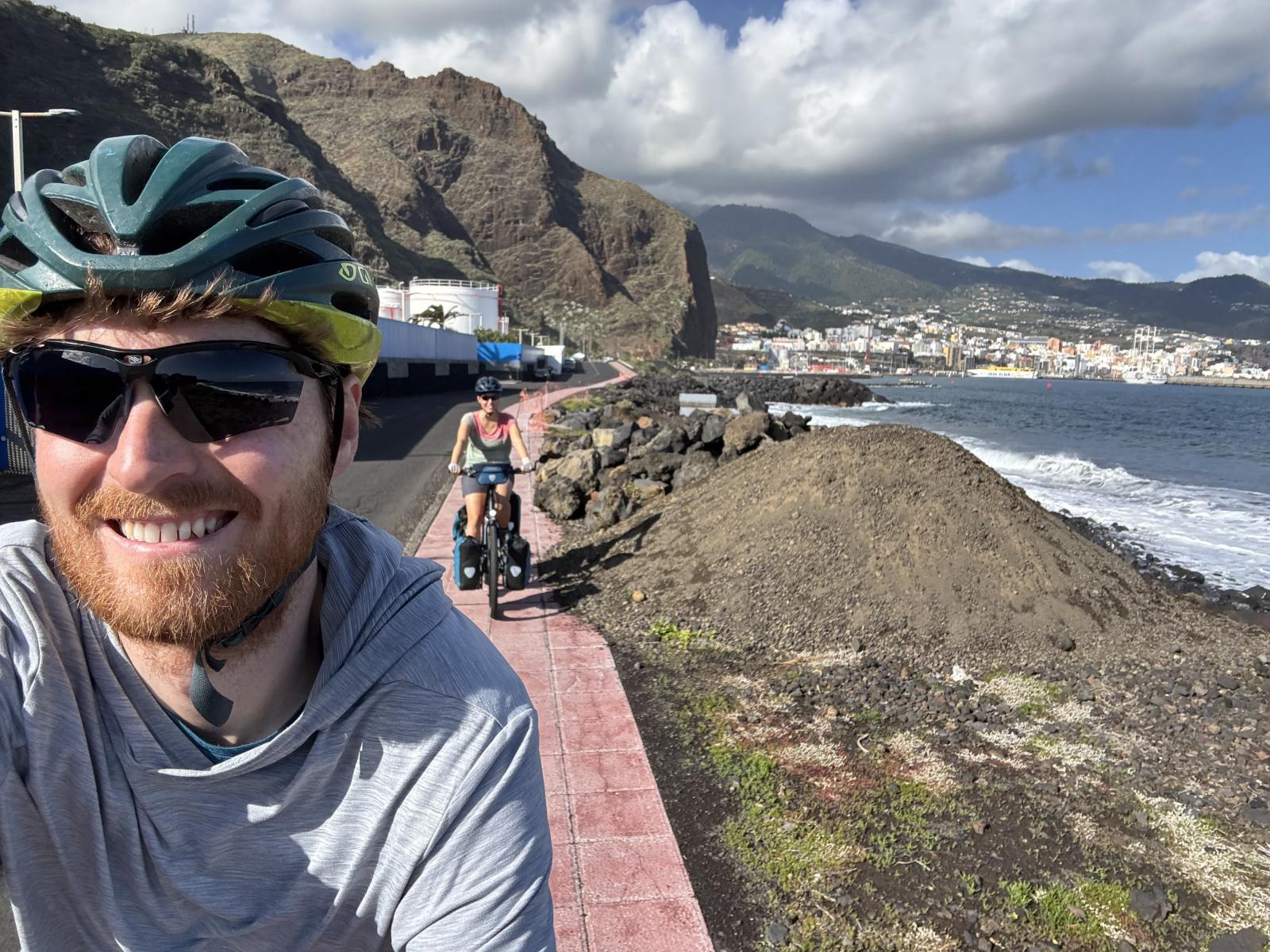
We mastered the remaining distance with tears in our eyes and constant smiles on our faces. As cyclists, we generally enjoy descents immensely, but these 1,000 meters of elevation gain were simply the icing on the cake. Rarely have we felt such intense happiness as when we rode into Puerto Naos, where we will now be staying for six weeks.



For even more insight into our everyday cycling life, check out our latest video:
Comments
Gasser
Liebe Nicole, lieber Beni Spannend zu lesen wie ihr nun hoffentlich euer "Comming Back to La Palma" weiter geniessen könnt, danke für euren eindrücklichen Beitrag! Heidi Gasser
04.01.2026 18:33
Nicole & Beni
Schön, dass du immer mitfieberst 😍 und ja, wir geniessen es sehr.
06.01.2026 10:48
Benjamin
😅 Sehr geil, eine Wahl der Übernachtungsplätze nach meinem Geschmack. Die „armen“ Kinder hätten beinahe eine Nacht ohne Kinderspielplatz auskommen müssen🤪 Viel Vergnügen in La Palma, ä gueti Ziit und immer eine handbreit Luft unter dem Gleitschirm😎
04.01.2026 18:34
Nicole & Beni
Hey Benjamin, Kinder hatte es nicht mal welche auf der Fähre, aber der Typ meinte, der Kapitän hat das so entschieden, ihm seien die Hände gebunden 🤦♂️😂. Er musste selber etwas lachen. Liebi Grüess
06.01.2026 10:46
Andreas & Barbara
Wir freuen uns sehr, dass ihr gesund in La Palma angekommen seid! So ein Glück, euch so strahlend und voll Energie zu sehen! Genießt eure Zeit auf der Insel.
04.01.2026 19:10
Nicole & Beni
Danke euch von Herzen für das Mitfreuen. Liebe Grüsse
06.01.2026 10:42
Urs Künzler
Wie immer toll und interessant geschrieben. Ganz erstaunlich, was ihr hier erlebt und leistet. Und scheinbar auch viel Zeit habt, über "Gott und die Welt" nachzudenken. Meine herzliche Gratulation zu dieser Reise und weiterhin alles Gute. Und Happy New Year gerade aus Burbank CA.
04.01.2026 21:00
Nicole & Beni
Vielen Dank Urs und auch dir und der Familie alles Gute fürs 2026, liebe Grüsse nach Burbank.
06.01.2026 10:40
David & Regula
Wir haben euren Reiseblog 2021 "entdeckt", als wir uns auf eine längere Veloreise vorbereiteten. Die Berichte waren schon immer super geschrieben und kurzweilig zum Lesen😄! Wir waren sehr betrübt, als euch LongCovid in Norwegen lahmgelegt hat. Umso mehr freuen wir uns, dass ihr wieder gsund seid und euer Leben so gestalten könnt, wie ihr es euch vorstellt!! Weiterhin viel Energie und eine gute Reise! Liebe Grüsse, David & Regula
24.01.2026 22:30
Nicole & Beni
Liebe Regula, lieber David Herzlichen Dank für die Komplimente und vielen Dank für die guten Wünsche, das wünschen wir euch natürlich auch ☺️! Wo seid ihr auf eurer Reise unterwegs gewesen? Sonnige Grüsse aus La Palma Beni & Nicole
28.01.2026 14:37
David & Regula
Wir sind, wie ihr, in Richtung Osten (Asien) aufgebrochen. Zurück sind wir noch nicht, aktuell radeln wir auf dem amerikanischen Kontinent nach Süden. Liebe Grüsse aus Guatemala
09.02.2026 22:10